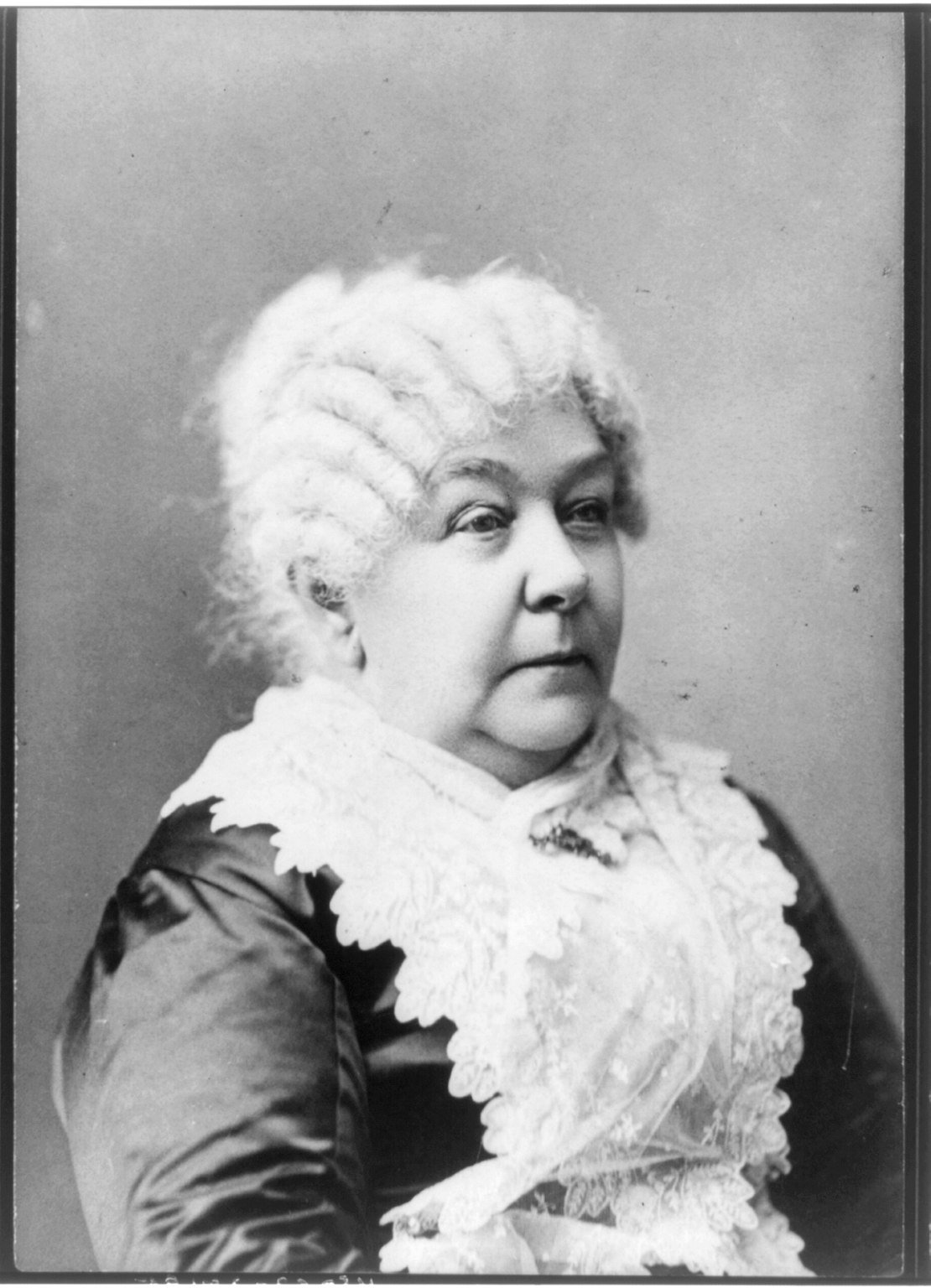
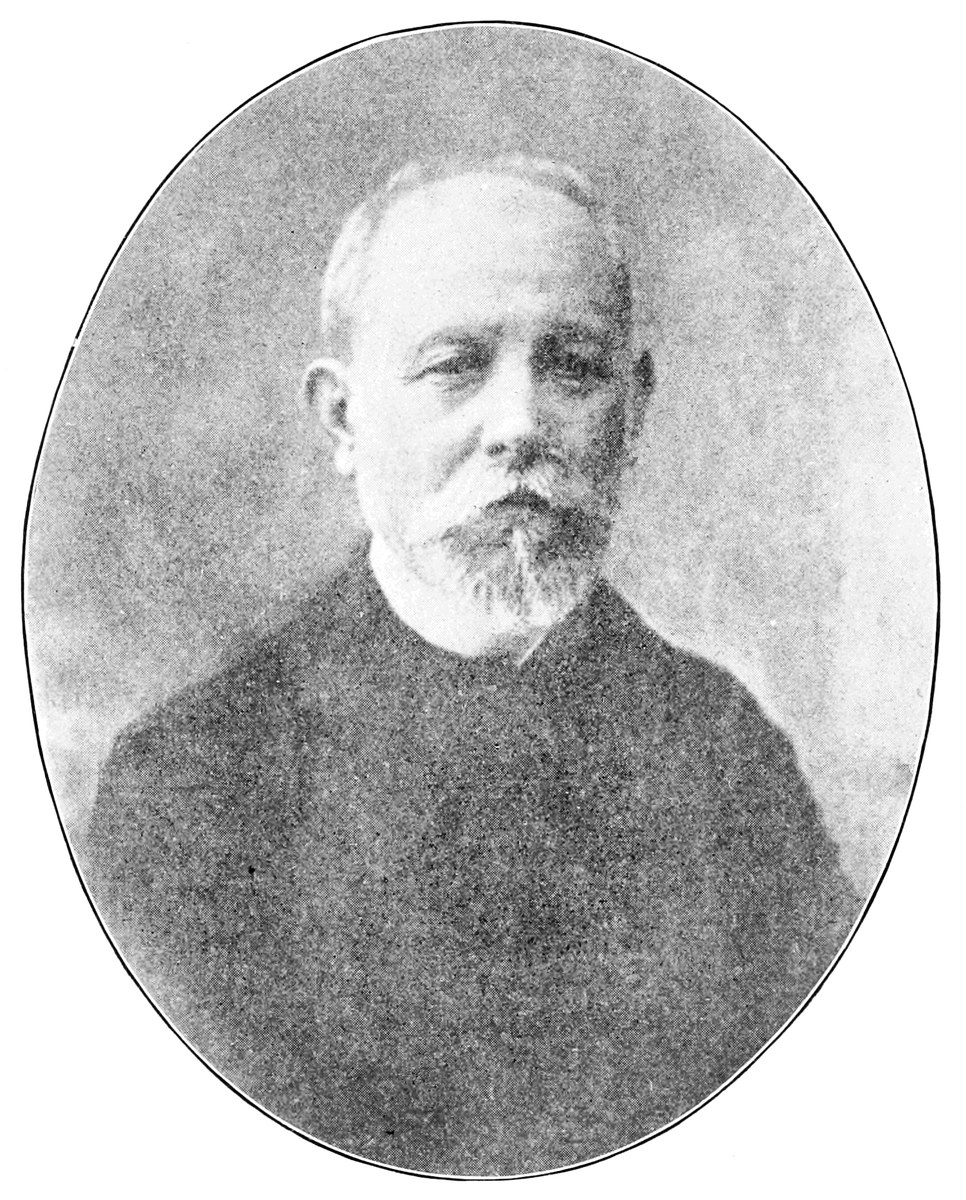

Unknown photographer, portrait of Florentino Ameghino, October 1910, published in Popular Science Monthly 80 (March 1912), public domain, via Wikimedia Commons · Photographic portrait of Florentino Ameghino captioned 'Portrait of Florentino Ameghino, October, 1910. Courtesy of W. J. Sinclair', printed as Fig. 1 of William Diller Matthew's obituary in Popular Science Monthly, volume 80, March 1912, New York. The photographer is unknown. The file is a plain downscale of the 1501 x 1864 pixel scan of that printed figure (a halftone in an oval frame) from Wikimedia Commons, reduced to 966 x 1200 pixels with no upscaling and no cropping. Identity rests on the printed caption and the article about him. · Public domain in the United States (published in 1912, before 1931)
박물학자 · 19세기
플로렌티노 아메기노
1853–1911
주요 업적 분야
아직 성격 매칭에 포함되지 않았습니다 — 기록된 근거가 성격 모델 전체를 다루기에는 충분하지 않습니다. 이 페이지의 다른 모든 내용은 자유롭게 확인하실 수 있습니다.
핵심 특성
주요 업적
독학한 아르헨티나 박물학자로, 아르헨티나 팜파스와 파타고니아의 화석 포유류를 세상에 알렸다. 1912년의 추도문은 그가 약 30년 동안 500개가 넘는 새로운 속(屬)을 기재했다고 하며, 브리태니커는 그의 발견을 19세기 후반 미국 서부의 화석 발견에 견준다.
1889년 아르헨티나 화석 포유류를 재정리한 책은 삽화가 풍부한 두 권의 큰 책이었다. 그러나 인류와 포유류가 남아메리카에서 기원했다는 더 대담한 주장은 널리 받아들여지지 않았고 혹독한 비판을 받았다.
코르도바와 라플라타에서 교수를 지내고 라플라타 박물관 부관장을 맡았으며, 『아르헨티나 박물학 잡지』(1891)를 창간해 편집했다. 1902년부터는 부에노스아이레스 국립자연사박물관장으로 1911년 숨질 때까지 일했다.
삶의 장면들
동생 카를로스가 파타고니아로 긴 탐사를 떠나 있는 동안 플로렌티노는 라플라타에 남아 작은 문구점에서 두 사람의 생활비와 탐사비를 벌었고, 그 결과를 쏟아지듯 많은 논문으로 발표했다.
이는 어떤 기관도 대 주지 않는 연구의 비용을 스스로 마련한 모습과 일치한다. 자원 활용 성향
1888년 관장과의 의견 차이로 라플라타 박물관 부관장직을 사임한 뒤 10년 남짓 중요한 직책이 없었지만, 1889년에는 화석 포유류 개정판을 냈고 1891년에는 자신의 학술지 편집을 시작했다.
이는 기관의 뒷받침을 잃은 뒤에도 연구를 이어 간 모습과 일치한다. 끈기
전환점
인류의 오랜 역사에 대한 그의 결론이 아르헨티나 양대 박물관의 지지를 얻지 못하자, 그는 1878년 파리 박람회에 수집품을 가져가 해외에서 얻은 지지를 바탕으로 1880-81년 『라플라타의 인류의 고대성』을 펴냈다.
이는 국내 권위자들이 인정해 주지 않는 결론을 더 넓은 청중에게 가져간 모습과 일치한다. 독립적 사고
비슷한 인물
전체적인 프로필이 이 사람과 닮은 사람들이에요.


넬슨 만델라

엘리자베스 케이디 스탠턴

루이 암스트롱

마하트마 간디

마르쿠스 아우렐리우스
출처
- Florentino Ameghino (Q503416), verified live via the Wikidata API (2026-10-31): label 'Florentino Ameghino', description 'natural scientist and museum director from Argentina (1854-1911)', born 19 September 1853 (the description says 1854, the statement says 1853), died 6 August 1911, place of birth recorded as an Italian municipality, no Korean label, image 'Florentino Ameghino portrait.png'. Orientation only; not used as support for any row.
- The Editors, 'Florentino Ameghino', Encyclopaedia Britannica, read in full. CANONICAL SIGNIFICANCE SOURCE: paleontologist, anthropologist and geologist whose fossil discoveries on the Argentine Pampas rank with those made in the western United States in the late nineteenth century; began collecting fossils as a youth, won international recognition through correspondence with Paul Gervais, professor at Cordoba (1884) and La Plata (1887), spent three years in Europe, remained isolated from mainstream thought, advanced radical anthropological theories that drew severe criticism (that all mammals including humans originated on the Argentine pampas), was dismissed from teaching posts, and directed the Museum of Natural History in Buenos Aires (1902-11); nearly 200 monographs in the posthumous Obras completas. Gives birth as 19 Sept 1853 in Moneglia. Reference entry; the praise is retrospective and some figures (more than 6,000 fossil species) are not used here.
- David Bushnell, 'Ameghino, Florentino (1854-1911)', Encyclopedia of Latin American History and Culture (Gale), via Encyclopedia.com, read in full: son of Italian immigrants, a boyhood collector of bones and fossils who worked as a schoolteacher and storekeeper, never received formal scientific training, travelled to Paris in 1878 with part of his collection, published almost two hundred articles and monographs, served as museum director in La Plata and Buenos Aires, and won notoriety for a hypothesis of a South American origin of humankind that was not generally accepted; called a tireless investigator and a pioneer of Argentine science. Short reference entry; gives the older birth date and place that Boscaini and colleagues (2021) correct.
- William Diller Matthew (American Museum of Natural History), 'Florentino Ameghino', Popular Science Monthly 80 (March 1912), pp. 303-307, read in full. Near-contemporary scientific obituary: our knowledge of the fossil mammals of the Argentine is due principally to him; a collector, explorer and writer of great energy who had spent ten years collecting before 1880; exhibited his collection at the Paris Exposition of 1878 after failing to win endorsement at home; published the two-volume revision of 1889; described over 500 new genera in thirty years; funded his brother Carlos's long Patagonian expeditions from a small stationer's shop in La Plata; resigned as sub-director of the La Plata Museum after differences with its director and held no important post for ten or twelve years; led the Museo Nacional of Buenos Aires from 1903. Also a critical voice: bitter opposition he had 'brought upon himself' by a combative, controversial spirit, work that sometimes appears hasty, and theoretical conclusions most paleontologists could not accept. Printed with the portrait photograph used here (Fig. 1).
- Sergio F. Vizcaino (CONICET, Museo de La Plata), 'Cartas para Florentino desde la Patagonia: cronica de la correspondencia edita entre los hermanos Ameghino (1887-1902)', Publicacion Especial 12, Asociacion Paleontologica Argentina (2011), pp. 51-67, read in full in Spanish. Scholarly account of the published letters between Florentino and Carlos Ameghino: the intense competition with Moreno's museum and with Mercerat (including an attempt to publish ahead of him in January 1893), the retention of fossils and concealment of locality data, Florentino urging Carlos to publish in prestigious journals and to share information with foreigners such as Hatcher, the loss of his museum salary, the sale of fossils and a loan, the 1889 monograph partly paid for by the Cordoba Academy, and his founding and editing of the Revista Argentina de Historia Natural (1891, citing Mantegari 2002). The letters are known through Torcelli's 1935 edition, whose fidelity to the originals is unknown.
- Alberto Boscaini, Marina Peralta Gavensky, Gerardo De Iuliis and Sergio F. Vizcaino, 'The origin of El hombre en el Plata: on the birthdate and birthplace of Florentino Ameghino (1853-1911)', Publicacion Electronica de la Asociacion Paleontologica Argentina 21(1):28-43 (2021), open access, read in full. Establishes birth in Moneglia, Italy on 19 September 1853 from a note in Capellini's papers and the post-mortem birth record; describes Burmeister's 1891 attacks on his education, the rise of his prestige in the 1880s, and the later 'heroic intellectual' image. Used for the birth year and as a critical voice on the hagiography; its interpretation of a 'constant need for prestige' is the authors' reading and is NOT used for any row.
- Lumila Paula Menendez, 'The antiquity and ancestral origin of humans in the Americas: a five hundred year inquiry from a biological anthropology perspective', Journal of Anthropological Sciences 102 (2024), 7-67, read where it treats Ameghino: he investigated the geology and co-occurrence of human and animal fossils in the Pampas and Patagonia from the 1870s, argued for great antiquity, built a primate phylogeny with hypothetical taxa from comparative anatomy, held that Homo sapiens originated in the Argentine Pampas, and devoted his whole career to finding fossils to support it, while Hrdlicka rebutted claims of antiquity in South America and deep human antiquity was later accepted on North American evidence. Modern scholarly review used as the independent assessment of his anthropological theory.
- 'Florentino Ameghino, the father of Argentinian paleontology', Letters from Gondwana (paleontology blog), 15 May 2020, read in full. Popular secondary account used only for details the other sources do not give (the 1878 Paris trip supported by the Genoese community, the sale of fossils to Cope and of a bird collection to a London museum, the 1902 plan of casts and exchanges to keep original fossils at home, the 'Ameghino, von Ihering and Co' correspondence) and for the Moreno feud framing; treated as low-weight and not used as sole support for any row.