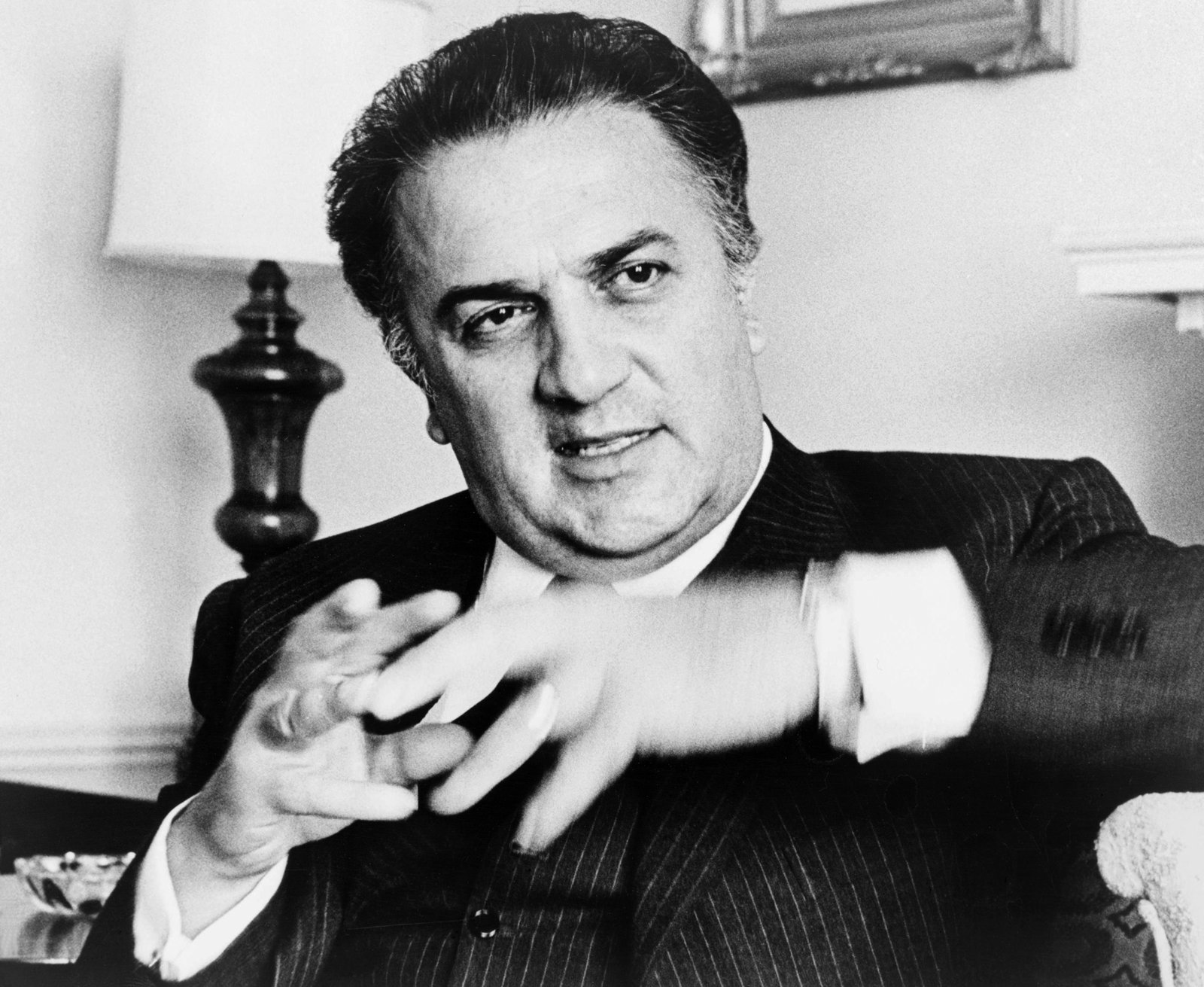

Walter Albertin, New York World-Telegram and Sun staff photographer, 1965; Library of Congress, Prints and Photographs Division, New York World-Telegram and Sun Newspaper Photograph Collection · Wikimedia Commons, from the Library of Congress New York World-Telegram and Sun Collection (resized derivative of the original photograph) · No known copyright restrictions (Library of Congress staff-photographer collection; reproduction rights transferred to the Library of Congress by Instrument of Gift)
핵심 특성
주요 업적
펠리니는 『라 스트라다』(1954)로 아카데미 외국어영화상을 받았고, 『카비리아의 밤』(1957)으로 다시 같은 상을 받았다. 앞의 영화에서는 아내 줄리에타 마시나가 앤서니 퀸이 연기한 떠돌이 차력사 곁의 소녀 젤소미나를 맡았고, 뒤의 영화에서는 마시나가 낙천적인 로마의 매춘부로 나온다. 샤나한(Shanahan)은 좌파 비평가들이 두 작품 모두 네오리얼리즘의 사회 비판 노선을 떠났다며 공격했다고 전한다.
『달콤한 인생』(1960)은 마르첼로 마스트로이안니가 연기한 로마의 가십 기자가 유명인과 스캔들로 얼룩진 도시의 밤을 헤매는 이야기이며, 사진기자 파파라초라는 인물을 통해 영어에 '파파라치'라는 말을 남겼다. 딕슨(Dixon)은 가톨릭 교회의 비난에도 이 영화가 곧바로 흥행과 평단 양쪽에서 화제작이 되었다고 설명하고, 보즐리 크라우더는 1961년 뉴욕 타임스 평에서 펠리니가 최근의 영화인 가운데 정신없는 현대 문명의 포괄적 모습에 가장 가까이 다가갔다고 평했다.
『8과 1/2』(1963)에서 마스트로이안니는 자신이 만들어야 할 영화를 기억하지 못하는 영화감독을 연기하며, 꿈과 기억과 환상이 제작 현장의 일상과 뒤섞인다. 이 영화는 아카데미 외국어영화상과 흑백 의상상을 받았고, 딕슨은 이 작품이 국제 비평가 투표에서 역대 최고의 영화 가운데 하나로 자주 꼽힌다고 쓴다.
파시즘 시대 리미니를 기억과 지어낸 이야기로 엮어 낸 『아마르코르드』(1973)로 펠리니는 1975년 시상식에서 네 번째 아카데미 외국어영화상을 받았다. 펠리니는 이 이야기를 처음부터 모두 지어냈다고 말했으며, 잭슨(Jackson)은 영화 속 바다와 대형 여객선이 일부러 인공적으로 보이게 만들어졌다고 설명한다.
삶의 장면들
펠리니는 『달콤한 인생』을 찍으면서 실제 비아 베네토에서 촬영하는 부담에 시달리자, 미술감독 피에로 게라르디에게 치네치타에 그 거리를 그대로 지어 달라고 했다. 30년 뒤 그는 카페 드 파리 앞을 지날 때마다 진짜 비아 베네토는 5번 스튜디오에 있던 거리라는 생각을 떨칠 수 없다고 썼고, 스튜디오의 거리가 더 정확하거나 적어도 더 매력적이었다고 덧붙였다. 『인터비스타』(1987)에서도 그는 스튜디오 축소 모형을 만들어 가로수 길의 방향을 바꾸고 지붕 색을 다르게 칠했다.
실제 거리보다 지어 놓은 거리를, 항공 촬영보다 스튜디오 모형을 택한 점은 미적 감수성과 부합한다. 인용된 말은 펠리니가 나중에 회고한 것이며 잡지 기고자를 통해 전해진다. 미적 감각
『달콤한 인생』의 첫 제작자 디노 데 라우렌티스가 주연으로 폴 뉴먼을 원하자, 딕슨에 따르면 펠리니는 마르첼로 마스트로이안니를 포기하지 않았고, 힘든 협상 끝에 데 라우렌티스는 제작에서 물러났다. 그 뒤 펠리니는 한동안 제작자 세 곳과 동시에 얽혔다가, 안젤로 리촐리와 주세페 아마토의 회사와 1958년 10월 28일 계약을 맺었다.
첫 제작자를 잃는 대가를 치르면서도 자신의 캐스팅을 고수한 것은 작품의 핵심 결정을 직접 통제하려는 욕구와 부합한다. 다른 제작자들의 입장에 대한 딕슨의 서술은 짧다. 자율성 욕구
전환점
펠리니는 1961~62년에 온천 휴양지를 배경으로 주연 배우들을 정해 두고 『8과 1/2』을 준비했지만, 친구 안젤로 솔미에게 말했듯이 줄거리를 알지 못했고, 제작자에게 더는 못 하겠다고 말하려던 순간이 쉰 번이나 있었다고 했다. 딕슨은 영화를 풀리게 한 결정적 변화가 주인공을 자신과 같은 영화감독, 곧 기억나지 않는 영화를 시작해야 하는 지친 남자로 바꾼 것이었다고 쓴다. 그 결과물은 아카데미상 두 부문을 받았다.
이야기가 정해지지 않은 상태에서 세트와 캐스팅을 진행하고, 그 문제 자체를 영화의 주제로 삼은 일은 높은 모호성 내성과 부합한다. 이 서술은 솔미를 통해 전해지는 펠리니 본인의 훗날 설명에 기대고 있다. 모호함 수용
비슷한 인물
전체적인 프로필이 이 사람과 닮은 사람들이에요.


세쿼야

쿠사마 야요이
펠라 쿠티

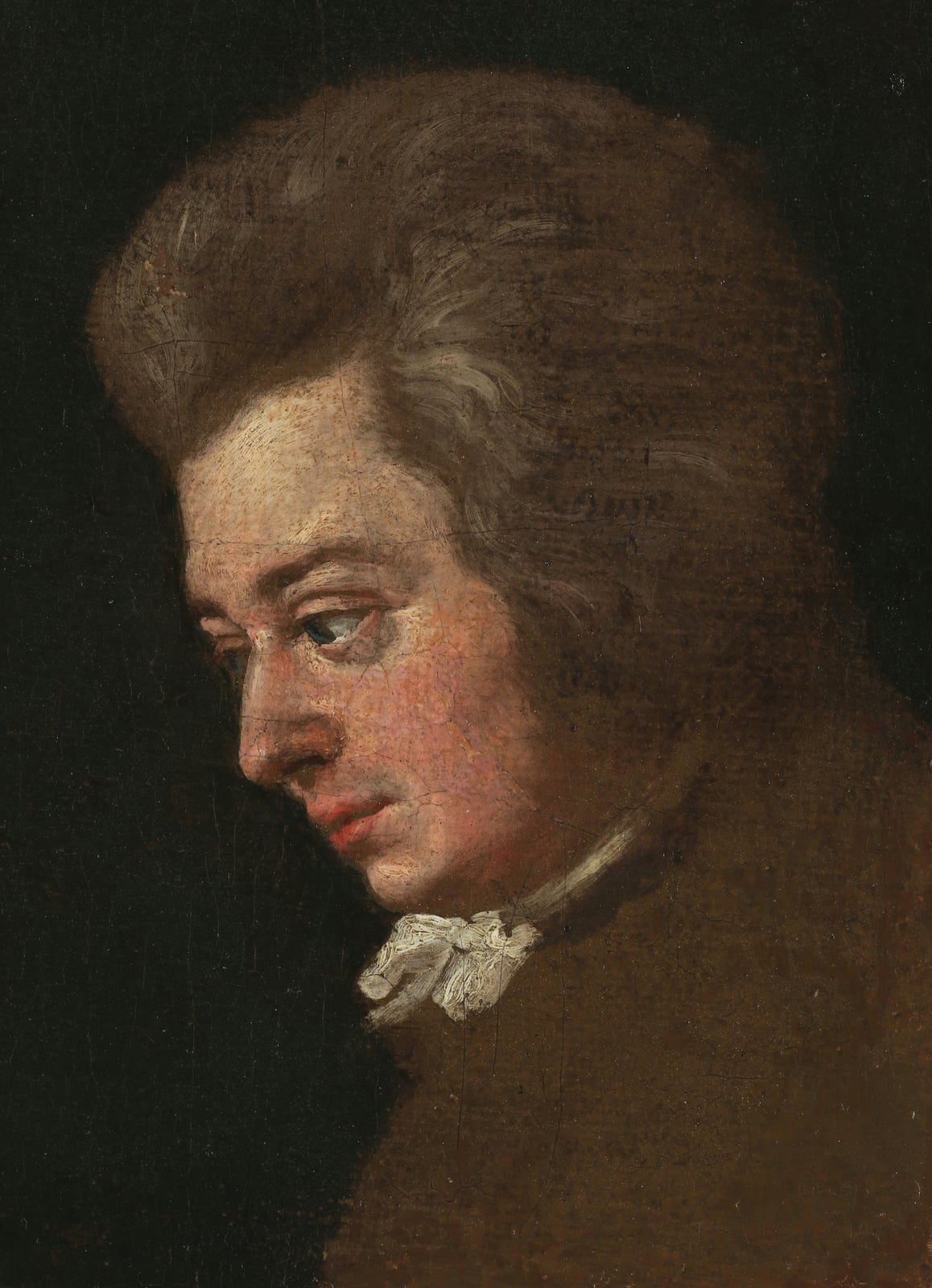
볼프강 아마데우스 모차르트

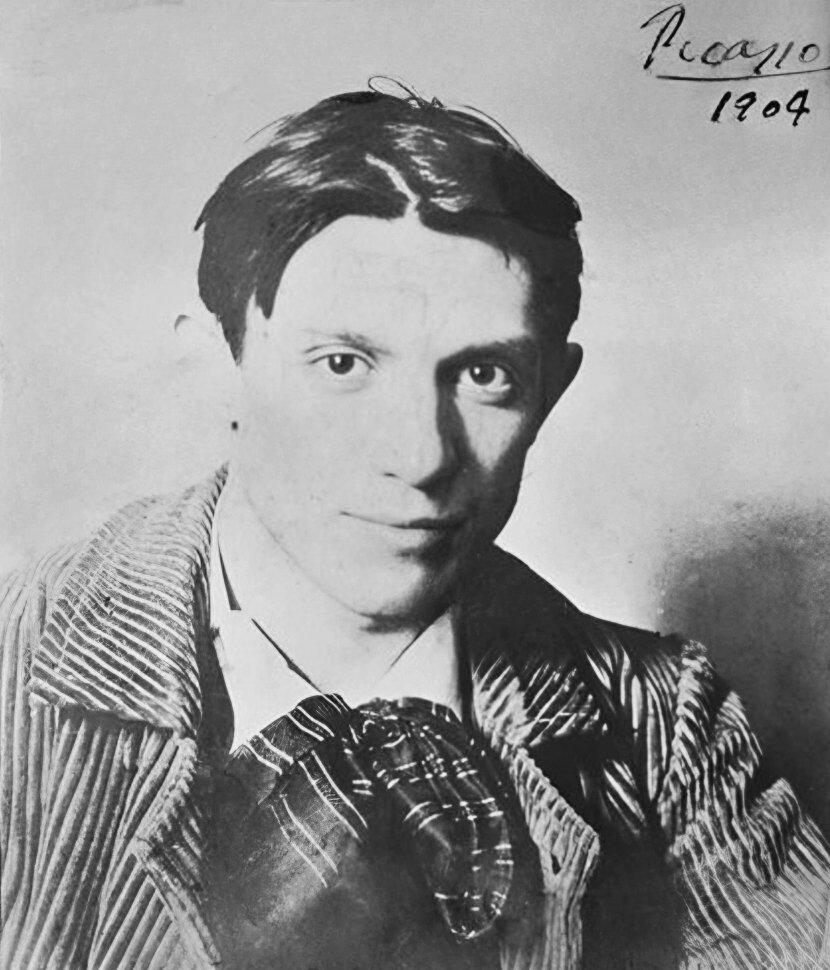
파블로 피카소
출처
- Federico Fellini (Q7371) -- verified live via wbgetentities (2026-10-10): en label 'Federico Fellini', description 'Italian filmmaker (1920-1993)', born 20 Jan 1920, died 31 Oct 1993, citizenship Italy, instance of human, ko label '페데리코 펠리니'. Orientation only; not used as support for any row.
- Wheeler Winston Dixon (film historian), 'La Dolce Vita', Senses of Cinema, CTEQ Annotations on Film, issue 54 (April 2010) -- INDEPENDENT scholarly essay (non-self) on Fellini's early career and the making of La dolce vita: the apprenticeship with Rossellini, the first two films' failures, the dispute with the first producer over casting Mastroianni, the dropped Luise Rainer role, the reconstruction of the Via Veneto at Cinecittà and the cutting of the film. Read in full.
- Wheeler Winston Dixon, 'A Fantastic, Enchanted Ballet: Federico Fellini's 8 1/2 (1963)', Senses of Cinema, CTEQ Annotations on Film, issue 82 (January 2017) -- INDEPENDENT scholarly essay (non-self) on the genesis of 8 1/2, relying on Angelo Solmi's 1967 book and Fellini's own quoted remarks: preparation without a settled plot, the change of the protagonist into a film director, the casting and the improvised ending. Read in full.
- Antonia Shanahan, 'Fellini, Federico', Senses of Cinema Great Directors, issue 21 (July 2002) -- INDEPENDENT critical survey (non-self) of the whole career, drawing on Peter Bondanella's readings: Fellini's formation as a caricaturist and magazine writer without film-school training, the ten years of scriptwriting and set apprenticeship with Rossellini and others, his chosen influences, the break with the neorealist 'social' brief after Paisa, the criticism from the political Left, and the turn to dream and memory. Read in full except the later bibliography.
- Roberto Chiesi (Cineteca di Bologna), film note on 'Fellini: A Director's Notebook' (1969), Il Cinema Ritrovato festival catalogue, 2019 edition -- INSTITUTIONAL film-archive note (non-self) recording that in 1966 Fellini withdrew from his planned film Il viaggio di G. Mastorna although sets were built and contracts signed, and that the 1969 television film he then made began on the abandoned set and included a Nights of Cabiria sequence cut at the producer's request. Read in full.
- Fondazione Cinema per Roma, 'Fellini Oniricon - The Book of My Dreams' (exhibition announcement, 17 November 2008) -- INSTITUTIONAL press text for the 2009 Academy of Motion Picture Arts and Sciences exhibition curated by Tullio Kezich and Vittorio Boarini; used only for the physical description and dating of the dream diary (two ledgers, drawings and notes dated 1960-1982 with scattered pages to 1990, begun on the advice of the Jungian analyst Ernst Bernhard). PROMOTIONAL in tone; not used for claims about influence. Read in full.
- Gideon Bachmann, 'Federico Fellini: The Cinema Seen as a Woman... An Interview on the Day City of Women Premiered in Rome', Film Quarterly vol. 34 no. 2 (Winter 1980-81), pp. 2-9, JSTOR scan on the Internet Archive -- SELF source: Fellini's own account of how he works and what he refuses (control until the final mix, film-making as a crew 'tribe', refusal to make a political platform of his films). Self-presentation by a famously unreliable self-narrator, so used only as one voice beside non-self sources and never alone for a row. Read in full.
- 'Inside Federico Fellini's dream factory in Rome', Apollo Magazine (art-history journalism) -- NON-SELF magazine feature on Cinecitta and Fellini that quotes his later recollections of building the Via Veneto in Studio 5 for La dolce vita and the scale model of the studio for Intervista (1987). Read in full; the quotations are Fellini's own, the framing is the writer's.
- Zach Zimmermann, 'Film as History: Fellini's La Dolce Vita as a Historical Artifact', Elements (Boston College undergraduate journal) -- student scholarly article on the reception of La dolce vita in Italy and the United States, quoting Bosley Crowther's 1961 New York Times reviews (admiring) and Time magazine's 1961 notice (hostile) and noting the later academic fall in Fellini's reputation. Read in full for the reception section; the formal analysis was skimmed.
- Roger Ebert, 'La Dolce Vita', Great Movies, Chicago Sun-Times (5 January 1997), read via the Internet Archive's 2023 capture of the Roger Ebert site -- CRITIC's retrospective (non-self) that places the film at the dividing point between the neorealism of the earlier films and the carnival visuals of the later ones and credits Nino Rota's score. Read in full.
- Bruce Jackson, 'Fellini's Memory: Amarcord', Senses of Cinema, feature article, issue 104 (January 2023) -- scholarly film essay (non-self) on how Amarcord was built from remembered and invented stories and from deliberately artificial studio sets (the cardboard liner Rex), quoting Fellini's remark that he invented the whole tale. Read in full for method and set design; the scene-by-scene analysis was skimmed.
- Benjamin Halligan (critic), review of Sam Rohdie's 'Fellini Lexicon' (BFI, 2002), 'The Felliniesque Besieged', Senses of Cinema issue 24 (January 2003) -- CRITICAL, interpretive review (non-self) that describes Fellini as repeatedly rewriting his own themes and reports Pauline Kael's later judgment that Casanova made 'an epic of his own alienation'. Used only as a sceptical counter-perspective on the scale of his originality; read in full.
- Jacob Agius, 'I Remember: Amarcord (Federico Fellini, 1973)', Senses of Cinema, CTEQ Annotations on Film, issue 104 (February 2023) -- short scholarly essay (non-self) on the film's collaboration with screenwriter Tonino Guerra, Fellini's remark that he invented the whole tale, and the film's Best International Feature Film Oscar at the 1975 ceremony. Read in full.
- Federico Fellini, English Wikipedia (raw wikitext read 2026-10-10) -- ORIENTATION ONLY for names, dates and the list of awards and collaborators; its claims that rest on Tullio Kezich's 'Fellini: His Life and Work' (2006), Bondanella and Alpert could not be checked against the books and are not used as support for any scored row.