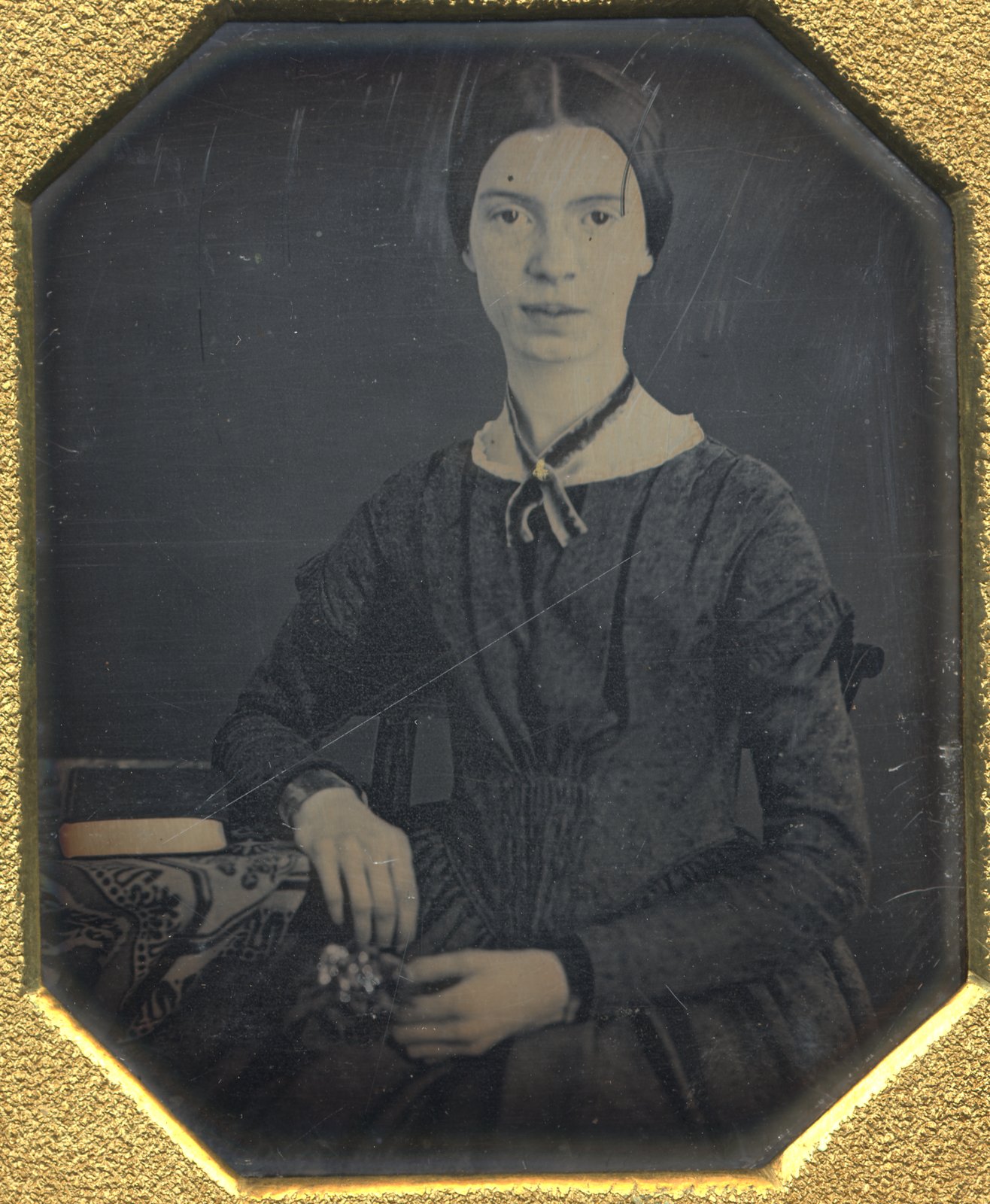

Emily Dickinson, daguerreotype, c. 1846-47; original in Amherst College Archives & Special Collections (credit requested by the holder); cropped and downscaled · Daguerreotype of Emily Dickinson, unknown photographer, probably Amherst, Mass., between 10 Dec. 1846 and late March 1847 (Amherst College Archives & Special Collections, Emily Dickinson Collection; Millicent Todd Bingham gift, 1956) -- Amherst College's own 720 dpi colour scan of the cased daguerreotype ('ED-dag-case-720dpi'), uploaded to Wikimedia Commons as File:ED-dag-cropped-720dpi.tif (original 4788 x 2797 px TIFF); cropped to the plate and gold mat (case lid and velvet removed) and downscaled to 1600 px long edge · Public domain
핵심 특성
주요 업적
디킨슨은 1,800편에 가까운 시를 썼다. 그의 원고는 제목이 없고 대략적인 시간 순서로만 번호가 매겨져 있었으며, 대시가 곳곳에 쓰이고 대문자 표기가 불규칙했으며 언어가 몹시 압축된 경우가 많았다. 그는 완전 압운을 자주 썼지만 근접 압운(slant rhyme)도 자주 활용했다.
1858년 무렵부터 1864년 사이에 디킨슨은 800편이 넘는 시를 직접 만든 작은 책자 마흔 권에 옮겨 적었다. 종이를 접어 겹친 뒤 끈으로 묶은 이 책자들은 오늘날 '파시클'이라 불리며, 1886년 그녀가 세상을 떠난 뒤 여동생이 발견했다. 그녀의 손으로 쓴 시 원고는 모두 약 2,500점이 남아 있다.
생전에 인쇄된 것으로 알려진 작품은 시 열 편과 편지 한 통뿐이며, 시는 모두 이름 없이 실렸으며, 학자들은 이 가운데 대부분 또는 전부가 그녀의 허락 없이 인쇄되었다고 본다. 첫 시집 『시집』(1890)은 토머스 웬트워스 히긴슨과 메이블 루미스 토드가 엮었는데, 두 사람은 구두점을 일반적인 방식으로 고치고 일부 낱말을 바꾸었다. 원고에 바탕을 둔 판본은 이후 1955년 토머스 H. 존슨, 1998년 R. W. 프랭클린에 의해 나왔다.
삶의 장면들
1861년 여름 디킨슨은 올케 수전 디킨슨에게 시 「설화석고 방 안에 안전히」를 보낸 뒤, 둘째 연을 완전히 새로 쓴 판본을 다시 보냈다. 수전이 새 연이 '마음에 들지 않는다'고 답장하자 디킨슨은 '이게 더 서늘한가요?'라고 물으며 세 번째 판본을 보냈다. 이 쪽지와 원고는 하버드 대학에 남아 있으며 1958년 학술판 서간집에 실려 있다.
독자의 비판에 첫 판본을 변호하기보다 새로운 대안으로 답한 것은 이 프로필의 실험 성향 점수와 부합한다. 그녀의 후기 원고에는 고를 수 있는 낱말 여러 개가 나란히 적혀 있는 경우가 많다. 실험 성향
1862년 6월 히긴슨이 출판을 미루라고 권하자, 그녀는 출판은 '내 생각과는 거리가 멀다'고 답했다. 1876년 작가 헬렌 헌트 잭슨이 익명 시 총서에 작품을 내라고 거듭 청하자, 디킨슨은 잭슨이 거절을 받아들이도록 반대 의견을 적은 쪽지를 써 달라고 히긴슨에게 부탁했다. 1884년에도 잭슨은 시를 '세상에 내놓으라'고 그녀를 설득하고 있었다.
거듭된 요청에도 자신의 시를 인쇄할지 말지를 스스로 정한 것은 이 프로필의 높은 자율성 욕구 점수와 나란히 놓인다. 그녀가 출판을 원했는지에 대해서는 학자들 사이에 여전히 의견이 갈리므로, 이 해석은 그녀가 무엇을 했는지를 말할 뿐 그 이유를 단정하지 않는다. 자율성 욕구
전환점
1862년 4월 디킨슨은 『애틀랜틱 먼슬리』에 실린 젊은 작가들을 위한 히긴슨의 조언을 읽고, 일면식도 없던 그에게 자신의 시가 '살아 있는지' 묻는 편지를 시 네 편과 함께 보냈다. 히긴슨은 잡지 편집자에게 보낸 사적인 편지에서 그 주에 받은 시들을 '다행히 출판용으로 넘길 것은 아니다'라고 적었다. 1891년의 회고에서 그는 그녀를 규칙과 전통 쪽으로 이끌어 보려 했지만, 그녀는 각운을 맞추려고 어순을 바꾸지 않았고 자신은 곧 지도하려는 시도를 그만두었다고 썼다.
이름난 비평가를 스스로 찾아가고도 자신의 형식을 지킨 것은 이 프로필의 독립적 사고를 보여 주는 한 사례다. 히긴슨의 회고는 수십 년 뒤 그녀를 높이 평가한 공동 편집자가 쓴 것이어서, 해당 점수를 최상위 구간 아래로 둔 이유 가운데 하나다. 독립적 사고
비슷한 인물
전체적인 프로필이 이 사람과 닮은 사람들이에요.


레오나르도 다빈치

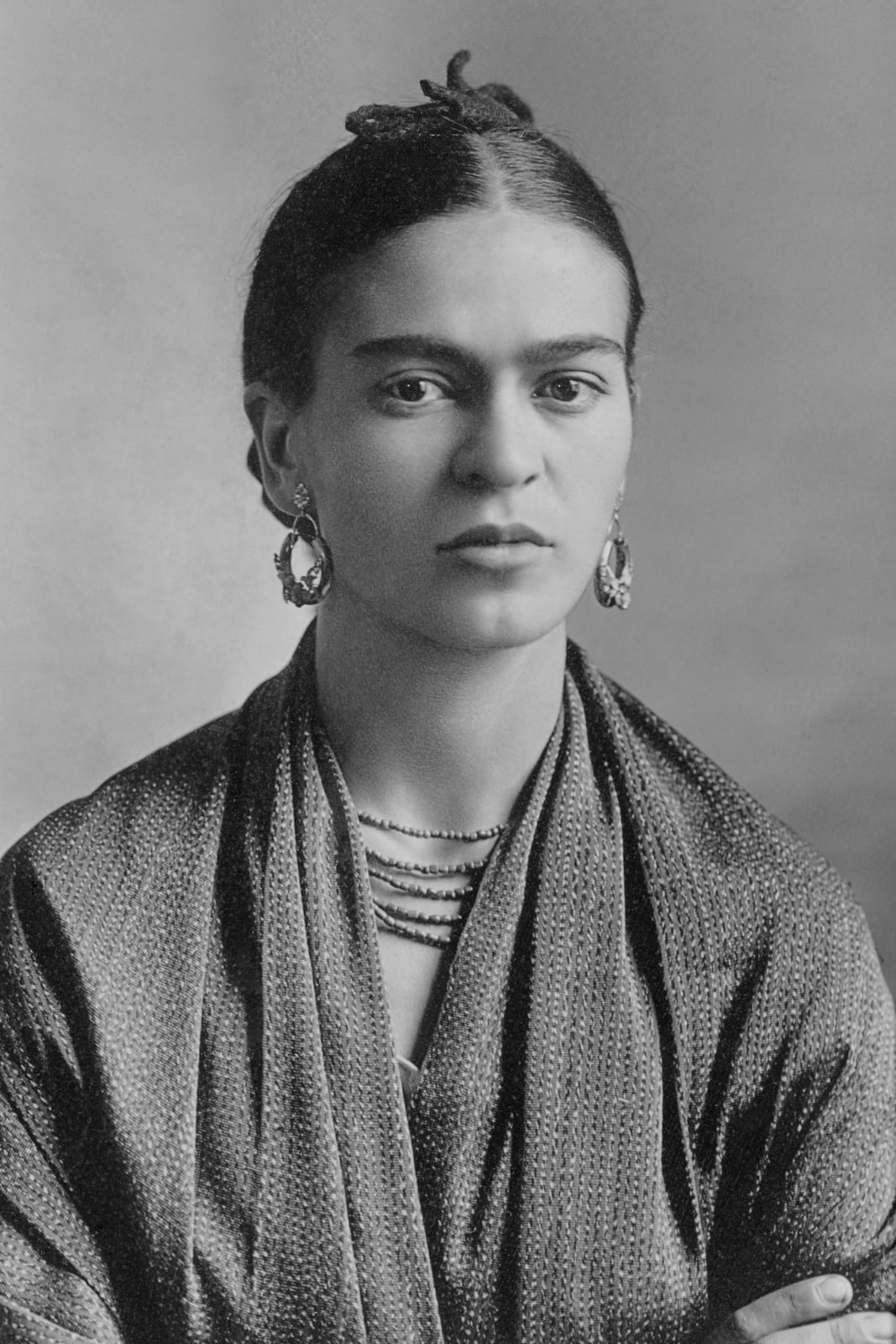
프리다 칼로

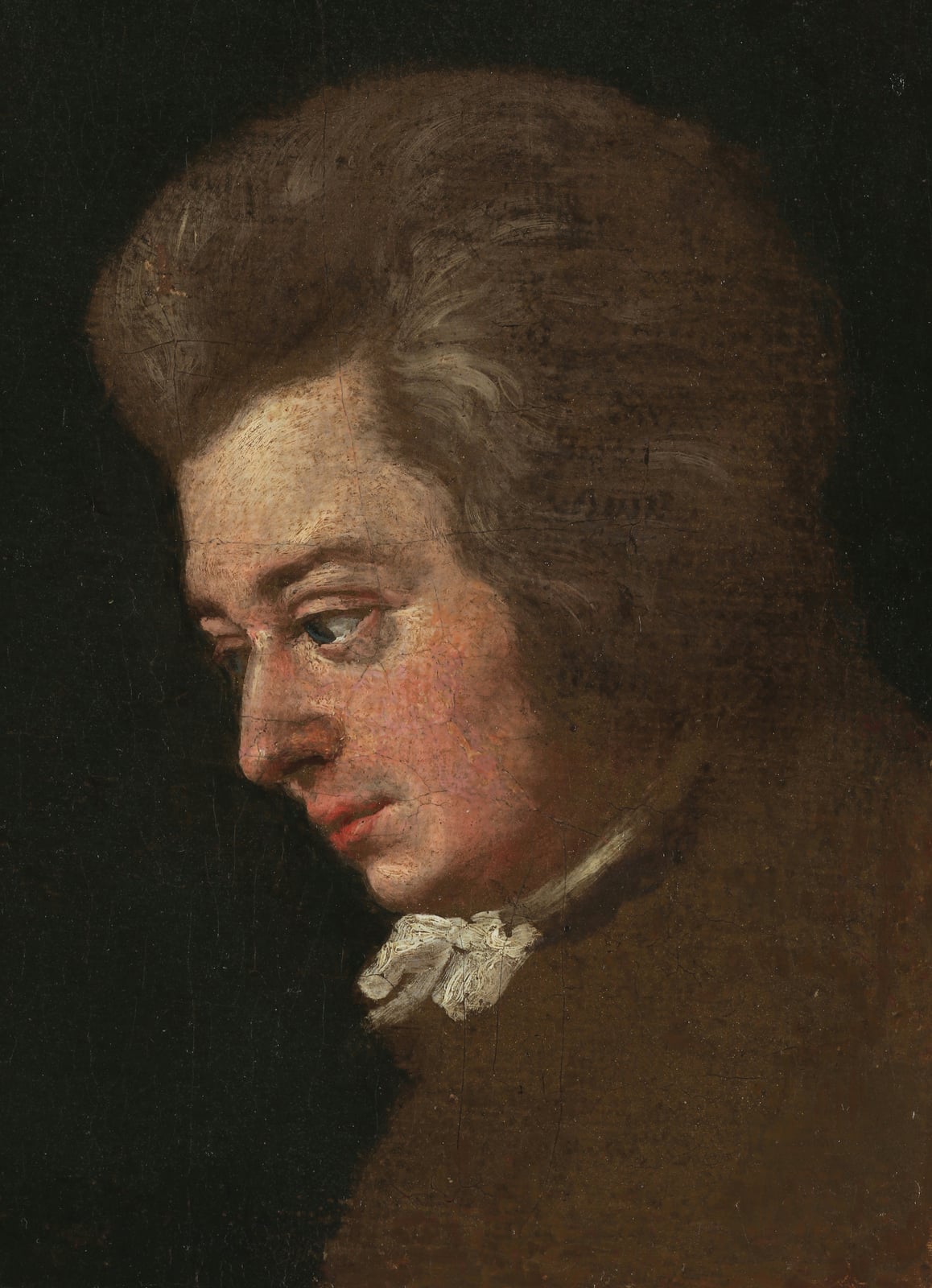
볼프강 아마데우스 모차르트
코코 샤넬

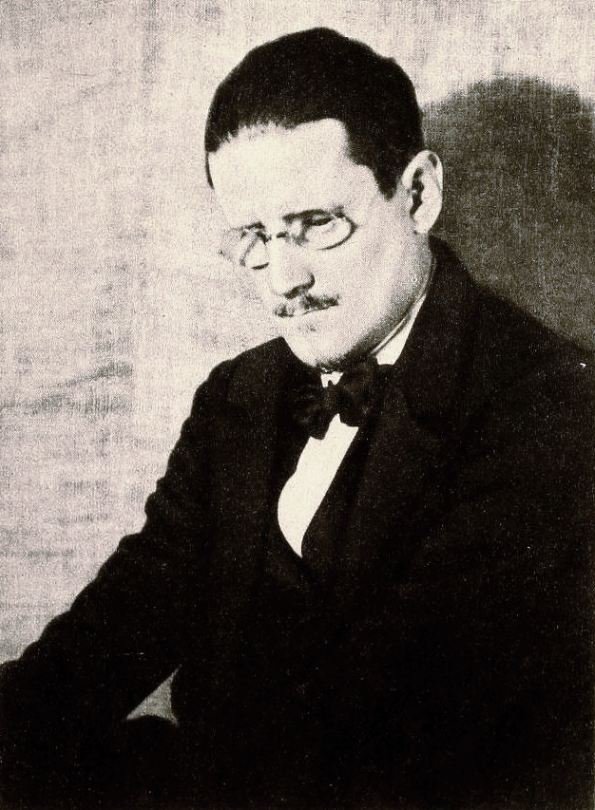
제임스 조이스
출처
- Emily Dickinson (English Wikipedia) -- orientation only; not used as support for any scored row.
- Emily Dickinson (Q4441) -- verified live via wbgetentities (2026-10-02): en label 'Emily Dickinson', description 'American poet (1830-1886)', ko label '에밀리 디킨슨', kowiki '에밀리 디킨슨', born 1830-12-10, died 1886-05-15, citizenship Q30 (United States), P18 'Emily Dickinson daguerreotype (Restored, cropped, blown up, sepia).jpg' (not used). Orientation only.
- Thomas Wentworth Higginson, 'Emily Dickinson's Letters', The Atlantic Monthly vol. 68 (October 1891), read in its reprint as ch. XIX 'Emily Dickinson' (pp. 247-283) of Higginson, Carlyle's Laugh and Other Surprises (Boston: Houghton Mifflin, 1909), archive.org OCR (carlyleslaughoth00higg), read in full -- FIRSTHAND CORRESPONDENT perspective (non-self narrative; he was her literary correspondent 1862-1886, met her in Amherst on 16 Aug. 1870 and once more, and co-edited her posthumous Poems 1890-91, so an interested party and an admirer). Contains his own account plus her letters to him as he printed them (her letters are counted as SELF material, see the record of Dickinson's own letters). Read: the 15/16 April 1862 first letter with four poems and the name on a separate pencilled card; his 'surgery' (criticism) and her replies of 25 April, 7 June and July 1862 (declining his advice to delay publishing; 'will you be my preceptor'); his attempt to steer her toward rules and her reply that she corrected spelling but not 'greater irregularities'; his observation that she would not change word order to gain a rhyme; the 1862-63 wartime letters; his statement that he 'soon abandoned all attempt to guide' her; two letters asking him to support her refusals to contribute (a charity request; Helen Hunt Jackson's 1876 'No Name Series' request); her invitations and 'I do not cross my father's ground to any house or town'; his account, from notes taken at the time, of the 16 Aug. 1870 interview; her letters after her father's death (1874) and Bowles's death (1878). Her statements about illness, eyes and bereavement were read and not used for any row.
- Mabel Loomis Todd, editorial prefaces -- (a) Preface (signed Amherst, Aug. 1891) to Poems by Emily Dickinson, Second Series, ed. T. W. Higginson and M. L. Todd (Boston: Roberts Brothers, 1891), archive.org OCR (poemsbyemilyd00dickrich), pp. 3-8, read in full; (b) 'Introductory' (signed Amherst, Oct. 1894) to Letters of Emily Dickinson, ed. Todd, 2 vols. (Boston: Roberts Brothers, 1894), archive.org OCR (lettersofemilydi00dick), pp. v-xii, read in full -- EDITOR perspective (non-self; Todd knew the family and worked from the manuscripts after Dickinson's death but, by her own account elsewhere, never met her face to face; she had a personal and commercial stake in the editions, so an interested party). Used for her description of the manuscripts found after Dickinson's death: most poems 'carefully copied on sheets of note-paper, and tied in little fascicules, each of six or eight sheets'; many showing 'thoughtful revision' with 'foot-notes, affording large choice of words and phrases'; different versions sent to different friends; the editors' judgement that she 'intentionally avoided the smoother and more usual rhymes'; Helen Hunt Jackson's letter of 5 Sept. 1884 urging her to publish ('you will not give them light'); and that she kept no journal, rarely addressed her own envelopes in later years and gave up journeys. Todd's assertions about Dickinson's temperament, religion and reasons for seclusion are editorial characterisation and were NOT used.
- Emily Dickinson Museum (Amherst, Mass.), 'The Poet at Work' section, five pages read in full 2026-10-02: 'The Poet at Work' (writing table in her bedroom; drafts on envelopes and scrap paper; forty hand-made booklets holding more than 800 poems, found after her death), 'The Manuscripts' (about 2,500 poem manuscripts and 1,000 letter manuscripts; 1858-1864 copying of 800+ poems into forty fascicles she made herself by stacking folded sheets, stabbing two holes and tying with string; fifteen unbound 'sets'; retained copies; about 500 poems shared with more than forty correspondents; 'A Route of Evanescence' sent to at least six recipients; about 100 fragments/worksheets), 'Publications in Dickinson's Lifetime' (one letter and ten poems, 1850-1878, all anonymous, scholars believe none authorised), 'The Publication Question' (Helen Hunt Jackson's 1878 Masque of Poets placement and her rebuke for refusing to publish; Thomas Niles's approach, which she avoided answering; the c.1880 charity request), and 'The Posthumous Discovery of Dickinson's Poems' (Lavinia's discovery; Todd-Higginson 1890 editorial alterations to punctuation, titles and words for rhyme; later editions by Bianchi, Johnson 1955, Franklin 1981/1998) -- MUSEUM/SCHOLARLY perspective, modern and independent of the 1890s editors (it cites Franklin, Johnson, Bianchi and Scharnhorst). The page's passing reference to the Todd-Austin Dickinson relationship is not used.
- Emily Dickinson Museum (Amherst, Mass.), biography section pages read in full 2026-10-02: '1855-1865: The Writing Years' (1858-1865 composing, revising and saving hundreds of poems; c. 800 recorded in hand-made fascicles shared with no one; c. 250 poems to Susan Dickinson and c. 100 to Higginson; her own bedroom as writing space; 1864-65 Boston eye treatment, after which she rarely left the Homestead grounds), '1865-1886: The Later Years' (stopped formal assembly of booklets; Higginson's 1875 reading; Helen Hunt Jackson's 'no name' request, L573a; the 1878 Masque of Poets), 'Emily Dickinson and Gardening' (gardening throughout her life; conservatory; school-years herbarium of more than 400 specimens each labelled with its Latin name, now Houghton Library), 'Emily Dickinson's Schooling: Mount Holyoke Female Seminary' (1847-48; placed by examination, promoted by midterm; listed among those 'without hope' at entry and among 29 who remained so at year end; her letter to Abiah Root, L20), 'Emily Dickinson and the Church' (did not make the public profession of faith during the revivals when family and friends did; had stopped attending services by 1868), and 'Emily Dickinson and Reading' (wide reading; daily Springfield Republican and every issue of the Atlantic; Bible and Shakespeare) -- MUSEUM/SCHOLARLY perspective, modern, citing Habegger, Sewall, Leyda, Capps, Longsworth, Franklin. The pages' material on health, the 'Master Letters', the 'terror' of 1861-62 and Judge Lord was read and deliberately NOT used.
- T. W. Higginson's CONTEMPORANEOUS private letters to his wife Mary Channing Higginson, Amherst 'Tuesday 10 P.M.' (16 Aug. 1870, Johnson no. 342a) and White River Junction 'Wednesday noon' (17 Aug. 1870, no. 342b, with the enclosed sheet of notes on E.D.), his diary entry of 16 Aug. 1870 and the postscript to his sisters of 21 Aug. 1870, all as printed from the Boston Public Library and Houghton manuscripts in Johnson and Ward (eds.), The Letters of Emily Dickinson, vol. II (see the record of the Johnson and Ward edition of the letters), pp. 472-476, read in full -- FIRSTHAND VISITOR perspective (non-self; same witness as the record of Higginson's 1891 Atlantic Monthly essay, so NOT counted as an independent perspective, but written the same night rather than 21 years later, and private). Used: his description of the meeting; that she talked 'continuously -- & deferentially'; that she bakes all the bread because her father likes only hers; that she said she never left the place and never felt want of employment; his own reaction ('I never was with any one who drained my nerve power so much ... I am glad not to live near her') and that 'She often thought me tired & seemed very thoughtful of others'. Her remarks about her mother, eyes and father were read and not used.
- Thomas H. Johnson and Theodora Ward (eds.), The Letters of Emily Dickinson, vol. II (Cambridge, Mass.: Belknap Press of Harvard University Press, 1958; 2nd printing 1965), archive.org lending-library OCR (lettersofemilydi0002unse_n7h2; catalogued there as 1914), read by line ranges -- SCHOLARLY EDITION perspective (modern editors working from the manuscripts, with manuscript, dating and publication notes); in-copyright, consulted for research only and quoted minimally. Read: no. 238 (summer 1861: two successive second stanzas of 'Safe in their Alabaster Chambers' sent to Susan Gilbert Dickinson, Susan's written reply that she was 'not suited' with the new stanza and thought the first complete in itself, and ED's third attempt, 'Is this frostier?', with the editors' manuscript note, HCL B 74a-c and 203d); the editors' notes and texts for nos. 260-261, 265, 268 (Higginson letters of 1862, incl. 'I smile when you suggest that I delay "to publish"'), no. 316 (early 1866: her complaint that 'The Snake' printed in the Springfield Republican of 14/17 Feb. 1866 was 'robbed of me -- defeated too of the third line by the punctuation ... I had told you I did not print'; editors' note on the Daily and Weekly Republican printings), the 1870 section introduction and nos. 338-342b (Higginson's visit), nos. 476a-c (Helen Hunt Jackson's Aug. 1876 letter enclosing the No Name Series circular and her call of 10 Oct. 1876; Higginson's reply of 22 Oct. 1876 that she need not do it if she felt a strong unwillingness), and the notes to no. 573 with Helen Hunt Jackson's letters to ED of 29 April and 25 Oct. 1878 and 8 Dec. 1878 and Thomas Niles's letter of 15 Jan. 1879 (nos. 573a-d: Jackson's repeated requests, offering to copy poems in her own hand so no one would know the author; 'Success' printed in A Masque of Poets 1878 'slightly changed in phraseology'; ED received the Jacksons in Oct. 1878, which the editors call unprecedented for her at that date). Jackson's and Niles's letters are contemporary NON-SELF documents (Jackson a friend and fellow author, Niles the publisher).
- Martha Dickinson Bianchi, The Life and Letters of Emily Dickinson (Boston: Houghton Mifflin, 1924), archive.org OCR (lifelettersofemi00unse), read by line ranges (the chapters on the 1850s-60s and the later years, OCR lines c. 2380-2410, 3330-3350 and 3810-3830, plus keyword searches) -- FAMILY INSIDER perspective (niece, b. 1866, daughter of Susan and Austin Dickinson; partisan in the family-Todd editorial dispute and romanticising in tone; much of her account is family tradition rather than her own observation). Used ONLY as corroboration: her statement that Dickinson 'was always eager to respond to Susan's criticism', with her version of the 'Safe in their alabaster chambers' exchange (derived from the same Susan Dickinson papers as Johnson no. 238, so not independent of it), and her description of work done 'in secret and often at midnight'. Her suggestions about a love attachment behind the withdrawal were read and deliberately NOT used.
- MacGregor Jenkins, Emily Dickinson: Friend and Neighbor (Boston: Little, Brown, 1930), archive.org OCR (emilydickinsonfr00jenk), read pp. 1-60 by line ranges -- CHILDHOOD NEIGHBOUR perspective (non-self; son of the Amherst pastor Rev. Jonathan Jenkins, he knew her as a child in the 1870s and recalls her half a century later; affectionate and anecdotal). Read: the gingerbread lowered in a basket from her window to the neighbourhood children; her pencilled notes and verses sent to the children; his remark that every scrap he handled showed 'haste to get the thing said while it was hot' while 'nothing with Miss Emily was haphazard'. Treated as low-weight colour; used only as minor corroboration that she circulated pencilled notes and verses privately rather than publishing; not used as support for any score on its own.
- Emily Dickinson's OWN letters -- SELF perspective, counted as ONE perspective and never sole support for a row: to T. W. Higginson, 15 April, 25 April, 7 June and July 1862, Aug. 1862 ('Are these more orderly?'), 1862-63 wartime letters, early 1866 (no. 316, on 'The Snake' and 'I had told you I did not print'), 1869 ('I do not cross my Father's ground to any House or town'), c. 1872 and 1876 letters asking him to back her refusals (charity request; Helen Hunt Jackson's No Name request) -- as printed by Higginson (the record of Higginson's 1891 Atlantic Monthly essay) and by Johnson and Ward (the record of the Johnson and Ward edition of the letters, nos. 260-268, 316, 330); to Susan Gilbert Dickinson, summer 1861 (no. 238, the revised stanzas of 'Safe in their Alabaster Chambers'); and the girlhood letter to Abiah Root of 1848 (L20) as quoted by the Emily Dickinson Museum. Statements about her own illness, eyes, bereavements, the 'terror since September', and family members' feelings were read and not used.
- Poetry Foundation, 'Emily Dickinson' biography page (poetryfoundation.org/poets/emily-dickinson; unsigned scholarly biography citing Sewall and the Johnson editions), fetched with curl 2026-10-02 and read in full -- SCHOLAR/EDITORIAL perspective, modern and independent of the 1890s editors. Used: Higginson's own letter to Atlantic editor James T. Fields written the day after receiving her first poems in April 1862 ('Two such specimens of verse as came yesterday & day before -- fortunately not to be forwarded for publication!'), as quoted there (a contemporaneous NON-SELF document; Higginson found the verse poorly structured and counselled her to wait before publishing); its account of the 'Alabaster Chambers' second stanza being reworked 'again, and yet again' in 1861; its note that she began organising poems into fascicles in 1858; and its view that restricting social visits was a practical choice that freed time for writing (treated as scholarly interpretation, not used as support). Its passages on the Susan Dickinson relationship, the 'Master' and the Todd-Austin affair were read and deliberately NOT used.