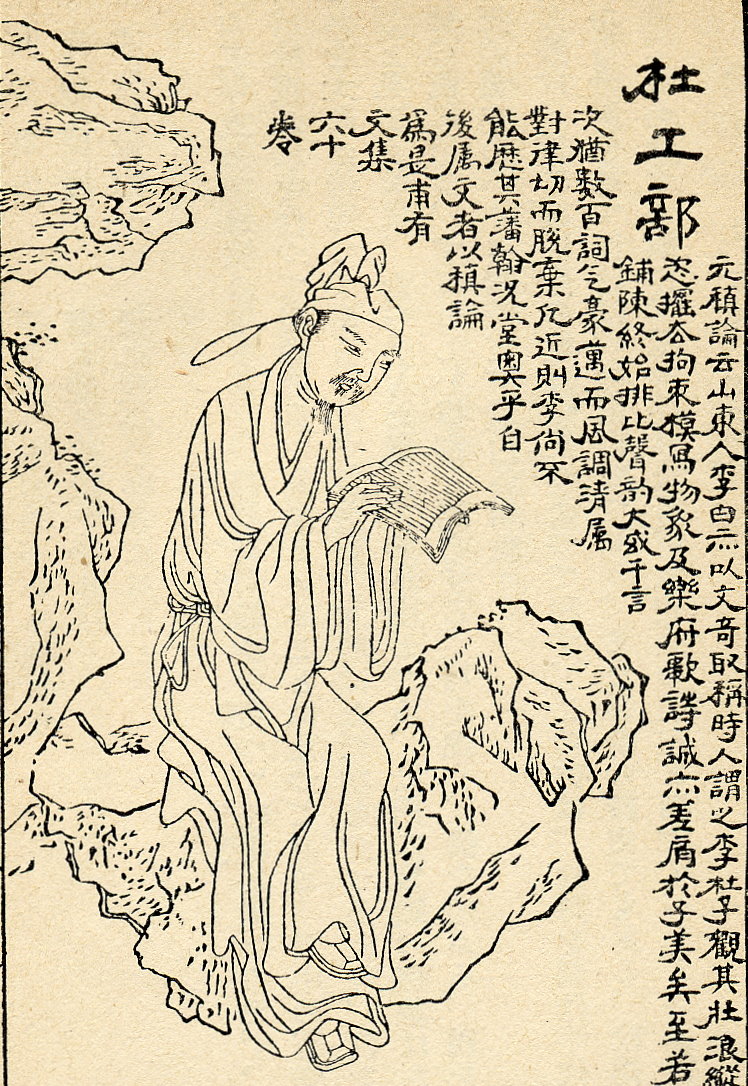

Shangguan Zhou, Du Gongbu (Du Fu), from Wanxiao tang huazhuan, 1743 (scan of a 1921 printing) · Imaginary portrait of Du Fu captioned 'Du Gongbu', a page from the portrait book Wanxiao tang huazhuan by Shangguan Zhou, first printed in 1743 (Wellcome Collection describes the book as imaginary portraits of 120 persons from Han to Ming times; the Metropolitan Museum of Art holds a copy marked public domain). The Commons scan is described by its uploader as taken from a 1921 printing. The design is a 1743 woodblock by an artist dead for centuries, so it is public domain by age. Made about a thousand years after the poet's death, so shown as a later imaginary depiction and not a likeness. Original scan 748 x 1086 pixels, used as is with no cropping and no upscaling. · Public domain (artwork by age)
시인 · 중세
두보
712–770
당나라
주요 업적 분야
아직 성격 매칭에 포함되지 않았습니다 — 기록된 근거가 성격 모델 전체를 다루기에는 충분하지 않습니다. 이 페이지의 다른 모든 내용은 자유롭게 확인하실 수 있습니다.
핵심 특성
주요 업적
당나라 시인으로, 이백과 더불어 중국 최고의 시인으로 꼽히며, 안녹산의 난 시기를 기록한 시 때문에 흔히 '시사(詩史)'로 불린다.
기근과 혼란, 고난을 다룬 그의 시는 대부분 자전적이며, 그 자신의 삶과 시대에 대해 알려진 내용의 상당 부분을 전한다.
중기에 산문과 운문을 섞고 사적인 주제와 공적인 주제를 결합한 새로운 사실주의를 발전시켰으며, 율시(律詩)의 대가로 가장 잘 알려져 있다.
삶의 장면들
중기에 그는 산문과 운문을 섞고 전통적인 시적 소재 옆에 '비시적' 소재를 나란히 놓았으며, 봉선으로 가는 길을 읊은 오백 자 시가 그 예이다.
이는 한 학술적 개설이 설명하듯 확립된 시적 관습에서 벗어나려는 태도와 부합한다. 창의적 독창성
전환점
759년 그는 관직을 버리고 가족과 함께 서쪽으로 떠나 방랑의 세월을 시작했으며, EBSCO에 따르면 이후 거의 전적으로 글쓰기에 몰두했다.
이는 유랑과 건강 악화 속에서도 이어진 꾸준한 문학적 생산과 부합한다. 끈기
비슷한 인물
전체적인 프로필이 이 사람과 닮은 사람들이에요.


마야 안젤루

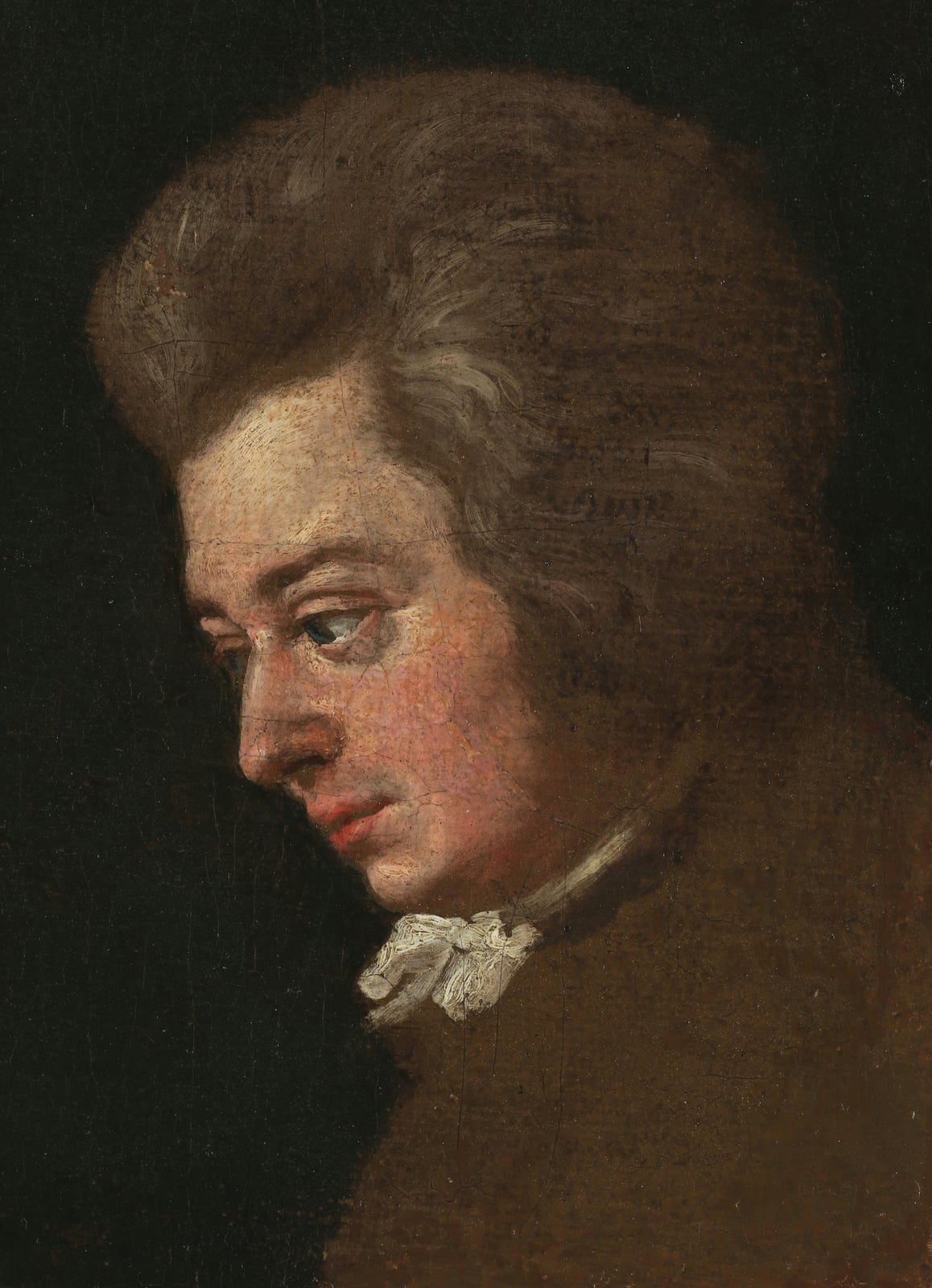
볼프강 아마데우스 모차르트

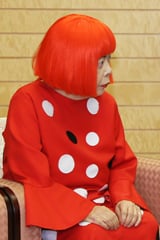
쿠사마 야요이

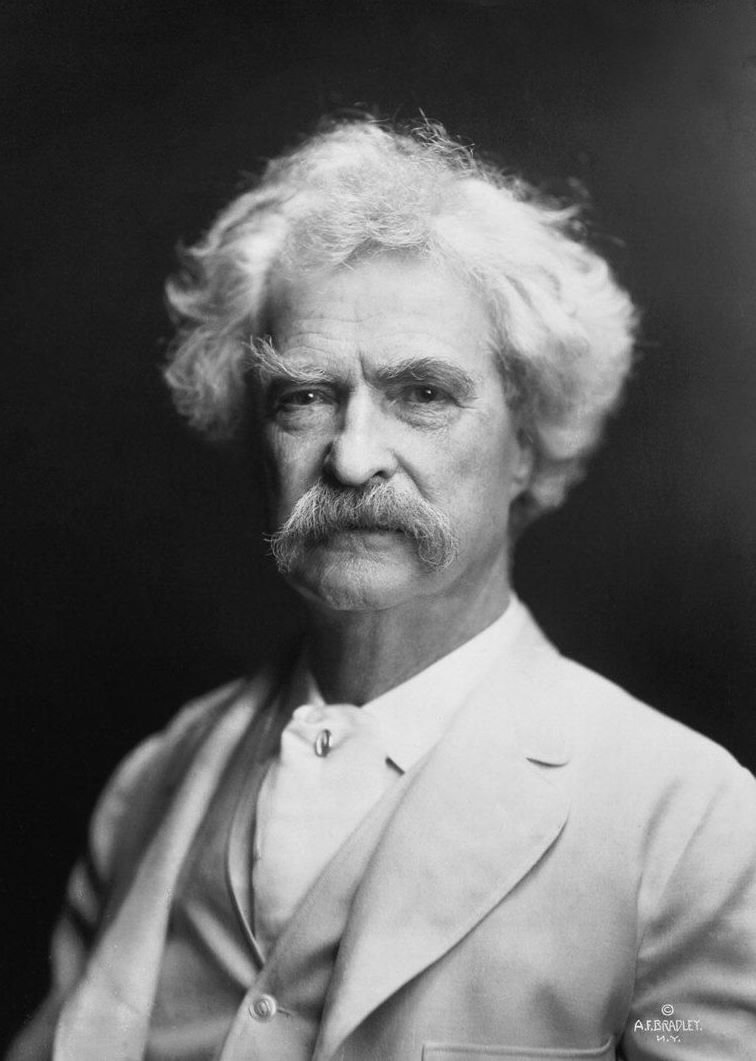
마크 트웨인

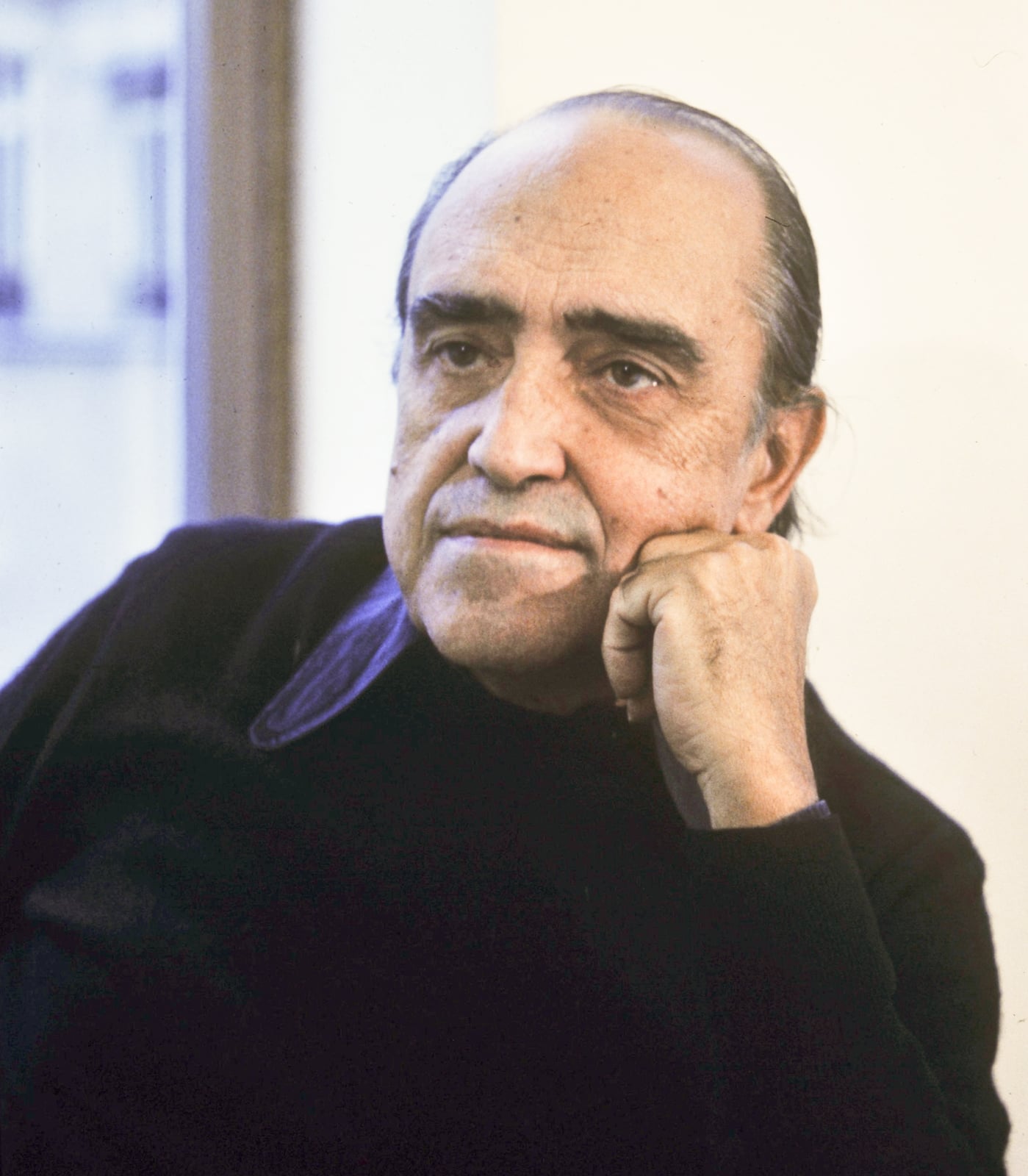
오스카 니마이어
출처
- Du Fu (Q33772), verified live via the Wikidata API (2026-10-28): label 'Du Fu', description 'Tang dynasty Chinese poet (712-770)', Korean label present, image 'Dufu.jpg'. Orientation only; not used as support for any row.
- Poetry Foundation, 'Tu Fu' biography (read in full). CANONICAL SIGNIFICANCE SOURCE: considered with Li Po one of China's greatest Tang poets; failed the civil service exam and travelled; wrote of famine, unrest and hardship during the An Lushan Rebellion years; lived in a cottage in Sichuan; often described as a poet-historian, with a translator's remark on the range of his experience. Poetry institution biography with an admiring tone.
- Academy of American Poets, 'Tu Fu' biography (read in full): major Tang poet, twice failed the imperial examinations, travelled and met other writers, moved often in a volatile period, best known for mastery of regulated verse. Short poetry institution biography.
- EBSCO Research Starters, 'Du Fu', article by Richard P. Benton (2024; read in full): family and education drawn largely from his autobiographical poems, three periods of his work, a new kind of realism in the middle period that mixed prose and verse and joined private and public subjects, the thatched hut and Kuizhou years, and later poems of greater technical prowess. Scholarly encyclopedic summary that depends heavily on his own poems for biography.
- Introduction and chronology of The Late Wanderings of Du Fu, Chinese University of Hong Kong Press, publisher sample chapter (read in full; author not named in the sample): says his reputation was slight in his lifetime, that he was 'immensely prolific' so that his poems amount to an autobiography and a chronicle of his times, that tradition has tended to simplify him, and that his decision to leave office in 759 has never been fully understood. Academic monograph introduction with a critical stance on reception.
- Wellcome Collection record 'Chinese manuscript Wan-hsiao-t'ang hua-chuan': imaginary portraits of 120 persons from Han to Ming times, printed in 1743 (checked for the portrait only; not used for any scoring).