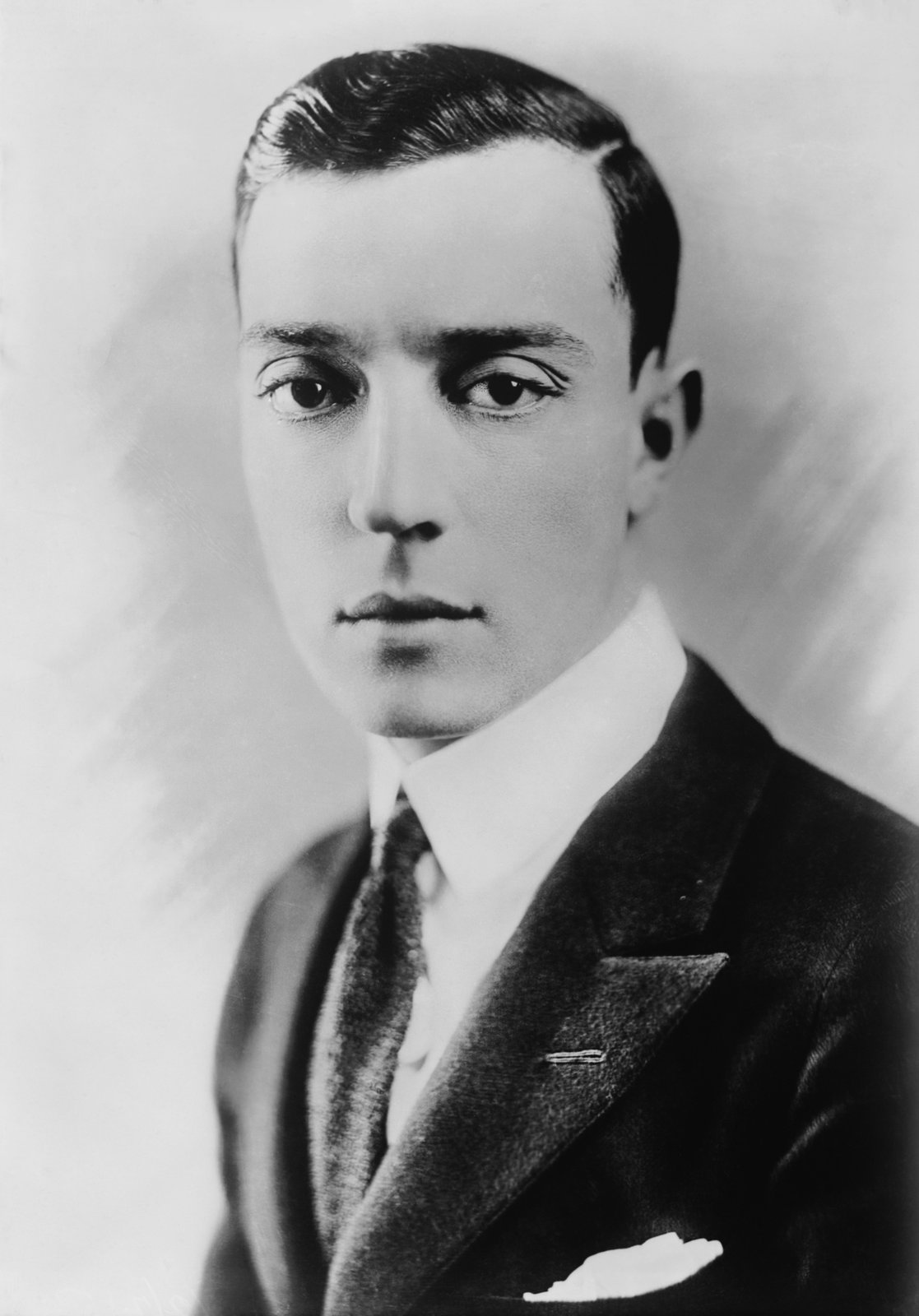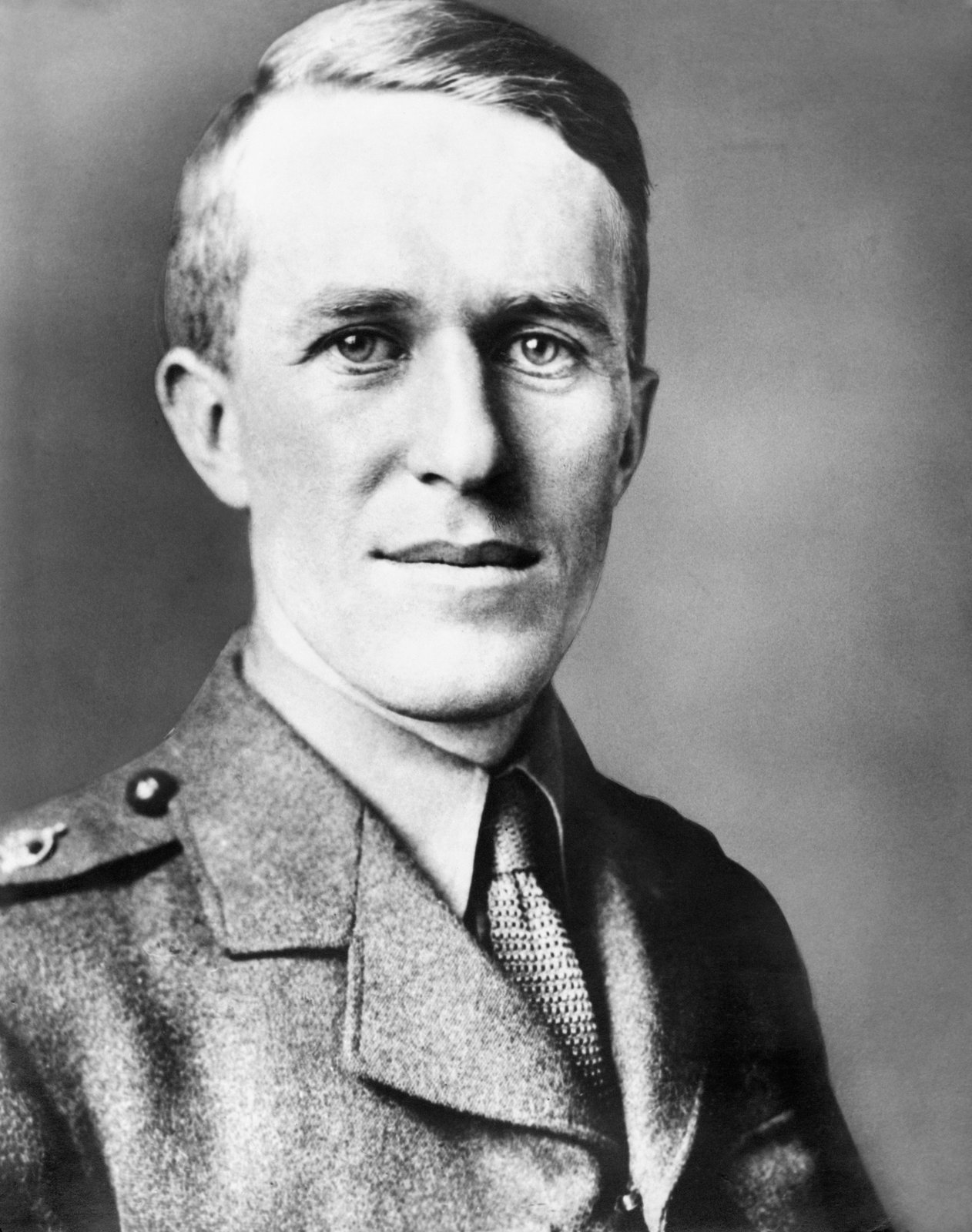

Buster Keaton, Bain News Service, [between ca. 1920 and ca. 1925], glass negative, George Grantham Bain Collection, Library of Congress (LC-DIG-ggbain-32451); dust/scratch-cleaned Commons copy (Busterkeaton edit.jpg, retouch by Liandrei); public domain (Bain News Service press photograph dated before 1931); downscaled · Bain News Service, George Grantham Bain Collection, Library of Congress Prints and Photographs Division (LC-DIG-ggbain-32451; call no. LC-B2- 5474-13), via Wikimedia Commons · PD-US (published pre-1931; Bain/LOC)
핵심 특성
주요 업적
1920년부터 1928년까지 키턴은 제작자 조지프 솅크를 위해 무성 단편과 장편을 만들었다. 터너 클래식 무비스의 수전 돌은 단편 19편과 여러 편의 장편이라고 세며, 그가 이 작품들에서 완전한 창작 통제권을 가졌다고 쓴다. 로저 프리스토는 그의 고정 팀을 공동 감독 에디 클라인, 기술 감독 프레드 가부리, 촬영 책임자 엘진 레슬리로 소개한다.
오리건 백과사전에 따르면 「제너럴」은 채터누가에 있던 실제 기관차를 쓰려던 계획이 무산된 뒤 1926년 여름 오리건주 코티지그로브 일대에서 촬영되었다. 제작진은 1862년의 조지아주 메리에타를 재현한 세트와, 열차 추락 장면을 위한 로 리버 위의 215피트 목조 가교를 지었다.
제임스 나이바우어는 텔레비전이 1949년부터 1960년대까지 키턴에게 가장 효과적이고 수입도 좋은 공연 무대였다고 쓴다. 1949년의 생방송 코미디 쇼, 1950~51년의 필름 시리즈가 있었고, 이후에는 게스트 출연과 광고가 이어졌다.
삶의 장면들
1926년 7월 23일 키턴은 오리건주 로 리버의 컬프 크릭에서, 「제너럴」을 위해 지은 가교가 무너지며 기관차가 추락하는 장면을 촬영했다. 줄리언 스미스는 앨타 저널에서 카메라 여섯 대가 배치되었고, 키턴이 여러 차례 시험 주행을 지휘했으며, 가교가 제때 무너지도록 일부만 톱질한 목재에 다이너마이트를 설치했다고 쓴다. 오리건 백과사전은 이 장면의 비용을 약 4만 2천 달러로 추정한다.
미니어처가 아닌 실제 기관차로, 한 번밖에 찍을 수 없었다고 스미스가 말하는 장면을 연출한 일은 이 프로필의 높은 위험 감수 점수와 부합한다. 다만 스미스가 솅크가 늘어나는 제작비에 화를 냈다고도 전하고, 그가 묘사하는 준비 과정은 무모함보다 계산된 위험에 가깝기 때문에 이 항목은 양면적 특성으로 매겨졌다. 위험 감수
MGM에서 만든 첫 영화 「카메라맨」(1928)에는 스튜디오가 준비한 대본이 있었다. 영화사학자 제임스 스테펜은 키턴이 제작자 어빙 탈버그를 설득해 대본에서 벗어날 수 있게 했다고 쓰고, 제임스 나이바우어는 탈버그를 설득해 대본을 손보고 에드워드 세지윅 감독과 방해받지 않고 촬영하게 했다고 쓴다. 다나 스티븐스는 양키 스타디움의 야구 팬터마임과 붐비는 탈의실 장면이 즉흥이었다고 말한다. 스테펜의 서술은 일부 키턴 본인의 1960년 회고록에 기대고 있다.
대본이 있는 스튜디오 작품 안에서 즉흥의 여지를 찾은 이 일은 이 프로필의 모호함 감내 점수를 보여 주는 한 사례이다. 다만 스테펜과 나이바우어 모두 이후 MGM 작품에서는 그 여지가 줄었다고 전하므로, 이것은 전체 모습이 아니라 하나의 일화이다. 모호함 수용
전환점
다나 스티븐스에 따르면 1927년 노동절 주말, 「증기선 빌 주니어」의 집 앞면 장면을 찍기 하루 전에 조지프 솅크가 키턴에게 그의 제작사가 문을 닫게 될 것이라고 알렸다. 이후 키턴은 솅크의 권유로 MGM과 계약했고, 제임스 스테펜은 키턴이 1960년 회고록에서 이 결정을 자신의 경력에서 가장 큰 실수라고 불렀다고 쓴다.
이후 개그 작가, 텔레비전 연기자, 광고 출연자로 일한 것은 이 프로필의 적응력 점수와 부합한다. 다만 나이바우어는 그 일부가 경제적 필요에서 나왔다고 강조하므로, 새 매체를 단순히 선택한 것으로만 읽어서는 안 된다. 적응력
비슷한 인물
전체적인 프로필이 이 사람과 닮은 사람들이에요.
출처
- Buster Keaton -- English Wikipedia, orientation only (dates 1895-1966, birthplace, occupations, spouses; fetched and skimmed). Not used as support for any scored row; the Korean Wikipedia page (ko.wikipedia.org, title 버스터 키턴) was also fetched to confirm the Korean name.
- Buster Keaton (Q103949) -- identity verified live via the Wikidata API (wbgetentities): label 'Buster Keaton', birth 1895-10-04, death 1966-02-01, citizenship United States (Q30), sitelinks enwiki 'Buster Keaton' and kowiki '버스터 키턴'; P18 'Busterkeaton edit.jpg'. Orientation only.
- Julian Smith, 'Buster Keaton's Last Stand', Alta Journal (undated on the fetched page; Smith is an Oregon-based history journalist) -- long production history of The General at Cottage Grove, Oregon, 1926, drawing on contemporary Cottage Grove Sentinel and Eugene Guard reports and a local historical-society interview (independent secondary). Read in full: the decision to build a 215-foot trestle and wreck a real locomotive on 23 July 1926, the six cameras and trial runs, the period-accurate Marietta set, repeated takes of short tracking shots, and Schenck's reaction to the budget. Claims Smith marks 'reportedly' or 'supposedly' were not used.
- Jim Scheppke, 'The General (film)', The Oregon Encyclopedia (Oregon Historical Society; last updated 24 Nov 2025) -- regional-history entry (independent secondary). Read in full: location fallback after the Chattanooga locomotive deal fell through, the three locomotives, the Marietta set, the 215-foot Row River trestle near Culp Creek and its estimated $42,000 cost. Used only to corroborate the bridge episode.
- Susan Doll, 'One Week', Turner Classic Movies article, 11 Aug 2010 -- film-studies essay (independent secondary, institution-hosted). Read in full: the 1919 Home Made documentary that inspired One Week, the story-conference method with the whole crew, work without a formal script, the instruction to keep cameras rolling, the turntable house, the reworking of gags in later films, and the caveat that the co-directors' exact contributions are debated.
- Roger Fristoe, 'The Scarecrow (1920)', Turner Classic Movies article, 24 Mar 2005 -- short film note (independent secondary). Read in full: Schenck's 1919-20 arrangement, the standing team of co-director Eddie Cline, technical director Fred Gabourie and cameraman Elgin Lessley, and the gadget-filled one-room house. A separate author from Doll (TCM hosts many authors).
- James Steffen, 'The Cameraman', Turner Classic Movies article, 17 Dec 2002 -- film-historian essay (independent secondary that also quotes Keaton's 1960 memoir, so partly SELF-derived on the MGM period). Read in full: the 1928 MGM contract and salary, the studio's newsreel story, Keaton's persuading Irving Thalberg to let him depart from the script, and the tighter scripting of Spite Marriage.
- Thomas Doherty, 'Sherlock Jr.: Buster Keaton's Silent Movie, Revisited', The Hollywood Reporter, 29 Aug 2024 -- essay by a film historian (independent secondary). Read in full: Sherlock Jr.'s five-month production, audience previews and re-editing, 60,000 feet shot for a film of about 4,065 feet, and the later television, commercial and Twilight Zone work (15 Dec 1961, aged 66).
- Dana Stevens, 'Steamboat Bill, Jr.', essay for the San Francisco Silent Film Festival 2022, adapted from her biography Camera Man (2022) -- independent secondary by a Slate critic (the biographer's perspective; contains some Keaton quotation). Read in full: the lineage of the window gag from Back Stage (1919) via One Week (1920) to the Labor Day weekend 1927 housefront, its rigging by Fred Gabourie with three crew members on the roof, and Schenck's announcement that the studio would close.
- Keith Phipps, 'Four Looks at Buster Keaton: A Conversation With Camera Man Author Dana Stevens', The Reveal (Substack), 22 Feb 2022 -- interview in which Stevens discusses The High Sign, The Cameraman, and the television work. The SAME perspective as the SFSFF essay (Stevens), so together they count as one. Read in full.
- David Robinson, note on 'The Scarecrow' (1920), Le Giornate del Cinema Muto (Pordenone silent-film festival) 2018 catalogue -- programme note by a film historian who wrote an earlier Keaton biography (independent secondary). Read in full: his first independent production The High Sign disappointed him and he shelved it for half a year; his 1917 move from vaudeville into Arbuckle's studio at $40 a week (not used for a row).
- Dwight Macdonald, 'Vote for Keaton', The New York Review of Books, 9 Oct 1980 -- review essay of Dardis, Moews, Robinson and Blesh (independent critic). Read in full: quotes a Keaton cameraman from Brownlow's The Parade's Gone By and Keaton's 1965 Sight and Sound remarks on the shift from two-reelers to feature-length stories, notes Dardis's corrections of Keaton's own accounts, and describes his later work as consultant and gag writer.
- James L. Neibaur, The Fall of Buster Keaton: His Films for M-G-M, Educational Pictures, and Columbia (Scarecrow Press, 2010) -- critical study by a film historian (independent secondary; it also draws on Keaton's autobiography and quotes contemporary press). Read in the full text hosted by vdoc.pub (a document-sharing site; the upload's permission status was not verified, so the book is cited as the source): the MGM transition, The Cameraman's script and improvisations, the 1937 gagman work, and the 1949-56 television and commercial work.
- Karen Backstein, review of the Criterion Blu-ray of The Cameraman, Cineaste Vol. XLVI No. 1 (2020) -- film-scholar review summarising the disc's documentaries (independent secondary; repeats Keaton's own 'the middle would take care of itself' remark). Read in full; used only as corroboration of the MGM script-versus-improvisation contrast.
- Roger Leatherwood, review of Matthew Dessem's The Gag Man: Clyde Bruckman and the Birth of Film Comedy, EatDrinkFilms, 18 Dec 2015 -- book review (secondary of a secondary, weak). Read in full; only the passage on Keaton sharing director credit and playing baseball with collaborators was used. The Bruckman health, drinking and death passages were deliberately not used.