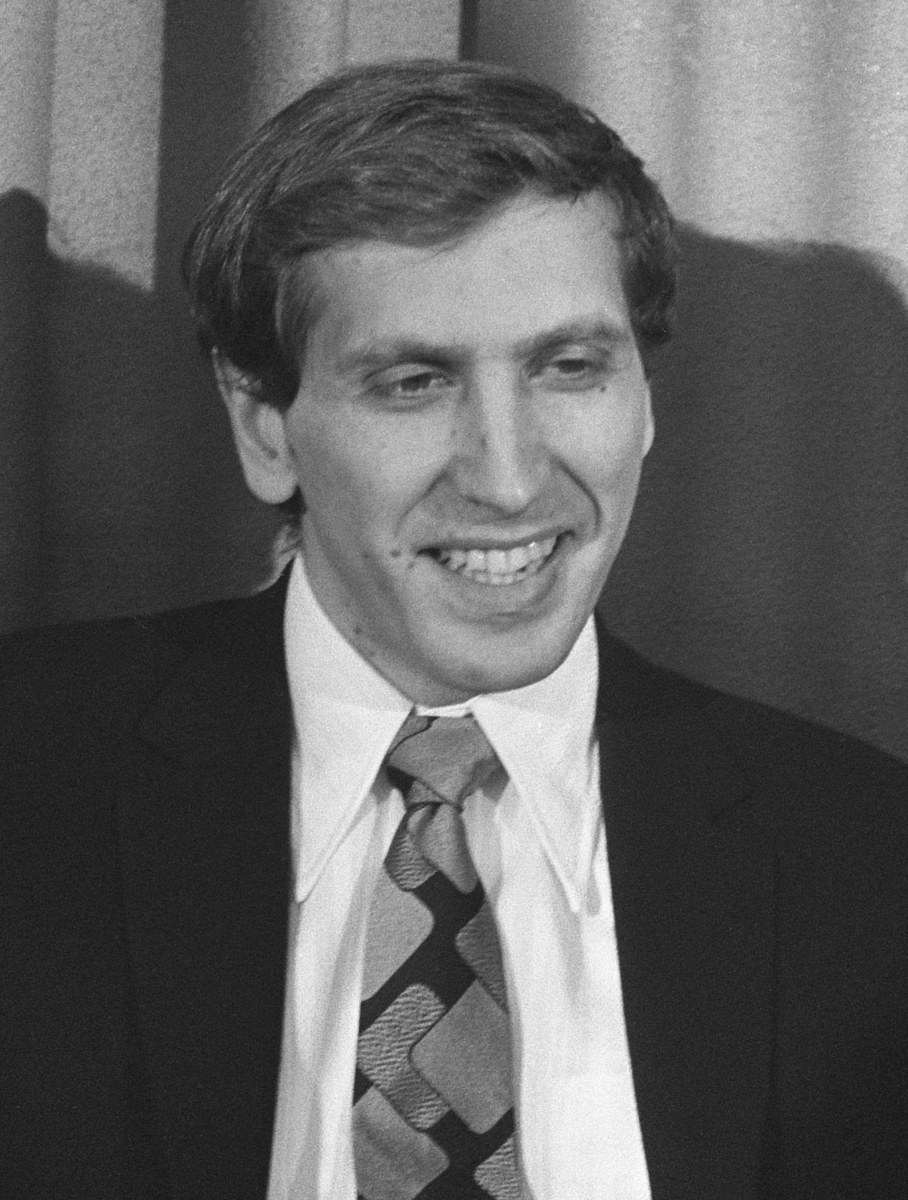

Photo: Bert Verhoeff / Anefo, 31 January 1972, Nationaal Archief, CC0, cropped and resized from the original · Nationaal Archief (Dutch National Archives), Fotocollectie Anefo, photograph of Bobby Fischer at the Hilton Hotel in Amsterdam by Bert Verhoeff / Anefo, 31 January 1972; the Wikimedia Commons crop of the original, 1231 x 1626 pixels, downscaled to 908 x 1200 · CC0 1.0 (public domain dedication)
운동선수 · 20세기
보비 피셔
1943–2008
주요 업적 분야
아직 성격 매칭에 포함되지 않았습니다 — 기록된 근거가 성격 모델 전체를 다루기에는 충분하지 않습니다. 이 페이지의 다른 모든 내용은 자유롭게 확인하실 수 있습니다.
핵심 특성
주요 업적
1972년 레이캬비크에서 보리스 스파스키를 12.5대 8.5로 꺾고 미국 태생 최초의 세계 체스 챔피언이 되어, 소련 선수만 챔피언이던 24년을 끝냈다.
1958년 15세에 역대 최연소 그랜드마스터가 되었고, 미국 챔피언십을 여덟 번 우승했으며 그중 한 번은 11전 전승이었다.
1970~71년 후보자 결정전에서 20연승을 거뒀고, 오랜 연구와 오프닝 준비로 기량을 쌓았으며, 1969년 저서 《My 60 Memorable Games》를 냈다. 1972년 대결은 미국에서 체스에 대한 관심을 크게 끌어올렸다.
삶의 장면들
1972년 대결에서 그는 2국에 나타나지 않았고 카메라 문제로 서면 항의를 냈으며, 3국 두 시간 전에는 무대 뒤 방에서 두자고 요구했는데 챔피언이 이를 받아들였다.
이는 경기 조건을 두고 주최 측과 상대에 맞서 공개적으로 다툴 수 있는 성향과 일치한다. 갈등 감내
세계체스명예의전당은 그가 최고 수준의 체스 이론을 공부하려고 러시아어를 배웠고 어린 시절부터 책과 잡지로 방대한 자료실을 만들어 열심히 활용했다고 기록한다.
이는 깊은 연구로 게임을 통달하려는 오랜 지향과 일치한다. 숙련 지향
전환점
1975년 도전자 아나톨리 카르포프와의 대결을 거부했고, 국제체스연맹은 카르포프를 부전승 챔피언으로 선언했으며 피셔는 거의 20년간 본격적인 대국에서 물러났다.
이는 자신이 경쟁하는 조건을 스스로 통제하려는 강한 욕구와 일치한다. 자율성 욕구
비슷한 인물
전체적인 프로필이 이 사람과 닮은 사람들이에요.
출처
- Bobby Fischer (Q41314), verified live via the Wikidata API (2026-10-31): label 'Bobby Fischer', description 'American chess player (1943-2008)', born 1943-03-09, died 2008-01-17, citizenship United States and Iceland, Korean label present. Orientation only; not used as support for any row.
- Encyclopaedia Britannica, 'Bobby Fischer' (biography article), read in full apart from its machine-generated Q&A boxes, which were not used: youngest grandmaster in history in 1958; the 1956 'Game of the Century' against Donald Byrne; dropped out of high school at 16 to devote himself fully to chess; eight American championships including a perfect 11 of 11; 20 consecutive wins in the 1970-71 Candidates matches; the 1972 Reykjavik match won 12.5-8.5 and the $250,000 purse; his surprise-attack style that stayed positionally sound; the 1975 refusal to meet Karpov and the loss of the title; his 20 years away from serious play. CANONICAL SIGNIFICANCE SOURCE (with the World Chess Hall of Fame essay). Its later passages on sanctions, passport and public statements are not scored.
- World Chess Hall of Fame, exhibition overview for 'A Memorable Life: A Glimpse into the Complex Mind of Bobby Fischer' (2014; staff essay on his study methods and library), read in full: learning the game at six, early teachers Carmine Nigro and Jack Collins, the library he built and used, reading and studying five to ten hours a day (an unattributed statement in the essay), his revival of long-unplayed openings, the opponent-game notebooks prepared by Robert Wade for the Taimanov, Petrosian and Spassky matches, and the artefacts used in his 1972 preparation. CANONICAL SIGNIFICANCE SOURCE. Museum curators' essay: admiring and based on the Sinquefield collection; its closing passages on his later life and storage-locker loss are not used.
- Shannon Bailey (chief curator, World Chess Hall of Fame), 'On Chess Hall Of Fame Exhibit Peeks Inside The Complex Mind Of Bobby Fischer', St. Louis Public Radio, 23 July 2014, read in full: his rise from US Junior champion at 12 to the 11-0 US Championship, the 1970-71 record of 20 consecutive wins in qualifying matches, the 1972 title that ended 24 years of Soviet champions, My 60 Memorable Games (1969), study without computers, learning Russian to read chess theory, private rather than state support, and the curator's own summary that the press often described him as difficult and that his later years were filled with controversy. Written by the same institution as the previous source, so the two are not independent of each other.
- NM Vanessa, 'Bobby Fischer Scores 1st Win', Chess.com, 25 July 2022 (50-year anniversary of game 3 of the 1972 match), read in full: a narrative of the forfeited second game, Fischer's written appeal and his stated reason (camera noise and the match conditions), the appeals committee's refusal, his further demands (a different board, special lighting, orange juice), the agreement to play game 3 in a back room, Spassky's own words about the forfeit, referee Lothar Schmid's recollection, Garry Kasparov's and Frank Brady's remarks, and an analysis of the game. Independent chess journalism by a titled player; it quotes Soviet and neutral participants as well as Fischer's own protest letter. Narrative reconstruction partly based on Brady's book, not an eyewitness report.
- ChessBase, 'Famous chess cheating tales, Part 1', read in full for its section on Fischer's article in Sports Illustrated of 20 August 1962: his published accusation that Soviet players had colluded at the 1962 Curacao Candidates, his quoted statement that Russians worked as a team, Larry Evans's later view that Fischer was not yet good enough to have won in any case, and the note that the world championship cycle was later restructured. Independent chess journalism; the original Sports Illustrated article was not opened, so Fischer's words are read second-hand; the accusation is contested (see the Boston Globe review).
- The Boston Globe, review of Yuri Averbakh's autobiography (30 October 2011), read in full for its passage on Fischer: the Soviet grandmaster and official Averbakh denies that Petrosian, Geller and Keres fixed the 1962 Curacao Candidates, saying only that friends would naturally play short draws, and describes Soviet attempts to stop Fischer in the 1971 cycle. A Soviet-side counter-voice; it is a book review, not Averbakh's own text, which was not opened.
- Nationaal Archief (Dutch National Archives), Fotocollectie Anefo, 'Bobby Fischer in Hilton Hotel te Amsterdam voor besprekingen met FIDE-voorzitter Max Euwe (rechts) over de tweekamp om het wereldkampioenschap met Boris Spassky', photograph by Bert Verhoeff / Anefo, 31 January 1972, item 925-3512 -- institutional catalogue page checked for the portrait: rights holder stated as 'Nationaal Archief, CC0'. Used only for the portrait.