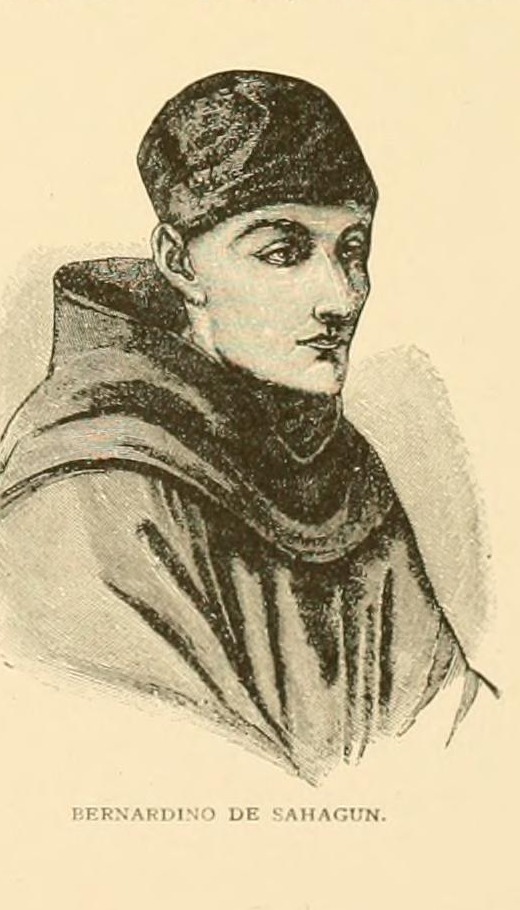

Bernardino de Sahagun, engraving in Fanny Chambers Gooch Iglehart, Face to Face with the Mexicans, New York, 1887, p. 375. Internet Archive, University of North Carolina at Chapel Hill copy, public domain · Engraved portrait of Bernardino de Sahagun, captioned 'BERNARDINO DE SAHAGUN.', page 375 of Fanny Chambers Gooch Iglehart, 'Face to Face with the Mexicans' (New York: Fords, Howard and Hulbert, 1887), from the University of North Carolina at Chapel Hill copy digitised by the Internet Archive. A posthumous nineteenth-century engraving whose engraver and source image the book does not name, made about 300 years after his death; not a lifetime likeness. The file is a crop of the plate and its caption from the full page scan (1747 x 2620), 520 x 910, no upscaling; the left shoulder is clipped slightly to avoid adjacent text. · Public domain (US book published in 1887; the archive's record gives NOT_IN_COPYRIGHT)
학자 · 근세
베르나르디노 데 사아군
1499–1590
누에바에스파냐 부왕령
주요 업적 분야
아직 성격 매칭에 포함되지 않았습니다 — 기록된 근거가 성격 모델 전체를 다루기에는 충분하지 않습니다. 이 페이지의 다른 모든 내용은 자유롭게 확인하실 수 있습니다.
핵심 특성
주요 업적
1529년 멕시코에 온 프란치스코회 선교사로, 『신에스파냐 사물 총사』(피렌체 문서)의 편찬을 이끌었다. 나우아족의 종교·사회·역사·자연을 스페인어와 나우아틀어로 담은 12권짜리 백과사전이며, 미국 의회도서관은 초기 멕시코사의 가장 중요한 자료 가운데 하나로 꼽는다.
이 저작은 그림 문서와 질문지를 써서 나우아 원로들을 면담하는 방식으로 만들어졌고, 그의 옛 나우아 제자들이 글을 쓰고 그림을 그렸다. 원래는 선교사들이 원주민 종교 관행에 맞서도록 돕는 도구였지만, 지금은 아스텍의 종교 지식에 관한 주요 자료다.
틀라텔롤코의 프란치스코회 산타크루스 학교에서 나우아 학생들에게 라틴어 문법을 가르쳤고, 그 가운데 일부는 훗날 필경사와 화가로 그와 함께 문서를 만들었다. 학자들은 그의 저작이 나우아 문명을 기록한 데서 그의 탁월한 지위를 보여 준다고 평가한다.
삶의 장면들
테페풀코에서 그는 마을 지도자들을 모아 아는 것이 많은 원로를 추천해 달라고 청했고, 원로 열 명 안팎과 옛 라틴어 제자 네 명과 함께 거의 2년 동안 자신의 개요를 질문마다 차례로 짚어 갔다. 원로들은 그림 문서를 바탕으로 답했다.
이는 미리 준비한 계획과 현지 정보 제공자·조력자들을 중심으로 조사를 조직한 방식과 일치한다. 계획 지향
테페풀코 조사 뒤 그는 자료를 가지고 틀라텔롤코로 옮겨 새 원로들과 1년 넘게 다시 검토하고 보충했으며, 이어 3년 동안 자료를 거듭 읽고 열두 권으로 나누었다. 그동안 나우아 라틴어 학자들이 초고를 고치고 덧붙였다.
이는 하나의 긴 작업을 여러 차례 고쳐 쓰며 끝까지 이어 간 태도와 일치한다. 끈기
전환점
1529년 그는 스페인을 떠나 멕시코로 건너가 이후 61년 동안 설교하고 가르치며 나우아틀어와 나우아 문화를 연구했다. 그는 나우아틀어를 익혔고, 이후 동료 선교사들에게 필요한 정보를 나우아틀어로 쓰라는 명을 받았다.
이는 신에스파냐에 정착한 뒤 하나의 연구 분야에 오래 전념한 태도와 일치한다. 끈기
비슷한 인물
전체적인 프로필이 이 사람과 닮은 사람들이에요.


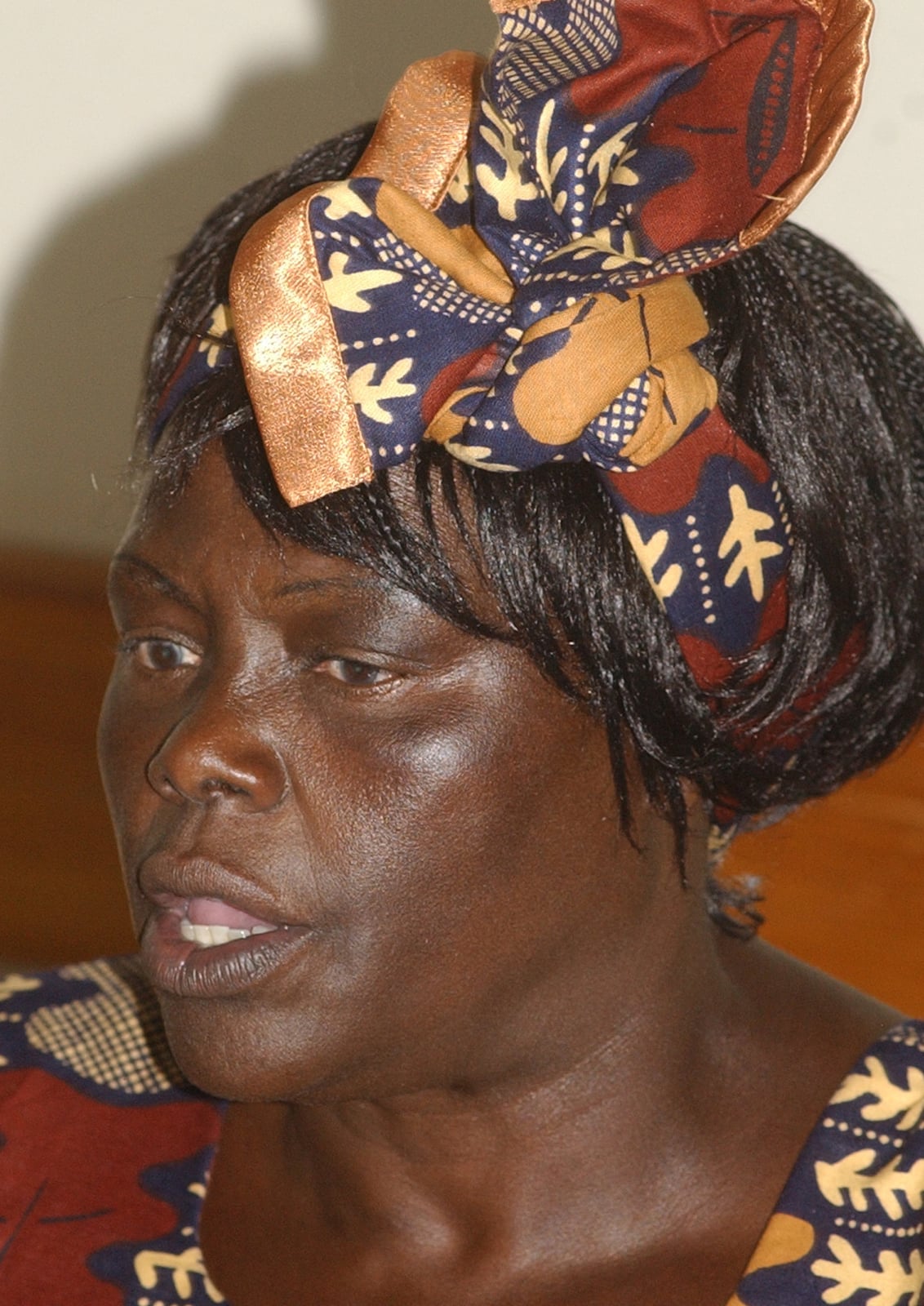
왕가리 마타이

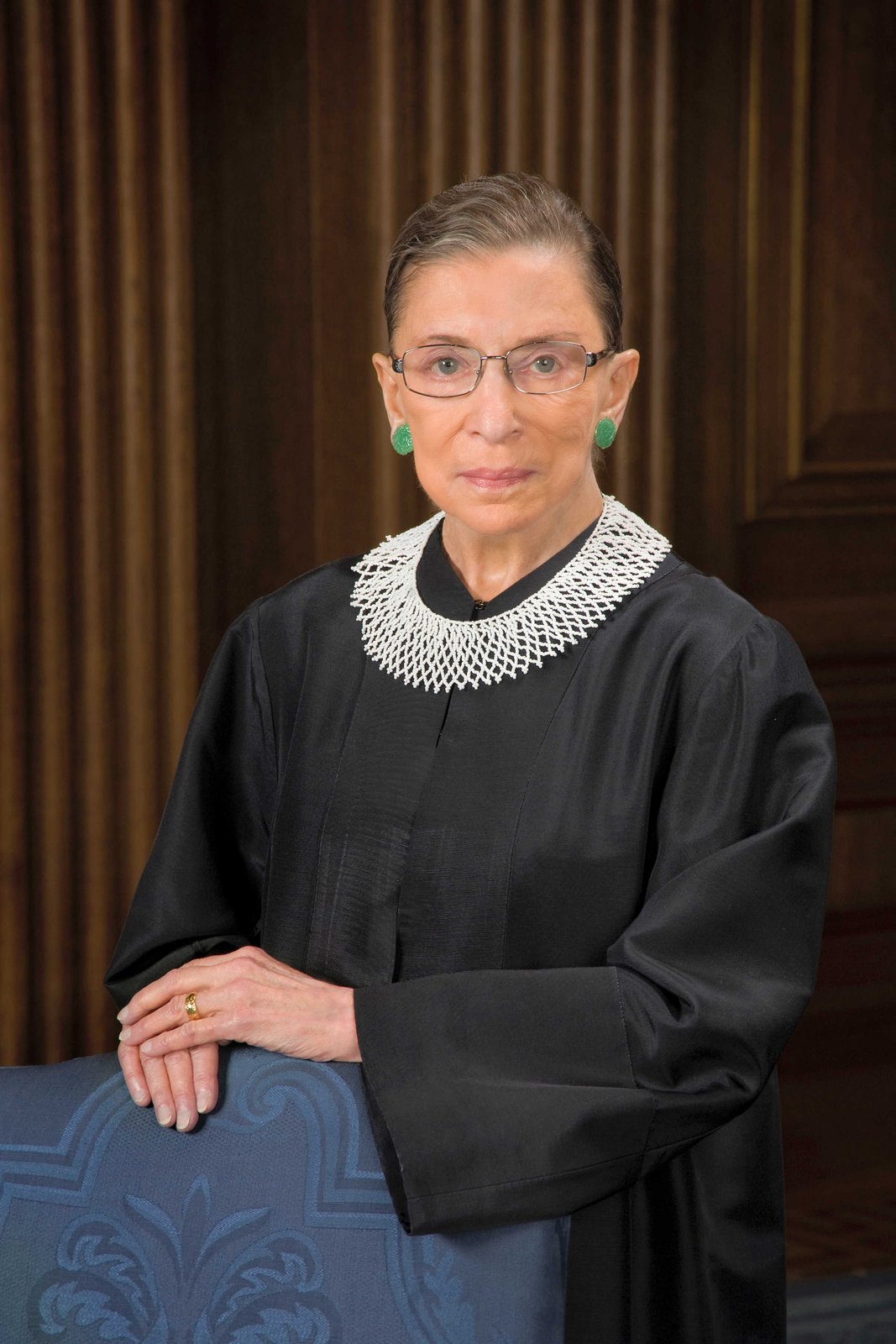
루스 베이더 긴즈버그

워런 버핏

마야 안젤루

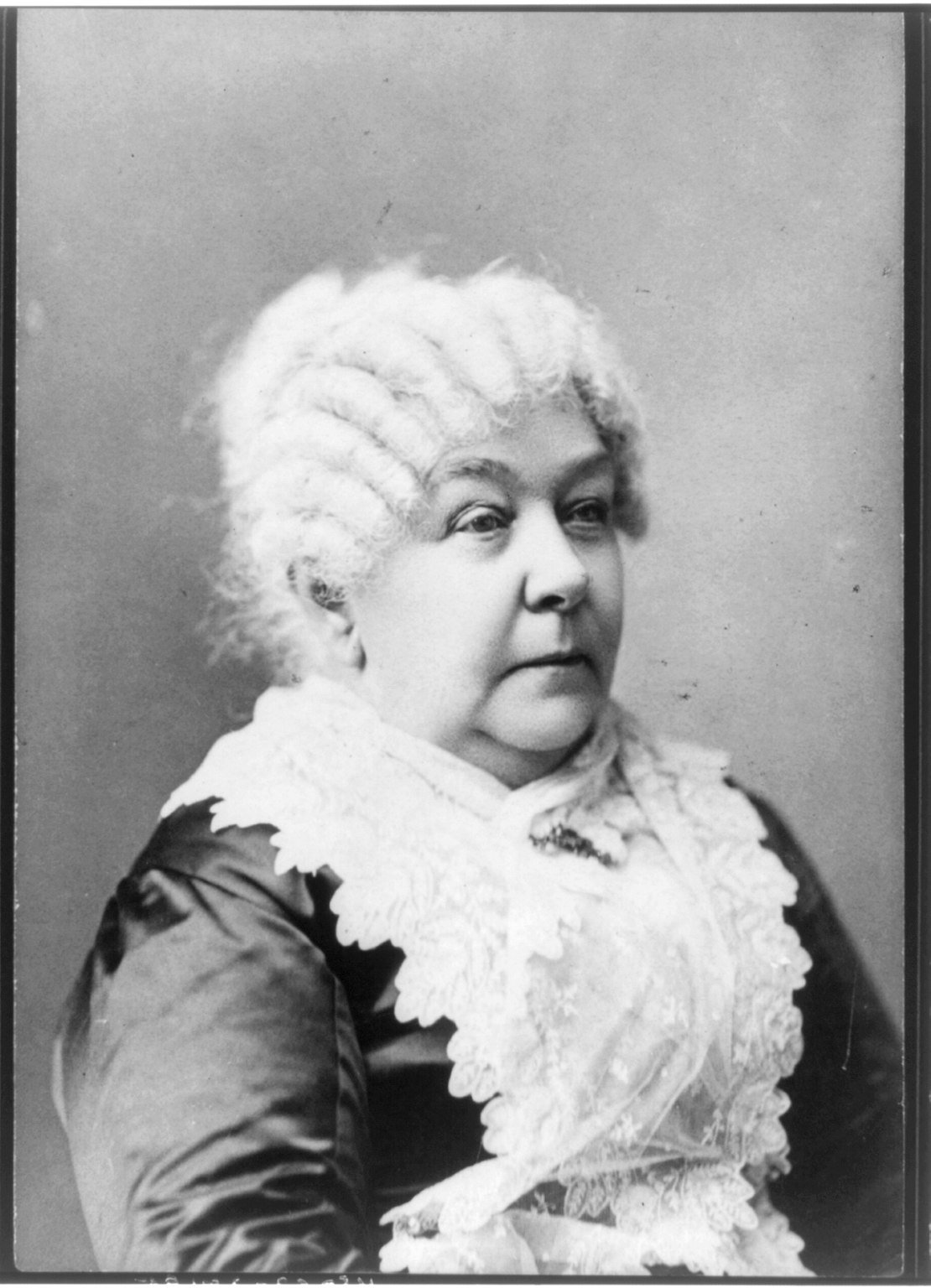
엘리자베스 케이디 스탠턴
출처
- Bernardino de Sahagun (Q379972), verified live via the Wikidata API (2026-11-05): label 'Bernardino de Sahagún', description 'ca. 1499-1590, Spanish mesoamericanist, evangelizador, fraile franciscano, misionero', birth 1499 (also 1500) and death 1590, Korean label 베르나디노 데 사아군, Korean Wikipedia title 베르나르디노 데 사아군. Orientation only; not used as support for any row.
- Library of Congress news release, 'World Digital Library Adds Florentine Codex' (31 October 2012; archived copy on the UNT Web Archive, read in full). CANONICAL SIGNIFICANCE SOURCE: calls the Florentine Codex 'one of the most important sources for the history of pre-Columbian and early post-Columbian Mexico'; names Historia general de las cosas de Nueva Espana as 'an encyclopedic work about the people and culture of central Mexico compiled over a period of 30 years by Fray Bernardino de Sahagun (1499-1590), a Franciscan missionary who arrived in Mexico in 1529'; text in Spanish and Nahuatl; 12 books 'richly illustrated by indigenous artists' covering Aztec religion and calendar, economic and social life, history and mythology, plants and animals, and the Spanish conquest as seen by the native Mexicans; digitisation by the Library of Congress with the Laurentian Library, Florence. Institutional announcement of a digitisation, so its praise is celebratory and about the work, not about Sahagun's behaviour.
- Encyclopaedia Britannica page 'Bernardino de Sahagun' (the page has no standalone article; the human-written excerpts from the Britannica articles on pre-Columbian civilizations shown on it were read, and its machine-generated summary was ignored): a Franciscan priest who arrived in Mexico very early (1529), learned the Nahuatl tongue and spent his life building 'a real encyclopaedia', the Historia general; he was ordered to write in Nahuatl the information his colleagues needed for the conversion of the indigenous peoples. Short; used to confirm the outline and the stated missionary purpose.
- Alfredo Lopez Austin, 'The Research Method of Sahagun', chapter in Munro S. Edmonson (ed.), Sixteenth-Century Mexico: The Work of Sahagun (School of American Research / University of New Mexico Press, 1974), read from the Mesoweb scan (the pages on his purposes, the Tepepulco and Tlatelolco inquiries, the Mexico-Tenochtitlan revision and the four documented stages of the work; the scan's OCR is imperfect and the left columns of some pages are garbled, so only passages legible in full are relied on). A scholar's analysis that quotes Sahagun's own prologue (SELF-REPORT: the interviews, the elders and the four Latinists, 'nearly two years' at Tepepulco, a year or more at Tlatelolco, three years of rereading, 'strainers' of Tepepulco, Tlatelolco and Mexico) and adds his own judgement: Sahagun's stated purposes were to know the former religion in order to prevent the return to idolatry, to record Nahuatl vocabulary for preaching, and to correct the opinion that the natives had a low cultural level, and the work 'could not have been the result of a merely academic restlessness'. Scholarly, mid-twentieth-century Mexican-school reading.
- Louise M. Burkhart, review of Miguel Leon-Portilla, 'Bernardino de Sahagun: First Anthropologist' (University of Oklahoma Press, 2002), The Catholic Historical Review 89:2 (April 2003), pp. 351-352 (read in full). An independent scholarly assessment and the counter-voice: Sahagun's surviving writings establish 'his pre-eminence in documenting Nahua civilization'; his method used interviews, questionnaires and 'extensive involvement of Nahua consultants, research assistants, artists, and scribes'; he 'never ceased to view native religion as idolatrous'; calling him 'pioneer' or 'father' of anthropology is 'an overstatement' because none of his ethnography was published until the nineteenth century, though 'anthropologist' is valid; the content was 'elicited and organized by Sahagun' but 'written and edited by Nahuas in Nahuatl'; the review faults the biography for not fully addressing the Nahua side or the research assistants, and notes Walden Browne's argument that he stayed too medieval to be a precursor of modern anthropology.
- Newberry Library, 'Christianizing the Nahua' (section 3 of the online exhibition 'The Aztecs and the Making of Colonial Mexico', on the Primeros Memoriales, Tepepulco 1559-61; page read in full): between 1559 and 1561 Sahagun interviewed learned indigenous noblemen at Tepepulco, who showed pictorial documents; four noblemen fluent in Spanish, Nahuatl and Latin, his former students from the Franciscan Colegio de Santa Cruz in Tlatelolco, assisted as scribes and made the drawings; 'although Sahagun pursued his work in order to create tools for eliminating Aztec religious practices, his work is now a major source of information about Aztec religious knowledge and practice'. Short institutional exhibition text.
- Fanny Chambers Gooch Iglehart, 'Face to Face with the Mexicans' (New York: Fords, Howard and Hulbert, 1887; Internet Archive scan from the University of North Carolina at Chapel Hill, item facetofacewithme00igle, metadata possible-copyright-status NOT_IN_COPYRIGHT). Portrait source only: the plate on page 375 is captioned 'BERNARDINO DE SAHAGUN'; the surrounding page text (pp. 375-376) is a popular-travel-book paragraph that is not used as evidence for any row.