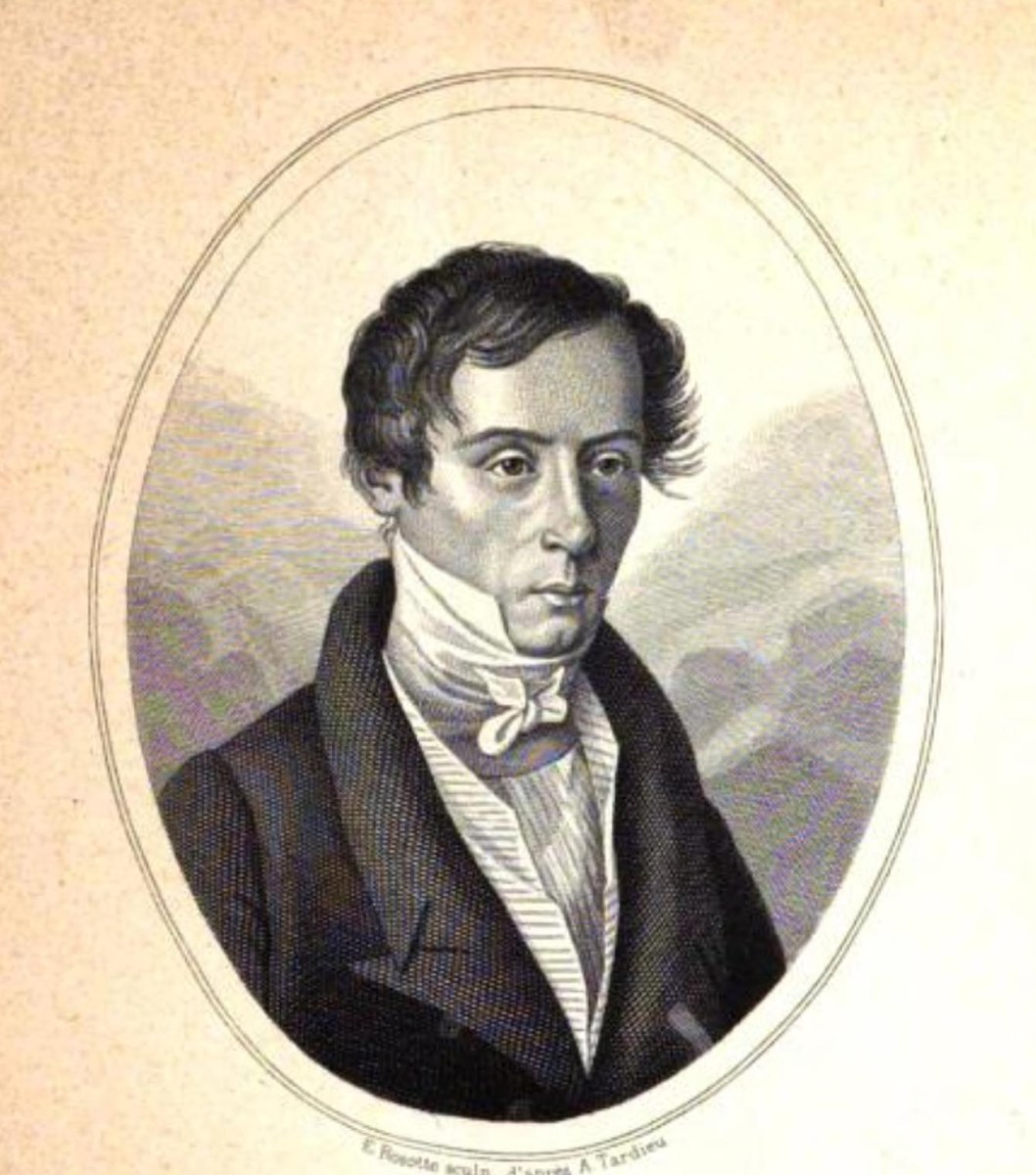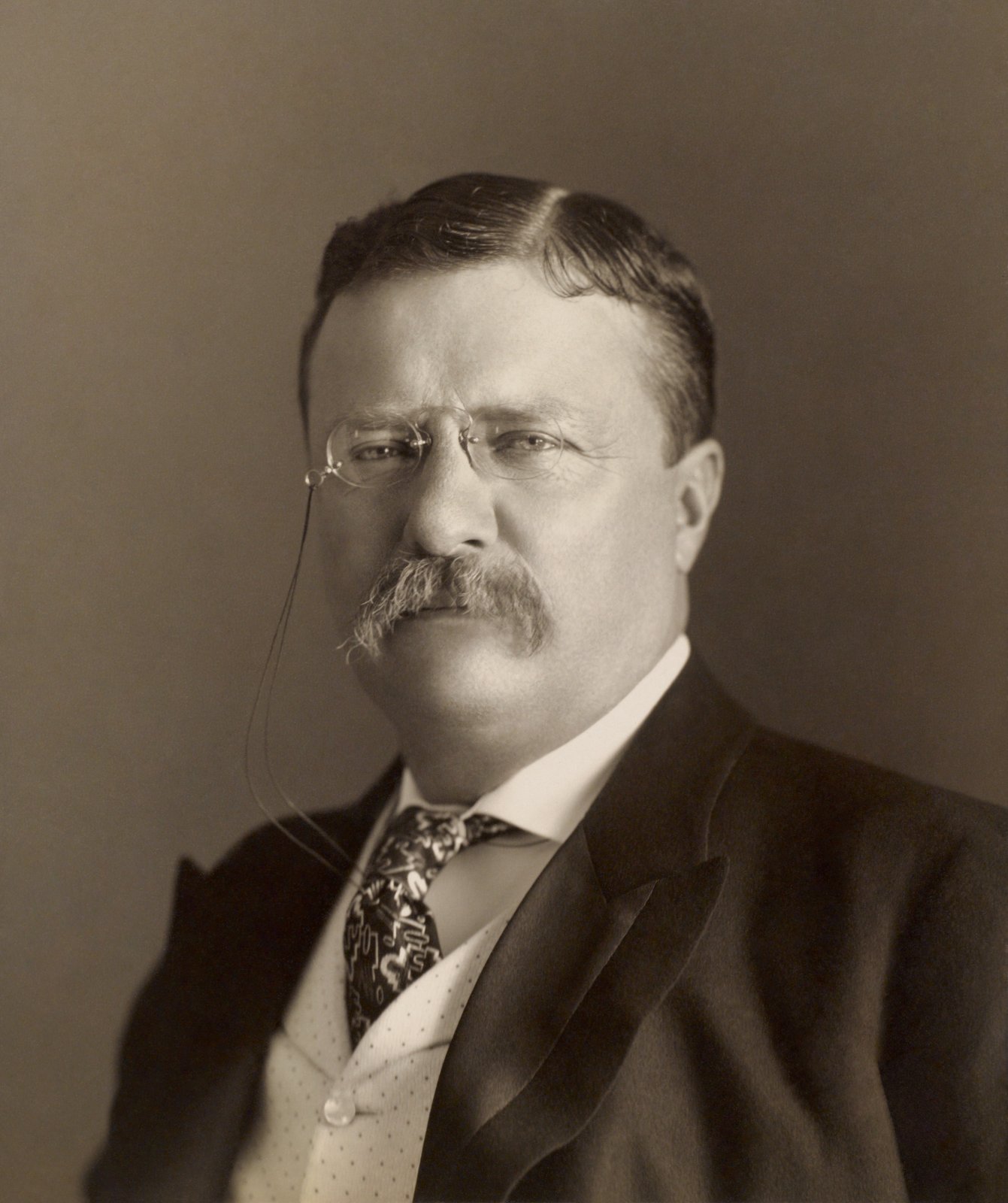

E. Rosotte after Ambroise Tardieu, portrait of Augustin Fresnel, in Oeuvres completes d'Augustin Fresnel, tome 1 (Paris, 1866), public domain · Frontispiece engraving of Augustin Fresnel signed 'E. Rosotte sculp. d'apres A. Tardieu' in the official edition 'Oeuvres completes d'Augustin Fresnel', tome 1 (Paris: Imprimerie imperiale, 1866), in the Internet Archive copy digitised from the New York Public Library (page image 2500 x 3275). The engraving is a later print after a portrait by Ambroise Tardieu; none of the sources read documents a sitting, so it is not presented as a likeness. This file is the engraving only, cropped from the scan and downscaled to 1058 x 1200 with no upscaling. · Public domain: published in Paris in 1866 (before 1931); the portrait it copies is by an artist who died in 1841
물리학자 · 19세기
오귀스탱 장 프레넬
1788–1827
주요 업적 분야
아직 성격 매칭에 포함되지 않았습니다 — 기록된 근거가 성격 모델 전체를 다루기에는 충분하지 않습니다. 이 페이지의 다른 모든 내용은 자유롭게 확인하실 수 있습니다.
핵심 특성
주요 업적
회절과 간섭 실험, 그리고 파면 요소의 수학으로 대부분의 과학자가 입자설을 지지하던 때에 빛의 파동설을 확립하는 데 기여했으며, 빛이 횡파라고 결론지었다.
1819년 회절 논문으로 과학 아카데미 상을 받았고, 푸아송이 그 수학으로 계산해 예측한 원판 그림자 중심의 밝은 점이 실제로 관측되었다.
등대용 계단식 렌즈를 개발해 거울을 대체했고, 1823년 코르두앙 탑에 첫 렌즈가 설치되었다. 프레넬 렌즈는 지금도 널리 쓰인다.
삶의 장면들
회절 물체의 한쪽 가장자리에 검은 종이를 붙이자 그림자 안쪽의 밝은 띠가 사라지는 것을 보고, 어느 띠가 양쪽 가장자리의 빛에서 생기는지를 추론했다.
이는 조건 하나를 바꿔 직접 실험으로 생각을 검증하는 모습과 일치한다. 실험 성향
1821년 그는 빛이 횡파라고 확신을 갖고 주장했고, 이는 아라고를 포함한 대부분의 동료에게 지나친 주장으로 받아들여졌으나, 이어서 복굴절이 그 생각에서 도출됨을 보였다.
이는 자신의 추론이 뒷받침하는 소수 의견을 끝까지 유지하는 모습과 일치한다. 독립적 사고
전환점
1814년 중반 도로를 놓는 정부 기술자로 일하던 그는 빛에 관한 실험을 시작했고, 빛의 편광이 무엇인지 모른다고 쓴 지 몇 달 뒤에는 당대의 주요 물리학자 반열에 올랐다.
이는 본업을 하면서 스스로의 실험으로 새로운 분야에 뛰어드는 모습과 일치한다. 실험 성향
비슷한 인물
전체적인 프로필이 이 사람과 닮은 사람들이에요.


마리 퀴리

존 D. 록펠러

니콜라우스 코페르니쿠스

윌버 라이트

앨런 튜링
출처
- Augustin-Jean Fresnel (Q187241), verified live via the Wikidata API (2026-11-04): English label 'Augustin-Jean Fresnel', description 'French engineer and physicist (1788-1827)', Korean label 오귀스탱 장 프레넬, birth 10 May 1788 and death 14 July 1827, image the frontispiece of the 1866 Oeuvres completes. Orientation only; not used as support for any row.
- Encyclopaedia Britannica, 'Augustin-Jean Fresnel' (article body read from the public page) and the Britannica article 'Fresnel lens' (read). CANONICAL SIGNIFICANCE SOURCE: French physicist (1788-1827) who significantly contributed to optics and helped establish the wave theory of light that Thomas Young advanced; he began optics research in 1814 while working as an engineer building roads, his experiments with interference fringes and diffraction led him to the wave theory, in 1819 he presented his diffraction work to the French Academy of Sciences, where his model predicted a bright spot at the centre of a shadow, later observed and named Poisson's spot; he combined Young's interference principle with Huygens' construction; the Fresnel lens, which divides a lens into concentric rings to reduce weight, was adopted by him in 1821 for lighthouses (the idea of dividing a lens into rings having come from Buffon in 1748). Some dates in the Q&A-style summary of the biography page (for example the year of the transverse-wave conclusion) differ from MacTutor and were not used. Scholarly reference; its praise is retrospective.
- MacTutor History of Mathematics (University of St Andrews), 'Augustin Fresnel' by J. J. O'Connor and E. F. Robertson (full biography read, including its quotations from the Dictionary of Scientific Biography). Covers the engineering career, the start of his light experiments in 1814, the black-paper diffraction experiment, the 1815-16 papers, the two-mirror interference experiments, the 1819 Academy prize judged by a committee not well disposed to the wave theory (Poisson's bright spot, tested at Arago's request), the 1821 claim that light is a transverse wave which even Arago did not accept, double refraction, the Lighthouse Commission and compound lenses, election to the Academy in 1823 and the Rumford Medal in 1827, and the Dictionary of Scientific Biography's character summary (attentive to detail, systematic, thorough; tenacious in convictions; rankling self-righteousness at times). Scholarly history site; his political episodes, family and health are not used.
- Francois Arago, biographical memoir of Fresnel (read at the Academy of Sciences in 1830), in the English translation by Baden Powell in 'Biographies of Distinguished Scientific Men' (London, 1859; Internet Archive text; read: the early optical researches, the passage on never publishing without checking earlier work, the engineering duties, the lighthouse lenses and the concentric-wick lamp, the Cordouan light built in July 1823, the costs of his instruments, and the translator's notes quoting Fresnel's own acknowledgement of Young's priority and Whewell's account of the transverse-vibration memoir). Written by Fresnel's close friend and collaborator, so admiring; the memoir's political passages and the translator's long optical notes were not used.
- Robert Moon, 'Fresnel and His Followers: A Criticism' (Cambridge, 1849; Internet Archive text; preface and contents read). A hostile 19th-century Cambridge mathematician who calls Fresnel's theory 'absurd', says its hypotheses were accepted with 'not a shadow of evidence' and condemns the whole system of investigation. COUNTER-VOICE on his method of theory-building; his critique concerns the physics, not Fresnel's conduct, and later physics did not follow it (the wave theory prevailed, as Britannica and MacTutor report). The body of the book was not read.