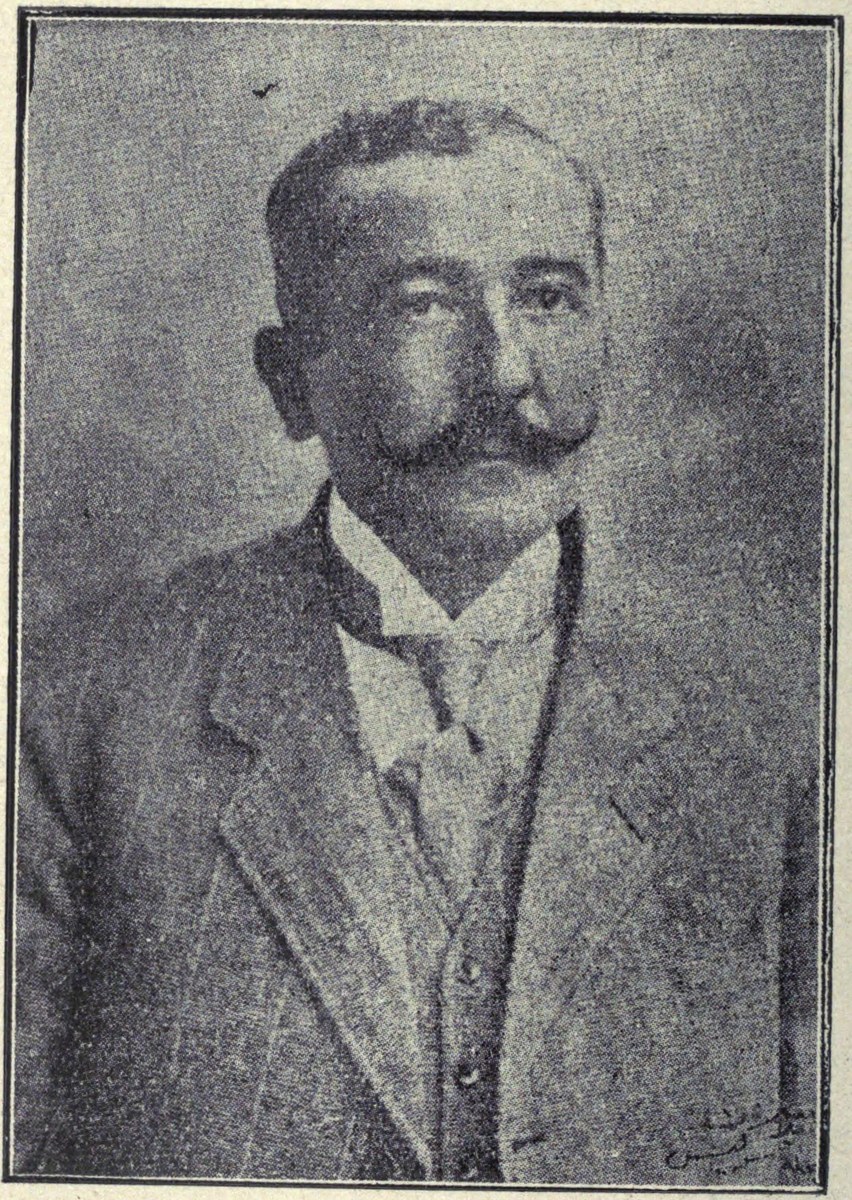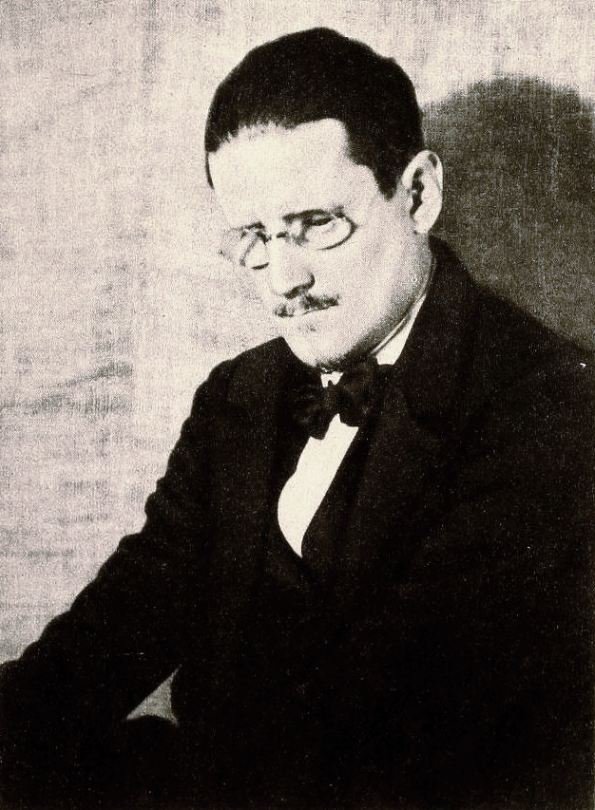

Photograph of Ahmad Shawqi, plate in Ahmad 'Ubayd, Mashahir shu'ara' al-'asr, Damascus, 1922; digitised by the University of Toronto Libraries via the Internet Archive; public domain by publication date · Halftone photographic portrait of Ahmad Shawqi printed as a plate in Ahmad 'Ubayd's anthology Mashahir shu'ara' al-'asr, part 1 (Damascus: al-Maktaba al-'Arabiyya, Matba'at al-Taraqqi, first edition September 1922), captioned in Arabic 'Ahmad Shawqi Bey' and facing the page that opens his biography; digitised by the University of Toronto Libraries (Robarts) on the Internet Archive. The photographer and the date of the original photograph are not stated (the compiler says some portraits were taken from earlier books and magazines), but it was in print by 1922. The plate was cropped from a page scan of 2,092 x 3,346 pixels (plate area about 1,242 x 1,749) and downscaled once to 852 x 1,200; nothing was upscaled. Caveats: the photographer is unknown and the image is a printed reproduction. · Public domain (published in Damascus in 1922; digitised book, Internet Archive possible-copyright-status: not in copyright)
핵심 특성
주요 업적
현대 아랍 신고전주의 시를 대표하는 시인으로 1927년 '시인들의 왕자(아미르 알슈아라)'로 추대되었으며, 그의 시는 네 권의 《샤우키야트》로 묶였다.
아랍 운문 희곡의 선구자로서 전통 운율을 극의 대사에 맞게 바꿔 《클레오파트라의 죽음》 같은 작품을 썼으며, 생애 마지막 8년 동안 이집트에서 공연된 희곡 일곱 편을 남겼다.
소설과 산문(《황금 시장》으로 묶임), 이슬람 역사를 다룬 장시, 예언자 무함마드를 기리는 시도 썼다.
삶의 장면들
1922년 선집에서 시인 칼릴 무트란은 샤우키가 동료들 사이에서, 마차와 기차 안에서, 공식 모임에서 내키는 대로 시를 지었고, 시를 완성해 놓고 한 달을 잊었다가 기억해 내 한 자리에서 적기도 했다고 말했다.
이 증언은 빠르게 시를 짓고 시 전체를 머릿속에 지닐 수 있었던 유창한 시인의 모습과 일치한다. 실행 속도
생애 마지막 8년 동안 이집트에서 공연된 운문 희곡 일곱 편을 썼고, 고전 운율을 극의 대사에 맞게 활용했다.
말년에 쏟아낸 운문 희곡은 물려받은 형식을 새로운 장르에 맞게 독창적으로 바꾼 작업과 일치한다. 창의적 독창성
전환점
궁정에서 1년 일한 뒤 몽펠리에와 파리에서 3년간 법학을 공부하러 파견되어 몰리에르와 라신 같은 프랑스 극작가들의 영향을 크게 받았고, 이 모델은 훗날 그의 운문 희곡에 반영되었다.
이 유학은 외국의 모범을 흡수해 훗날 아랍어로 새로운 형식을 만들어 낸 시인의 모습과 일치한다. 창의적 독창성
비슷한 인물
전체적인 프로필이 이 사람과 닮은 사람들이에요.


듀크 엘링턴

라빈드라나트 타고르

프란츠 카프카

쿠사마 야요이

제임스 조이스
출처
- Ahmed Shawqi (Q401491), verified live via the Wikidata API (2026-11-05): label 'Ahmed Shawqi', description 'Egyptian poet (1868-1932)', born 25 December 1868 (other sources give 16 or 17 October), died 14 October 1932, Korean label 아마드 샤우키. Orientation only; not used as support for any row.
- Encyclopaedia Britannica, 'Ahmad Shawqi' (article read in full, about 250 words, by the Britannica editors). CANONICAL SIGNIFICANCE SOURCE: calls him the amir al-shu'ara' ('prince of poets') of modern Arabic poetry and a pioneer of Arabic poetical drama, records his state-funded study at Montpellier and Paris, the 1927 proclamation, and his poetic plays following Shakespeare, Corneille and Racine; also a measured judgment that his imitations of ancient Arabic poets were unsuccessful while his adaptation of traditional metres to dramatic dialogue worked.
- Egypt State Information Service, 'Ahmed Shawqi' (official biography page read in full, about 300 words). Official Egyptian summary: poet and dramatist who pioneered the modern Arab literary movement, his study in Montpellier and Paris, the list of his seven plays, the four-volume Ash-Shawqiyyat, the long poem on Islamic history, novels and the prose collection The Markets of Gold. A state source with a celebratory tone.
- Mark D. Luce, 'Shawqi, Ahmad (1868-1932)', Routledge Encyclopedia of Modernism, 2018 (publisher abstract of about 250 words read; the full entry is behind a paywall and was not opened). Scholarly summary: leading poet and pioneer playwright of the neo-classical period of Arabic literature, mastery of Arabic and French, an innovator whose Western-influenced efforts were not favoured at court, excelled at modern themes in classical metres and rhymes, and in the last eight years of his life produced seven plays that were performed in Egypt.
- Ahmad 'Ubayd (compiler), Mashahir shu'ara' al-'asr fi al-aqtar al-'arabiyya al-thalatha, part 1 'Shu'ara' Misr' (Damascus: al-Maktaba al-'Arabiyya, Matba'at al-Taraqqi, first edition September 1922; University of Toronto copy on the Internet Archive; the title page, the Shawqi biography on printed pages 62-63 and the section of contemporaries' opinions on pages 65-66 were read as page images in the original Arabic, and the translations of those lines are the agent's own). Contemporary anthology compiled while Shawqi was alive: records his education, his works and quotations from fellow writers (Mustafa Lutfi al-Manfaluti, Hafiz Ibrahim, Khalil Mutran, Muhammad Sulayman, Muhyi al-Din Rida), including practical remarks on how he composed and critical remarks that his poetry was prolific and uneven, that some of his language was obscure and some meanings borrowed. Admiring in the main, but includes critical voices. The rest of the book was not read; the OCR text is unusable.
- Ahmed Shawqi, Wikipedia (read in full). Orientation only, never counted as support; it relays, through a secondary book not opened here, the criticism by Muhammad al-Muwaylihi that his innovations were heretical and Westernised.