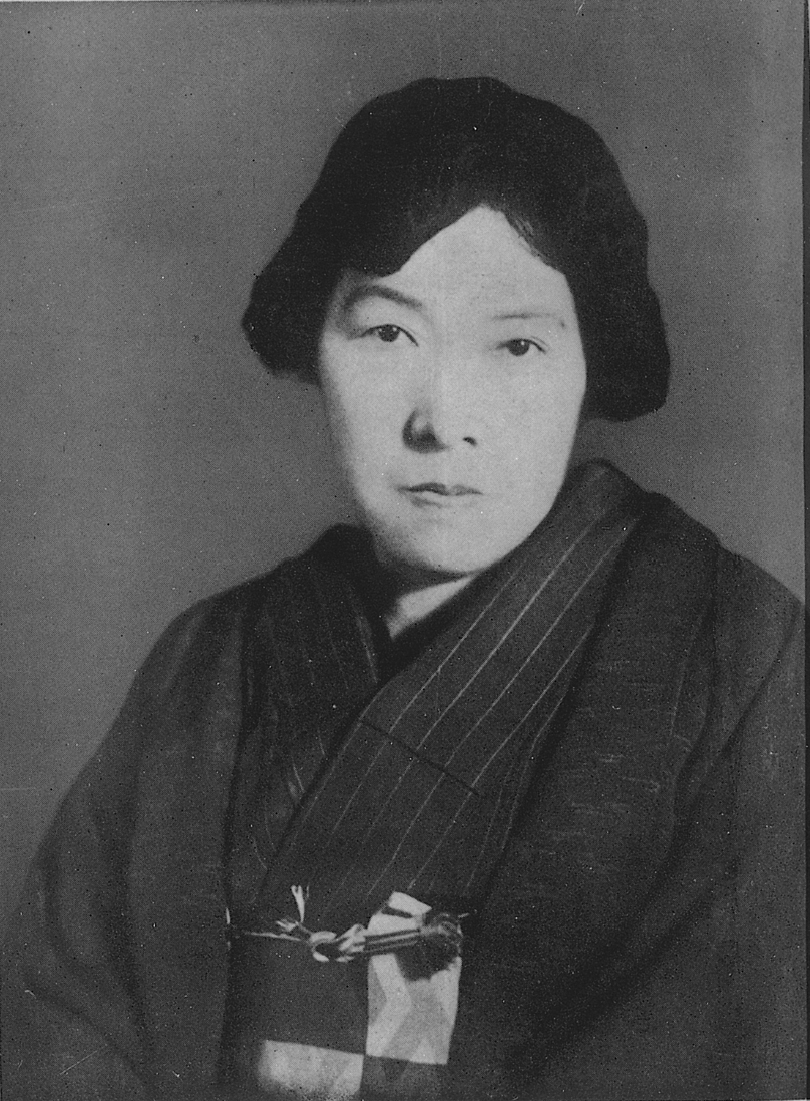

Photographer unknown, published 1952 in Yosano Akiko shiikashu (Sogensha). Source: Portraits of Modern Japanese Historical Figures, National Diet Library, Japan (https://www.ndl.go.jp/portrait/) · Portrait photograph of Yosano Akiko, photographer unknown, taken before her death in 1942 and published in the poetry collection Yosano Akiko shiikashu (Sogensha, Tokyo, 1952), as reproduced in the National Diet Library's digital exhibition 'Portraits of Modern Japanese Historical Figures' (entry for YOSANO Akiko, source item NDL Digital Collections pid 1341526). The library's entry names the sitter. The file is the library's published exhibition image (810 x 1101 pixels) with no resizing, cropping or upscaling; it is a halftone book reproduction. · Public domain (declared by the National Diet Library for all images in 'Portraits of Modern Japanese Historical Figures'; the anonymous photograph was published in Japan in 1952 or earlier, so its term under the 1899 Copyright Act had expired by 1970)
poet · 20th Century
Yosano Akiko
1878–1942
Known For
Not yet included in personality matching — the documented evidence doesn't yet cover enough of the personality model. Everything else on this page is fully available.
Trait Constellation
Key Achievements
Tanka poet whose 1901 collection Midaregami (Tangled Hair) brought frank female passion into a thousand-year-old verse form and made her a leading figure of Japanese Romanticism.
Rendered the Tale of Genji into modern Japanese twice, an abridged version in 1912-13 and a complete one in 1938-39, and wrote biographical studies and a scholarly edition of the classic.
Helped found the Bunka Gakuin school in Tokyo in 1921, where she taught, and wrote widely on education and women's issues.
Moments That Reveal Them
Her first collection Midaregami (1901) was dismissed by one reviewer as the 'precocious prattle of a young girl', yet it found a ready readership among the young and brought her fame.
This is consistent with a poet whose unconventional form drew criticism but also an audience. Creative Originality
For fourteen years from 1909 she worked on a Genji commentary that was destroyed just short of completion in the fires after the 1923 Great Kanto Earthquake; she later published a complete modern-Japanese translation of the tale in 1938-39.
This is consistent with a long commitment to one classic that continued after a major loss. Persistence
Turning Points
In 1921 she helped found the Bunka Gakuin in Tokyo, moving from writing about education to teaching in a school where the arts were prominent and for which she wrote a literature textbook.
This is consistent with a writer who extended her work from poetry into institution-building and teaching. Proactive Agency
Similar People
People whose overall profiles resemble theirs.


Ada Lovelace

Maya Angelou

Leonardo da Vinci

Sequoyah

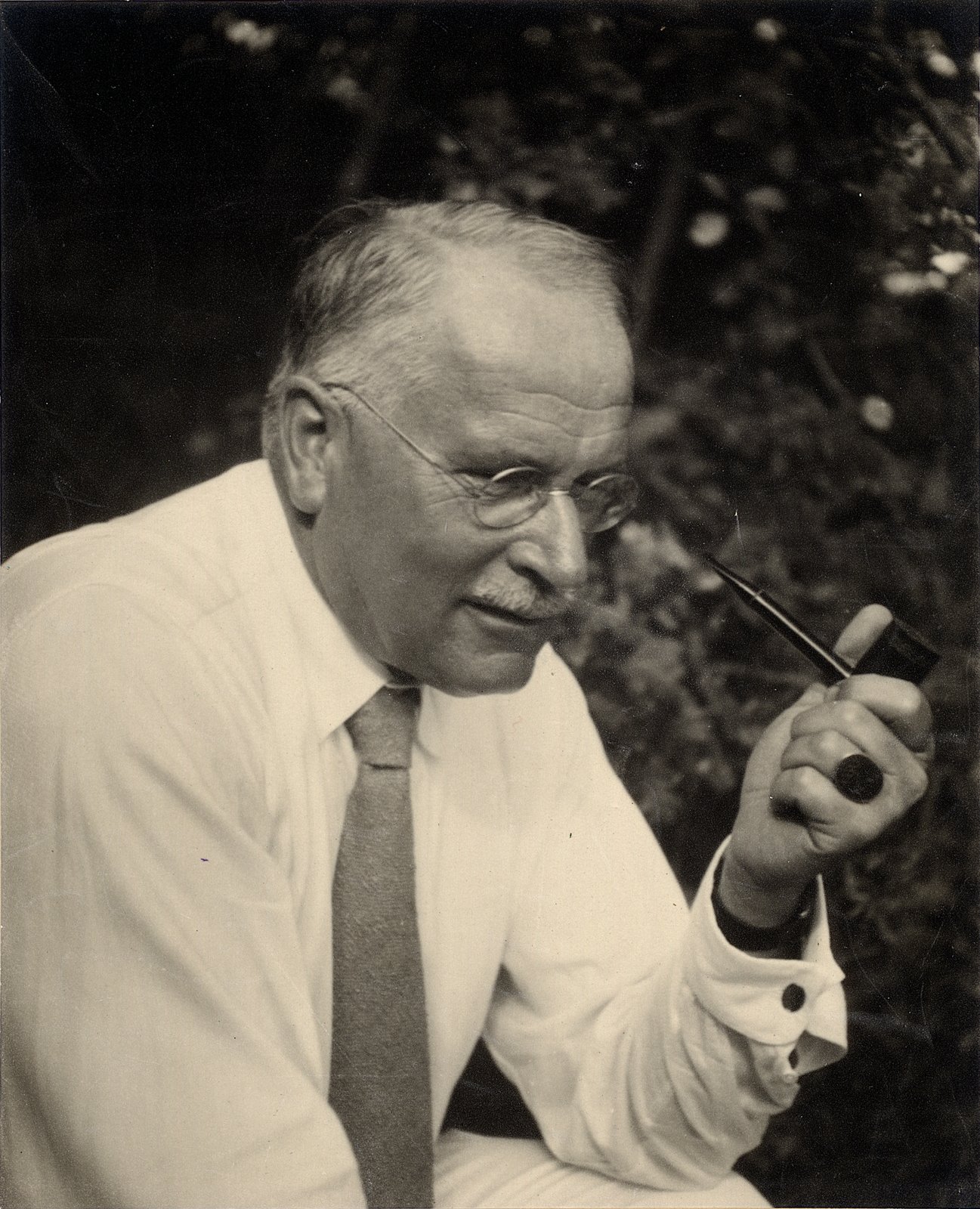
Carl Jung
Opposite Profile
Not a rival — a different profile shape worth a look.
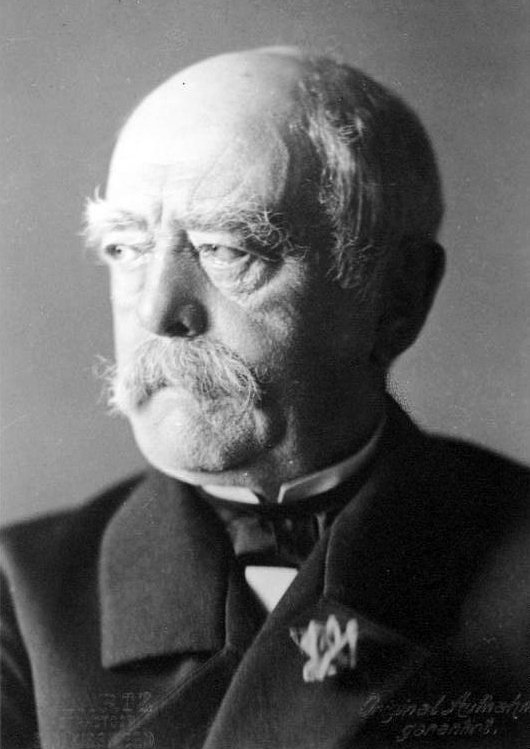
Otto von Bismarck
Sources
- Akiko Yosano (Q464104), verified live via the Wikidata API (2026-11-04): English label 'Akiko Yosano', description 'Japanese tanka poet (1878-1942)', Korean label 요사노 아키코, born 7 December 1878, died 29 May 1942, citizenship Japan. Orientation only; not used as support for any row.
- National Diet Library, Japan, 'YOSANO Akiko', Portraits of Modern Japanese Historical Figures (biographical note by library staff, English and Japanese texts read from the site's published data): poet; graduate of Sakai Girls' School; joined the Kansai Seinen Bungakukai in 1899 and the Tokyo Shinshisha in 1900; published tanka in the magazine Myojo; published Midaregami in August 1901, which created a great sensation; went on to publish many collections as a representative of Japanese Romanticism; translated Genji Monogatari into modern Japanese, helped found the Bunka Gakuin in 1921, and made constructive statements on problems of women and education. CANONICAL SIGNIFICANCE SOURCE: neutral national-library reference note; used for the career chronology.
- Poetry Foundation, 'Yosano Akiko' (poet biography), read in full: one of the best-known female poets from post-classical Japan; Midaregami (Tangled Hair, 1901) created a stir for its frank depiction of female passion and, in tanka form, defied the conventions of traditional verse by setting religious and spiritual metaphors against sensuous description; the journal Myojo first published her work; when it folded her writing became the primary income of her family; a year in France in 1912, then the translation of the Tale of Genji; more than 20 collections of poetry and numerous volumes of social criticism; established the Bunka Gakuin in 1921; the English translations and Janine Beichman's 2002 study are listed. Poetry-world institution; admiring in tone; some details (a 'women's trade school') differ from other sources.
- Encyclopaedia Britannica, 'Yosano Akiko' (encyclopaedia biography by the editors), read in full: poet whose new style caused a sensation in Japanese literary circles; interested in poetry from school, published a private poetry magazine with friends; joined Yosano Tekkan's Shinshisha in 1900 and contributed to Myojo; Midaregami (1901) brought her fame, Yume no hana (1906) revealed her developing art; a year in France from 1912 and the collection Natsu yori aki e (1914); on returning she began translating Genji monogatari into modern Japanese; established the Bunka Gakuin in 1921 where she also taught, and later wrote literary criticism; the posthumous collection Hakuoshu (1942). Neutral encyclopaedia entry.
- Christopher Harding, 'Yosano Akiko - a great of modern Japanese poetry', Engelsberg Ideas (21 February 2022), read in full: historian's portrait; Akiko first wrote poems at sixteen, partly (it was said) from concern about the quality of women's poetry; Midaregami (399 poems) was dismissed by one reviewer as the 'precocious prattle of a young girl' but found a ready readership among the young; she concluded the state school system produced loyal subjects with stunted imaginations and co-founded the Bunkagakuin (1921), where she wrote a literature textbook meant to inspire love of poetry and prose and taught the Tale of Genji; she disagreed with feminists who stressed state support for motherhood; the article also covers her anti-war poem of 1904 and a late nationalist turn, which are context and are not scored here. Independent historian's essay; includes critical voices (a hostile reviewer, socialists who disliked the anti-war poem, admirers puzzled by her later outlook).
- Gaye Rowley, 'Yosano Akiko and The Tale of Genji' (author's book page, University of Michigan Center for Japanese Studies, 2000; revised open-access edition 2022) with the Fulcrum open-access abstract, read: scholar's summary that a major part of Akiko's career was devoted to the Japanese classics, above all Genji; she wrote biographical studies of Murasaki Shikibu, series of lectures on Genji and a scholarly edition of the text; for fourteen years between 1909 and 1923 she worked on a Genji commentary that, just short of completion, was destroyed in the fires after the Great Kanto Earthquake of 1 September 1923; her two colloquial translations are Shin'yaku Genji monogatari (abridged, 1912-13) and Shin-shin'yaku Genji monogatari (complete, 1938-39), both still in print; the abstract says she modernized the tale as a novel and pioneered academic research on it, and that 'poetess of passion' no longer captures her career. The full open-access text could not be downloaded in this session (automated download returned 403), so only the author's summary and the publisher abstract were read, not the book. Scholarly specialist; the abstract's claims of pioneering are the author's thesis.
- Ohio State University Libraries Japanese Collections blog, 'A Rare Acquisition: Yosano Akiko's A New Translation of The Tale of Genji' (23 March 2025), read in full: the library's Rare Books and Manuscripts holding of the 1912 first edition of Shin'yaku Genji monogatari in four books with sixty-one woodblock prints by Nakazawa Hiromitsu; describes it as transforming Genji into a modern-language work and an intervention at a time when it was studied through a male-centric academic lens; says a Yomiuri newspaper once called her a 'modern Murasaki Shikibu'; lists later modern-Japanese translators of Genji. Library collection blog; admiring and brief.
- Sakai City (Osaka Prefecture), 'Yosano Akiko' historic-figures page (English), read in full (last updated 2025): born in 1878 into the Surugaya confectionery family in Kaino-cho, Sakai; composed tanka in the Meiji, Taisho and Showa periods and was called the 'Poetess of Passion'; Midare-gami (1901) was popular with the younger generation and is regarded as a Romanticism masterpiece; translated classics including the Tale of Genji into modern Japanese; wrote many essays on women's rights and played an active role in women's education. Civic hometown page; promotional in tone.
- Setsuko Shoji (Ichimura Gakuen Junior College), 'A Historical Study of Akiko Yosano's Ideas on Physical Education' (KAKEN research-project abstract, 1985-86, report published 1987), read in full: scholarly abstract stating that her educational ideas rested on humanitarian educational thought and a liberal approach that questioned competing to win; that she criticized a military drill proposed by a special meeting on physical education; that she rejected interference by the authorities in physical-education methods (linked to Bunka Gakuin, though the abstract's wording is unclear); and that the researcher sees a 'blind spot' in her liberal thinking in her later acceptance of Japan's wartime aggression (political context, not scored). Short funding abstract by an independent education historian; the Bunka Gakuin link is not clearly worded.