Sigmund Freud
93% Profile Match
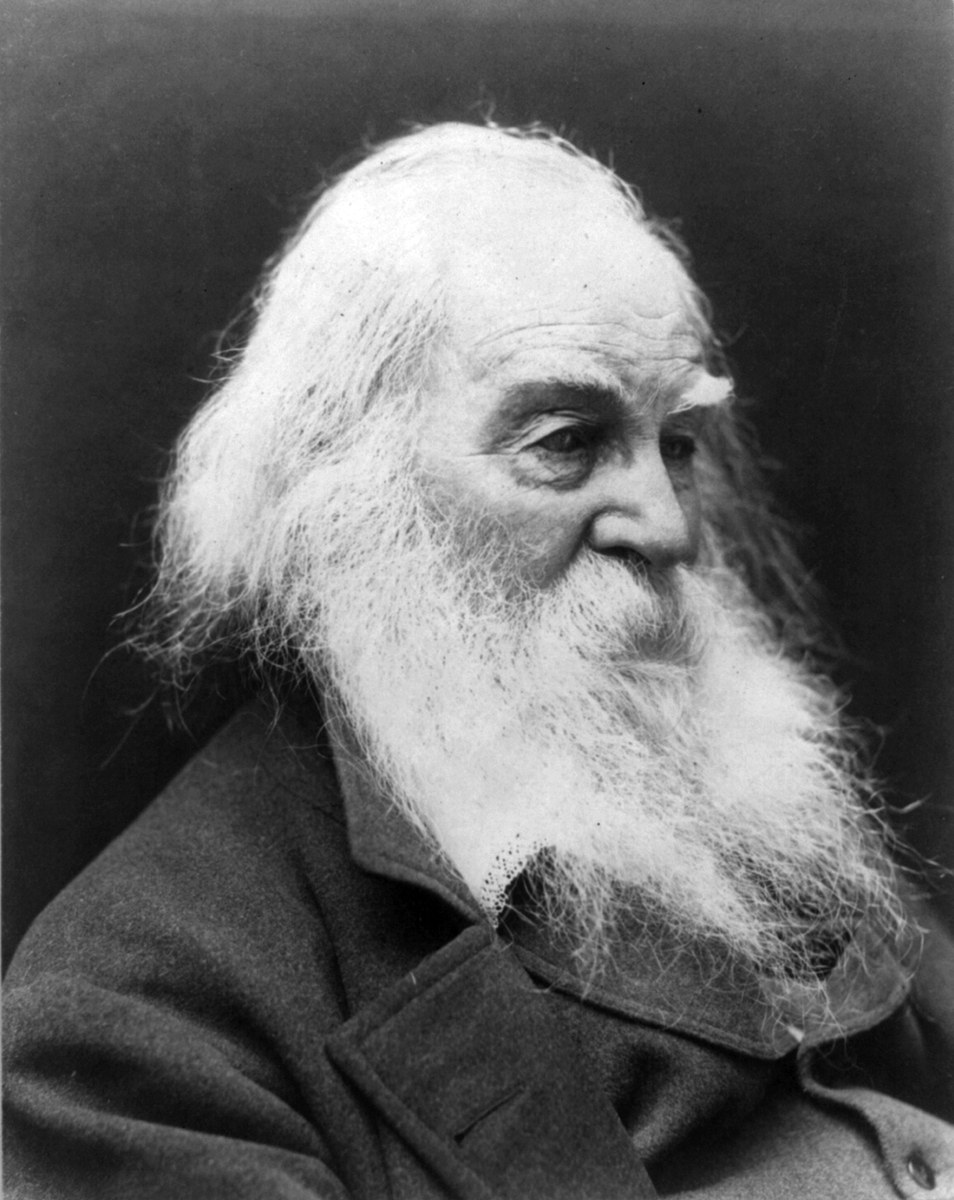
Photo: George C. Cox, 1887, Library of Congress Prints and Photographs Division (public domain) · Wikimedia Commons, 'Walt Whitman by George C. Cox cph.3b20763.jpg' -- photograph of Walt Whitman by George C. Cox, 1887, the Library of Congress Prints and Photographs record cph.3b20763 (Commons source field {{LOC-image|id=cph.3b20763}}). Uploaded to Commons 6 February 2013 (SHA-1 15638c65 matches the downloaded file). Original 1188 x 1494 pixels (grayscale scan, 760,410 bytes); saved here downscaled once to 954 x 1200 pixels, no crop, never upscaled. The unrestored LOC scan was chosen over the featured restoration so that no restorer attribution applies. · Public domain (published 1887 in the United States, before 1930; photographer George C. Cox died in 1903, so the term of life plus 70 years has also expired)
poet · 19th Century
1819–1892
Not yet included in personality matching — the documented evidence doesn't yet cover enough of the personality model. Everything else on this page is fully available.
In 1855, with no publisher willing, he paid to print the twelve-poem first Leaves of Grass, in a new unrhymed free-verse style. Emerson called it "the most extraordinary piece of wit and wisdom" America had yet contributed, and Britannica calls it a landmark of American literature.
He kept revising and enlarging the book for the rest of his life: nine volumes titled Leaves of Grass, six of them true editions by the Whitman Archive's count. The 1881 edition fixed the final order of its 293 poems.
Drum-Taps (1865), written during his Civil War years in Washington, includes the Lincoln elegy "When Lilacs Last in the Dooryard Bloom'd". The Poetry Foundation lists Pound, Williams and Ginsberg among the poets he later influenced.
In 1855 he sold a house to pay for the first Leaves of Grass, chose the typeface and layout with the Rome brothers, set about ten pages of type himself, and came to the Brooklyn print shop most mornings to work on proofs.
Consistent with a self-starter who made his own route into print when no publisher offered one, and who cared about how the book was physically made. Proactive Agency
For the 1856 edition he printed Emerson's private letter without asking him, and added nine reviews of the first edition, two of them his own unsigned writing, alongside puzzled and negative ones.
Consistent with an energetic self-promoter whose publicity cost him goodwill, since Emerson was reported angry, while his willingness to print hostile reviews shows a tolerance for open controversy. Persuasiveness
Before 1855 he had worked as a printer, teacher, journalist and editor, publishing sentimental stories and poems that showed almost no literary promise; in the spring of 1855 he printed the first Leaves of Grass in a new style instead.
Consistent with a creative break in which he abandoned the conventional verse of his earlier writing for a form of his own. Creative Originality
People whose overall profiles resemble theirs.