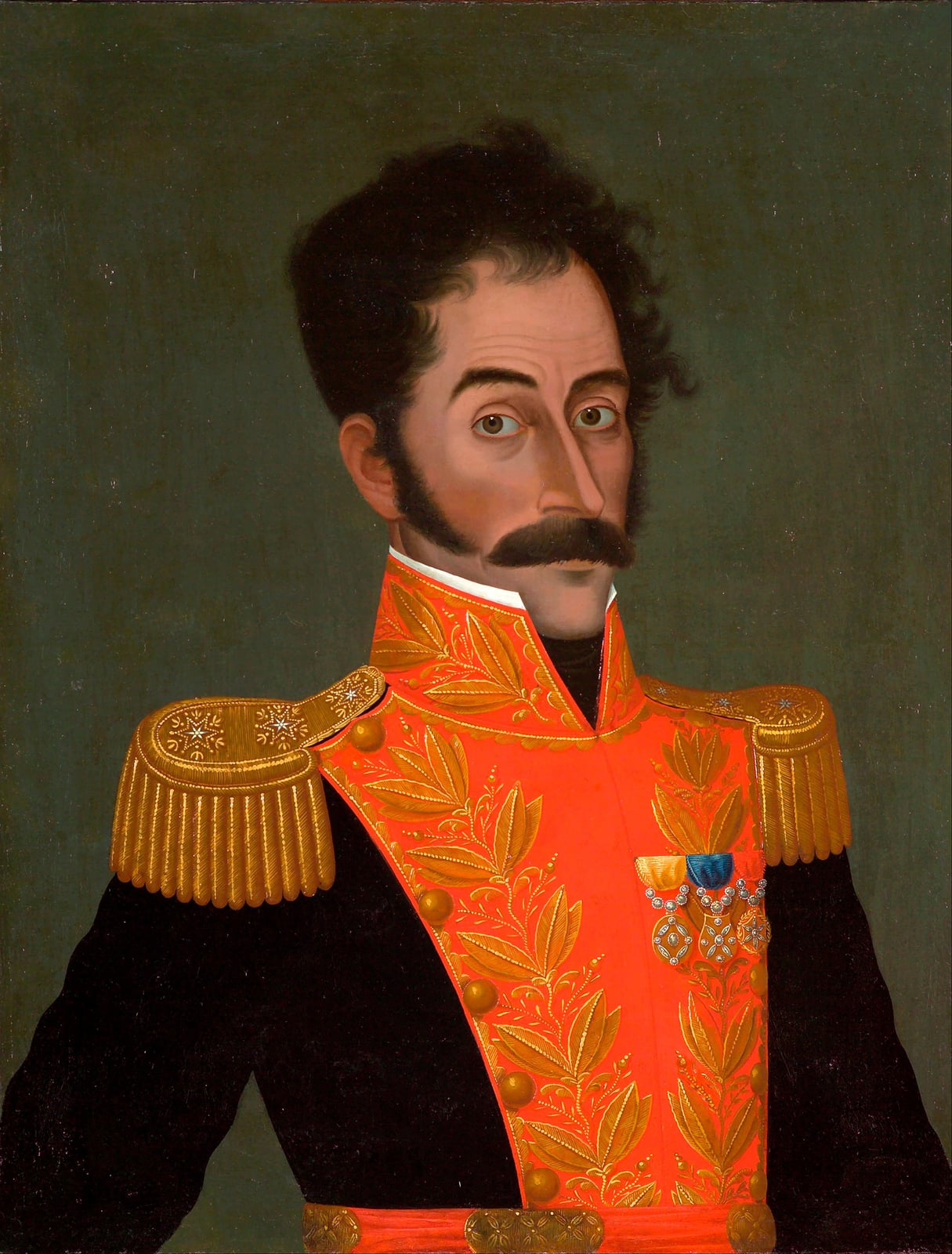
Simón Bolívar
94% Profile Match
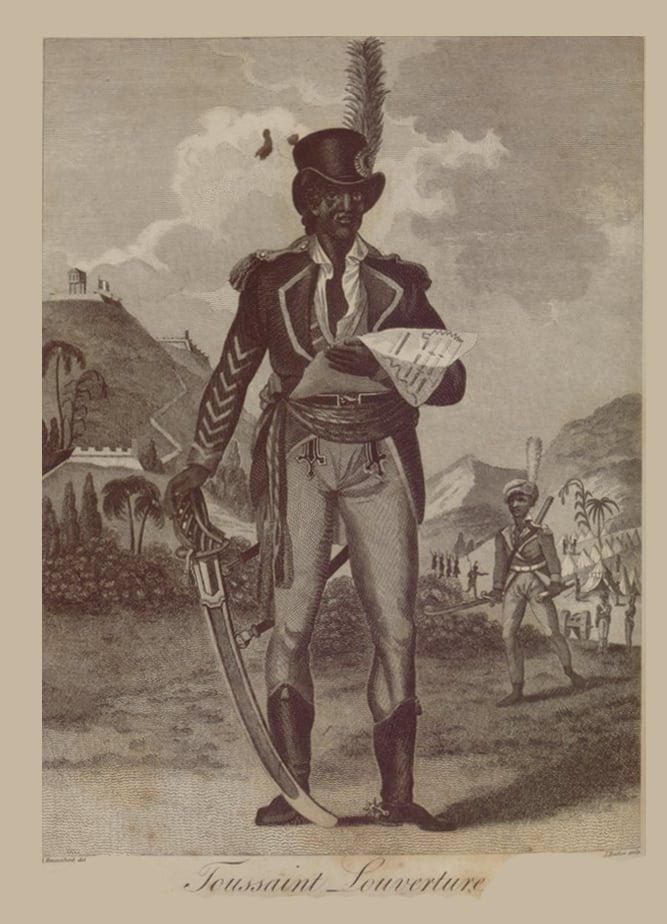
Engraving after Marcus Rainsford / John Kay, 1805 — a near-contemporary standard depiction, not made from life; no lifetime portrait of Louverture is known to exist · Wikimedia Commons (recompressed derivative) · Public Domain
1743 — Born into slavery.
1791 — Joined the uprising that became the Haitian Revolution.
1794 — Switched his forces' allegiance from Spain to France after France abolished slavery in its territories.
Over the following decade — Rose to Commander-in-Chief and Governor-General of Saint-Domingue, building a disciplined army from formerly enslaved people.
1801 — Promulgated a constitution permanently abolishing slavery, while naming himself governor-for-life.
1802–1803 — Arrested by French forces and deported to France; died imprisoned at Fort de Joux in April 1803.
Rising from an enslaved coachman and cattle-driver to Commander-in-Chief and Governor-General of Saint-Domingue, Toussaint Louverture built and trained a disciplined military force from formerly enslaved people with limited resources, employing tactics adapted successively against Spanish, French, and British forces over roughly a decade, according to Dubois's history of the revolution.
In 1801, Louverture promulgated a constitution for Saint-Domingue that permanently abolished slavery in the colony — while also naming himself governor-for-life and requiring former plantation workers to remain on the land under a strict labor regime intended to rebuild the colony's devastated agricultural economy, a policy that drew criticism at the time and from later historians.
In 1794, after France's National Convention decreed the abolition of slavery in French territories, Louverture switched his forces' allegiance from Spain, which he had initially fought alongside, to France — a specific, dated strategic reversal based on his assessment of which side would more durably secure abolition, according to Dubois.
Reversing an existing alliance on the strength of one's own read of which side would better serve the actual goal, rather than loyalty to whichever side one started with, is the kind of evidence this profile's independent thinking score draws on. Independent Thinking
In June 1802, acting on orders from French expedition commander Charles Leclerc — dispatched by Napoleon Bonaparte to restore French control over the colony — General Jean-Baptiste Brunet lured Louverture into a meeting under false pretenses and had him arrested. He was deported to France and imprisoned at Fort de Joux in the Jura mountains, where he died in April 1803 — nine months before his former lieutenants declared Haiti's independence in January 1804.
People whose overall profiles resemble theirs.

Not a rival — a different profile shape worth a look.