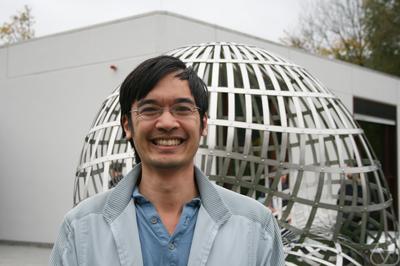
Ivonne Vetter, Archives of the Mathematisches Forschungsinstitut Oberwolfach, 2012, CC BY-SA 2.0 DE · Oberwolfach Photo Collection (Archives of the Mathematisches Forschungsinstitut Oberwolfach), photo ID 17061, taken by Ivonne Vetter in 2012 at the Arbeitsgemeinschaft on Ergodic Theory and Combinatorial Number Theory (Tao annotated as organiser); Wikimedia Commons file 'Terence C. Tao Oberwolfach 2012.jpg'. The MFO Terms of Use (clause 4) allow its reduced-resolution watermarked images, where MFO owns the copyright, to be used under CC BY-SA 2.0 Germany; the collection page lists Copyright: MFO and Author: Vetter, Ivonne. Saved at the Commons size of 400 x 266 with its small MFO watermark, no resizing. · CC BY-SA 2.0 DE
mathematician · Contemporary
Terence Tao
b. 1975
Known For
Not yet included in personality matching — the documented evidence doesn't yet cover enough of the personality model. Everything else on this page is fully available.
Trait Constellation
Key Achievements
With Ben Green he proved in 2004 that the prime numbers contain arithmetic progressions of any length, a long-standing question.
He received the 2006 Fields Medal for contributions to partial differential equations, combinatorics, harmonic analysis and additive number theory, with work ranging from the Kakeya problem to wave maps.
He worked with Emmanuel Candes on compressed sensing, used in image reconstruction, and organised the open online Polymath project on prime gaps in 2013.
Moments That Reveal Them
In 2015 Tao proved the Erdos discrepancy conjecture, weeks after a blog commenter suggested a link to the Elliott conjecture, and thanked the commenter in the paper.
This is consistent with a willingness to revise a first impression and build on others' ideas. Belief Updating
In June 2013 he created the Polymath project on bounded prime gaps, splitting Zhang's modular proof among participants; at times the bound fell every thirty minutes.
This is consistent with a collaborative, modular way of attacking a problem in public. Collaboration
Turning Points
In October 2023 he announced he was learning the Lean proof language with AI help, and in November led the formalization of the PFR proof with many volunteers, completed in about three weeks.
This is consistent with a mid-career shift toward formal verification and large-scale collaboration. Adaptability
Similar People
People whose overall profiles resemble theirs.
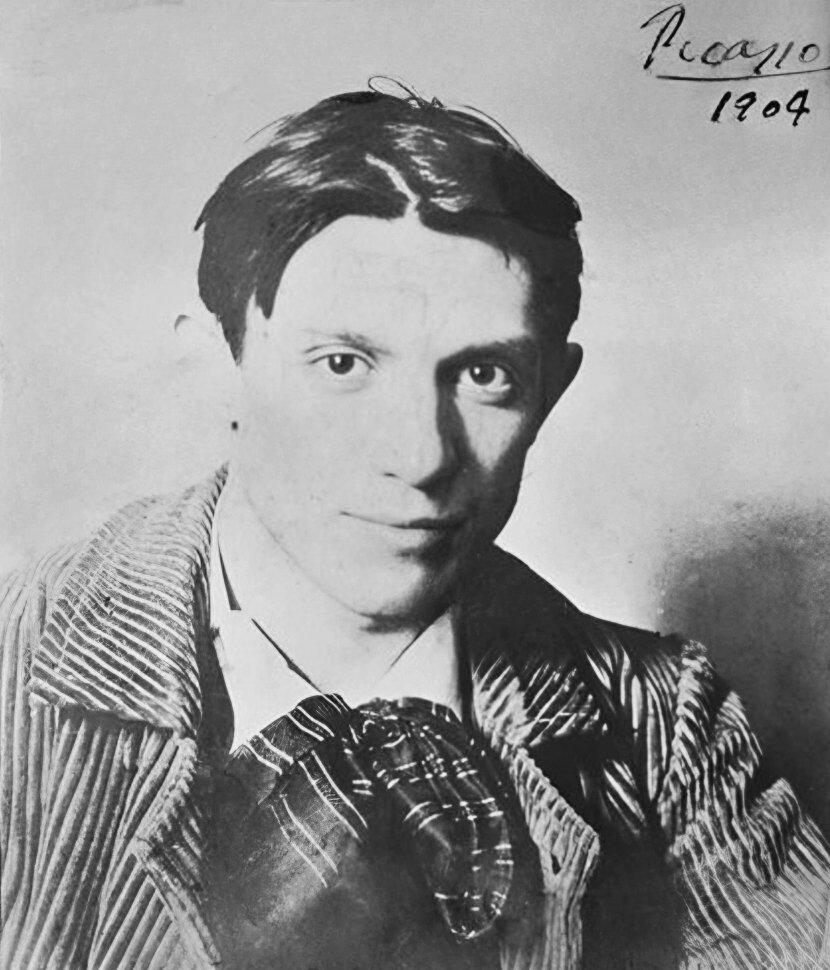

Pablo Picasso

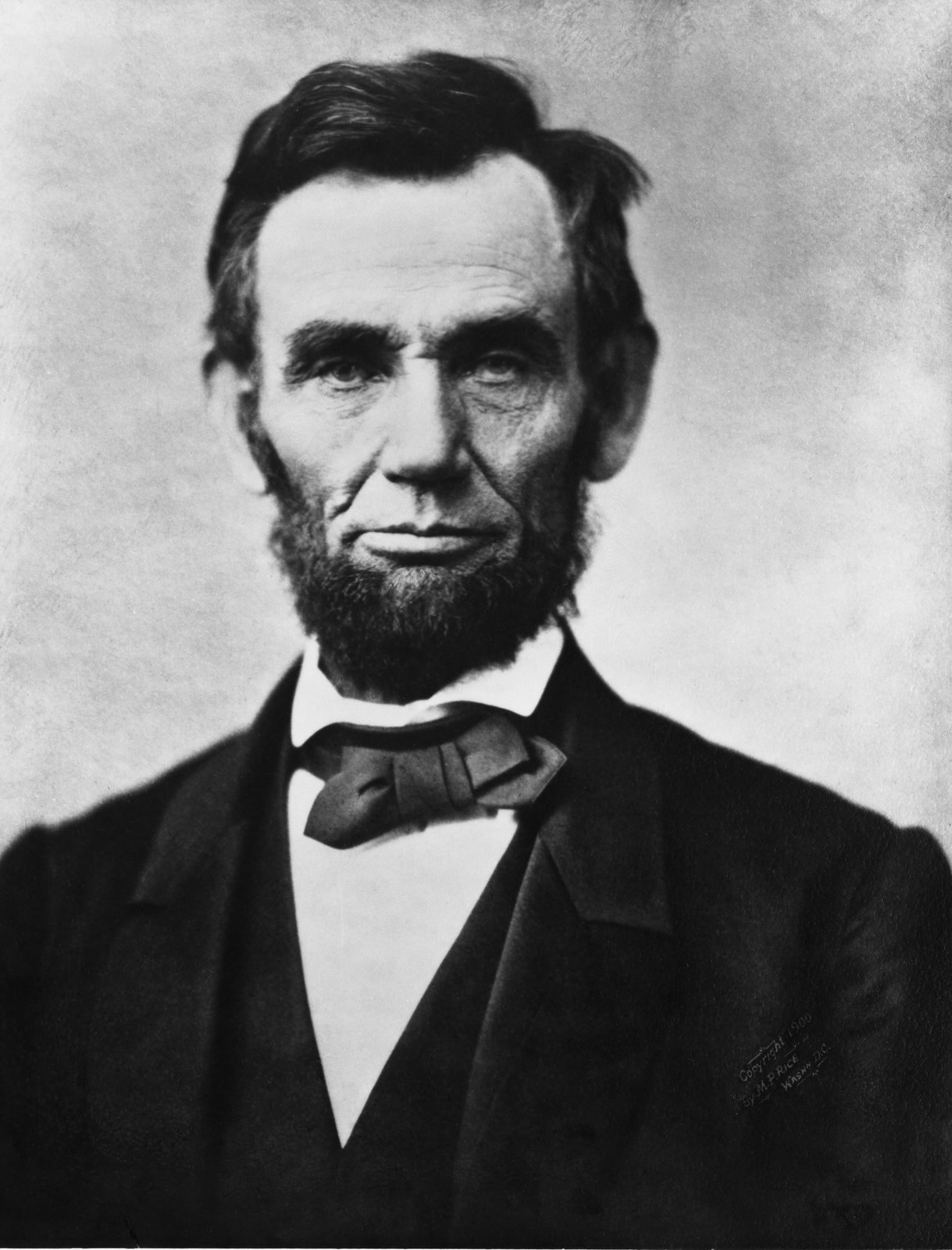
Abraham Lincoln

Benjamin Franklin

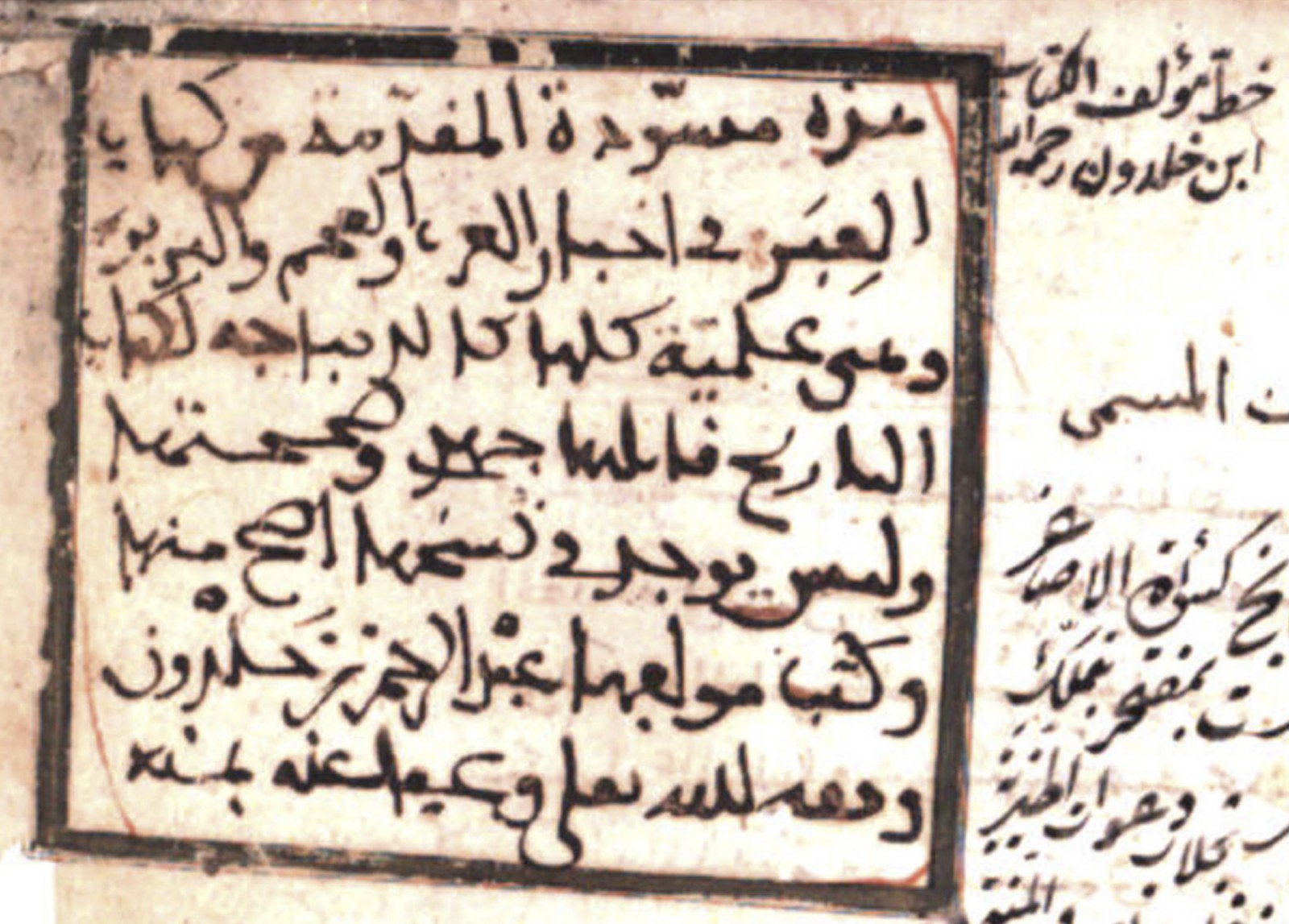
Ibn Khaldun

Maya Angelou
Opposite Profile
Not a rival — a different profile shape worth a look.
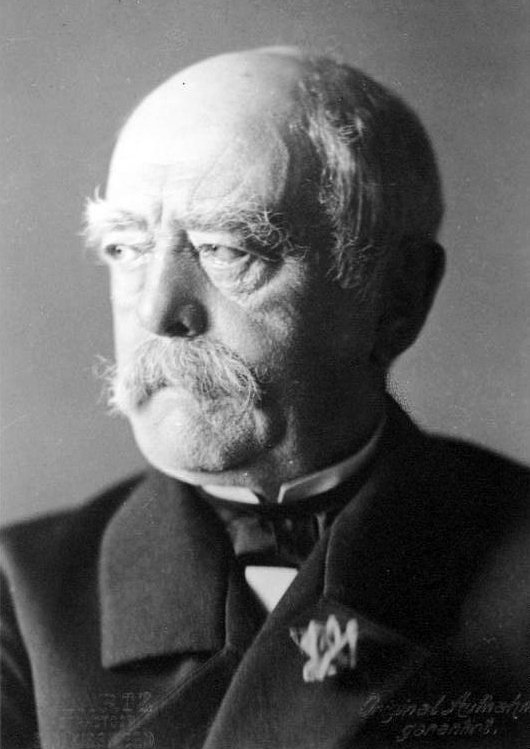
Otto von Bismarck
Sources
- Terence Tao (Q295981) -- verified live via the Wikidata API (2026-10-24): English label 'Terence Tao', description 'Australian-American mathematician', born 1975-07-17, no date of death, Korean label '테런스 타오', P18 image 'Terence Tao at IPAM's Fireside Chat 2026 (50m16s) (cropped).jpg' (not used). Orientation only; not used as support for any row.
- International Mathematical Union, '2006 Fields Medal: Terence Tao' citation and laudation (IMU medals archive, EMIS mirror), read in full. CANONICAL SIGNIFICANCE SOURCE: citation 'for his contributions to partial differential equations, combinatorics, harmonic analysis and additive number theory'; describes the Green-Tao theorem that the primes contain arithmetic progressions of any length, his work on the Kakeya problem, wave maps and nonlinear Schroedinger equations (with the 'I-team' of Colliander, Keel, Staffilani and Takaoka), and the Horn conjecture work with Allen Knutson; quotes Tao's own Clay interview on collaboration and on viewing mathematics as a unified subject. An award-body laudation: admiring and retrospective, with Tao's own words only as quoted self-account.
- Clay Mathematics Institute Annual Report 2006, 'Recognizing Achievement: Fields Medal Winner Terence Tao', read in full: former Clay Research Fellow; more than 140 papers, about three-quarters written with one or more of fifty collaborators; work ranging from harmonic analysis and partial differential equations to combinatorics, number theory and compressed sensing; the 2004 Green-Tao paper answering a long-standing conjecture; and the observation that he is unusual in the attention he gives to exposition (online lecture notes, textbook, a new blog). Institutional profile from a body that funded him; admiring.
- Mark F. Bernstein, 'Mind of a Mathematician' (Princeton Alumni Weekly, 4 November 2019), read in full: profile with interviews of Charles Fefferman and others; the Green-Tao work built on Szemeredi's theorems, the twin-prime and prime-gap effort, the 2015 Erdos discrepancy proof triggered by a blog comment from Uwe Stroinski, the compressed-sensing collaboration with Emmanuel Candes (retold from Smithsonian magazine), his remarks that insight comes from hard work, trial and error and walking, and that he rejects being called a genius. An alumni magazine: friendly and partly based on Tao's own account. The family, childhood and personal passages were read but excluded from scoring.
- Erica Klarreich, 'Together and Alone, Closing the Prime Gap' (Quanta Magazine, 19 November 2013), read via a page fetch: Tao created the Polymath project on bounded prime gaps on 4 June 2013 after Yitang Zhang's 70 million bound; the work was split into modular steps, public and fast ('at times, the bound was going down every thirty minutes'); Zhang worked alone and James Maynard independently reached a bound of 600; Tao says it is important to have people who work in isolation and buck conventional wisdom. Journalistic account with independent voices (Zhang, Maynard, Sutherland, Morrison).
- Kevin Hartnett, 'How Terry Tao Became an Evangelist for AI in Math' (Quanta Magazine, 8 June 2026, adapted from his book), read via a page fetch: Polymath's open-forum model and its limits; Tao announcing in October 2023 that he was learning the Lean proof language; the Lean formalization of the Tao-Green-Gowers-Manners PFR proof in about three weeks with many volunteers; the 2024 Equational Theories project; his view of language models as overconfident undergraduates. Includes critics: Johan Commelin questions whether the lessons generalise given the project's high profile, John Baez calls Equational Theories 'a colossal waste of time', Kevin Buzzard finds the mathematics elementary. COUNTER-VOICE source; secondary and recent, so the AI-policy parts were not used.
- Chris Cesare, 'Math Whiz Solves a Master's Riddle' (Nature news, reprinted by Scientific American, 25 September 2015), read in full: Tao's September 2015 arXiv proof of the Erdos discrepancy conjecture after years of failed attempts including the PolyMath effort and a computer proof of a special case; he credited commenter Uwe Stroinski; Gil Kalai said he was completely confident of the proof; Tao says he first thought the connection was only superficial. News report with an independent expert.
- Oberwolfach Photo Collection (Mathematisches Forschungsinstitut Oberwolfach), photo 17061 'Terence C. Tao' by Ivonne Vetter, 2012, with the collection's Terms of Use and the Wikimedia Commons file page 'Terence C. Tao Oberwolfach 2012.jpg' (licence template CC BY-SA 2.0 DE), checked for the portrait only.