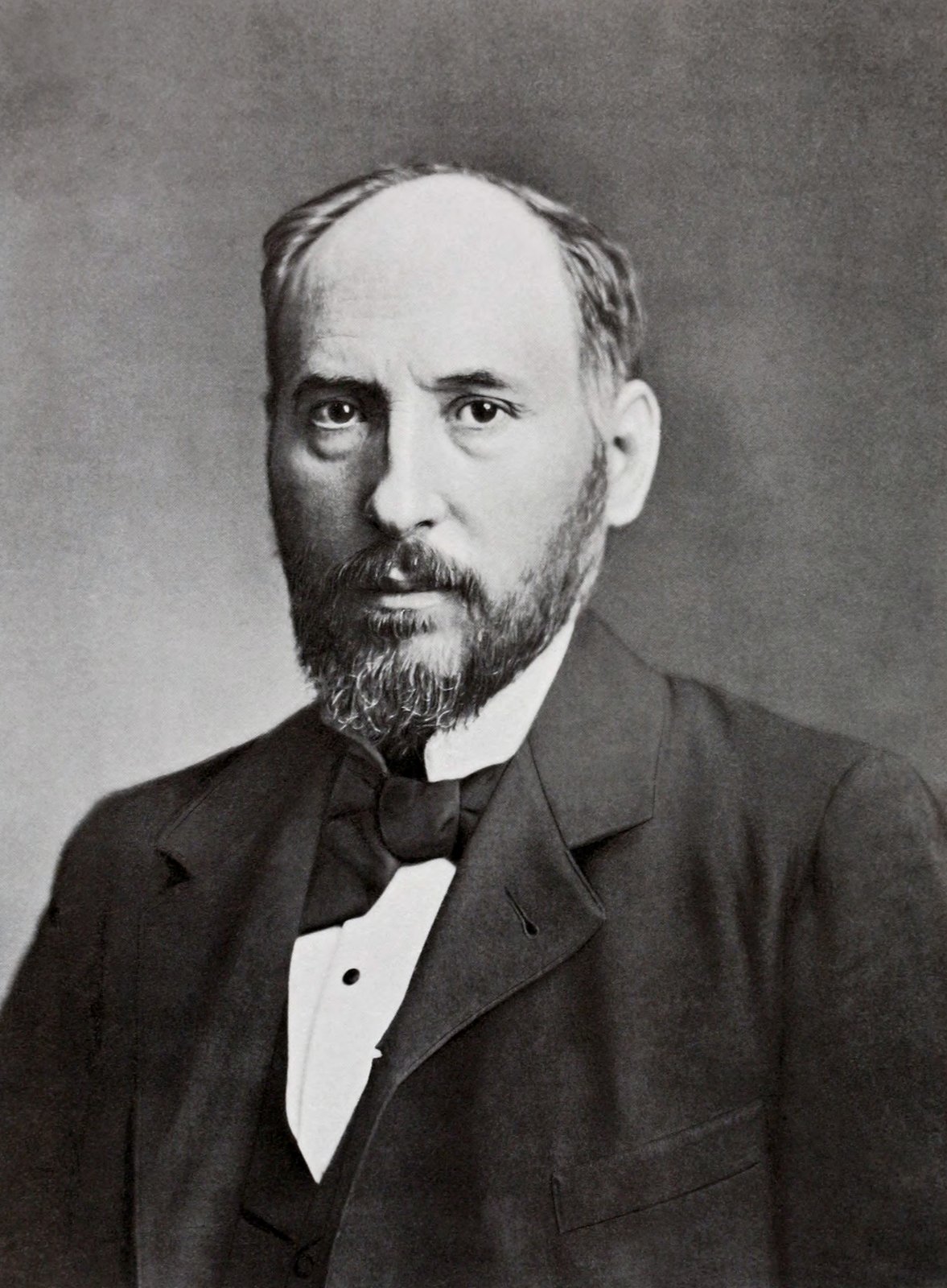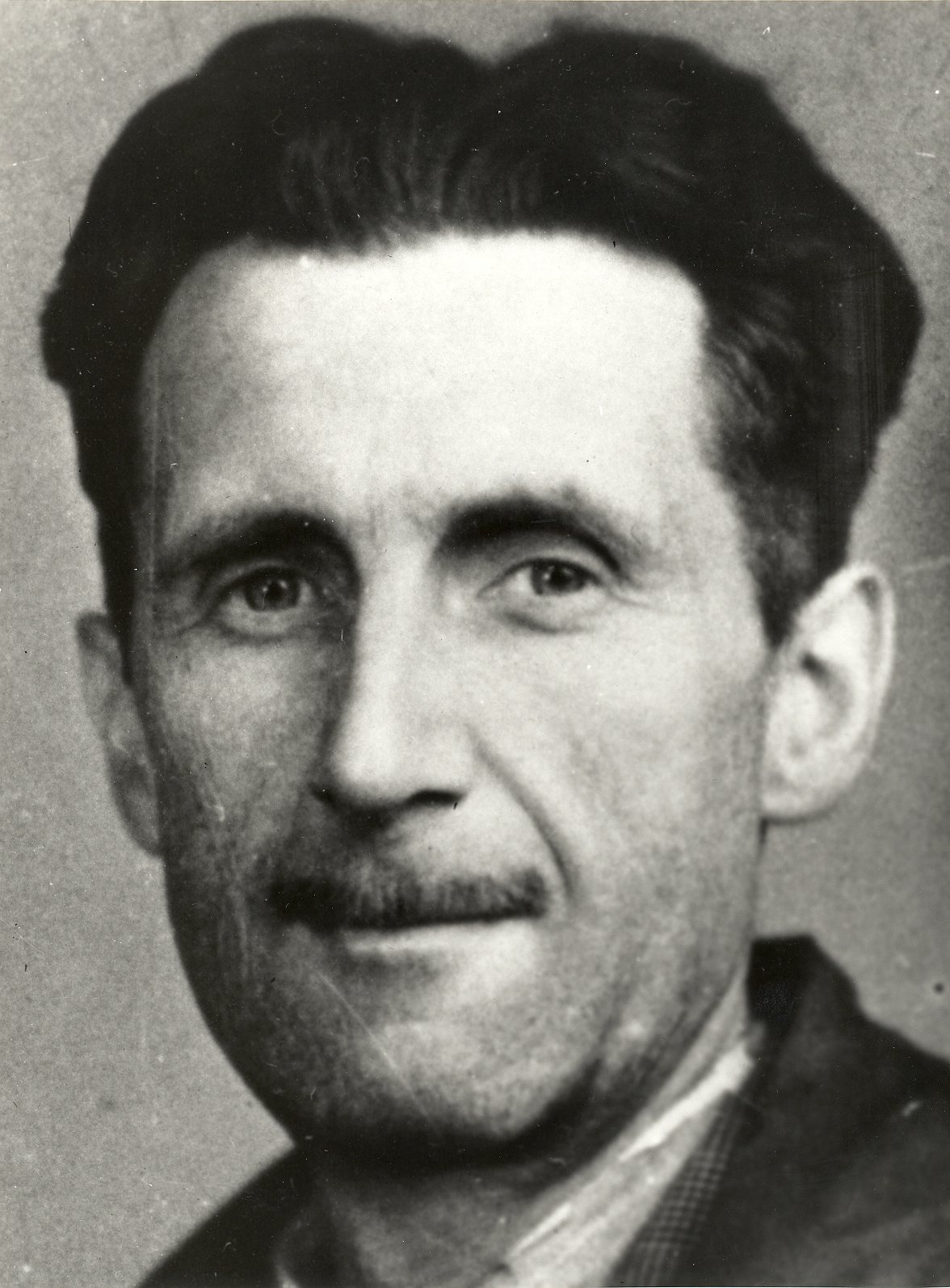

Santiago Ramón y Cajal, photograph by an unknown photographer, published in Clark University, 1889-1899: Decennial Celebration (1899); restoration by Garrondo (Wikimedia Commons: dust removed, levels adjusted, cropped to the photograph); downscaled · Portrait plate facing p. 311 in Clark University, 1889-1899: Decennial Celebration (Worcester, Mass.: printed for the University, 1899); restored digital copy on Wikimedia Commons · Public domain
Trait Constellation
Key Achievements
Shared the 1906 Nobel Prize in Physiology or Medicine with Camillo Golgi for work on the structure of the nervous system. In his own Nobel lecture, Golgi set out his disagreement with Cajal's view of how nerve cells connect.
From 1888 he argued that nerve cells are separate units that communicate by contact rather than forming a continuous network. By 1891 he had also proposed that impulses travel in one direction through each cell, from the dendrites and cell body to the axon.
Between 1889 and 1913 he developed several staining methods and variants, including the reduced silver nitrate method of 1903. About 4,500 slides from his collection and almost 2,000 scientific drawings, nearly all by his own hand, survive at the Cajal Institute in Madrid.
Moments That Reveal Them
In October 1889 Cajal travelled to the German Anatomical Society's congress in Berlin with his own slides and microscope. Arthur van Gehuchten, who was there, later recalled that he stood almost alone amid sceptical smiles until he took Albert von Kölliker aside to a microscope. Within months Kölliker had published confirmations of his findings.
Choosing to show his preparations to the leading sceptics in person, instead of waiting for his papers to be read, is consistent with a strong habit of taking the initiative. Proactive Agency
Around 1918-20 his pupil Pío del Río Hortega found that cells Cajal had described as lacking processes did in fact have them. By Río Hortega's own account, Cajal called the conclusions too daring and did not encourage publication. When the findings were later confirmed, Cajal's memoirs credited the discovery to another pupil.
This account comes from the pupil concerned and sits alongside other episodes in which Cajal did revise his views, which is one reason his profile places him near the middle on changing his mind. Belief Updating
Turning Points
In 1887 the neurologist Luis Simarro showed Cajal brain sections stained with Golgi's silver method, a technique Cajal had dismissed after reading about it. He adopted it at once and applied it to young animals and embryos, whose nerve fibres are easier to stain. His first major findings followed in 1888.
Taking up a method he had earlier set aside, and adapting it through his choice of material, offers one example of the hands-on trial and variation seen throughout his work. Experimentation
Similar People
People whose overall profiles resemble theirs.

Mahatma Gandhi

Elizabeth Cady Stanton

Elizabeth Blackwell

Jane Goodall

George Orwell
Sources
- Santiago Ramón y Cajal (English Wikipedia) -- orientation only; not used as support for any scored row. Korean Wikipedia title '산티아고 라몬 이 카할' confirmed via the Wikidata sitelink.
- Santiago Ramón y Cajal (Q150526) -- verified live via wbgetentities (2026-09-26): en label 'Santiago Ramón y Cajal', description 'Spanish scientist (1852-1934)', ko label '산티아고 라몬 이 카할' (ko description '스페인의 신경과학자'), es label 'Santiago Ramón y Cajal', born 1852-05-01, died 1934-10-17, citizenship Q29 (Spain), P18 'Cajal-mi.jpg' and 'Santiago Ramón y Cajal (1852-1934) portrait (restored).jpg', kowiki '산티아고 라몬 이 카할'. Orientation only.
- Dorothy F. Cannon, Explorer of the Human Brain: The Life of Santiago Ramón y Cajal (1852-1934) (New York: Henry Schuman, 1949), with 'A Memoir of Dr. Cajal' by Sir Charles Sherrington (pp. ix-xv), archive.org OCR (in.ernet.dli.2015.63985) -- two perspectives in one volume, recorded separately in the notes: (a) SHERRINGTON, FIRSTHAND HOST/PEER: Cajal stayed some two weeks in Sherrington's London house in 1894 (Croonian Lecture); Sherrington writes from his own observation (London Bridge visit, Army and Navy Stores, choosing slides for the Croonian lecture and the chick 'pyramidal tract' exchange, his rough-mounted preparations and anthropomorphic descriptions). (b) CANNON, SCHOLAR/BIOGRAPHER: admiring, relies heavily on Cajal's own Recuerdos (such passages are treated as SELF-derived) but adds unpublished firsthand material from pupils: Fernando de Castro (student from 1914; daily routine, teaching, retirement laboratory), Pío del Río Hortega's unpublished memoir 'El maestro y yo' via Moisés Polak (the microglia dispute, c.1918-20; an ADVERSARIAL insider account), and Wilder Penfield's 1926 published account of meeting Cajal. Read: Author's preface; Sherrington memoir in full (a garbled OCR page [xi]-[xii] partly unreadable); ch. 1 opening; ch. 7 Berlin 1889 section (pp. 142-145); ch. 10 pp. 237-245 (Río Hortega episode, de Castro's account of the master and his school); ch. 11 pp. 248-250 (de Castro on retirement years, Penfield's 1924-25 meeting).
- Camillo Golgi, Nobel Lecture 'The neuron doctrine - theory and facts', 11 Dec. 1906 (English translation), nobelprize.org PDF -- ADVERSARIAL PEER perspective: Golgi, co-laureate, opposed the neuron doctrine and argues against Cajal on the cerebellar basket/Purkinje endings and the spinal-ganglion pathway. Read in full 2026-09-26. Used for: Golgi's own statement that Cajal 'successively modified his theory' of dynamic polarization to fit new data and 'to meet some opposition' (the spinal-ganglion T-bifurcation revision), and his judgment that Cajal's reduced-silver neurofibril results were 'the finest and most important' and easy to demonstrate.
- K. A. H. Mörner (Rector of the Karolinska Institute), Presentation Speech, Nobel Prize in Physiology or Medicine 1906, 10 Dec. 1906, nobelprize.org -- INSTITUTIONAL perspective, read in full 2026-09-26. Evaluative only (describes Cajal's 'extraordinarily active and successful work'); contains no behavioural episode and supports no row; recorded for completeness.
- Santiago Ramón y Cajal, Nobel Lecture 'The structure and connexions of neurons', 12 Dec. 1906 (English), nobelprize.org PDF -- SELF, one perspective, never sole support for a row. Read pp. 220-223 closely and skimmed the rest: states the neuron propositions, credits Golgi's method and the confirmations by Kölliker, Lenhossék, Retzius, van Gehuchten and others, says he applied Golgi's method first to embryos and young animals, and claims twenty-five years of work with the Golgi, Cox, Ehrlich and neurofibrillar methods.
- Javier DeFelipe, 'Cajal and the discovery of the Golgi method: a neuroanatomist's dream', Anatomical Science International 100 (2025): 384-399 (open access, PMC12513909), read in full -- MODERN SCHOLAR perspective (Instituto Cajal/CSIC; admiring, but works from the primary publications and archive). Used for: the 1887 Simarro encounter and Cajal's earlier dismissal of the Golgi method after Ranvier; the 1888 avian cerebellum paper including Cajal's printed note that he first suspected the dendritic spines were silver precipitate and accepted them as real only from their constancy; the 1891-92 redefinition of Golgi's type I/II classification; the 1933 '¿Neuronismo o reticularismo?' rebuttal; and, critically, Arthur van Gehuchten's 1913 EYEWITNESS account (quoted) of Cajal at the Berlin congress of Oct. 1889, alone amid 'smiles of incredulity', taking Kölliker aside to a microscope.
- P. Garcia-Lopez, V. Garcia-Marin and M. Freire, 'The histological slides and drawings of Cajal', Frontiers in Neuroanatomy 4:9 (2010) (open access, PMC2845060), read in full -- ARCHIVAL/MUSEUM SCHOLAR perspective: a catalogue of 4,529 of Cajal's surviving slides and 1,976 scientific drawings at the Cajal Museum. Used for documentary facts about his working method (not counts as merit): most slides made personally and 1,907 of the drawings by his own hand; a sequence of staining methods and variants he introduced 1889-1920 (fast and double-impregnation Golgi variants 1889, methylene-blue variant 1896, reduced silver nitrate 1903, formalin-uranium nitrate 1912, gold-sublimate 1913); systematic use of correlative stains to confirm a structure; the 'ontogenic' choice of embryonic/young animals; the Cajal-De Castro 1933 technical rules on species and ages.
- William Carleton Gibson, 'Santiago Ramón y Cajal (1852-1934)', Annals of Medical History n.s. 8 (Sept. 1936): 385-394 (PMC7939818, scanned, CC BY-NC), read in full -- JOURNALIST/COMPILER perspective: a memorial essay drawing on Recuerdos, Sherrington's 1935 obituary notice, Penfield 1926 and others; little or no firsthand content, so SELF-derived passages are treated as such. Used only for: the refusal of the Ministry of Public Instruction (not scored, political), the switch of his laboratory journal to French so pupils' work would be read, and the (hearsay, 'it has been recounted') London bedroom-laboratory anecdote, which is NOT used for any row.
- Santiago Ramon y Cajal, Recuerdos de mi vida, 2 vols. (Madrid: Nicolas Moya, 1917 edition; vol. II 'Historia de mi labor cientifica'), archive.org OCR (recuerdosdemivid01ramuoft, recuerdosdemivid02ramuoft) -- SELF, one perspective, never sole support for any row (the English 'Recollections of My Life', 1937, is a lending-only copy on archive.org and was not read). Read in Spanish: vol. II preface ('Dos palabras al lector'); ch. V pp. 97-103 (the 1888 'ano cumbre', two years of unrewarded trials, the self-financed Revista trimestral de Histologia of May/Aug. 1888, six articles and six plates by his own hand, 60 copies mostly for foreign scientists); ch. VIII pp. 144-147 (joining the German Anatomical Society; Berlin congress Oct. 1889 paid from savings, own Zeiss microscope, demonstrations to His, Schwalbe, Retzius, Waldeyer and Kolliker, with his footnote quoting van Gehuchten's 1913 speech). Vol. I (childhood) was consulted only via Cannon's and Gibson's retellings and is not used for any row.