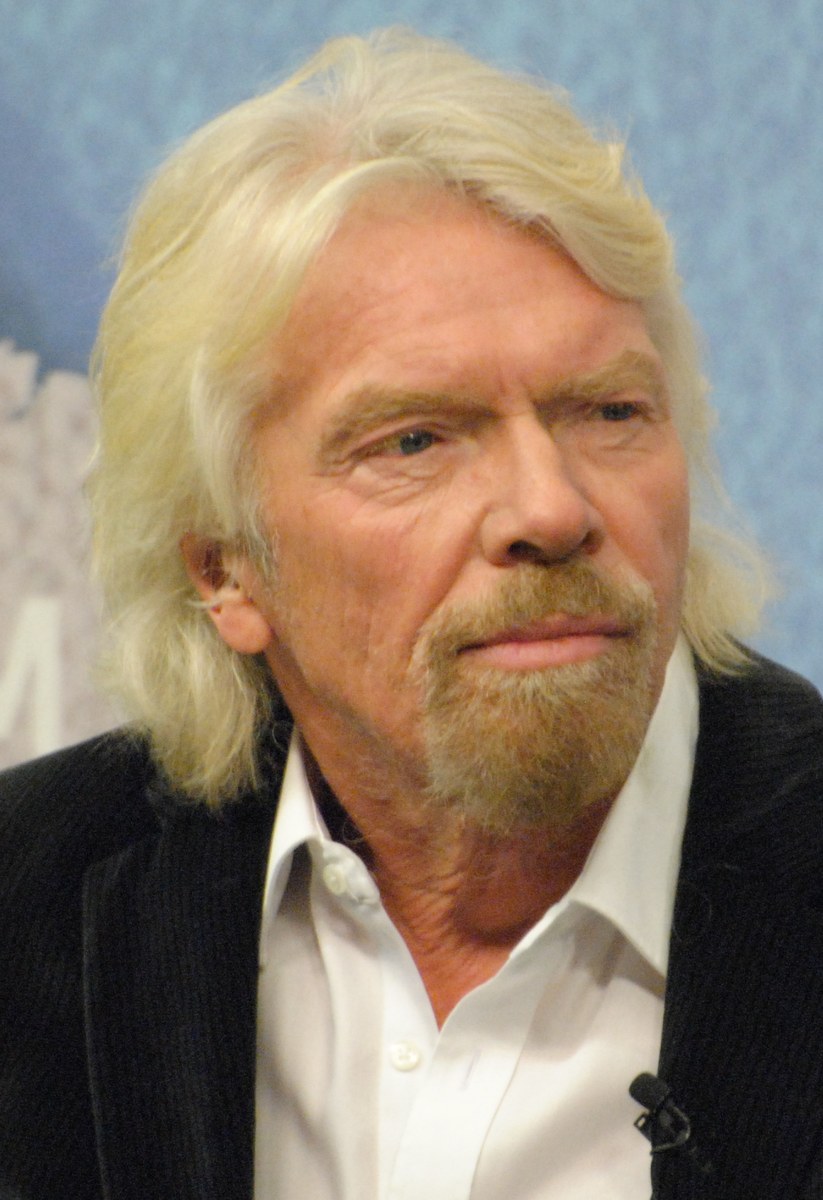

Photo: Chatham House, 4 March 2015, CC BY 2.0, downscaled from the original · Wikimedia Commons, 'Richard Branson March 2015 (cropped).jpg' -- photograph by Chatham House, taken 4 March 2015 at the 'UK Drugs Policy: Taking the Lead Internationally' event, London, from Chatham House's Flickr (photos/chathamhouse/16528067458); Commons records the Flickr licence as verified CC BY 2.0 by the UploadWizard; Commons file 1348 x 1965 pixels, downscaled once to 823 x 1200 (never upscaled). · CC BY 2.0
entrepreneur · Contemporary
Richard Branson
b. 1950
Known For
Not yet included in personality matching — the documented evidence doesn't yet cover enough of the personality model. Everything else on this page is fully available.
Trait Constellation
Key Achievements
He founded Virgin in 1970 as a mail-order record business, built it into Virgin Records and a group the Gale business biography puts at more than two hundred companies across music, air travel, financial services and retail, and promoted it with his own stunts, such as the 1986 powerboat record and the 1987 balloon crossing of the Atlantic.
He launched Virgin Atlantic in 1984 with a single second-hand Boeing 747, against the objections of his own Virgin Records executives, and in 1992 sold the Virgin Music Group for about $1 billion to keep the airline going.
Moments That Reveal Them
In 1992 he sold the Virgin Music Group, the profitable business he had built from the start, for about $1 billion so that Virgin Atlantic, which was struggling with lenders and overdrafts, could stay in the air.
This is consistent with sticking with a struggling venture and giving up a successful one to keep it going. Persistence
To launch Virgin Cola in the United States in 1998 he rode a tank through New York, crushing rivals' bottles, though the drink was later withdrawn and the case study found little sign that the publicity had been turned into sales.
This is consistent with taking on much larger rivals in showy fashion, with mixed commercial results. Competitiveness
Turning Points
In February 1984 he agreed to back lawyer Randolph Fields's idea for a transatlantic airline, despite objections from his Virgin Records executives and bankers, and Virgin Atlantic made its first flight that June from a single leased 747.
This is consistent with moving a music-based business into a capital-intensive new industry despite resistance from those closest to it. Risk Tolerance
Similar People
People whose overall profiles resemble theirs.

Nellie Bly

Miriam Makeba

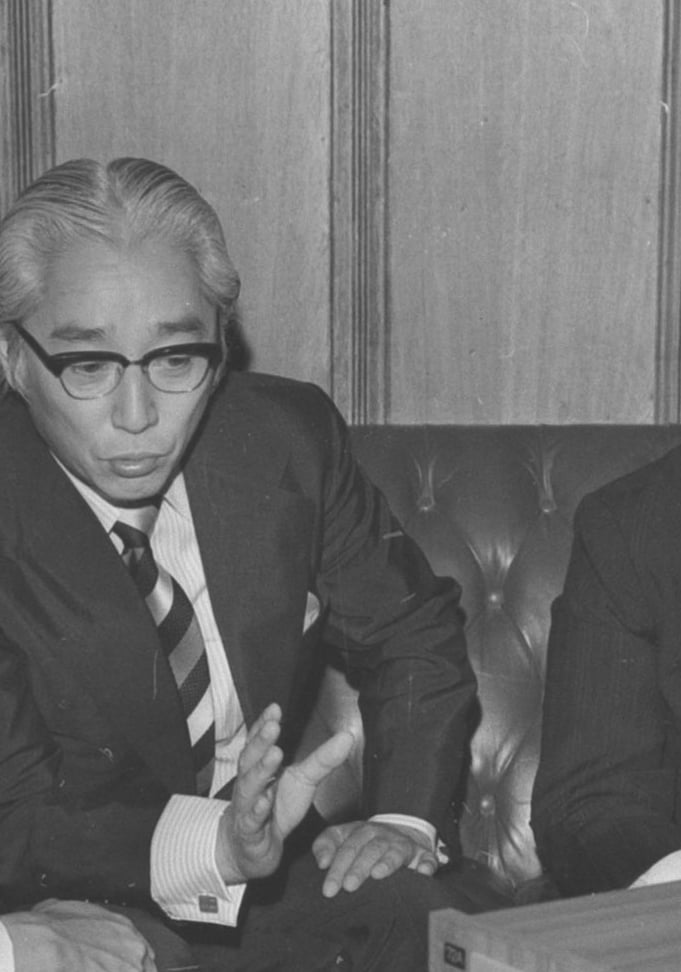
Akio Morita

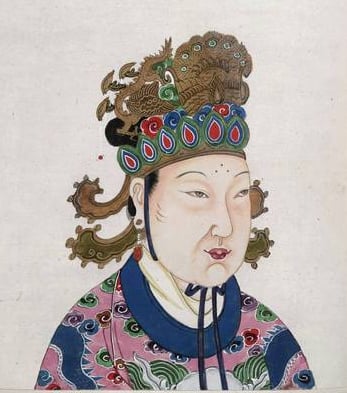
Wu Zetian

Che Guevara
Opposite Profile
Not a rival — a different profile shape worth a look.

Warren Buffett
Sources
- Richard Branson (Q194419) -- verified live via the Wikidata API (2026-10-11): English label 'Richard Branson', description 'British business magnate', born 18 July 1950, no date of death, citizenship United Kingdom, Korean label present. Orientation only; not used as support for any row.
- Barry Alfonso, 'Branson, Richard 1950-', International Directory of Business Biographies (Gale), via Encyclopedia.com -- reference biography covering the Student magazine and mail-order record start, Virgin Records, the 1984 launch of Virgin Atlantic against his partners' and bankers' objections, the publicity stunts, the 1985 flotation and 1988 buy-back, the unusual group structure and delegating style, the criticism of 'Virgin's system of one', the 1992 sale of the music business, and the late-1990s failures and retrenchment. CANONICAL SIGNIFICANCE SOURCE. Written to 2004; mostly neutral with criticism noted; draws on Branson's own memoir and interviews, so self quotations inside it are marked as such. Read in full.
- 'Richard Branson and the Virgin Group of Companies in 2002', business-school case study from Robert M. Grant's Contemporary Strategy Analysis teaching materials (Blackwell) -- academic account of the group's structure and Branson's role (publicity, public relations and appointing senior executives), the 1984 airline launch, the 1985 flotation and its aftermath, Virgin Cola, Virgin Vodka, Victory Corporation and Virgin Direct, the Economist's 1998 over-extension warning and the 1996-97 refocus on core businesses. Independent, analytical and critical of several ventures; footnotes cite INSEAD cases, Fortune, Forbes and Bloomberg. Read in full apart from the appendix tables.
- Glenn Rifkin, 'How Richard Branson Works Magic', strategy+business (Booz & Company), 1998 -- management-journal profile with reported interview material from Branson and Virgin executives on his 'big bad wolf' approach to entering industries, the 25 percent of his time spent on publicity, Freddie Laker's advice to use himself in promotion, reading employee mail each morning, his notebook, and the 1992 sale of Virgin Records. Admiring in tone and heavily based on what Branson says; used with that caution. Read in full.
- Julian Baum, 'Branson: just another '60s dreamer?', The Christian Science Monitor, 2 May 1988 -- contemporary newspaper profile with Branson's own account of learning to delegate young, of boyhood friends still running his record company, and of how near the company was to failure four years earlier, plus the reporter's note that Virgin's share price had dipped below its flotation price. Independent contemporary reporting, partly interview. Read in full.
- Alan Mitchell, 'Is Branson about to burst the Virgin brand bubble?', Marketing Week, 2 August 2001 -- critical commentary on Branson's decision to redefine Virgin as a 'branded venture capital organisation' licensing its name to joint ventures and partners, with three reasoned objections. Independent critical voice from a marketing columnist; an opinion piece, so used only for what it reports about the decision and for the critical view. Read in full.
- 'Why Richard Branson isn't afraid to fail: Four Virgin businesses that didn't work out', City A.M. -- business-press piece on Virgin Cola (1994-2009, the 1998 US launch with a tank in New York), Virgin Megastores, Virgin Brides and Virgin Ware, framing his success as built on experimentation. Light, partly jokey in tone; used only for the facts of the failures. Read in full.
- Mark Finlay, 'History: How Virgin Atlantic Came To Be', Simple Flying -- aviation-press history of the airline's founding: Randolph Fields's idea, Freddie Laker's advice, the second-hand 747 leased from Boeing with a one-year option to return it (Branson's recollection), the first flight, the three-class layout and the use of Branson's publicity. Aviation-enthusiast press, sympathetic; the sections on the later dispute with British Airways were not used. Read in full.
- CNBC Make It, 'Richard Branson started Virgin Atlantic with a board and $39 flights', 30 December 2019 -- short feature built on Branson's own recollection, in a CNBC podcast interview, of the cancelled flight, the chartered plane and the call to Boeing. SELF account, a well-polished anecdote; used only to cross-check the Boeing lease, never as sole support. Read in full.
- Biography.com, 'Richard Branson' -- general biography page for dates and orientation (Student magazine at 16, Virgin Records, Virgin Atlantic in 1984, the 1992 sale to Thorn EMI). Popular and uncritical; not used as support for any row. Read.
- Chelsea Gohd and SPACE.com, 'Virgin Galactic Launches Richard Branson to Space in First Fully Crewed Flight of VSS Unity', Scientific American, 12 July 2021 -- news report of the 11 July 2021 Unity 22 flight, in which Branson flew with five others to 86 km (282,000 feet) in Virgin Galactic's SpaceShipTwo, noting the debate over whether the flight officially reached space. Added after the achievement self-gate as the one bounded source for a documented fact only; not used for any trait row. Read in full to the discussion of the altitude debate.
- Wikimedia Commons file 'Richard Branson March 2015 (cropped).jpg' and its Flickr source page (Chatham House, 4 March 2015, licence shown as Creative Commons Attribution 2.0) -- opened to check the portrait's licence. Not used for any scoring.