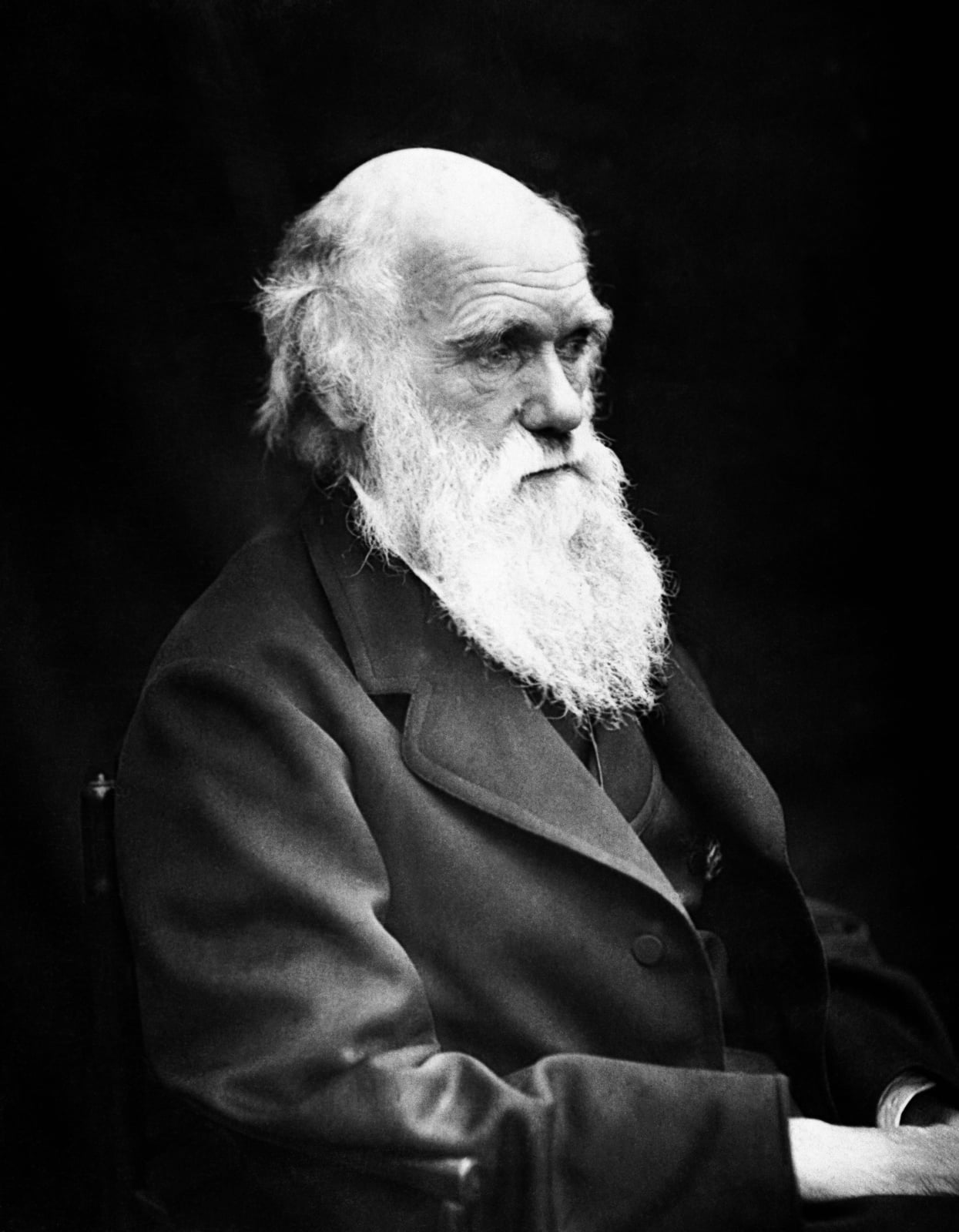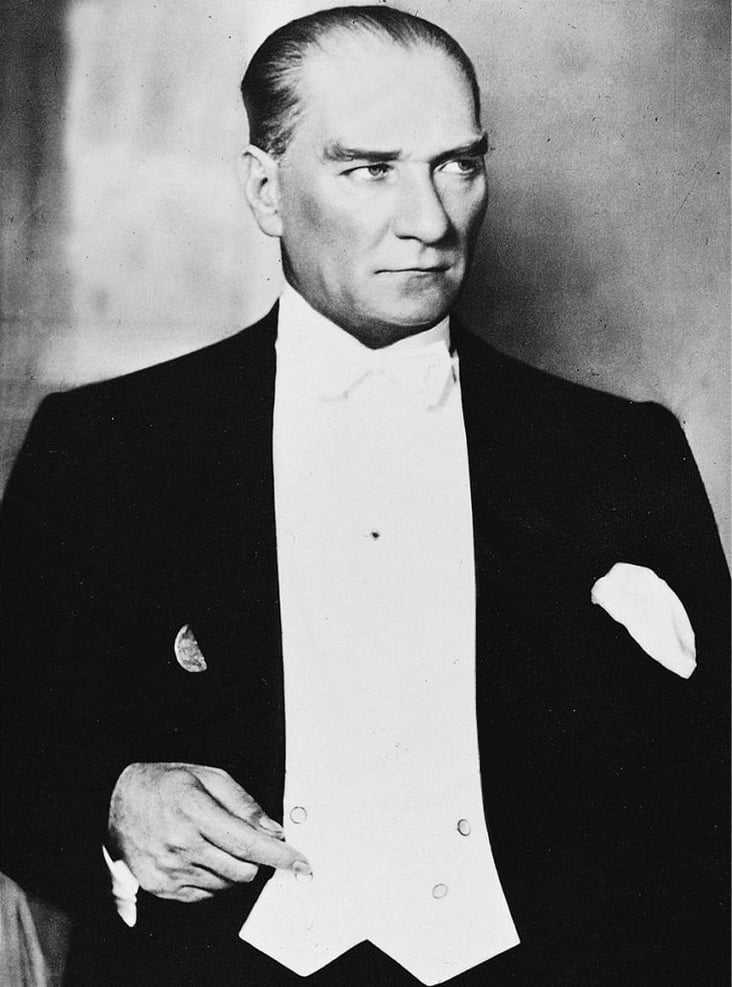
Mustafa Kemal Atatürk
93% Profile Match
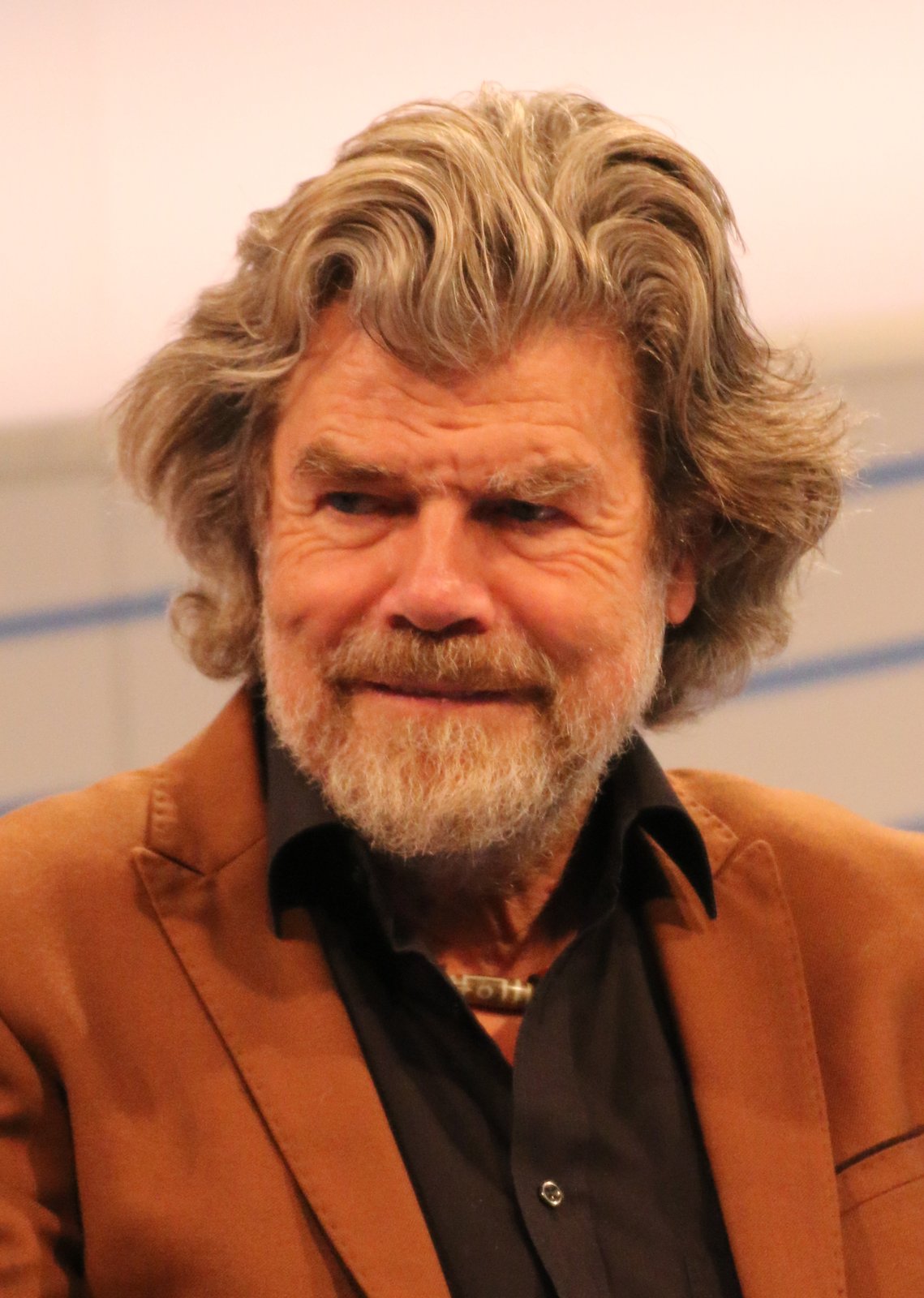
Ptolusque, Wikimedia Commons, CC BY-SA 4.0 (resized from the original) · Wikimedia Commons file 'Reinhold Messner at Frankfurt Book Fair 2017 (26) (cropped).jpg', photographed at the Frankfurt Book Fair on 12 October 2017 (own work of the uploader); downsized from 2015 x 2831 pixels to 1139 x 1600 · Creative Commons Attribution-ShareAlike 4.0 International (CC BY-SA 4.0)
explorer · Contemporary
b. 1944
Not yet included in personality matching — the documented evidence doesn't yet cover enough of the personality model. Everything else on this page is fully available.
On 8 May 1978 Messner and the Austrian Peter Habeler reached the summit of Everest from the South Col without supplementary oxygen, which Guinness World Records credits as the first such ascent. They went with very little equipment, in the lightweight alpine style they had first used on Gasherbrum I in 1975, which Habeler describes as the first alpine-style ascent of an eight-thousander.
In summer 1978 Messner climbed Nanga Parbat alone, described as the first solo ascent of an eight-thousander from base camp to summit. On 20 August 1980 he reached the top of Everest alone and without supplementary oxygen, by the north side during the monsoon and partly on a new route, which ExplorersWeb calls the first solo summit of the mountain.
Messner began his eight-thousander years on Nanga Parbat in 1970, where he and his brother Günther made the first ascent of the Rupal Face, and by 1986 had climbed all fourteen peaks above 8,000 metres; a 2024 profile says all without bottled oxygen, and he is credited as the first to complete the set. The Polish climber Jerzy Kukuczka finished it about a year later.
From 13 November 1989 to 12 February 1990 Messner and the German Arved Fuchs crossed Antarctica from the Ronne Ice Shelf to Scott Base in 92 days, each pulling his own sled and relying on their own power except for two supply depots. Messner puts the distance travelled at 2,800 km, and Climbing magazine calls it the first trans-Antarctic journey on foot. He later crossed Greenland with his brother Hubert in 1993.
In late April 1978 Habeler fell ill after eating a tin of sardines at Camp III, and Messner went on with two Sherpas to the South Col, where a storm pinned them for two days. Back at base camp he told the film crew he might have to find a new partner, and Habeler later said it was Messner kicking him into action, 'Come on, Peter', that brought back his drive. The two reached the summit on 8 May.
Pressing a hesitating partner to go on is consistent with persuasiveness that works through pressure as well as encouragement; filmmaker Leo Dickinson says Messner could get the best out of people but also shame them. The account rests on Habeler's and Dickinson's recollections. Persuasiveness
On the approach to his 1980 solo climb of Everest, Messner fell into a crevasse at night above 7,000 metres. He later said that in the crevasse he told himself he would give up if he got out, but after climbing out he went on up the north ridge, and reached the summit on the third day after leaving base camp.
Continuing the climb after a near-fatal fall, alone and without a way to be rescued, is consistent with persistence; the same choice also carried very high risk, which the sources acknowledge. Persistence
After completing the fourteen eight-thousanders in 1986, Messner turned to long journeys over flat, remote terrain. In his book Free Spirit he describes turning to the 'wild, untouched horizontal expanses'. A 2024 profile lists a search for the yeti in 1988, the Antarctic crossing of 1989-90, Greenland in 1993 and a solo Gobi journey in 2004.
Moving from vertical to horizontal exploration after finishing his main goal is consistent with adaptability, though the new projects stayed within the same field of remote, self-propelled travel. Adaptability
People whose overall profiles resemble theirs.


Not a rival — a different profile shape worth a look.