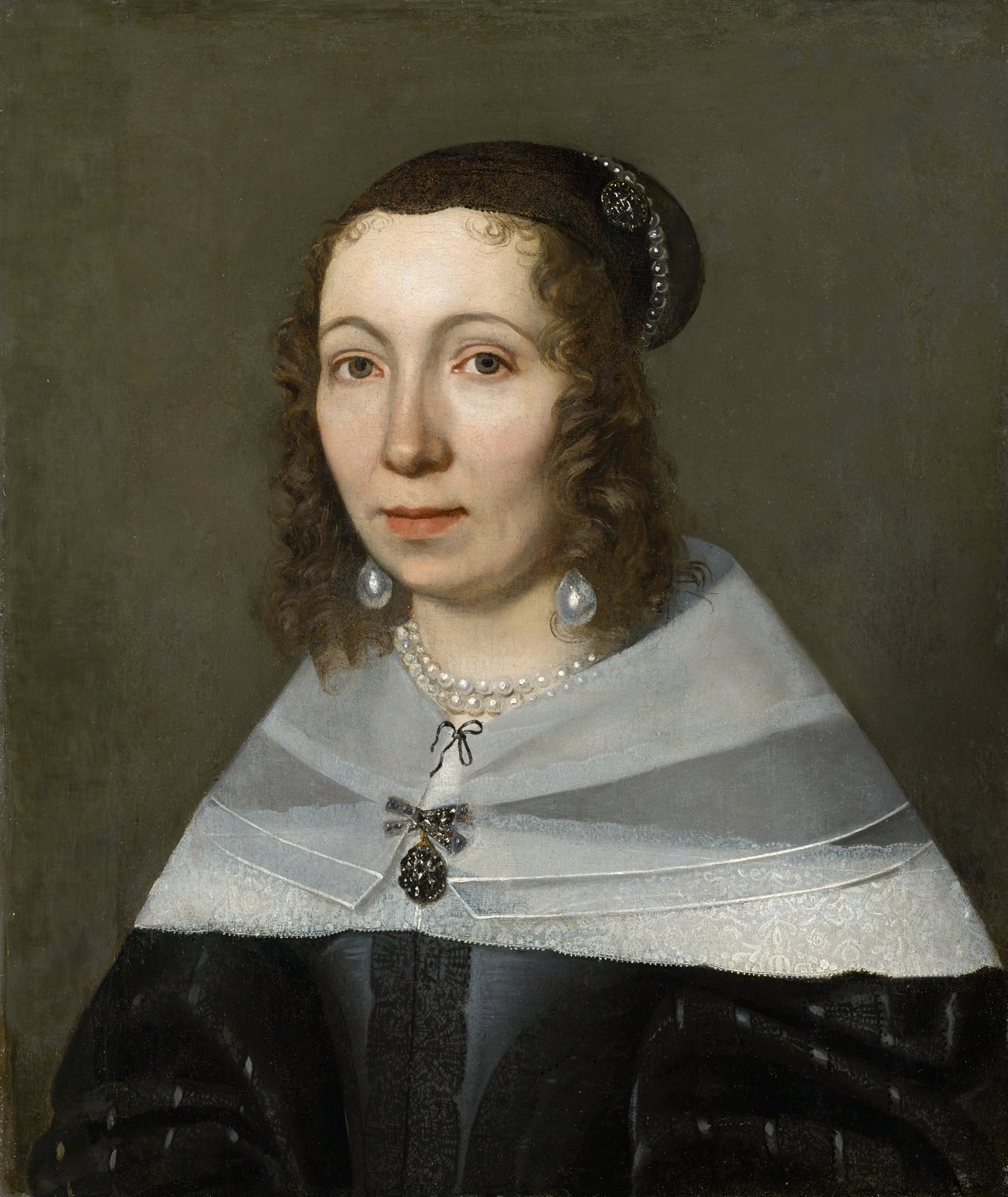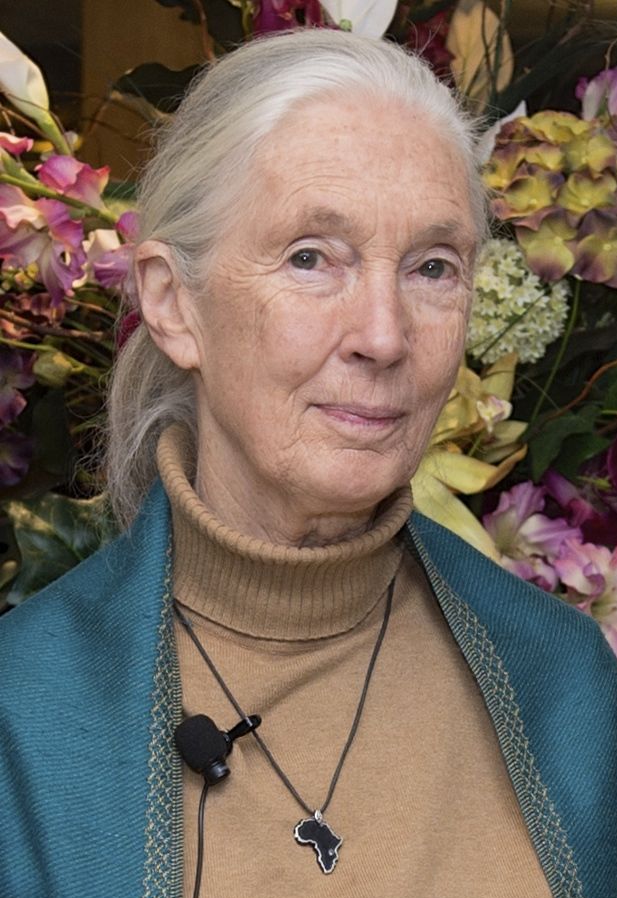

Portrait of Maria Sibylla Merian, 1679, oil on canvas, attributed to Jacob Marrel; Kunstmuseum Basel, Inv. 436 (image data public domain, Kunstmuseum Basel); downscaled · Wikimedia Commons, File:Bildnis der Maria Sibylla Merian, 1679.jpg (2106 x 2499 px original), reproduction of the painting in the Kunstmuseum Basel, Inv. 436 (gift of Louise Bachofen-Burckhardt, 1904) · Public domain
Trait Constellation
Key Achievements
In 1679 and 1683 she published two volumes on European caterpillars, researching, writing and illustrating them herself and etching the plates for the first with her own hand. Each plate shows an insect's egg, caterpillar, pupa and adult arranged around the plant its caterpillar fed on.
Her Metamorphosis insectorum Surinamensium (Amsterdam, 1705) has 60 large plates of insects and other animals of Suriname shown on their food plants. In the preface she says she observed and painted almost everything herself, adding a few items on the testimony of Indigenous informants, and kept the local names of plants alongside Latin names supplied by the botanist Caspar Commelin.
Her surviving study journal, now in St Petersburg, pairs numbered notes with small life-size paintings on vellum. It opens with rearing trials she dated to 1660, when she was thirteen, and has entries as late as 1710. A visitor in 1711 was also shown a thick volume of plants painted from life on parchment.
Moments That Reveal Them
Many of the caterpillars she reared died or were killed by parasites before reaching adulthood. According to her own accounts, as analysed by the biologist Kay Etheridge, she began again the next season with fresh caterpillars, and completing the full life cycle took her four years for both the dot moth and the cabbage moth, and three years for the emperor moth.
Returning year after year to rearings that had failed is consistent with the high persistence in her profile, though the details come largely from her own records. Persistence
When the collector Zacharias Conrad von Uffenbach visited her in Amsterdam in February 1711, he noted that she had engraved all the plates of her caterpillar books herself. She charged him 45 guilders instead of the usual 15 for a copy of the Suriname book she had coloured by hand. Her letters show that she funded that book by subscription and sold specimens from Suriname to collectors.
Doing her own engraving, colouring and selling offers one example of the resourcefulness her profile reads in how she kept her research self-supporting. Resourcefulness
Turning Points
In Amsterdam she saw collections of tropical insects that showed only adult specimens, with nothing about how they developed. In June 1699, aged 52, she sailed to the Dutch colony of Suriname with her younger daughter, and stayed until June 1701, returning earlier than planned because of the heat. Her book mentions enslaved and Indigenous people who dug up plants for her, cut paths through the forest and told her about plant uses.
Setting out to observe these insects' life cycles for herself, which no one had asked her to do, sits alongside the strong reading of taking the initiative in her profile; the work also depended on the labour and knowledge of people in Suriname. Proactive Agency
Similar People
People whose overall profiles resemble theirs.
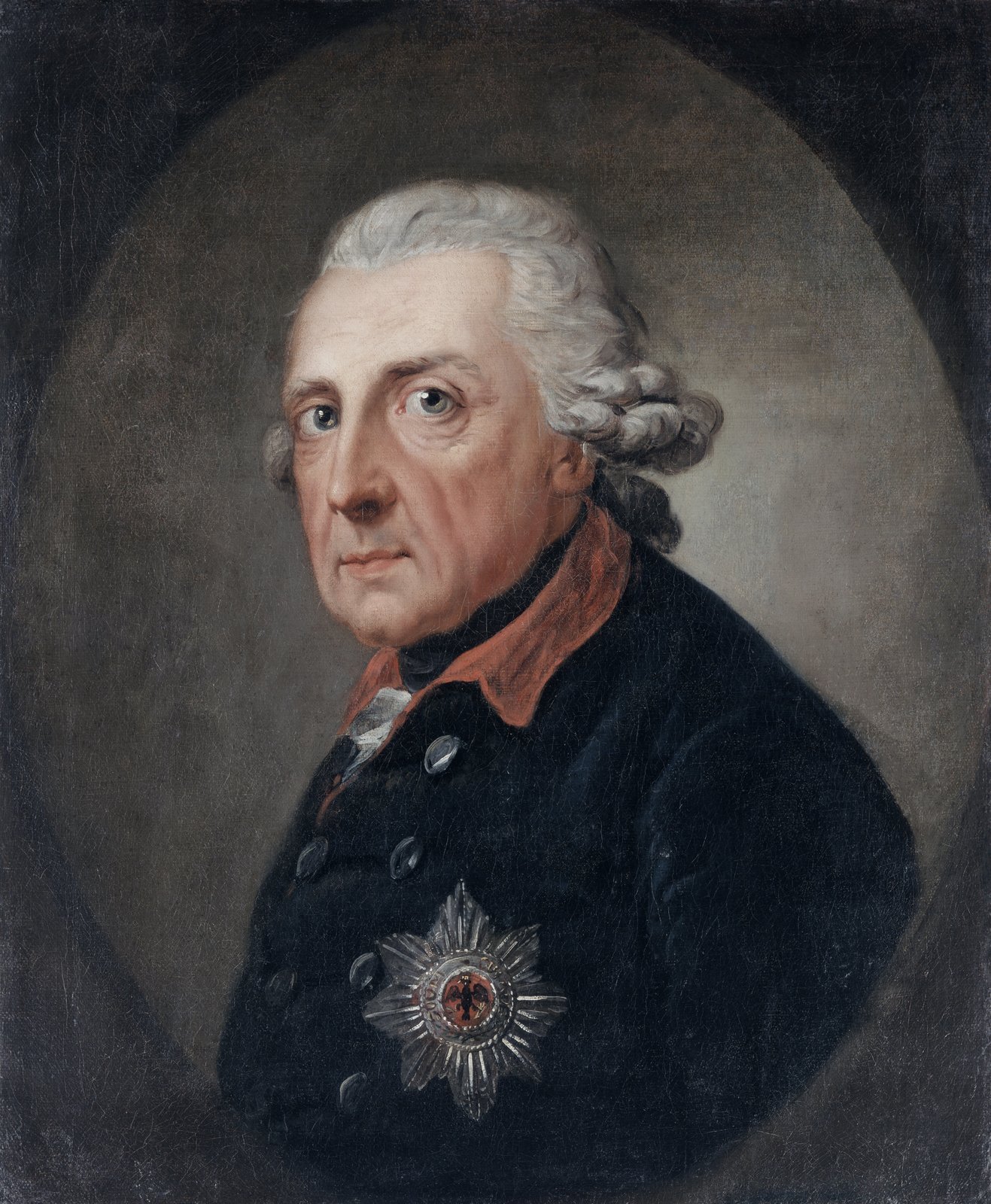

Frederick the Great

Frida Kahlo

Frederick Douglass

Sigmund Freud

Jane Goodall
Sources
- Maria Sibylla Merian (English Wikipedia) -- orientation only; not used as support for any scored row. Korean Wikipedia title '마리아 지빌라 메리안' confirmed via the Wikidata kowiki sitelink.
- Maria Sibylla Merian (Q62530) -- verified live via wbgetentities (2026-09-26): en label 'Maria Sibylla Merian', description 'German-Dutch entomologist, botanist, naturalist, scientific illustrator, graphic artist, painter, and lepidopterologist (1647-1717)', ko label '마리아 지빌라 메리안', born 1647-04-02 (Frankfurt, Q1794), died 1717-01-13 (Amsterdam, Q727), citizenship Q170072 (Dutch Republic), Q183, Q29999; P18 'Bildnis der Maria Sibylla Merian, 1679.jpg'; kowiki '마리아 지빌라 메리안'. Orientation only.
- Arnold Houbraken, De groote schouburgh der Nederlantsche konstschilders en schilderessen (Amsterdam, 1718-21), entry 'Maria Sybille Merian' (pp. 220-223 of the combined DBNL text, houb005groo01_01_0385), read in full -- CONTEMPORARY NON-SELF artists' biographer (published within two years of her death; likely informed in part by her family; hagiographic in tone and opens with a prenatal-influence explanation of her interests, which is disregarded). Used for: her taking up painting from age eleven against her mother's wishes with her stepfather Jacob Marrel's support and lessons from Abraham Mignon; her continuing work through marriage and child-rearing; her resolve to trace the transformation and food of caterpillars and publish it (1679, 1683); and the Suriname voyage 'not shrinking from the dangers of the sea', staying about two years 'solely' to draw from life and investigate. Houbraken dates the departure to 1698 (other sources: 1699).
- Kay Etheridge, The Flowering of Ecology: Maria Sibylla Merian's Caterpillar Book (Leiden: Brill, 2021; open access, CC BY-NC-ND 4.0, Gettysburg College Cupola PDF), with M. S. Merian's texts translated by Michael Ritterson -- MODERN SCHOLAR perspective (biologist-historian; admiring but explicitly weighs rival readings of her motives). Read: Preface (incl. her 27 April 1705 letter to James Petiver, BL Sloane 4064); ch. 2 'A Life Investigated' sections Early Fascination, Marriage and the Move to Nuremberg, Beginnings of the Raupen Books (incl. Joachim von Sandrart's 1675 Teutsche Academie entry, p. 339, quoted), Merian's Motivations; ch. 3 sections Fieldwork, Laboratory Work, Merian's Study Journal, Merian's Other Sources of Information (incl. Uffenbach's 1711 visit account quoted from the 1753 edition, p. 553); ch. 4 Recognition and Reception by Near Contemporaries (Doppelmayr 1730, Leibniz 1687). Many behavioural details reach Etheridge from Merian's own 1679 text and study journal (SELF), which is recorded as such in each rationale; Etheridge's independent contribution is her examination of the study-journal manuscript (facsimile), plates and correspondence, and her comparison with Goedaert.
- Joachim von Sandrart, Teutsche Academie der Bau-, Bild- und Mahlerey-Künste, vol. II, book 3 (Nuremberg, 1675), p. 339, entry CCLXXXIII on Johann Andreas Graff with the passage on Maria Sibylla, read directly in the German text of the Sandrart.net critical edition (and the Merian Society transcription), cross-checked against Etheridge's English rendering -- CONTEMPORARY NON-SELF artists' biographer who knew her family (Nuremberg circle), written when she was 28; laudatory. Used for: her depicting insects 'mit samt dern Veränderungen, wie selbige Anfangs seyn, und hernacher zu lebendigen Thieren werden, samt dern Kräutern, wovon sie ihre Nahrung haben' with 'großen Fleiß'; her washable painted textiles; her etching of drawing-lesson plates for pupils; all 'neben dern regulirten guten Haushaltungs-Führung'.
- Maria Sibylla Merian, Metamorphosis insectorum Surinamensium. Ofte Verandering der Surinaamsche Insecten (Amsterdam: for the author, 1705), Dutch text, archive.org OCR of the Smithsonian (Schaus) copy (Metamorphosisin00Meri) -- SELF, one perspective, never sole support. Read: the preface 'Aan den Leser' in full (from youth studied insects, starting with silkworms in Frankfurt; 'alle gezelschap der menschen verliet' to devote herself to it; continued observations in Friesland; Amsterdam cabinets of Witsen, Ruysch, Vincent lacked the origin and transformation of the insects, which prompted 'een groote en kostelyke reise' to Suriname, June 1699 - June 1701, landing again 23 Sept. 1701; left earlier than planned because the heat was against her constitution; at first deterred by the cost of publication; text kept to 'myn ondervindingen' because 'de gevoelens der Geleerde verschillig zyn'; all painted and observed by herself 'uitgenoomen eenige weinige, die ik op de getuigenisse der Indianen daar by gevoegt hebbe'; plant names kept as given by inhabitants and Indigenous people, Latin names added by Caspar Commelin); plate texts 1 (ananas), 18 (spiders, ants, hummingbirds; includes the bird-eating claim and a hearsay item marked 'zoo als men my gezegt heeft'), 36 (plant dug up by 'mynen Indiaan'; colonists mocked her for seeking anything but sugar; 'myne Slaven' sent ahead with axes to cut a path through the forest), 45 (Flos pavonis: Indigenous and enslaved African women's use of the seeds as an abortifacient, 'gelyk sy my uit haar eigen mond onderrecht hebben'), and dated rearing records (e.g. 22 Jan. / 16 Feb. 1700; 14 / 26 Apr. 1701).
- Maria Sibylla Merian's letters 1682-1712 (18 known), transcriptions in the original languages with English introductions by Bert van de Roemer, The Maria Sibylla Merian Society (University of Amsterdam), based on Schmidt-Loske, Prüssmann-Zemper and Wirth (eds.), Maria Sibylla Merian. Briefe 1682 bis 1712 (2020) -- SELF (her own letters; several not in her hand) with SCHOLAR-EDITOR summaries. Read the English introductions to the Volkamer letters (nos. 7, 8, 13, 14: 1702-05), the Petiver letters (nos. 9-12, 15, 16, 18: 1703-12), the Schlegel letter (no. 17, 1711) and the Imhoff letters (nos. 1-6), and spot-read the German of no. 7. Used for: financing the Suriname book by subscription, recruiting Volkamer and Petiver to find subscribers, refusing commission sales through intermediaries and insisting on payment in Amsterdam, pricing coloured and counterproof copies, selling naturalia from Suriname, returning Petiver's specimens because she was interested only in generation, metamorphosis and feeding (27 Apr. 1705), and her Oct. 1702 statement that she nearly died of the heat and had to leave.
- Zacharias Conrad von Uffenbach, account of his visit to Merian in the Kerkstraat, Amsterdam, on 23 Feb. 1711, from Merkwürdige Reisen durch Niedersachsen, Holland und Engelland, vol. 3 (Ulm, 1753), pp. 552-554, read in full in Bert van de Roemer's transcription (collated with the Göttingen manuscript) on the Maria Sibylla Merian Society 'Biographies' page -- INDEPENDENT EYEWITNESS (Frankfurt patrician collector with no stake in her reputation; he also repeats hearsay, e.g. wrongly that her husband had died). Used for: 'sehr künstlich in Wasserfarben zu mahlen, und gar fleissig' at about 62; her showing him volumes of parchment studies from life (Surinam animals; a very large volume of plants); 'Zu diesen hat diese fleissige Frau die Platten alle selbsten gestochen'; charging him 45 guilders instead of 15 for a copy she had coloured herself 'mit grossem Fleiss'; that she would have stayed longer in Suriname had she been able to bear the heat. Also read on the same page and recorded under this id as further contemporary non-self notices: Hermann Conring (1687) praising her 'maximae industriae' and findings 'propria experientia comperta'; the Leipzig Neue Zeitungen von Gelehrten Sachen notice of 20 March 1717 (informed by her daughter's publication; used only lightly). Dittelbach (1692) and Doppelmayr's account of the Labadist period were read and deliberately EXCLUDED (private life).
- Rev. Lansdown Guilding (d. 1832), 'Observations on the Work of Maria Sibilla Merian on the Insects, &c. of Surinam', Magazine of Natural History 7 (1834): 355-375, archive.org OCR (magazineofnatura07loud) -- ADVERSARIAL LATER NATURALIST (Caribbean resident; worked from a later, 1726-type coloured edition). Read the introduction, the notes on plates 1 and 18 with the editor's footnote on W. S. MacLeay's objection to the bird-eating spider, and skimmed the remaining plate notes. Used for: his concession of her 'zeal' in spending two years 'under a burning sun' to satisfy her curiosity, set against his charges of inaccurate or 'absurd' figures, host-plant misattributions, and 'idle stories, related to her by strangers', i.e. her reliance on informants' testimony. Several of his colouring complaints are argued by later scholars (src_merian_jee_2023) to concern posthumous editions; his tone is dismissive.
- 'Female naturalists and the patterns of suppression of women scientists in history: the example of Maria Sibylla Merian and her contributions about useful plants', Journal of Ethnobiology and Ethnomedicine 19 (2023), doi:10.1186/s13002-023-00589-1, open access, read in the sections on Merian's trajectory, her Surinam informants and the reception by Guilding and MacLeay -- MODERN SCHOLARLY perspective with an explicit advocacy framing (gender 'suppression'); used only as light corroboration. Used for: her giving Indigenous, Dutch and Latin names and cross-referencing Marcgraf and Piso; her acknowledgement of informants (preface; plate 45); and the argument that several of Guilding's colour complaints concern non-original editions. Its reading of her attitude to slavery is NOT used.