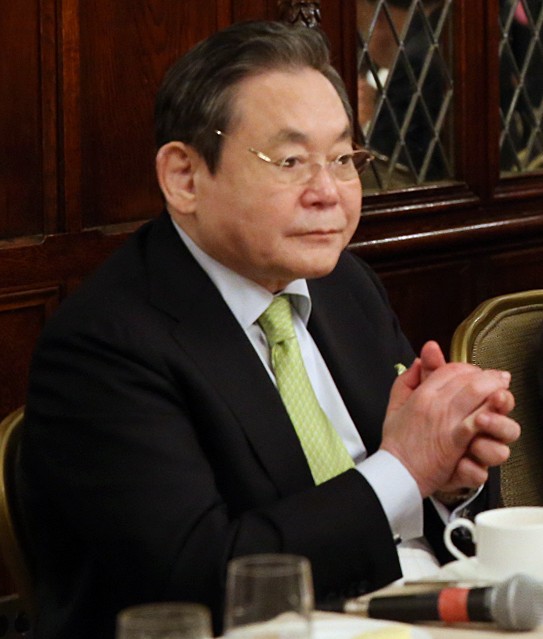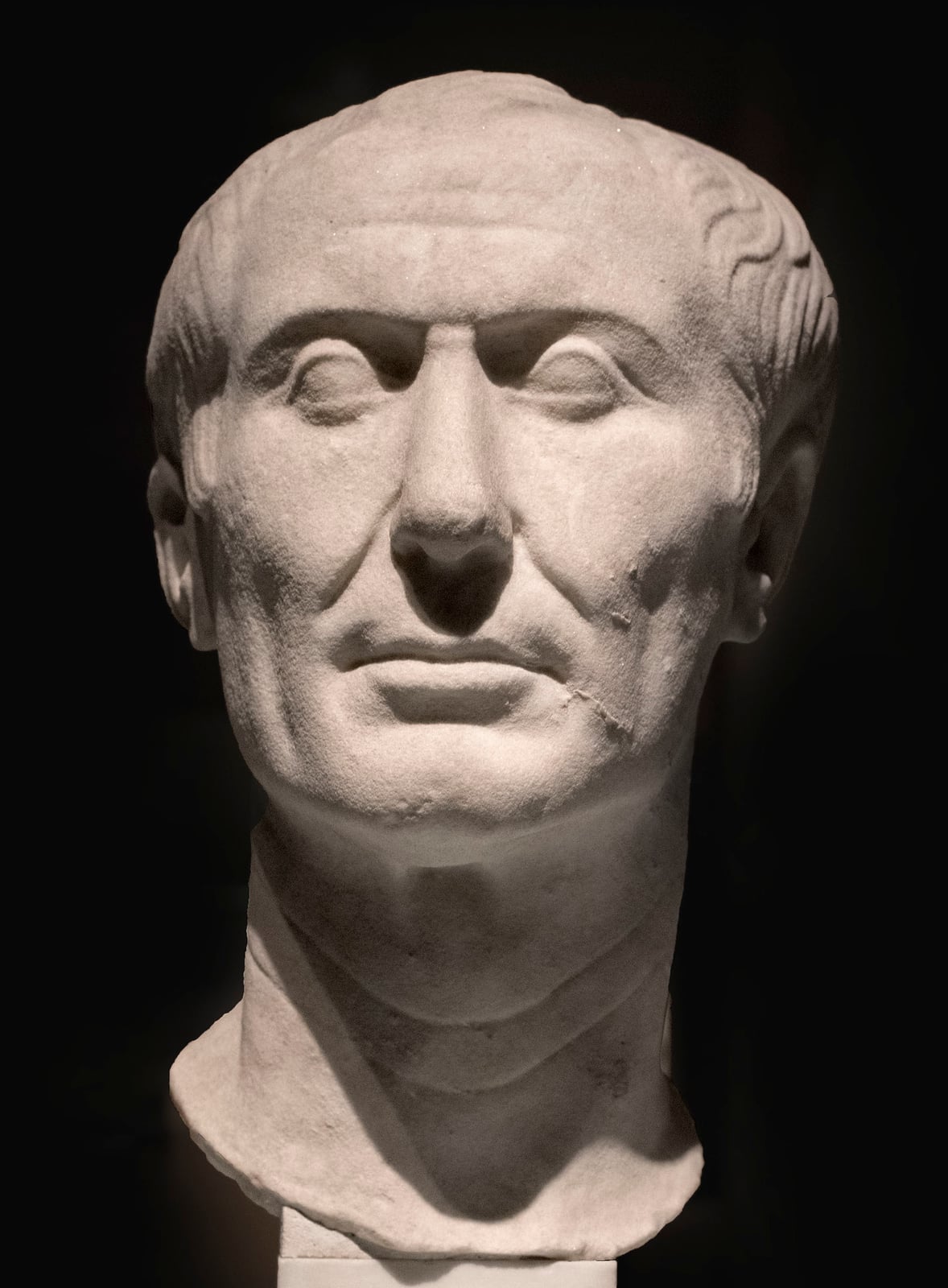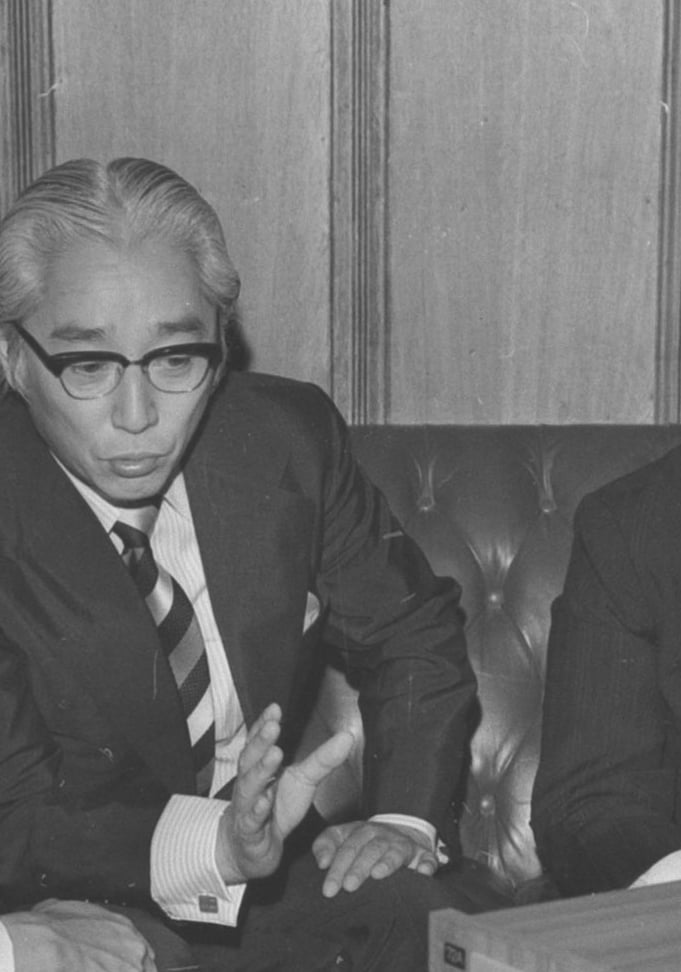

Republic of Korea (Cheong Wa Dae), 2013, CC BY-SA 2.0, via Wikimedia Commons · Lee Kun-hee at a breakfast meeting of Korean business leaders with the President, Hay-Adams Hotel, Washington, D.C., 8 May 2013, photograph from the Republic of Korea (Cheong Wa Dae) Flickr account, cropped on Wikimedia Commons from a larger group photograph. The live Flickr page shows CC BY-SA 2.0, matching Commons, and the Commons upload was reviewed by a human reviewer in 2014. Original file 543 x 639 pixels, used unscaled. · CC BY-SA 2.0
executive · Contemporary
Lee Kun-hee
1942–2020
Known For
Not yet included in personality matching — the documented evidence doesn't yet cover enough of the personality model. Everything else on this page is fully available.
Trait Constellation
Key Achievements
As chairman of the Samsung Group from 1987, he launched the 1993 'new management' reform, telling executives in Frankfurt to change everything but their family and to put quality ahead of quantity.
Under his chairmanship Samsung built overseas plants and made acquisitions, and by 1996 Samsung Electronics ranked as the world's leading exporter of memory chips.
He backed quality with hard decisions: in 1995 he ordered defective mobile phones incinerated, and in 2003 he ordered CRT television production stopped to move to flat-panel sets.
Moments That Reveal Them
In 1995 he ordered defective Anycall mobile phones worth 15 billion won incinerated as part of the push to put quality first.
This is consistent with a leader who was willing to absorb a large visible loss to make a quality standard credible. Decisiveness
In 2003 he ordered the end of CRT television production, which the Korea Times says accounted for 27 percent of sales volume, to focus on plasma and LCD sets.
This is consistent with a willingness to give up a major existing product line ahead of a technology transition. Risk Tolerance
Turning Points
In June 1993, after leaving day-to-day management to a corporate staff, he changed course and launched the new management revolution from the top, beginning with the Frankfurt meeting of 7 June.
This is consistent with a trajectory that moved from a quiet understudy and figurehead to an assertive reformer of the group. Leadership Drive
Similar People
People whose overall profiles resemble theirs.

Simón Bolívar

Wu Zetian

Toussaint Louverture

Mustafa Kemal Atatürk

Julius Caesar
Sources
- Lee Kun-hee (Q494412), verified live via the Wikidata API (2026-10-31): label 'Lee Kun-hee', description '4th and 6th Chairman of the Samsung Group (1942-2020)', born 1942-01-09, died 2020-10-25, Korean label present, image 'Lee Kun-Hee.jpg'. Orientation only; not used as support for any row.
- Louis Kraar, 'Lee Kun-Hee', Encyclopaedia Britannica, read in full. CANONICAL SIGNIFICANCE SOURCE: chairman of the Samsung Group 1987-2008 and 2010-2020; after taking over he left management to a corporate staff, then in June 1993 launched a revolution from the top, calling Samsung 'second rate' and urging staff to change everything but their family; a 'new management' concept that insisted subordinates point out errors to bosses, put quality over quantity and promoted women to senior posts; overseas plants and acquisitions; Samsung Electronics the world's leading exporter of memory chips by 1996; the 1996 bribery conviction (suspended sentence, pardoned), the 2008 tax-evasion conviction and 2009 pardon. Reference biography by a Fortune and Time Asia correspondent.
- Park Jae-hyuk, 'Lee transformed Samsung into world's tech giant', The Korea Times (25 October 2020), read in full: the 1974 purchase of Korea Semiconductor with his own assets, the 1983 semiconductor announcement, the 1993 Frankfurt declaration prompted by a video of employees cutting faulty washing-machine lids, the 1995 burning of defective phones, the 2003 order to stop CRT television production and the later overtaking of Sony. Obituary-style newspaper feature from a Korean daily; largely admiring and partly built on Samsung's own account.
- Jeong-Soo Hwang, 'Late Samsung chairman Lee's New Management back in spotlight', KED Global (Korea Economic Daily, 18 October 2023), read in full: the 7 June 1993 Frankfurt meeting with senior executives and overseas branch heads, the shift from quantity to quality, the 68-day tour, and academic assessments (Roger Martin, Rita McGrath) at a Samsung-hosted symposium. Business-press report of a company-hosted event, so the academic praise is not independent of Samsung.
- Sam Byford, 'King of Samsung: a chairman's reign of cunning and corruption', The Verge (30 November 2012), read in full: a critical-to-mixed 25-year assessment covering the 1993 reform and rebranding, merit-based incentives added to the seniority system, the 1997 recordings and later slush-fund allegations, the 2008 conviction and 2009 pardon, the Apple patent loss and the doubt that the company had yet produced an iconic breakthrough product. Independent technology journalism and the counter-voice for this profile.
- BBC News, 'Samsung chief resigns from post' (22 April 2008), read in full: the resignation after tax-evasion and breach-of-trust charges, the denial of wrongdoing, prosecutors' reference to structural problems and the group's size in 2008. Contemporary news report, used only for the legal context that is not scored.
- 'The Samsung Epiphany - How the Family Business Achieved Global Dominance', Tharawat Magazine, read in full: the 1993 California store visit, the Frankfurt meeting with about 200 executives, the quality, design and price proposition quoted from brand scholar Kevin Lane Keller, the lecture series transcribed into a manual and the burning of about 150,000 phones. Family-business trade magazine with a narrative tone; used only as a cross-check on the Korea Times account.