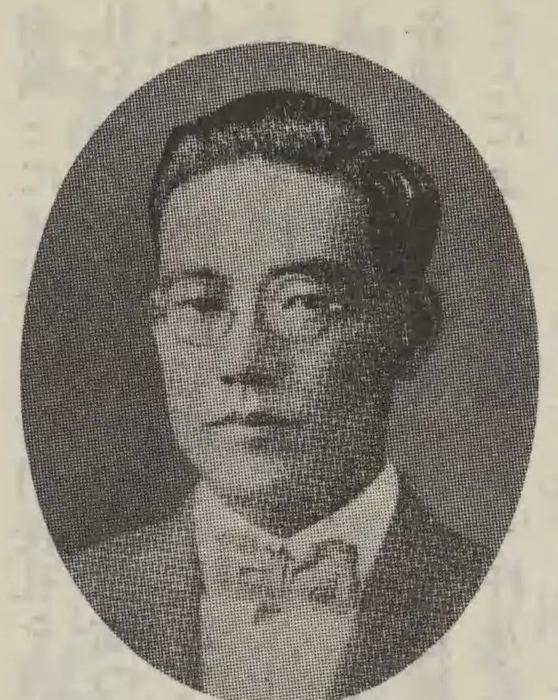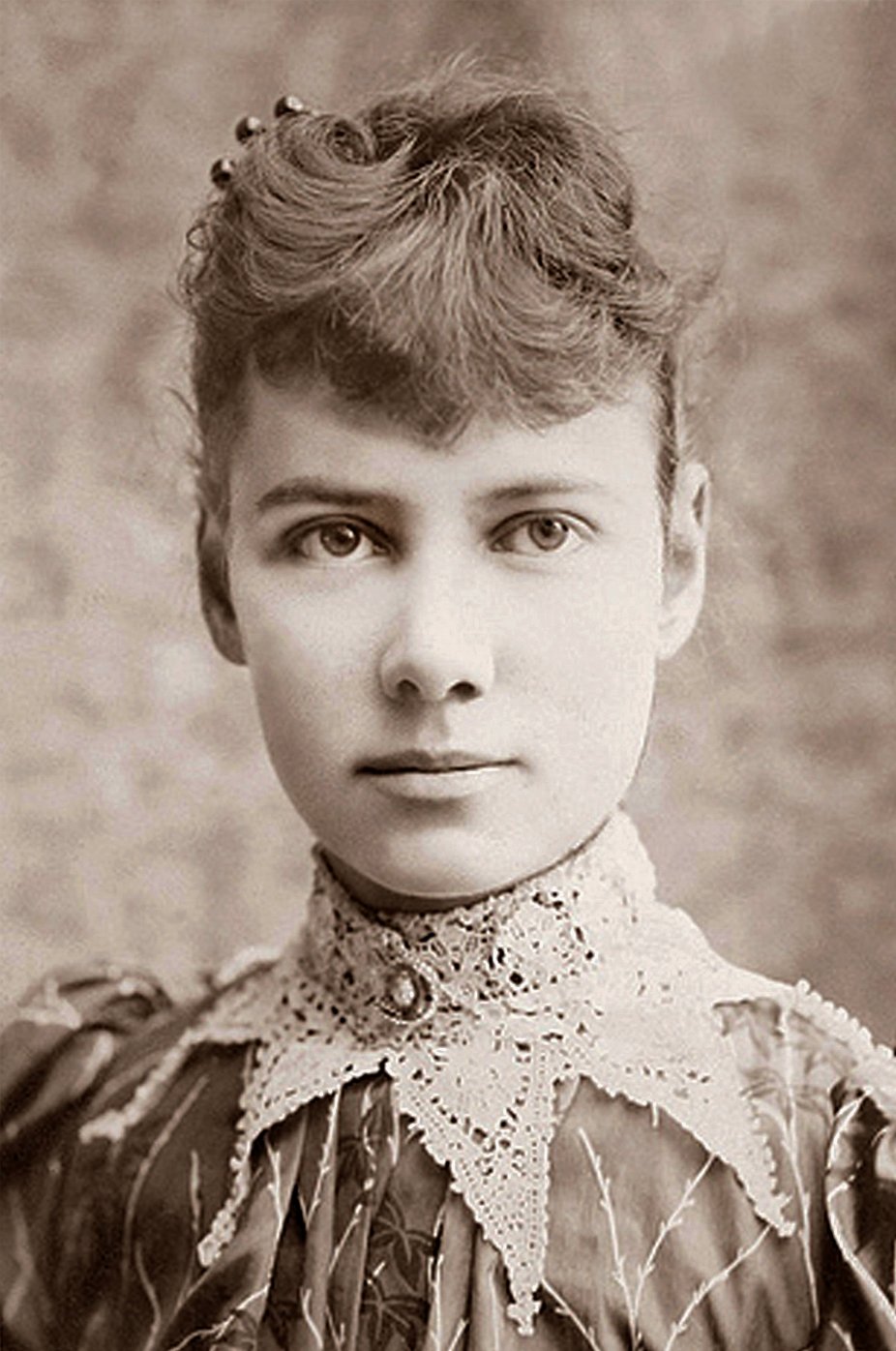

Photographer unknown, published 1937 in Osaka Hatsumei Kyokai (ed.), Teikoku hatsumeika meikan. Source: National Diet Library Digital Collections, Japan (https://dl.ndl.go.jp/pid/1207646) · Portrait photograph of Kiichiro Toyoda, photographer unknown, published in Teikoku hatsumeika meikan (Directory of Inventors of the Empire), edited by the Osaka Inventors' Association (Osaka Hatsumei Kyokai) and published by Nikkan Kogyo Shimbun Shuppanbu, Osaka, 1937, page 312 (NDL Digital Collections pid 1207646), where the oval photograph is captioned with his name above the entry for his shuttle-change automatic loom patent. The file is the oval photograph cropped from the library's 4496 x 4560 pixel page image, with no resampling or upscaling; it is a halftone book reproduction, so the grain is that of the print. · Public domain (National Diet Library Digital Collections record for this book carries the Public Domain Mark; the photograph was published in Japan in 1937)
engineer · 20th Century
Kiichiro Toyoda
1894–1952
Known For
Not yet included in personality matching — the documented evidence doesn't yet cover enough of the personality model. Everything else on this page is fully available.
Trait Constellation
Key Achievements
Japanese engineer who founded Toyota's automobile business: from 1933 he led the automotive division of Toyoda Automatic Loom Works, had the Model A1 passenger-car prototype built by 1935, and spun the work off as Toyota Motor Co. in 1937, with the Koromo Plant completed in 1938.
He invented the shuttle-change automatic loom behind the Type G loom (patent registered in his name in 1925), developed with his team from his father Sakichi's work; Platt Brothers took the patent rights outside Japan, China and the United States in 1929, and historian Kazuo Wada finds the popular story that this payment financed Toyota unsupported, the car business being funded instead by the Toyoda group's loom profits.
At the Koromo Plant he proposed just-in-time production, making only what is needed when it is needed, which Toyota's history presents as the beginning of the just-in-time pillar of the Toyota Production System, though wartime rationing suspended it and it was not fully realised until the mid-1950s.
Moments That Reveal Them
In October 1933 he took a Chevrolet apart and sketched its parts; Toyota's first prototype engine, finished in September 1934, produced only 48-49 hp against the Chevrolet's 60 hp until its cylinder head was redesigned to reach 65 hp.
This is consistent with an engineer who learned by building and testing prototypes and reworking them against a measured benchmark. Experimentation
When the Depression hit the loom business he pressed for a move into automobiles although the company president, Risaburo, regarded car making as risky and hopeless; the board backed the automotive division in 1933.
This is consistent with a willingness to stake the group's resources on a new industry over the objection of its head. Risk Tolerance
Turning Points
On 25 May 1950, during a two-month dispute over a reconstruction plan with job cuts, he announced that he accepted responsibility and would resign, and on 5 June he stepped down as president; he went on to research a helicopter and a new engine and was due to return as president in July 1952, but died on 27 March 1952.
This is consistent with a founder who stepped aside when held responsible but kept working on engineering problems. Persistence
Similar People
People whose overall profiles resemble theirs.

Catherine the Great

Elizabeth Blackwell

T. E. Lawrence

Mustafa Kemal Atatürk

Che Guevara
Sources
- Kiichiro Toyoda (Q358556), verified live via the Wikidata API (2026-11-04): English label 'Kiichirō Toyoda' (with macron), description 'Japanese businessman (1894-1952)', Japanese description 'Japanese businessman, engineer', Korean label 기이치로 토요다, born 11 June 1894, died 27 March 1952, citizenship Japan, occupations businessperson and engineer; Korean Wikipedia article title 토요다 기이치로. Orientation only; not used as support for any row.
- Toyota Motor Corporation, '75 Years of Toyota' (company history), Part 1 Chapter 2, Sections 2-4 and 6-7 (read in full: Establishment of an Automotive Production Division; Prototypes of the A Engine and Model A1; Establishment of a Research Laboratory; Establishment of Toyota Motor Co. and construction of the Koromo Plant; The Origins of Just-in-Time; Reforming and Improving Vehicle Quality). CANONICAL SIGNIFICANCE SOURCE (cross-checked against the two independent scholarly papers below): on 1 September 1933 he established the Automotive Production Division inside Toyoda Automatic Loom Works and began prototypes (a 1933 Chevrolet was taken apart and sketched in October 1933; the first prototype engine ran on 25 September 1934 at 48-49 hp against the Chevrolet's 60 hp and was redesigned to 65 hp; the Model A1 passenger car prototype was completed in May 1935 using many genuine Chevrolet parts); he recruited experienced car engineers; he founded a research laboratory in Shibaura, Tokyo in May 1936; Toyota Motor Co. was registered on 28 August 1937 and the Koromo Plant was completed on 3 November 1938; the history says he proposed just-in-time production when the Koromo Plant opened but that wartime rationing suspended it and the concept was not fully realised until the supermarket method of 1954; it also records early vehicle quality problems, his 1939 statement that low quality vehicles were hard to bear, and its own data suggesting he may have judged himself too harshly. A company history by the firm he founded: authoritative on chronology and documents, admiring in tone, and its just-in-time account rests on his own statements and a 1966 colleague interview.
- Toyota Motor Corporation, '75 Years of Toyota' (company history), Part 1 Chapter 1, Sections 3-4 (read in full: Creating the first automatic loom prototype; Patent Transfer Agreement with Platt; Ring Spinning Frame Development and Automobile Research Starts): after returning from the United States and Europe in 1922 Kiichiro began automatic loom development with Rizo Suzuki and Risaburo Oshima; about 30 looms ran by summer 1923; the March-May 1924 trial of 200 looms at Kariya produced more than ten times the breakdowns of a 20-loom trial but exposed the failings early; new patents for a shuttle-change automatic loom and related devices were filed in his name in November-December 1924 and a shuttle-magazine failsafe in March 1925; the 1929 Platt patent transfer was signed on 21 December 1929 after Kiichiro, instead of selling the patents in the United States himself, left that to a staff member and studied the automotive industry and machine tools (per two colleagues who travelled with him). Same company-history perspective as the other Toyota pages.
- Toyota Motor Corporation, '75 Years of Toyota' (company history), Part 1 Chapter 2, Section 6 Item 6 (Labor Disputes and President Kiichiro's Resignation; read in full) and Section 7 Item 3 (final years, read): after the 1949 Dodge Line recession the company's reconstruction plan required job cuts; the April-June 1950 dispute ended with a memorandum signed on 10 June 1950 (2,146 job losses, 5,994 staff remaining); on 25 May 1950 President Kiichiro Toyoda announced to the dealers' council that he accepted responsibility and would resign, and on 5 June he, the executive vice president and a managing director resigned; afterwards he travelled between Tokyo and Nagoya researching a helicopter and a new gasoline engine (prototype ran August 1951), was set to return as president at the July 1952 shareholders' meeting, and died on 27 March 1952 aged 57; Eiji Toyoda recalls that Risaburo Toyoda had been the most opposed to entering the automobile business and that Kiichiro 'conceived what no one else imagined'. Company perspective only; no union voice.
- Kazuo Wada (University of Tokyo), 'Kiichiro Toyoda and the Birth of the Japanese Automobile Industry: Reconsideration of Toyoda-Platt Agreement' (CIRJE discussion paper F-288, July 2004; later published as 'The fable of the birth of the Japanese automobile industry', Business History 48(1), 2006), read in full from the open PDF (34 pages): independent business-historian account of Kiichiro's 1922 Platt Brothers visit and diary, the invention of the shuttle-change loom (patent 65156, which Wada notes was granted in his name and earned the 1938 Imperial Commemorative Award, the fourth ever given), the 1929 trip and the Platt agreement; it argues the popular story that the agreement's money funded his car research is unsupported (Platt's payment received in 1930 was 250,000 yen, not one million, and appears to have been distributed among Toyoda group employees), that the venture was instead financed by the Toyoda group's loom profits (about 17 million yen invested by Toyoda Automatic Loom Works) and group investors, and that after seeing Platt's decline in December 1929 and January 1930 he set up an automobile research room in May 1930. Independent scholarly voice and the corrective to the legend.
- Anna S. Mostovaia, 'Origins and Development of the Japanese Automotive Industry in 1920-1945: the Case of Toyota Motor Company', Herald of the Russian Academy of Sciences 2023 no. 1, pp. 121-134 (in Russian; read in full from the open PDF): independent scholarly account, drawing on the Wada and Yui biography, that he concluded in 1929 that Toyoda could make cars without foreign partners, urged diversification into automobiles during the Depression against the resistance of company president Risaburo, who thought car making risky and hopeless, won the board's backing for the automotive division in 1933, recruited experienced engineers and university professors, set up his own steelmaking because no suitable supplier existed, and turned down a General Motors partnership; contemporaries rated him a highly capable engineer. Independent and modern; argues state policy created a favourable environment, which is context here and not scored.
- Toyota Commemorative Museum of Industry and Technology, virtual tour pages 'Agreement and Kiichiro's lab notes' and 'The establishment of Toyota Motor Sales and labor disputes', read: his training notes from the card assembly room at Platt Brothers run to 46 pages and informed his later mass-production designs; the Platt agreement of 1929 gave Platt exclusive rights outside Japan, China and the United States for a patent fee of 100,000 pounds; after the 1949 Dodge Line recession and labor disputes Kiichiro resigned as president, a decision to reappoint him had been made informally, and he died suddenly in March 1952. Museum of the Toyota group: institutional and short; used only to corroborate the Platt notes and the resignation and return plan.
- Teikoku hatsumeika meikan (Directory of Inventors of the Empire), edited by the Osaka Inventors' Association (Osaka Hatsumei Kyokai), Nikkan Kogyo Shimbun Shuppanbu, 1937, p. 312, National Diet Library Digital Collections: the entry for Toyoda Kiichiro, captioned with his name and a Nagoya address, describes patent no. 65156 (a shuttle-change automatic loom) and calls him a young inventor and the son of Sakichi Toyoda whose invention astonished the loom industry and did not disgrace his great father's record, adding that he won top prizes at exhibitions. Contemporary 1937 compendium; admiring and brief, read only for this entry and used for the portrait and the identification of the sitter, not for any row.