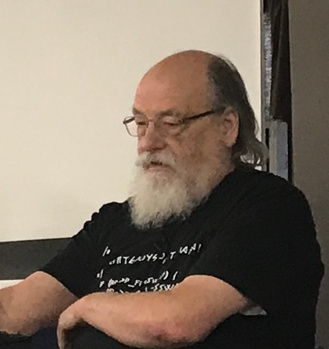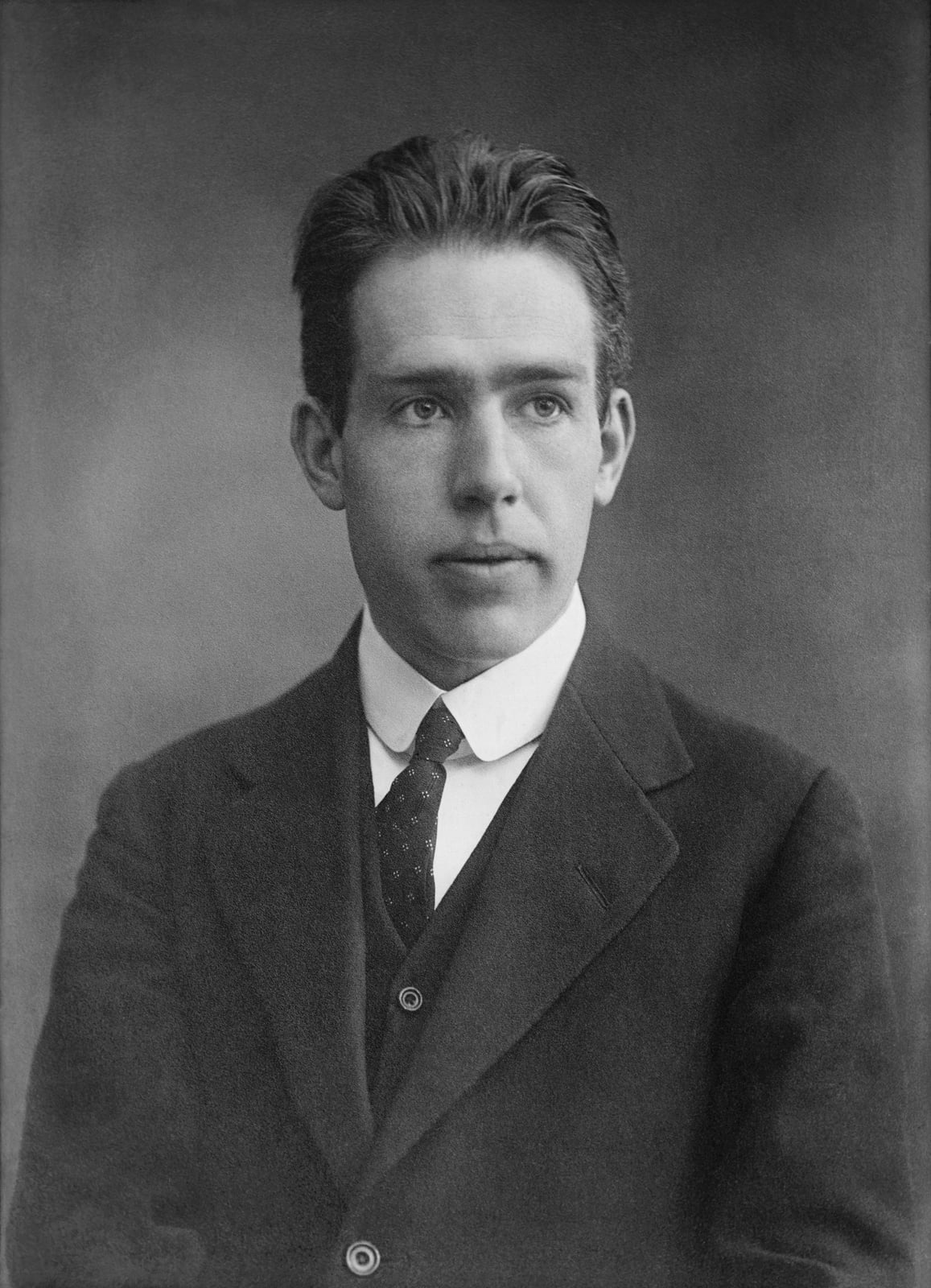

Photo: A.C. Diller, 2019, CC BY-SA 4.0; cropped from the original · Wikimedia Commons 'Brian Kernighan and Ken Thompson.jpg' (original 1280 x 960): photograph by A.C. Diller (own work, uploaded by the photographer), taken 4 May 2019 at Vintage Computer Festival East during Brian Kernighan's interview of Ken Thompson; released under CC BY-SA 4.0 on the file page. Cropped to Thompson only at native pixel size (329 x 349), no resampling or upscaling; the same crop exists on Commons as 'Ken Thompson, 2019.jpg'. The Wikidata alternative 'Ken Thompson 02.jpg' (220 x 255) was rejected: its public-domain claim rests only on the file having appeared in the Jargon File, with no author or date. Modest resolution, but legally clearer than the alternatives. · CC BY-SA 4.0
computer scientist · Contemporary
Ken Thompson
b. 1943
Known For
Not yet included in personality matching — the documented evidence doesn't yet cover enough of the personality model. Everything else on this page is fully available.
Trait Constellation
Key Achievements
In 1969 wrote the first version of the Unix operating system at Bell Labs, designing its file system and process model with Dennis Ritchie and colleagues, and created the language B, the precursor of C.
With Rob Pike designed the UTF-8 text encoding in 1992 for Plan 9, and from 2007 helped create the Go programming language with Pike and Robert Griesemer.
Shared the 1983 Turing Award with Dennis Ritchie for Unix, and with Joseph Condon built the Belle chess-playing machine that was for several years the top computer chess player.
Moments That Reveal Them
Pike recalls that after an X/Open call in September 1992 he and Thompson went to dinner, Thompson worked out the bit-packing of a new encoding, and that night he wrote the packing code so Plan 9 was running only UTF-8 within days.
This is consistent with a habit of turning a design idea into working code very quickly. Execution Speed
Wired reported that Thompson rewrote a colleague's sprawling audio-compression code into a version that ran in real time, and the colleague, Jim Johnston, said Thompson 'assassinated the whole mess'.
This is consistent with a drive to simplify complex systems into compact working form. Systems Thinking
Turning Points
After Bell Labs withdrew from Multics in 1969 and requests for a new machine were turned down, Thompson found a little-used PDP-7 and began building his own operating system, which became Unix.
This is consistent with starting his own project when the institutional path closed. Proactive Agency
Similar People
People whose overall profiles resemble theirs.

Pablo Picasso

Maya Angelou

Alan Turing

Miles Davis

Wolfgang Amadeus Mozart
Sources
- Ken Thompson (Q1107006) -- verified live via the Wikidata API (2026-10-25): English label 'Ken Thompson', description 'American programmer and computer scientist, co-creator of the Unix operating system (born 1943)', born 1943-02-04, citizenship United States, Korean label '켄 톰프슨'. Orientation only; not used as support for any row.
- Computer History Museum, 'Ken Thompson' Fellow profile (1997 Fellow, computerhistory.org), read in full: honoured for co-creating Unix with Dennis Ritchie and for development of the C language; born New Orleans 1943, BS/MS electrical engineering and computer science at UC Berkeley; Unix created in 1969 at Bell Labs as a scaled-down alternative to Multics for small minicomputers; rewritten in C by Ritchie it became portable; Turing Award 1983, National Medal of Technology 1999 and Japan Prize 2011, all shared with Ritchie. CANONICAL SIGNIFICANCE SOURCE. Institutional profile, retrospective, admiring.
- David C. Brock, 'A Computing Legend Speaks: A New Oral History with Ken Thompson' (Computer History Museum blog, 8 October 2025), read in full: museum historian's summary of a 2024-25 ACM-CHM oral history; Doug McIlroy's recollection of Thompson as a 'most amazing' programmer whose code reads 'like a novel'; Thompson's early programming as 'an addiction', his raising of an alligator in his office on joining Bell Labs, his start on his own operating system after Bell Labs left Multics in 1969, the Thompson-Ritchie collaboration that produced C, his own explanation that Bell Labs' unconstrained research environment made Unix and C enduring, and the later Plan 9 and Go work; notes he is 'an intensely private person' (private passages not used). The full 4.5-hour oral history transcript was NOT opened. Museum historian's retelling with a collaborator quotation; admiring.
- Dennis M. Ritchie, 'The Evolution of the Unix Time-sharing System' (AT&T Bell Laboratories Technical Journal, 1984; Harvard course copy of the PDF), read in full: collaborator's first-hand history of Multics' decline, the 1969 file-system design on blackboards ('most of the design was Thompson's'), Thompson's Space Travel game and move to a PDP-7, his writing of the first file system, process model, shell and assembler, the fork/exec design, and how an intended Fortran became the language B within about a week; Ritchie's statement that 'we' with an unclear antecedent can be read as 'Thompson, with some assistance from me'. Non-self (written by the co-creator, not by Thompson) but admiring and from a close collaborator; Ritchie's own contributions are deliberately not credited to Thompson here.
- Bell Labs news release, 'Ken Thompson Receives Kanai Award for Impact of UNIX System' (25 March 1999; web.archive.org copy of bell-labs.com), read in full: IEEE Computer Society citation for his role creating Unix; Thompson conceived the Unix time-sharing system in spring 1969 and co-developed it with Ritchie and collaborators; his research areas (operating systems, languages, security, computer games, digital music distribution); with Joseph Condon he built the hardware and software of the chess machine Belle; Ravi Sethi on portable C compilers and open systems. Employer press release, retrospective and promotional.
- Charles Platt, 'Music on Demand' (Wired, August 1995), read in full: independent magazine profile of Thompson at Bell Labs; his routine of coding in a shared open area from about 1 p.m. to late evening; that he wrote Unix mainly for his own use and 'sometimes listened' to bug reports; the note that critics find Unix terse and unforgiving; his rewrite of the Bell Labs audio-compression code into a real-time program with Sean Dorward, and Jim Johnston's account that Thompson 'assassinated the whole mess' of his earlier Fortran-to-C code; his stated dislike of fussy applications. Personal-life, hobby and travel passages deliberately not used. Journalistic, observational, with a named colleague's frank quotation and a critics' remark.
- Rob Pike, 'UTF-8 history' (email thread of April-June 2003 with Russ Cox's archive search, copy at cl.cam.ac.uk/~mgk25/ucs/utf-8-history.txt), read in full: Pike's first-hand account that UTF-8 was designed at a New Jersey diner in September 1992 with Thompson working out the bit-packing, that Thompson wrote the packing code that night while Pike converted the libraries, and that Plan 9 ran only UTF-8 by the end of the week; it corrects the story that IBM designed it and credits the X/Open people for making the opportunity happen. Cox's file-date evidence supports the timeline. Collaborator's retrospective recollection corrected a decade later; favourable but includes a correction of the record against Thompson's own credit.
- Ken Thompson, 'Reflections on Trusting Trust' (Turing Award lecture, Communications of the ACM, August 1984; PDF copy at cs.cmu.edu), read in full: self-authored primary work demonstrating a self-reproducing compiler Trojan horse; opens by crediting Ritchie ('a thing of beauty') and the many contributors to Unix and saying he continues 'to get undeserved credit for the work of others'; concludes you cannot trust code you did not create yourself and criticizes the press for treating computer intruders as heroes. Self material; used only for the work and his stated crediting, never as sole support of any row.
- The Go Authors, 'Frequently Asked Questions (FAQ)', History of the project section (go.dev/doc/faq), read: Griesemer, Pike and Thompson began sketching goals for a new language on 21 September 2007, Thompson started a compiler by January 2008 'with which to explore ideas', the project became public open source on 10 November 2009. Official project history by the team itself (self-published), used only for dates and roles.
- Eric S. Raymond, 'Plan 9: The Way the Future Was' (The Art of Unix Programming, 2003, catb.org), read in full: independent expert's description of Plan 9, built by the Bell Labs group that built Unix, as an attempt to do Unix over again better (everything-is-a-file taken further, per-process namespaces, UTF-8 invented for it), and his critical verdict that it failed to displace Unix because it was not a compelling enough improvement over a 'good enough' existing codebase; also notes Plan 9 ideas absorbed into FreeBSD and Linux. Independent critical voice; treats the Bell Labs group as a whole, not Thompson individually.
- The Linux Information Project, 'Ken Thompson Biography' (linfo.org/thompson.html), read in part: reference-site biography saying Thompson was the principal inventor of Unix, wrote Space Travel in 1969, and wrote the first kernel, shell, editor and assembler in about a week each while his family was away. Secondary compilation without cited primary sources for those details; used only to corroborate chronology and never as sole support. Family detail deliberately not used.
- Wikimedia Commons file pages 'Brian Kernighan and Ken Thompson.jpg' (1280 x 960) and the derived 'Ken Thompson, 2019.jpg' (wikitext and API record), checked for the portrait's licence: photograph by Wikimedia user A.C. Diller (own work), taken 4 May 2019 at Vintage Computer Festival East where Brian Kernighan interviewed Ken Thompson, released CC BY-SA 4.0. Not used for any scoring.