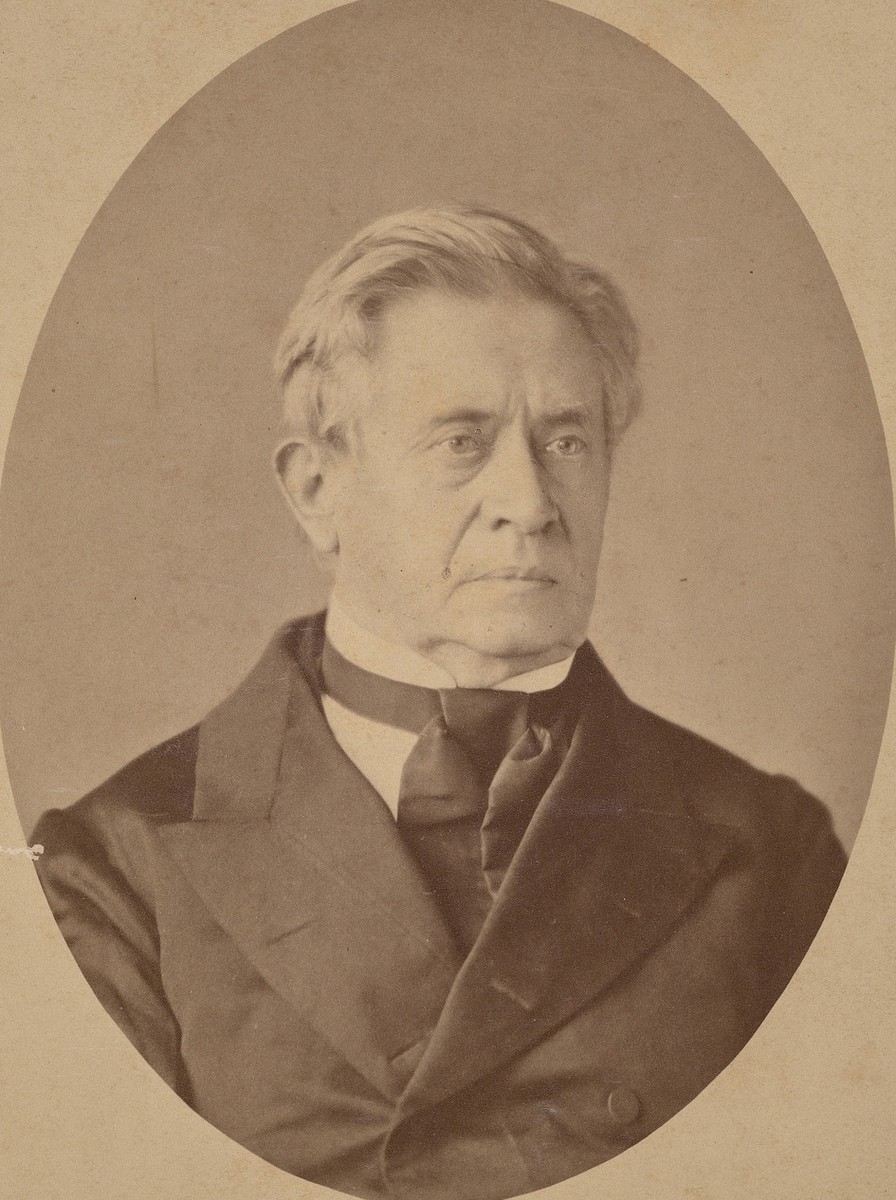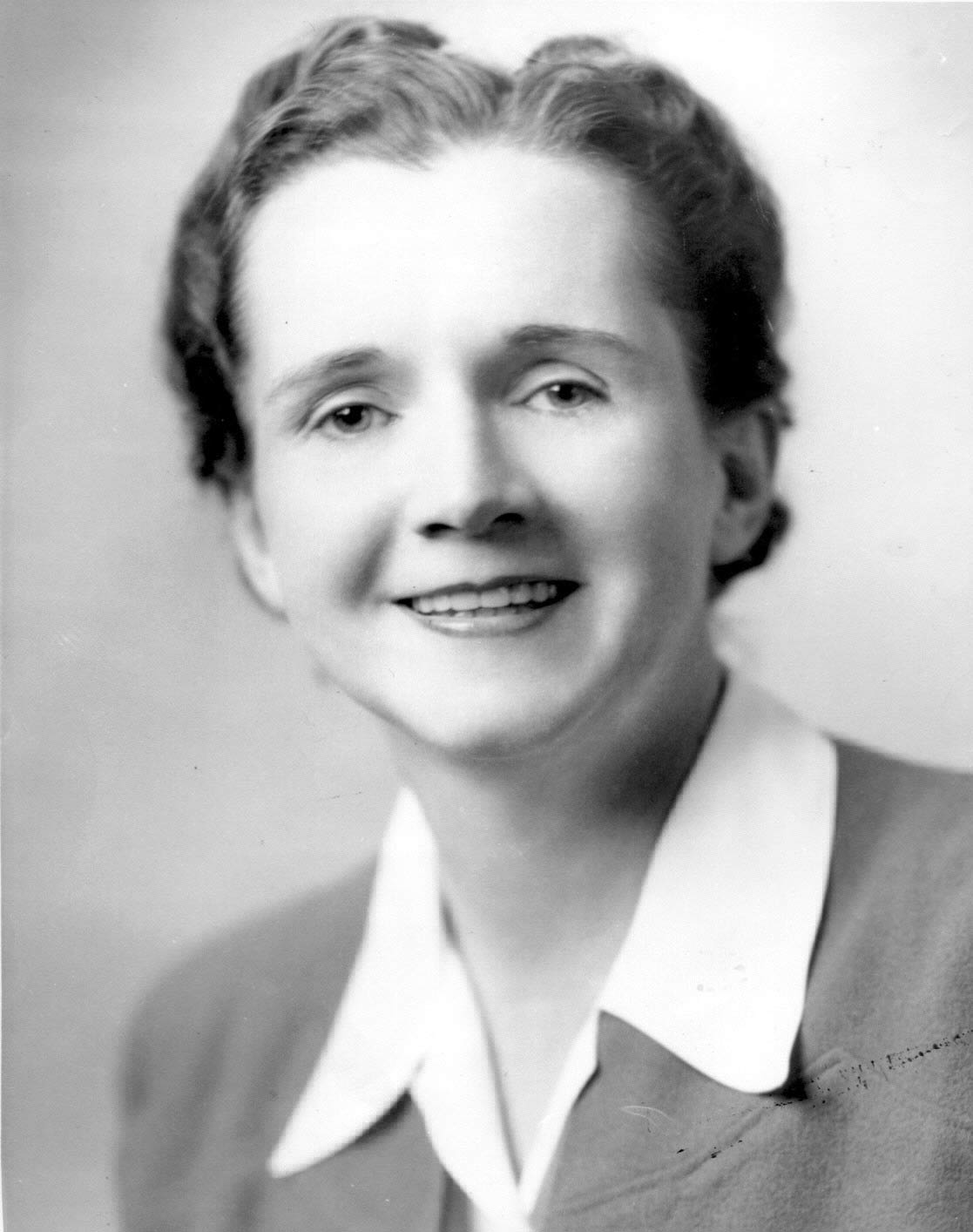

Thomas William Smillie, Portrait of Joseph Henry, April 1873, Smithsonian Institution Archives, Record Unit 95, Box 27B, image SIA_000095_B27B_097, public domain (CC0) · Photograph of Joseph Henry (1797-1878) by Thomas William Smillie, the Smithsonian's staff photographer (1843-1917), a cabinet card taken in April 1873, Smithsonian Institution Archives, Record Unit 95, Box 27B, image SIA_000095_B27B_097. The archive's item record marks the image as public domain (Creative Commons Zero) and gives the copyright status as no copyright in the United States. The file is a plain crop of the oval photograph from the archive's 3850 x 5760 pixel scan, downscaled to 896 x 1200 pixels with the card border cut away and no enlargement. · Public domain (Smithsonian Institution Archives, CC0)
physicist · 19th Century
Joseph Henry
1797–1878
Known For
Not yet included in personality matching — the documented evidence doesn't yet cover enough of the personality model. Everything else on this page is fully available.
Trait Constellation
Key Achievements
Physicist who built very powerful electromagnets in 1831, described the self-induction of an electric current, and independently reached electromagnetic induction, though Faraday published first; the unit of inductance, the henry, is named after him.
First Secretary of the Smithsonian Institution from 1846 to 1878, he shaped it around scientific research, publication and international exchange rather than a large library or museum.
His electromagnet research and a relay he demonstrated by 1835 became the basis of much of Morse's telegraph; he never patented his work, and a historian concludes the telegraph would have been delayed without him.
Moments That Reveal Them
In his 1831 paper he ran 23 experiments, repeating Barlow's wire-length test with a 25-element battery and then comparing coils wound in parallel with one long coil to find the arrangement that gave the most magnetic force.
This is consistent with a systematic, step-by-step way of testing a problem. Analytical Rigour
In 1847 he told the Smithsonian regents that telegraph lines could warn observers of approaching storms; from about 1850 weather reports were mapped at the Smithsonian, and he later turned the work over to the Army Signal Service.
This is consistent with starting new programmes and then handing them on once others could run them. Proactive Agency
Turning Points
In 1846 he left his Princeton professorship to become the Smithsonian's first Secretary, giving up most of his own research, which a history entry says he regretted but felt it his duty to do.
This is consistent with accepting institutional responsibility at the cost of his own laboratory work. Leadership Drive
Similar People
People whose overall profiles resemble theirs.


Otto von Bismarck

Ruth Bader Ginsburg

Nelson Mandela

Susan B. Anthony

Mustafa Kemal Atatürk
Sources
- Joseph Henry (Q157043), verified live via the Wikidata API (2026-10-31): label 'Joseph Henry', description 'American scientist and the 1st Secretary of the Smithsonian (1797-1878)', born 1797-12-17, died 1878-05-13, Korean label present. Orientation only; not used as support for any row.
- Simon Newcomb, 'Biographical Memoir of Joseph Henry', read before the National Academy of Sciences on 21 April 1880 (about 110,000 characters, read in the PDF text for the sections on the electrical research, the Smithsonian administration, the Jewett contest, weather telegraphy and character). CANONICAL SIGNIFICANCE SOURCE: the National Academy's memoir of its late president; it names the 1831 electromagnet and induction work, the self-induction discovery, and the Smithsonian secretaryship as his central contributions, and notes that Faraday published first. A colleague's tribute, so admiring; it is the memoir that the Academy keeps, and it admits its debt to earlier notices.
- David Hochfelder, 'Joseph Henry: Inventor of the Telegraph?', Joseph Henry Papers Project, Smithsonian Institution Archives (essay, about 36,000 characters, read in full): an independent historian's account of Henry's 1831 paper and his coil experiments, his lecture-hall telegraph and relay, his advice and endorsements to Samuel Morse in 1839-1842, his unwilling testimony in the 1849-1852 patent suits, Morse's 1855 attack and Henry's appeal to the Smithsonian regents. It concludes that Henry did not invent the telegraph but that its invention would have been delayed without him. Written by a doctoral candidate for the papers project of the Smithsonian, which is a party with an interest in Henry's reputation, but it criticises Henry's slowness to reduce his work to practice and cites his students' notebooks.
- Smithsonian Institution Archives catalogue record for 'Educator and Researcher, Administrator and Public Servant: Joseph Henry's Career as a Scientist' (Annotation newsletter, March 2004; the author edited volumes 6-11 of the Henry papers), read as the catalogue summary only (not the article text): Henry was described at his death as the most eminent scientist in the United States, announced a powerful electromagnet in 1831, discovered mutual induction and self-induction, became professor at Princeton in 1832 and Smithsonian secretary in 1846, advised the federal government, and his reputation declined after his death before being restored in the 1960s. CANONICAL SIGNIFICANCE SOURCE (with the National Academy memoir). Institutional summary; only the catalogue abstract was read.
- Engineering and Technology History Wiki (IEEE), 'Joseph Henry' (unsigned entry, last edited 1 February 2016), read in full via the fetch tool: self-education, professor at Albany Academy from 1826, electromagnet work, the 'henry' unit, Princeton from 1832, first Secretary of the Smithsonian from 1846, his refusal to patent, and the statement that he turned down more lucrative offers because he believed the Smithsonian was the best way to serve science. Short, uncited professional-society wiki entry.
- 'Sketch of Professor Henry', Popular Science Monthly, volume 2 (April 1873), read in full in the Wikisource transcription (unsigned): a contemporary biographical sketch written during his lifetime on his upbringing, the Albany experiments, the Princeton years, the Smithsonian secretaryship and its 25 annual reports to 1871, and his work on the Light-House Board, the Civil War inventions commission and the National Academy. Popular and favourable, and does not mention Morse.
- Smithsonian Institution Archives catalogue summaries of 'The Library of Congress and the Smithsonian Institution: A Legislated Relationship' and of the 1951 biography of Charles Coffin Jewett, read as catalogue summaries only: they describe Henry's wish for a small research library, the regents' push for a larger one, Jewett's plan for a national library, the clashes ending in Jewett's dismissal in 1854, the 1848 international exchange and publications programme, and the 1866 transfer of the Smithsonian library to the Library of Congress. Gives the librarian's side of the quarrel at summary level; the full texts were not read.