Leonardo da Vinci
93% Profile Match
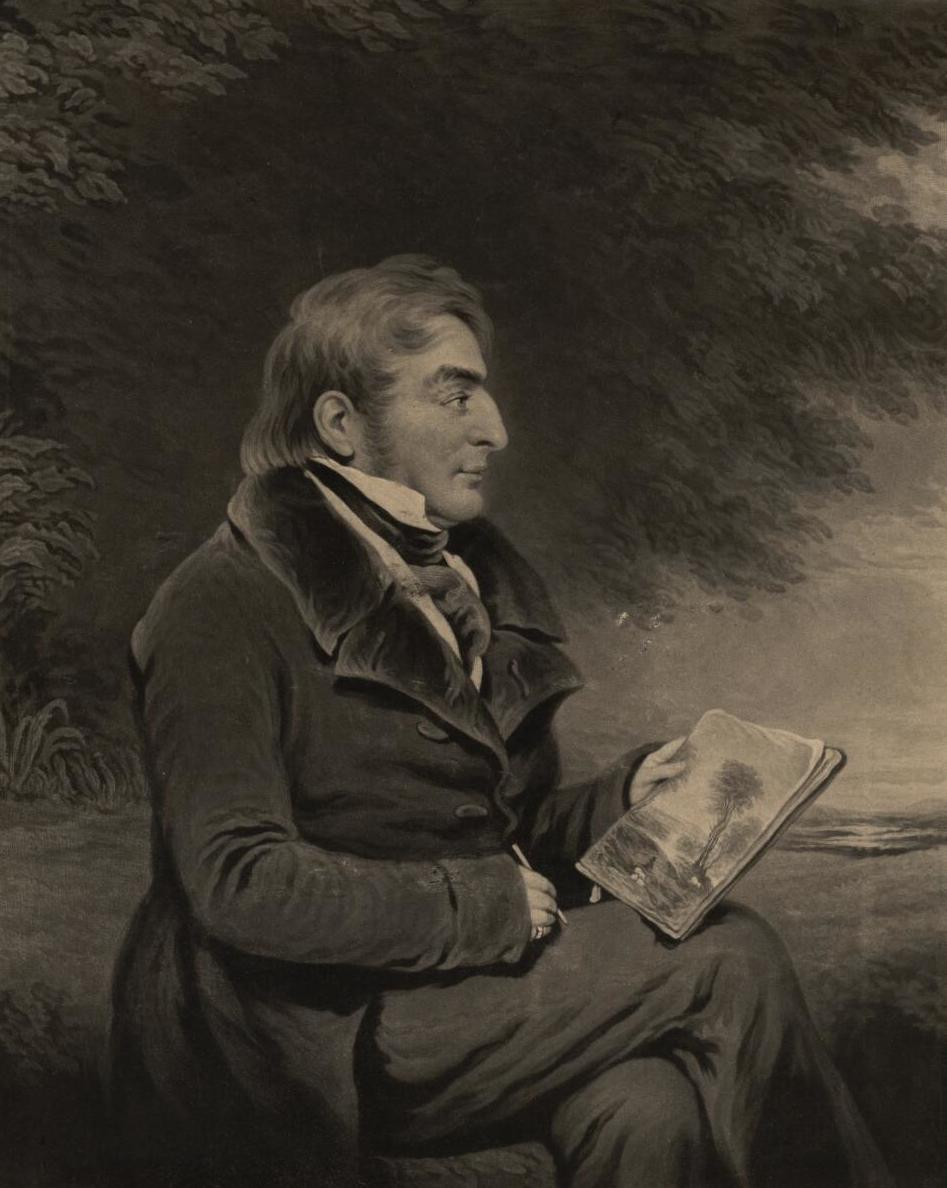
Charles Turner, mezzotint, about 1840, National Library of Wales, Welsh Portrait Collection (Public Domain Mark) · Mezzotint print by Charles Turner (engraver, 1774-1857), published about 1840 by Day and Haghe, titled 'J. M. W. Turner, R.A. making his sketch for the celebrated picture of Mercury and Argus'; National Library of Wales, Welsh Portrait Collection (handle 10107/4674619); file as hosted on Wikimedia Commons · Public domain (engraver died 1857; print published about 1840; the National Library of Wales marks the digitised item with the Public Domain Mark 1.0)
painter · 19th Century
1775–1851
Not yet included in personality matching — the documented evidence doesn't yet cover enough of the personality model. Everything else on this page is fully available.
In 1839 Turner showed The Fighting Temeraire at the Royal Academy, a picture of the old Trafalgar warship being towed up the Thames by a steam tug to the breaker's yard. The National Gallery notes that he worked from reports, not from seeing the tow, and took liberties with her rigging and paintwork for effect. In 1840 he exhibited the Slave Ship under the title Slavers Throwing Overboard the Dead and Dying, with lines from his own manuscript poem; Ruskin later owned it and the picture went to Boston. In 1844 he painted Rain, Steam, and Speed, a Great Western Railway train crossing Brunel's Maidenhead bridge in rain, now also in the National Gallery.
From 1807 Turner issued the Liber Studiorum, a series of landscape mezzotints sold in numbers of five plates and arranged under six heads: historical, pastoral, elegant pastoral, mountain, marine and architectural. Hamerton calls it a direct appeal to the public to judge between Turner and Claude Lorrain, whose private Liber Veritatis it echoed in name. Turner published it himself and etched and engraved some of the plates, with other engravers working under his corrections. It stopped at the fourteenth number, seventy-one plates in all with the frontispiece, and it did not pay.
Turner's will of 1831, with later codicils, left his finished pictures to the National Gallery on conditions, among them that two be hung between two Claudes and that a Turner Gallery be built, with the bulk of his funded money meant for a charity for decayed male artists. After his death in 1851 the National Gallery took 324 pictures and a vast number of drawings, and the conditions were argued over in Parliament and Chancery. Ruskin, sorting the drawings in 1857-58, found more than 19,000 pieces of paper in seventeen boxes, many damaged, and catalogued 1,757 studies as important.
Alongside his oil paintings Turner made large numbers of watercolour designs for engraved topographical series. For Turner's Annual Tour, Tate's catalogue records, he produced about forty designs in gouache on blue paper in 1832-33 specifically to be engraved; they were published by Charles Heath in two volumes in 1834 and 1835 and later gathered as The Rivers of France.
At the Royal Academy's varnishing days in 1832, Constable was adding bright reds to the barges of his Opening of Waterloo Bridge, hung beside a grey sea piece by Turner. C. R. Leslie, who came into the room just as Turner left it, says Turner had put a round daub of red lead on his sea, and Constable said, 'He has been here, and fired a gun.' Turner stayed away for a day and a half, then used the last painting time to glaze the red patch and shape it into a buoy.
Answering a rival's colour with a single stroke, then reshaping it to belong in the picture, is consistent with competitiveness; Leslie reports the events as an eyewitness without stating Turner's motive. Competitiveness
Late in Turner's career the New Yorker James Lenox, who knew Turner only from engravings, asked Leslie to buy him a picture, and Turner let him have a sunset view of Staffa for 500 pounds after refusing a lower offer for the Temeraire. Lenox found it 'indistinct' when it arrived. Leslie told Turner, who replied, 'indistinctness is my fault.' Lenox later wrote that on a second view he admired it greatly.
Answering a buyer's complaint by owning the quality he was criticised for, rather than softening it, is consistent with independent thinking; the account is Leslie's, a friendly witness who was the go-between. Independent Thinking
In 1807, when few buyers sought his oil pictures and fashionable taste followed Claude, Turner began the Liber Studiorum in the spirit of a challenge to Claude's Liber Veritatis. According to the drawing-master Wells, he took it up when he had little business. For the first plates he hired the engraver Charles Turner at eight guineas a plate; after a quarrel over the terms and the corrections the two did not speak for nineteen years. The series stopped at the fourteenth number.
Turning a slack period into a self-published series addressed to the public, rather than waiting for buyers, is consistent with proactive agency; the business was run unevenly and the project was not completed. Proactive Agency
People whose overall profiles resemble theirs.