Elizabeth Blackwell
93% Profile Match
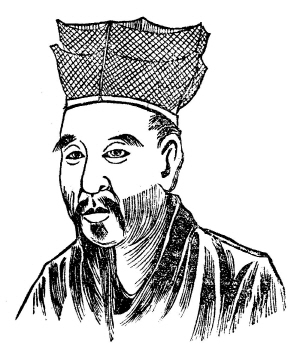
Jeong In-ho, illustration in Chodeung Daehan yeoksa (1908); digitised by History Net, National Institute of Korean History · Printed illustration of Jeong Yak-yong in 'Chodeung Daehan yeoksa' (Elementary Korean History, 1908), vol. 4, drawn by Jeong In-ho, as digitised by History Net of the National Institute of Korean History, which states free-use terms (including commercial use) for its national history textbooks collection. A stylised later depiction, not a portrait from life. Published in 1908, so public domain in the United States on age grounds. Original file 300 x 359 pixels, used as is; no upscaling. · Public domain (published in 1908); host institution states free use
A scholar of late Joseon practical learning (Silhak), he wrote on governance, law and the Confucian classics, and his writings were gathered posthumously as the Yeoyudang jeonseo, 154 volumes in 76 books published in 1934-1938.
In exile at Gangjin after 1801 he completed the Mongmin simseo in 1818, a 48-chapter manual for local officials, and his Gyeongse yupyo proposed reforms including a state office to bring in technology.
As an official under King Jeongjo he took part in designing the pontoon bridge over the Han River (1789) and the Hwaseong fortress works (1792), and devised the geojunggi crane, though a historian notes only one unit is recorded in use.
In designing the geojunggi he drew on the imported Gigi doseol but cut the iron and copper needed and dropped inessential provisions, concentrating on the basic principle.
This is consistent with adapting an outside design to local materials and needs. Resourcefulness
He completed the Mongmin simseo in 1818 in Gangjin, a 48-chapter, 16-volume guide to local administration drawing on his own earlier posts.
This is consistent with sustained, detailed writing aimed at practical use. Persistence
After the 1801 persecution he spent 18 years in exile, 11 of them at the Dasan Chodang in Gangjin, where much of his writing on governance and the classics was produced.
This is consistent with a shift from official service to sustained scholarly writing. Persistence
People whose overall profiles resemble theirs.