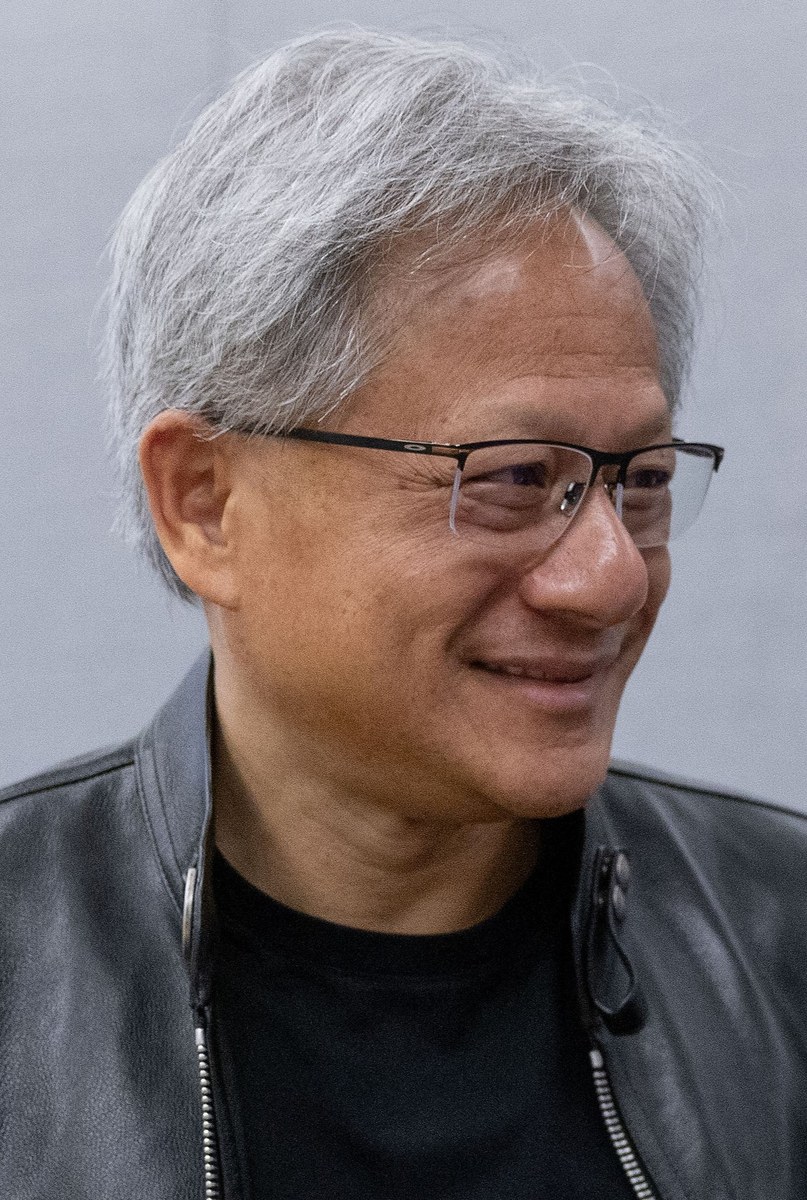

Photo: Peter Dasilva, © European Union, 2024, licensed under CC BY 4.0; cropped and downscaled from the original · Wikimedia Commons, 'Jensen Huang (cropped) (2024).jpg' -- photograph by Peter Dasilva for the European Commission Audiovisual Service, 13 May 2024 (meeting with Josep Borrell Fontelles; EC photo P-063789/00-17), cropped on Commons from 'Josep Borrell with NVIDIA CEO and founder Jensen Huang (2024).jpg'; Commons file 1129 x 1678 pixels, downscaled once to 807 x 1200 (never upscaled). · CC BY 4.0
entrepreneur · Contemporary
Jensen Huang
b. 1963
Known For
Not yet included in personality matching — the documented evidence doesn't yet cover enough of the personality model. Everything else on this page is fully available.
Trait Constellation
Key Achievements
He co-founded Nvidia in 1993 with Chris Malachowsky and Curtis Priem, and its 1999 GeForce 256 is described by the Computer History Museum as the first graphics processing unit.
Nvidia introduced CUDA in 2006, which let developers use its GPUs for general-purpose computing, and its GPUs powered AlexNet in 2012, after which the company focused on accelerated computing for AI.
In 2024 the Computer History Museum named him a Fellow for visionary leadership in computer graphics devices and systems, also recognising his work in accelerated computing and artificial intelligence.
Moments That Reveal Them
A Dow Jones review of Stephen Witt's biography describes a 2006 product that repurposed gaming-chip technology for scientists as a fiasco, yet the museum shows the CUDA platform from that year later becoming central to AI.
This is consistent with a willingness to back a platform whose payoff was years away and not yet visible. Risk Tolerance
Asked in a 60 Minutes interview about staff describing him as demanding and a perfectionist, he said the labels fit him perfectly and that extraordinary work should not be easy.
This is consistent with a leader who accepts a high personal standard as a deliberate part of how he works. Perfectionism
Turning Points
In 2013, after meeting an engineer working on neural networks, he abruptly moved Nvidia from videogame graphics towards chips for AI computation, according to a Dow Jones review of Witt's biography.
This is consistent with sensing a new opening early and redirecting a company towards it quickly. Opportunity Sensing
Similar People
People whose overall profiles resemble theirs.

Mustafa Kemal Atatürk

Wu Zetian

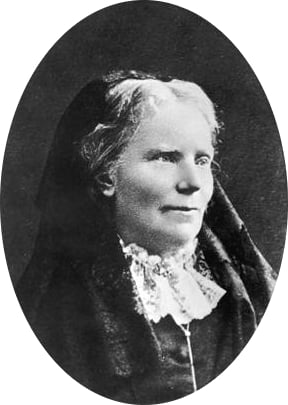
Elizabeth Blackwell

Susan B. Anthony

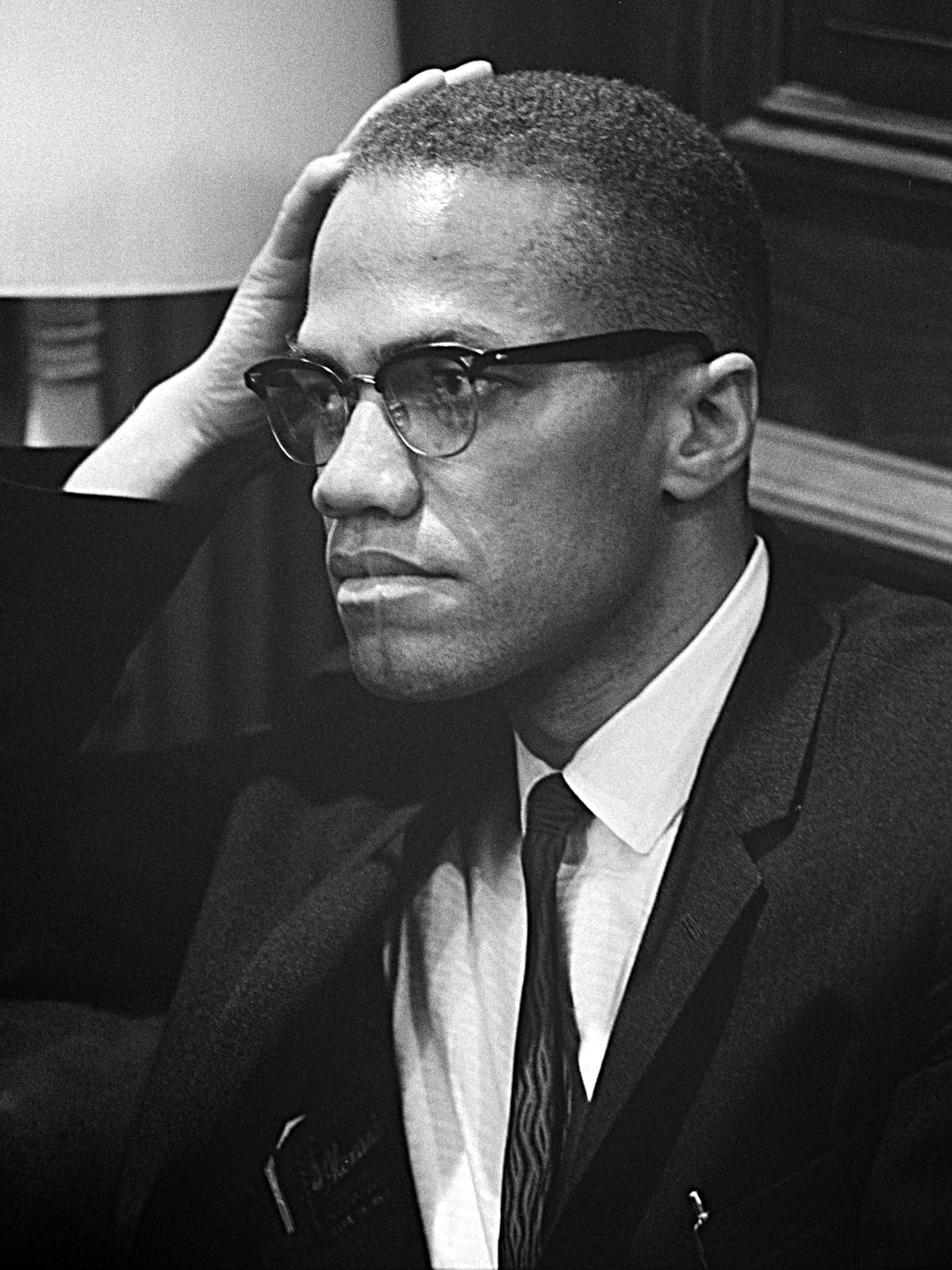
Malcolm X
Opposite Profile
Not a rival — a different profile shape worth a look.

Leonardo da Vinci
Sources
- Jensen Huang (Q305177) -- verified live via the Wikidata API (2026-10-11): English label 'Jensen Huang', description 'American entrepreneur and businessman; co-founder and CEO of Nvidia', born 17 February 1963, no date of death, citizenship Taiwan and United States, Korean label present. Orientation only; not used as support for any row.
- Computer History Museum, 'Jensen Huang' 2024 Fellow profile -- museum profile of the Nvidia founder covering the 1993 founding with Chris Malachowsky and Curtis Priem, the 1999 GeForce 256 which the museum calls the first GPU, CUDA in 2006, the use of Nvidia GPUs for AlexNet in 2012, and the Fellow citation 'for visionary leadership in the advancement of devices and systems for computer graphics' with accelerated computing and artificial intelligence. CANONICAL SIGNIFICANCE SOURCE (orientation to his historical contribution, institutional and honouring in tone); used for the achievement cards and the CUDA/AlexNet dates, never as the sole support for a behavioural row. Read in full.
- Fortune, 8 June 2024, article on Huang's management and Nvidia's fast product cadence -- relays former Nvidia employee Rene Haas (later Arm CEO, via the Financial Times) saying Huang organised the company around projects rather than hierarchy so he could reach any layer and get direct answers ('transparency and speed', 'they move very, very fast'), reports Huang's June 2024 announcement of yearly AI accelerator upgrades (Blackwell Ultra for 2025, Rubin for 2026), and notes he is one of 22 CEOs who founded their Fortune 500 company. Non-self business press with one former-employee voice; thin on detail beyond those points. Read in full.
- Eleanor Pringle, 'Nvidia CEO Jensen Huang: demanding perfectionist, say staff', Fortune, 30 April 2024 -- reports from a 60 Minutes interview that staff describe him as demanding, a perfectionist and not easy to work for, that Huang says those labels fit him 'perfectly' and that 'if you want to do extraordinary things, it shouldn't be easy'. Staff descriptions are unnamed and general, and the substance is Huang's own acceptance of them, so used only for the perfectionism row with a mixture of other and self voice. Read in full.
- Marc Levinson, review of Stephen Witt's 'The Thinking Machine', Dow Jones Newswires, republished 8 April 2025 -- critical-to-mixed book review: credits Huang with an abrupt 2013 decision to move Nvidia from videogame graphics towards AI computation after meeting engineer Bryan Catanzaro, recounts the failed first chip (1995), the successful GeForce (1999), a failed 2003 revision and a 2006 product repurposing gaming technology for scientists described as a fiasco, and portrays Huang as a relentless worker and harsh critic who berates staff in public and lost his temper often as CEO, so that he 'may not be a good model' for aspiring CEOs. Independent, partly adversarial reviewer summarising a biography; the review itself does not mention CUDA. Read in full.
- Book review of Stephen Witt's 'The Thinking Machine', Unite.AI -- largely admiring review describing Nvidia's choice of parallel processing for real-time graphics, Huang treating the GPU as the base of a wider computing platform, software treated as strategically as silicon, tools and developer support funded well before demand, CUDA making GPUs usable for general computing and Nvidia facing near-failure more than once but surviving on a long-held conviction about accelerated computing. Independent but admiring and short on dates, so used with moderate confidence. Read in full.
- Amanda Liang, DIGITIMES, 16 December 2024, article drawn from Tae Kim's book 'The Nvidia Way' -- reports Huang's use of whiteboards rather than slides, his preference for big-picture estimates over false precision, his very wide span of direct reports and direct communication with most staff, an unnamed former executive's anecdote about the oversized whiteboard and his own admission that office politics was a problem in Nvidia's early days. Promotional in tone, two voices anonymous and largely Huang's own account via the book, so not used as sole support for any row; partly paywalled. Read in full as available.
- The Next Platform, 28 October 2015, 'Inside the Programming Evolution of GPU Computing' -- interview with Nvidia's Ian Buck on how his Stanford Brook project became CUDA after Nvidia hired him in 2004 (extensions to C, C++ and Fortran so a threaded programmer could use a GPU, a library team built in parallel, GPUs in the Titan supercomputer). Colleague first-hand account of the technology; it does not mention Huang, so used only as background for the CUDA design and as a check on CHM's dates, not for any Huang trait row. Read in full.
- European Commission Audiovisual Service photo page P-063789/00-17 and its conditions-of-use page -- checked for the portrait: photo dated 13 May 2024 captioned as Jensen Huang, Founder and CEO of NVIDIA; EU-owned audiovisual content is licensed CC BY 4.0 unless a file says otherwise. Not used for any scoring.