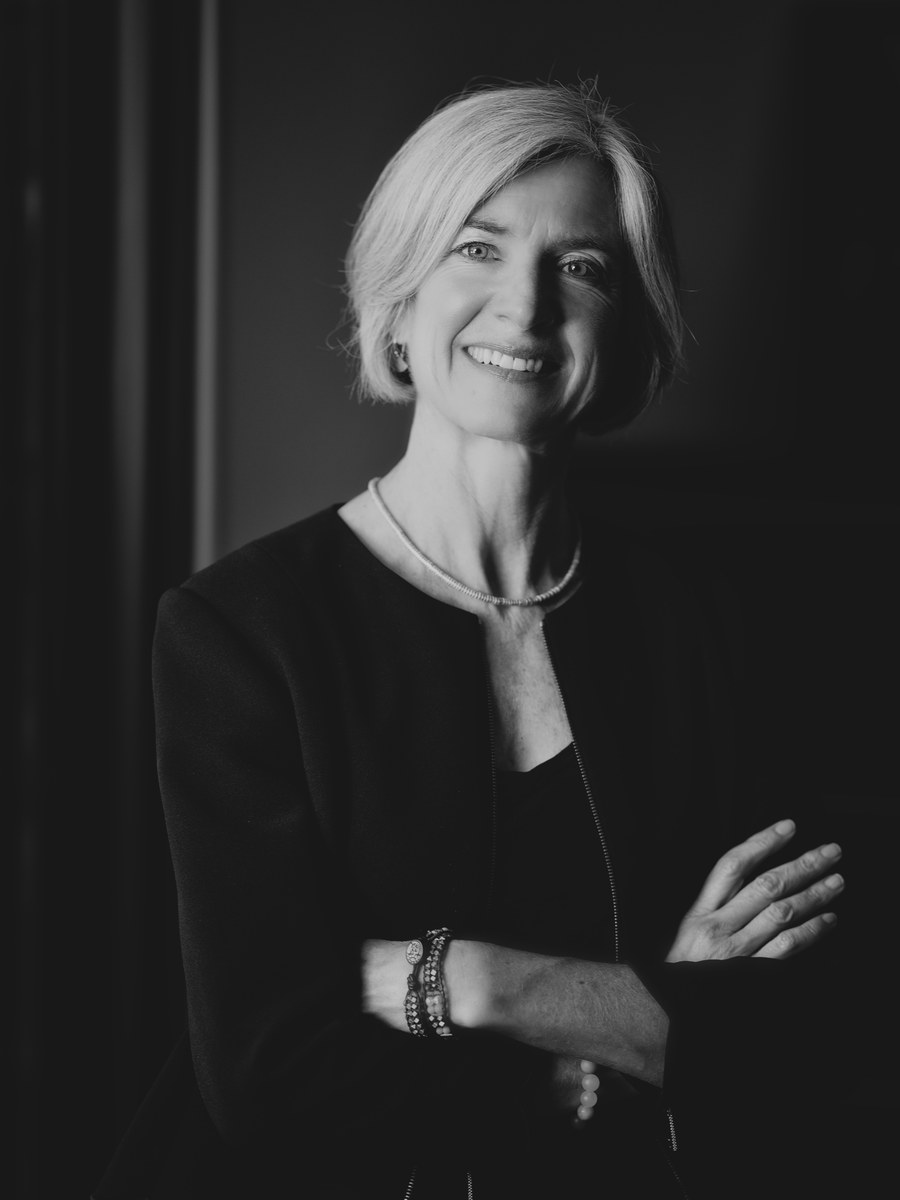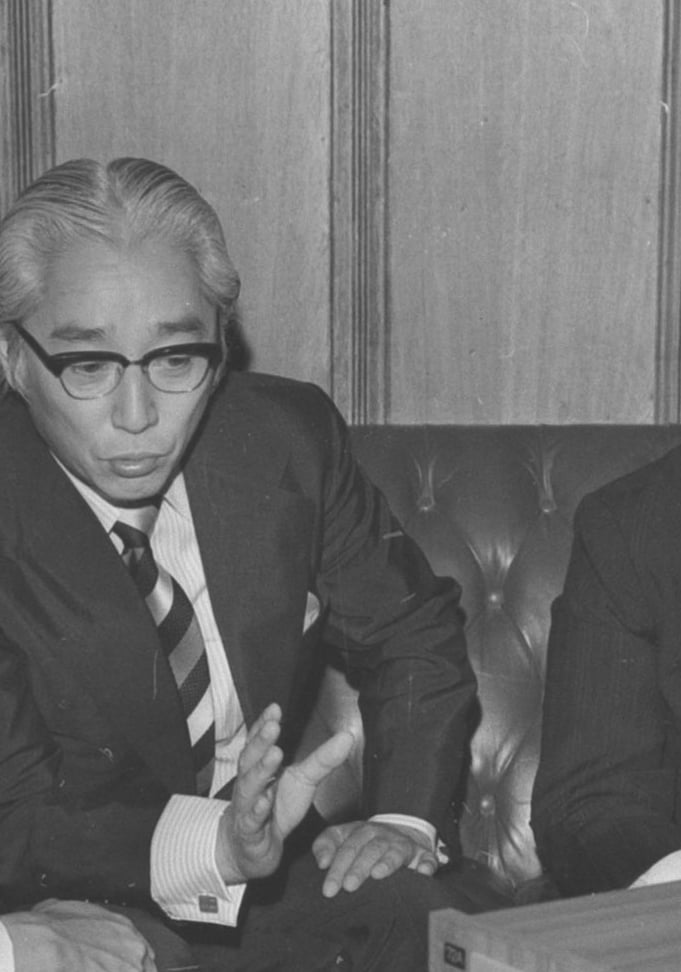

Photo: Christopher Michel, 2023, licensed under CC BY-SA 4.0; downscaled from the original · Wikimedia Commons, 'Jennifer Doudna by Christopher Michel in 2023 05.jpg' -- photograph by Christopher Michel, 12 July 2023, uploaded by the photographer as own work under CC BY-SA 4.0; original Commons file 5464 x 7285 pixels, downscaled once to 900 x 1200 (never upscaled). Black-and-white portrait. · CC BY-SA 4.0
biologist · Contemporary
Jennifer Doudna
b. 1964
Known For
Not yet included in personality matching — the documented evidence doesn't yet cover enough of the personality model. Everything else on this page is fully available.
Trait Constellation
Key Achievements
In 2012, working with Emmanuelle Charpentier, she helped recreate the CRISPR/Cas9 'genetic scissors' in a test tube and reprogram them to cut any DNA molecule at a predetermined site.
She shared the 2020 Nobel Prize in Chemistry with Charpentier "for the development of a method for genome editing".
From 2006 her Berkeley group worked out how several Cas proteins function, and in 2011 she and Eva Nogales published a cryo-EM structure of the E. coli CRISPR effector complex.
Moments That Reveal Them
In 2012 the Berkeley, Vienna and Umea groups worked almost around the clock across time zones to publish the Cas9 results before competitors could, with a postdoc waking each day to the previous day's results from Vienna.
This is consistent with a team that moved quickly under competitive pressure, working in step with a partner lab on another continent. Execution Speed
In March 2020 she announced that her institute was building a clinical COVID-19 testing laboratory on the Berkeley campus, and the NIH director later noted that she had no experience in virology or clinical diagnostics.
This is consistent with a scientist willing to redirect her institute's resources to an unfamiliar problem when a community need appeared. Adaptability
Turning Points
At a 2011 conference in Puerto Rico, Charpentier proposed that the two of them study how Cas9 works in Streptococcus pyogenes, and Doudna joined, starting the collaboration that led to the 2012 discovery.
This is consistent with a researcher who joined forces with a partner from a different field to tackle a problem neither could settle alone. Collaboration
Similar People
People whose overall profiles resemble theirs.

Theodore Roosevelt

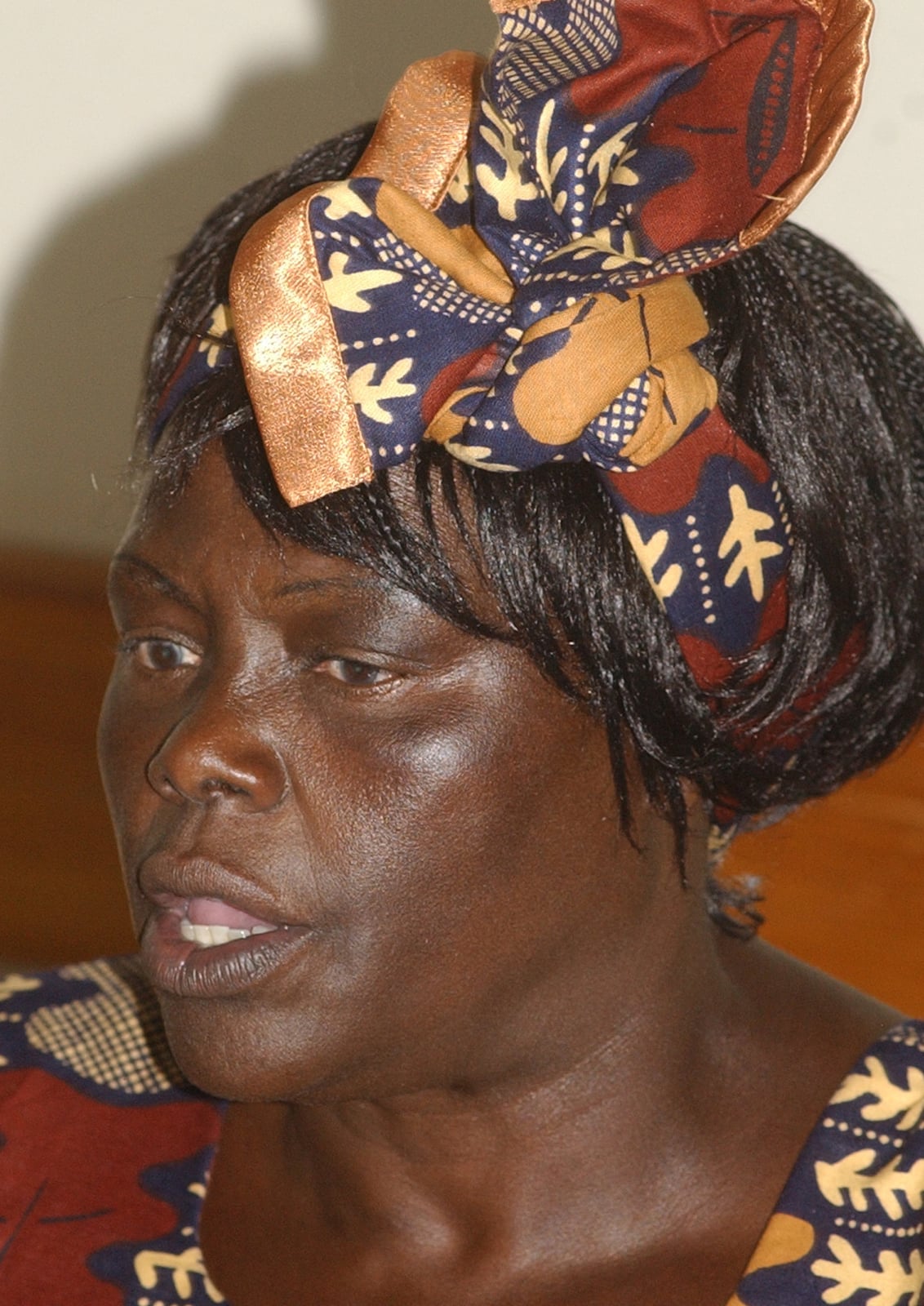
Wangari Maathai

Benjamin Banneker

Nelson Mandela

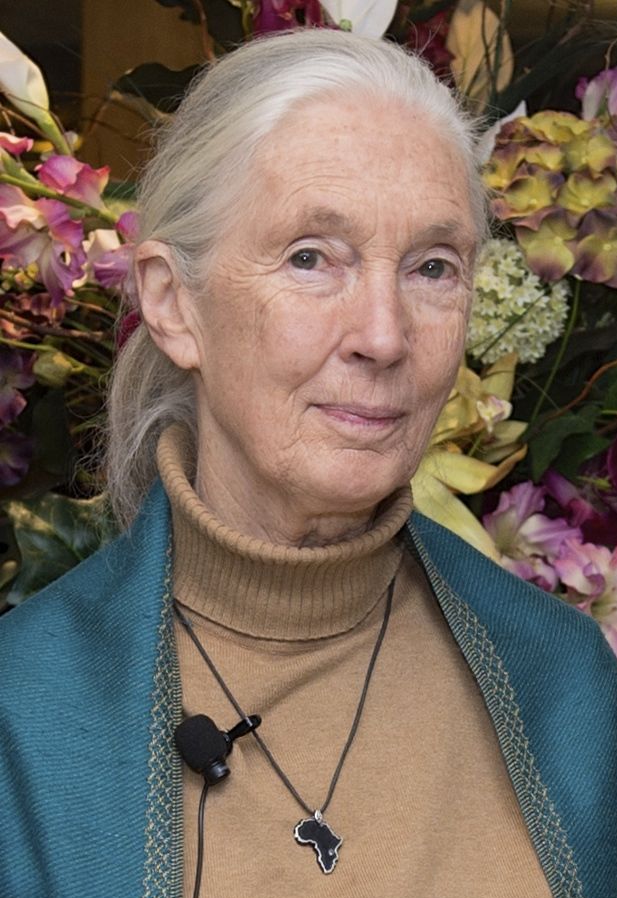
Jane Goodall
Sources
- Jennifer Doudna (Q56068) -- verified live via the Wikidata API (2026-10-11): English label 'Jennifer Doudna', description 'American biochemist', Korean label present, born 19 February 1964, no date of death recorded. Orientation only; not used as support for any row.
- The Royal Swedish Academy of Sciences, press release 'The Nobel Prize in Chemistry 2020' (7 October 2020) -- CANONICAL SIGNIFICANCE SOURCE: the citation 'for the development of a method for genome editing' to Emmanuelle Charpentier and Jennifer A. Doudna, the account of Charpentier's 2011 discovery of tracrRNA, the collaboration she initiated with Doudna the same year, the test-tube recreation and reprogramming of the CRISPR/Cas9 genetic scissors in 2012 and their use since. Read in full.
- The Royal Swedish Academy of Sciences, 'Popular information: Genetic scissors: a tool for rewriting the code of life' (Nobel Prize in Chemistry 2020) -- the Nobel Committee's narrative of the discovery: Doudna's work on RNA and RNA interference, the 2006 call from a Berkeley microbiologist colleague about CRISPR and her putting her research group to work on the Cas proteins, the 2011 meeting in Puerto Rico where Charpentier proposed the collaboration, and the failed first experiment solved by adding tracrRNA. Written by the Committee with the laureates' own accounts as input, so partly self-derived; read for the facts of the collaboration, not for personality. Read the biographical and discovery sections in full; the later sections on applications and ethics were skimmed.
- ASBMB Today (American Society for Biochemistry and Molecular Biology), 'From bacterial immunity to scientific revolution' (December 2020) -- society-magazine feature on the CRISPR-Cas9 discovery and the 2020 Nobel Prize, with interviews of Doudna, colleagues and collaborators (Martin Jinek, Krzysztof Chylinski, Megan Hochstrasser, Fyodor Urnov, Joan Steitz). INDEPENDENT of Doudna, favourable in tone and partly built on her own quotes. Covers the move from RNA interference to CRISPR, the Berkeley-Vienna-Umea collaboration, the race to publish in 2012, the founding of the Innovative Genomics Institute in 2014, the 2015 Napa meeting she planned on gene-editing ethics, and the pandemic work. Read in full; the patent-dispute paragraph was read but not scored.
- Matthew Herper, 'CRISPR pioneer Doudna opens lab to run Covid-19 tests', STAT, 30 March 2020 -- contemporaneous news report on the pop-up clinical testing laboratory at the Innovative Genomics Institute (2,500 square feet, over 1,000 samples a day planned), staffed by more than 50 volunteers including industry staff, with the effort started on 13 March 2020 and based on laboratory robots. Independent reporting with Doudna's own quotes. Read in full.
- Federal Laboratory Consortium, 'NIH Director lauds CRISPR pioneer's COVID-19 volunteer efforts' (summary of NIH Director Francis Collins's Director's Blog of 12 May 2020) -- government summary stating that Doudna, with no experience in virology or clinical diagnostics, led the creation of a pop-up COVID-19 testing laboratory that was fully operational on 6 April 2020 after obtaining CLIA certification and validating its test, and that she convinced IGI colleagues to help. Third-party observer (a federal agency head), second-hand through the FLC summary; the original blog post was not opened. Read in full.