Galileo Galilei
90% Profile Match
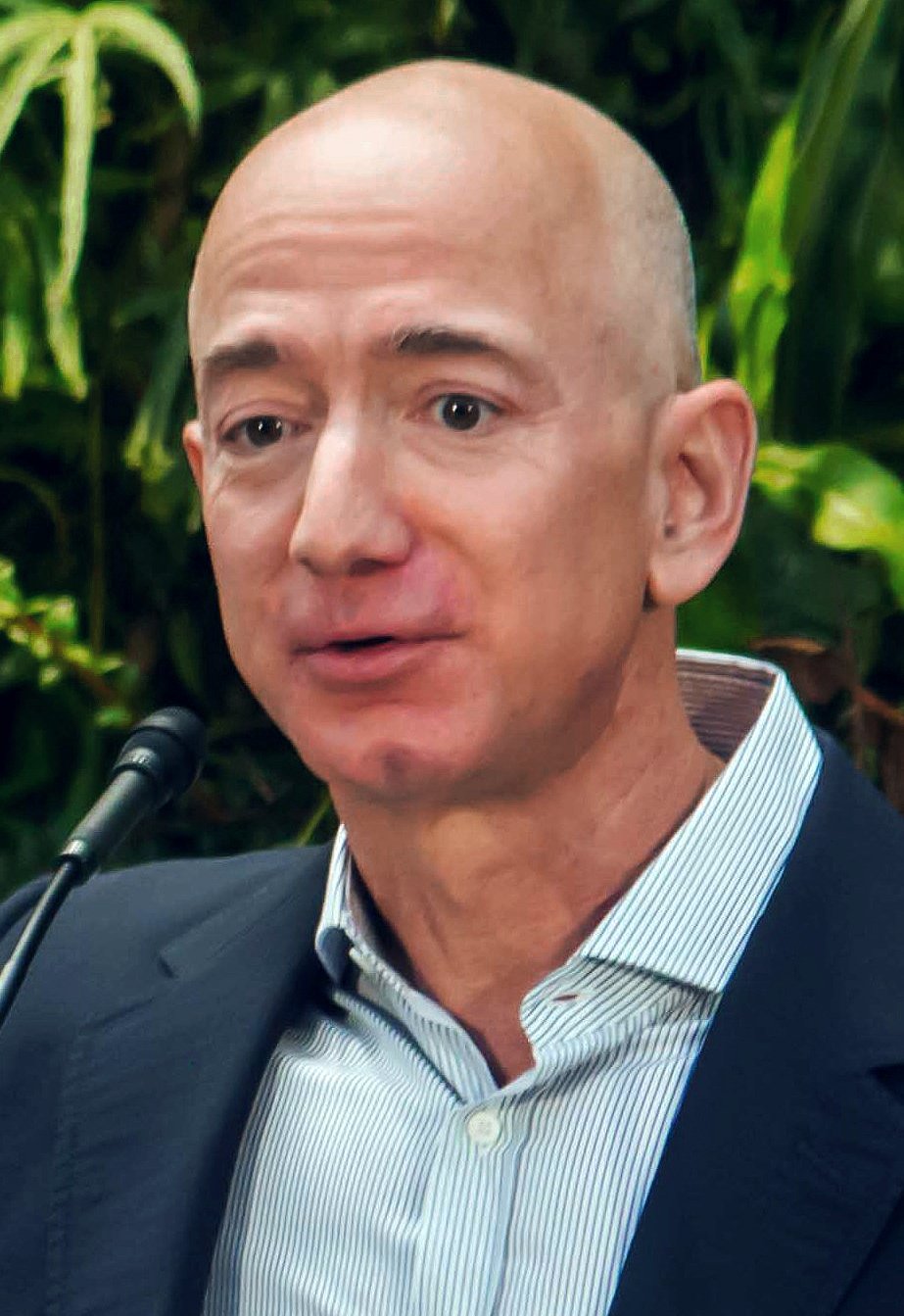
Seattle City Council, CC BY 2.0 (photograph of 29 January 2018, cropped) · Seattle City Council (Flickr), via Wikimedia Commons · CC BY 2.0
In 1994 Bezos left a vice-president post at the New York quantitative firm D. E. Shaw & Co. to start an online bookstore. In Brad Stone's account he first listed about twenty candidate product categories and chose books because they were commodity goods, two main distributors served the trade, and far more titles were in print than any physical store could stock. Shel Kaphan, the company's first employee, gives three reasons for choosing Seattle over California: sales-tax rules, closeness to a major book-distribution center, and the local pool of programmers.
In 2006 Amazon began renting out parts of its own infrastructure to outside customers. BusinessWeek's November 2006 cover story describes the S3 storage service introduced that March, the EC2 computing service opened in test mode on 24 August, and the Mechanical Turk task marketplace launched the previous November; Bezos told the magazine Amazon was now exposing systems it already ran for its own store. Benjamin Black, a former Amazon engineer, recalls that he and Chris Pinkham wrote the 2003 paper that raised selling virtual servers as a service and that Bezos later asked for a more detailed write-up, while GeekWire notes that accounts of how AWS began differ.
Amazon Prime began with a suggestion from an engineer, Charlie Ward, through the company's employee suggestion box. The Seattle Times reports that in November 2004 Bezos gathered a group of executives and told them to return with a proposal by the end of January. Prime launched on 2 February 2005 with a note from Bezos saying it would be expensive for Amazon in the short term, at a time when, the paper reports, many on Wall Street worried about the cost.
In 2002 Colin Bryar pitched a roomful of Amazon senior leaders on opening the company's product catalog to outside developers as web services. Robert Frederick, a technical leader on the effort, recalled to GeekWire in 2026 that nearly all of them said no, citing the risks of cannibalizing existing business and educating competitors. He recalls Bezos laughing and saying they should go ahead and see what developers built, and a July 2002 press release used similar language about developers surprising the company.
Going ahead after near-unanimous internal objection is one example consistent with the independent-thinking score, though it rests on a single recollection recorded more than two decades later. Independent Thinking
Austin Carr's 2015 Fast Company account of the Fire Phone, based on interviews with more than three dozen current and former Amazon employees, reports that Bezos personally chose a 13-megapixel over an 8-megapixel camera and pressed for the Dynamic Perspective 3-D feature, telling the team he did not care how long it took or how much it cost. After the first leaders on that feature did not deliver, replacements were brought in, and the company restarted much of the early work around the start of 2013. Reviewers criticized the phone after it went on sale in July 2014, and in December 2014 Bezos publicly defended it as a bold bet that would take many iterations.
Continuing to press a feature through a leadership change and a restart, and defending the project after a poor reception, illustrates the persistence score; the same account records team members' doubts about the feature, which is why this profile treats the trait as dual-edged. Persistence
In spring 1994 Bezos told David Shaw, the founder of D. E. Shaw & Co., that he planned to leave and start an online bookstore; in Brad Stone's account the two spent two hours walking in Central Park, where Shaw said he understood the impulse but noted the firm was growing and might end up competing with the new venture. They agreed Bezos would take a few days to think it over, and he then left the firm and set up the company in the Seattle area, where Amazon's first employee, Shel Kaphan, joined him that October. A 1999 TIME profile reports that investors thought the plan was crazy.
Leaving a secure senior role for an untested online venture, after talking it through with the firm's founder, is consistent with the risk-tolerance score. Risk Tolerance
People whose overall profiles resemble theirs.