Frida Kahlo
93% Profile Match
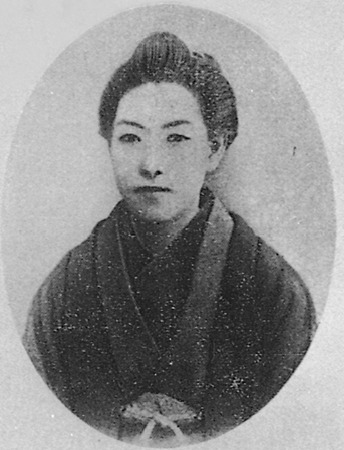
Source: Portraits of Modern Japanese Historical Figures, National Diet Library, Japan (photograph of 1895, photographer unknown) · Oval portrait photograph of Higuchi Ichiyo captioned in print 'Higuchi Ichiyo shoei (Meiji 28)', that is a portrait of 1895, as reproduced in the Japanese literature anthology 'Gendai Nihon bungaku zenshu, vol. 9' (Kaizosha, 1931; National Diet Library digital collection pid 2627917, whose record carries the library's public-domain mark) and displayed on the National Diet Library's digital exhibition 'Portraits of Modern Japanese Historical Figures', page for Higuchi Ichiyo. The photographer is not named. Rights review: the exhibition's current 'About This Site' page states that all images used in the exhibition are in the public domain and may be reused, including commercially, with the source cited (the library notes that its terms were unchanged when its website policy was updated in February 2025). The basis is also age: the photograph dates from 1895, the sitter died in 1896, and it was reproduced in a Japanese book of 1931, so any Japanese term had expired long before the 1996 US restoration date and the image is in the public domain in the United States. Caveats: the individual photographer and the first publication of the photograph were not found; the image is a halftone reproduction. Identity rests on the printed caption. Cropped from the library's 448 x 495 pixel exhibition image to the oval portrait to remove the caption, 344 x 450 pixels (never upscaled). A larger exhibition image from a 1959 biography was not used because its source book is not openly viewable. · Public domain (National Diet Library statement; photograph of 1895)
In a career of only a few years she became, in Britannica's words, the most important Japanese woman writer of her period, known above all for Takekurabe (1895), a story of children growing up at the edge of Tokyo's pleasure quarter.
Her breakthrough came with 'Umoregi' in 1892, and her best-known stories followed from 1894: The Last Day of the Year, Troubled Waters, The Thirteenth Night and Takekurabe, written in a polished classical prose.
She also left a literary diary kept from 1891 to 1896 and many waka poems; her portrait has appeared on the Japanese 5,000 yen note since 2004.
After her first mentor advised her to write in colloquial language, she kept to a classical style and polished her own distinctive prose.
This is consistent with following her own judgment over a mentor's advice, though it rests on a single reference-work statement. Independent Thinking
While running a small shop beside the Yoshiwara quarter she kept writing, sometimes leaving the store in her sister's care to visit the library.
This is consistent with continuing to work at her writing alongside other demands. Persistence
From the shop neighbourhood beside the Yoshiwara quarter she took the setting and subjects that moved her stories from conventional love tragedies to the lives of vulnerable people, culminating in Takekurabe.
This is consistent with a creative shift driven by a change of surroundings and observation, according to a popular biography. Creative Originality
People whose overall profiles resemble theirs.



Not a rival — a different profile shape worth a look.