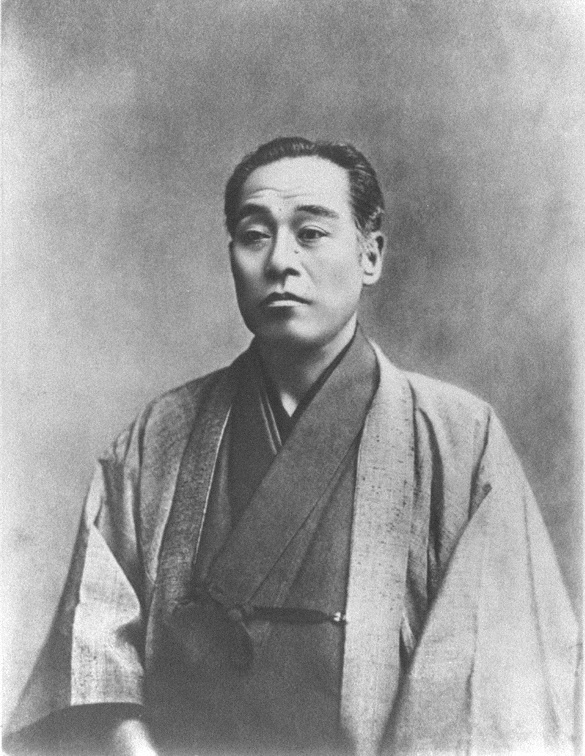
Photograph of Fukuzawa Yukichi, c. 1891, Fukuzawa Research Center, Keio University (photographer not recorded) · Photograph of Fukuzawa Yukichi taken around 1891, held by the Fukuzawa Research Center at Keio University; photographer not recorded. Public domain by age: the term for an 1891 photograph under Japan's 1899 Copyright Act expired long before 1996, so it was not restored in the United States. The same photograph is credited to the Fukuzawa Memorial Center for Modern Japanese Studies, Keio University, on Nippon.com. The Keio database page and any institutional terms could not be opened, so that is noted as unverified. Original Commons file 585 x 756 pixels, used as is with no cropping and no upscaling. · Public domain (age of photograph)
teacher · 19th Century
Fukuzawa Yukichi
1835–1901
Known For
Not yet included in personality matching — the documented evidence doesn't yet cover enough of the personality model. Everything else on this page is fully available.
Trait Constellation
Key Achievements
He founded the Dutch-studies school in Edo that grew into Keio Gijuku and then Keio University, a private institution that, per Keio, introduced new subjects and brought in overseas professors.
After joining shogunate missions to the West, he wrote Seiyo jijo (Conditions in the West) and An Encouragement of Learning, bestselling books that introduced Western institutions and argued for practical education.
In 1882 he founded the newspaper Jiji Shimpo, which Britannica says trained liberal politicians and journalists.
Moments That Reveal Them
Sent in 1867 as an envoy to the United States, he made his personal aim buying textbooks to take back to Japan, and on his return he set about creating his own school.
This is consistent with self-directed initiative toward a project of his own. Proactive Agency
Offered government posts after the Restoration, he consistently declined, saying Japan needed an independent intellectual community, and stayed a private citizen.
This is consistent with a preference for institutional independence from the state. Independent Thinking
Turning Points
After his travels in Europe and America, Keio says he concluded that Japan needed a new education system to stay independent, and he turned from interpreter and envoy to building his own school and writing for the public.
This is consistent with a shift toward education as his main vehicle for impact. Impact Motivation
Similar People
People whose overall profiles resemble theirs.


Nelson Mandela

Jane Goodall

Wangari Maathai

George Orwell

Ludwig Wittgenstein
Sources
- Fukuzawa Yukichi (Q355447), verified live via the Wikidata API (2026-10-26): label 'Fukuzawa Yukichi', description 'Modern Enlightenment thinker, educator, philosopher, scholar, author, writer, journalist, translator, entrepreneur, and founder of Keio University in Japan's Meiji era (1835-1901)', born 1835-01-10, died 1901-02-03, Korean label present, P18 image 'Fukuzawa Yukichi 1891.jpg'. Orientation only; not used as support for any row.
- Keio University, 'Yukichi Fukuzawa: A Brief Look into the Life of Keio Founder' (read in full). CANONICAL SIGNIFICANCE SOURCE: his three trips to the West, the conclusion that Japan needed a new education system, the school that became Keio Gijuku, An Encouragement of Learning, the introduction of speech-making (enzetsu) and new Japanese terms, women's equality writings, the Jiji Shimpo newspaper (dated 1883 here, 1882 elsewhere), and his 1896 'Last Testament' speech. Admiring founder-institution account, so used with lower confidence for character claims.
- Encyclopaedia Britannica, 'Fukuzawa Yukichi' (lead summary and fact box read; the full article text sits behind the page's expandable sections and was not opened): author, educator and publisher; Keio University developed from the Dutch-language school he started in 1858; Seiyo jijo; the Jiji shimpo newspaper (1882) that trained liberal politicians and journalists; over 100 books on parliamentary government, popular education, language reform and women's rights.
- Nippon.com, 'Fukuzawa Yukichi: Advocate for Education and Independence' (Shapers of Japanese History series, translated from Japanese; read in full): career from rangaku student through shogunate missions to Seiyo jijo, An Encouragement of Learning and its sales, the Meirokusha society, his role as private citizen, his resistance to top-down modernisation under Okubo, the 1881 political crisis and the Jiji Shimpo editorials, and his late concern with individual independence. Independent scholar's essay for a Japanese public-media site; interpretive in places (the Franklin comparison is the author's own view).
- New World Encyclopedia, 'Fukuzawa Yukichi' (read in full): early education in Dutch and English, the shogunate missions of 1860-1867, Seiyo jijo, the founding of Keio and the Jiji Shimpo, his repeated refusal of government posts, and a Criticism section covering the Datsu-A ron essay (1885) and his support for the First Sino-Japanese War. Compiled tertiary encyclopedia with a Wikipedia-derived base; used for the refusal of posts and the criticism, and its 'first independent university' claim is not repeated.
- Wikimedia Commons file page 'Fukuzawa Yukichi 1891.jpg' (checked for the portrait only; not used for any scoring).