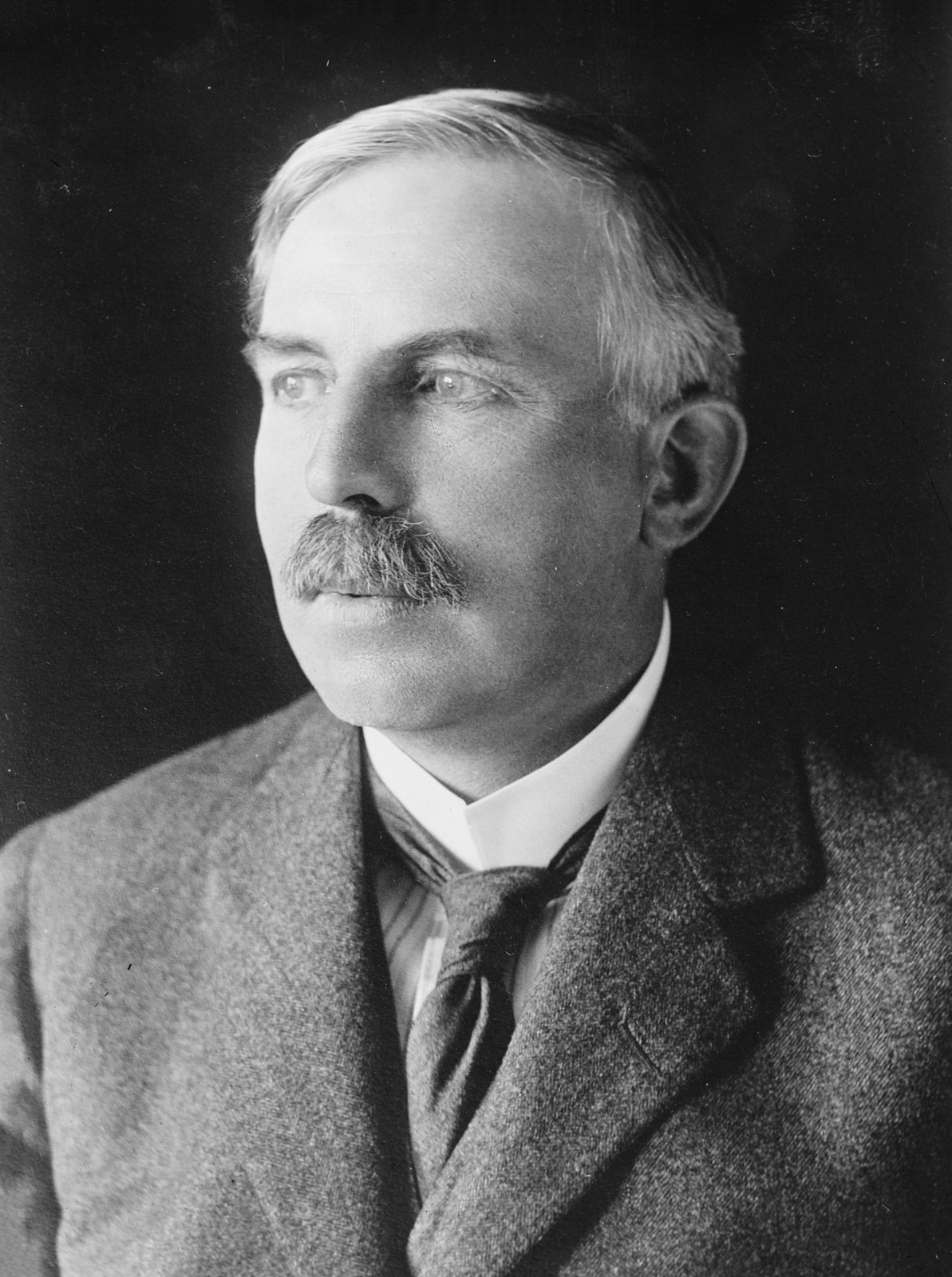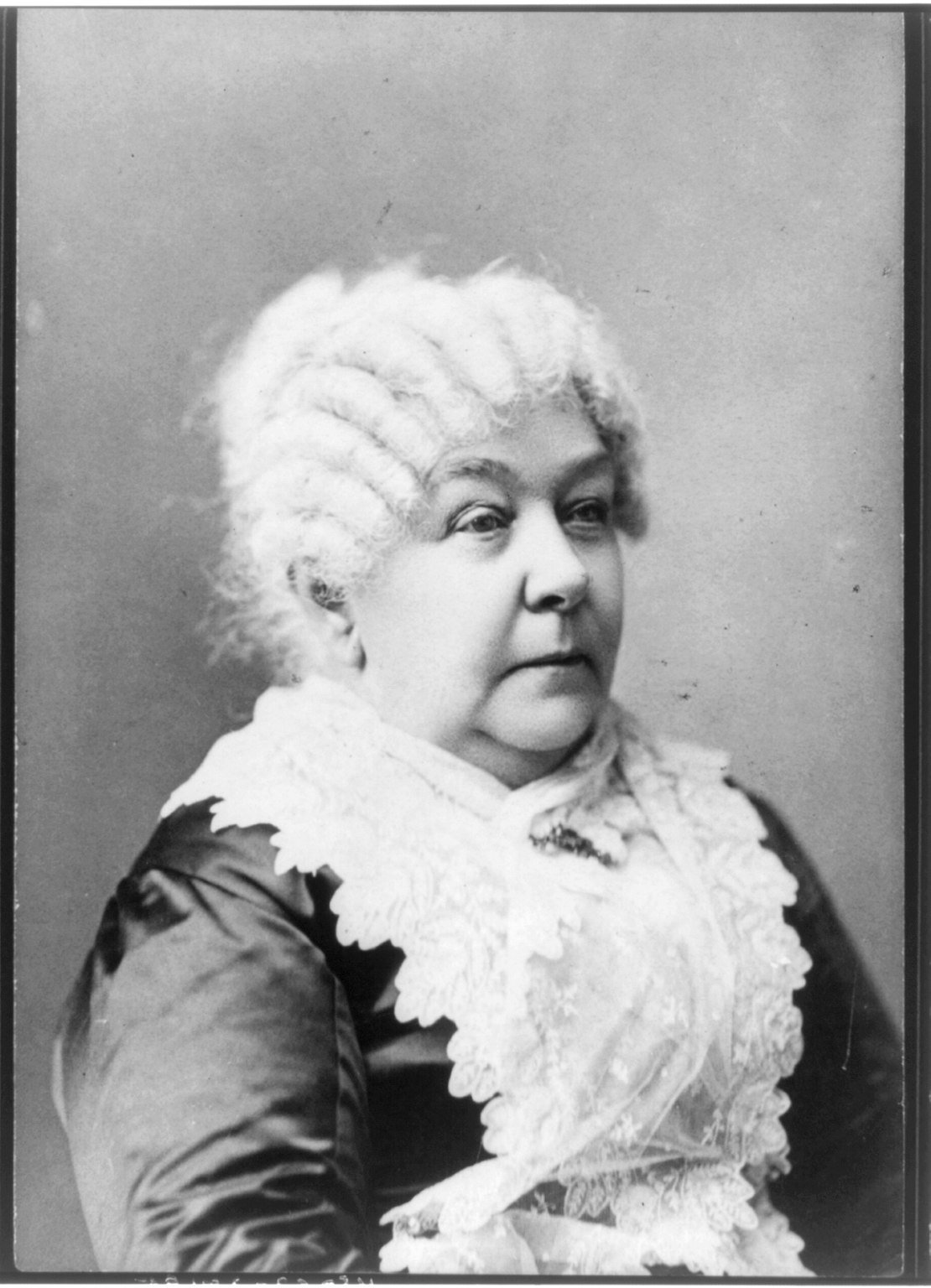

Bain News Service, Library of Congress, George Grantham Bain Collection (ggbain.36570); photographer not credited; date not recorded · Library of Congress, Prints and Photographs Division, George Grantham Bain Collection (digital ID ggbain.36570), via Wikimedia Commons · Public domain (US); LOC: no known restrictions on publication
Trait Constellation
Key Achievements
At McGill University in Montreal, Rutherford worked with the chemist Frederick Soddy on thorium and its radioactive emanation, and their papers of 1902 and 1903 set out that radioactive substances change into other substances at a rate proportional to the amount present. The historian Helge Kragh describes the resulting disintegration theory as still counting as the fundamental law of radioactive change.
In May 1911 Rutherford published a paper in the Philosophical Magazine arguing that the large-angle scattering of alpha particles seen in Hans Geiger and Ernest Marsden's Manchester experiments required most of an atom's mass and charge to sit in a very small central body. New measurements by Geiger and Marsden, published in 1913, agreed well with the scattering formula he derived.
In papers published in 1919, Rutherford reported that alpha particles passing through nitrogen produced long-range particles which he concluded were probably hydrogen atoms, and he suggested that the nitrogen atom had been disintegrated in the collision. Eve and Chadwick's obituary says he did the experimental work himself, with William Kay's help in observing the scintillations.
Moments That Reveal Them
In 1908-09, while Hans Geiger and Ernest Marsden were measuring how alpha particles scatter in thin metal foils, Rutherford suggested that Marsden look for alpha particles reflected directly from a metal surface. Marsden later wrote that he doubted Rutherford expected such a result and called the suggestion a hunch; Rutherford later recalled Geiger telling him in great excitement that some alpha particles were coming backwards.
The episode is consistent with a willingness to try an experiment whose outcome looked unlikely, a pattern that other accounts in this profile describe in different periods. Experimentation
On 7 March 1919, before deciding whether to stand for the Cavendish chair at Cambridge, Rutherford wrote to J. J. Thomson that he wanted a clear mutual understanding about the laboratory and its research students. Thomson replied that he would leave Rutherford an absolutely free hand in managing the laboratory, and Rutherford became its Director as well as professor.
The exchange is consistent with an interest in being responsible for a laboratory's direction, alongside the other evidence for leadership in this profile. Leadership Drive
Turning Points
In January 1907 Rutherford told Otto Hahn that he had been appointed to the chair and laboratory directorship at Manchester and would leave McGill that June, adding that he would be glad to be nearer the scientific centre because he felt America and Canada were on its periphery. At Manchester he went on to work with Geiger and Marsden on the scattering of alpha particles.
Similar People
People whose overall profiles resemble theirs.

Wilbur Wright

John D. Rockefeller

Niels Bohr

Ruth Bader Ginsburg

Elizabeth I of England
Opposite Profile
Not a rival — a different profile shape worth a look.
Marlene Dietrich
Sources
- Ernest Rutherford -- English Wikipedia, fetched and read for orientation only (birth/death dates and places, the McGill 1898-1907 / Manchester 1907-1919 / Cambridge 1919-1937 posts, the 1908 Nobel Prize in Chemistry, knighthood 1914, barony 1931); not used as support for any scored row.
- Ernest Rutherford (Q9123) -- identity verified live through the Wikidata API (wbgetentities): en label 'Ernest Rutherford', en description 'New Zealand physicist (1871-1937)', born 1871-08-30, died 1937-10-19, citizenship New Zealand, P18 'Ernest Rutherford LOC.jpg', kowiki sitelink title '어니스트 러더퍼드'.
- A. S. Eve, Rutherford: Being the Life and Letters of the Rt Hon. Lord Rutherford, O.M. (Cambridge University Press, 1939), Internet Archive OCR full text (Digital Library of India scan, item dli.csl.3544), downloaded whole and read by chapter with targeted searches -- by Rutherford's former McGill colleague and authorised biographer, working from the preserved letters. Used for: the 1902 McGill work with Soddy and Soddy's own 1933 recollection of it, Prof. Norman Shaw's 1937 account of the McGill Physical Society meeting, the 1903 Soddy book episode, the 6 Jan 1907 letter to Hahn, C. G. Darwin's 1938 recollection of the 1911 calculation, the 1910 Marconi expert-witness episode, the 7 Mar 1919 letter to J. J. Thomson about the Cavendish chair, the April 1925 Royal Institution lecture, and Rutherford's 1933 remarks to the Royal Society on the word 'isotope'. Rutherford's own letters quoted in it are self-testimony (counted as one perspective with the rest of his writings).
- A. S. Eve and J. Chadwick, 'Lord Rutherford, 1871-1937', Obituary Notices of Fellows of the Royal Society vol. 2 no. 6 (Jan 1938) pp. 395-423 -- reprint digitised by the Wellcome Library via the Internet Archive (item b33631104), OCR full text downloaded and read. Two-author obituary by Rutherford's McGill-era colleague Eve and his Manchester/Cambridge collaborator Chadwick. Used for: the Manchester and Cambridge chapters (Geiger as second, the 1919 nitrogen experiments done by Rutherford with Kay's help and supported by control experiments, the 1920 'short-range atoms' deduction later found wrong, the attempts to detect a neutral particle, the satellite-nucleus model 'without real success', the acceptance of a large student body as a duty). Subject-adjacent (his own colleagues, published by a society he had presided over), so weighted below the independent sources.
- Norman Feather, Lord Rutherford (Blackie & Son, 1940), Internet Archive OCR full text (item LordRutherford), downloaded and read; foreword by W. H. Bragg. Biography by a Cavendish researcher who worked under Rutherford in his later years. Used for: the Manchester chapter (Bohr's 1912 request to drop his experiment for theory and Rutherford's 1929 statement that he was able to 'encourage Professor Bohr's bold application' of the quantum theory; Rutherford's own account of the older-school objection that a nuclear atom must be unstable) and the epilogue (a 1936 letter advising a colleague against pugnacious papers). Independent authorship from Eve, but the preface says Feather used letters Eve had already sifted and that Chadwick criticised the proofs.
- Rudolf Peierls, 'Rutherford and Bohr' (Rutherford Memorial Lecture, National Physical Laboratory, New Delhi, 10 Nov 1987; reproduced in Current Science 73, 1997 and Resonance, May 2010, pp. 476-487), PDF downloaded and read in full -- a physicist's account of the Rutherford-Bohr correspondence 1912-1937, quoting Rutherford's letters (1913 comments on Bohr's first paper, the 1914 readership, a Dec 1917 letter on his disintegration experiments, his 1919 plan for a Manchester chair, 1920-1936 remarks). Independent of Eve/Feather; used only for Rutherford's science-related behaviour, not for the health or bereavement passages it also contains.
- Helge Kragh (historian of science, Aarhus University), 'Rutherford, Radioactivity, and the Atomic Nucleus' (arXiv:1202.0954), PDF downloaded and read in full -- scholarly review of Rutherford's science c.1900-1937: the 1902 letter to his mother about keeping in the race, the 1902-03 disintegration theory with Soddy, the 1908 Rutherford-Royds proof, Dec 1910 letter to Boltwood, the May 1911 scattering paper and its stated assumptions, the reception of Bohr's atom and the beta-ray change of mind, the 1919 nitrogen experiments, the 1920s satellite nucleus model, the 1933-37 search for tritium. Independent scholarly perspective; cites letters through Badash, Pais and Stuewer.
- American Institute of Physics, Center for History of Physics, online exhibit 'Rutherford's Nuclear World', section 'Alpha Particles and the Atom' (2011), fetched and read in full -- Manchester 1907-1919: Geiger, Kay and Royds; the 1908 Bumstead letter; Ernest Marsden's recollection (quoted from Birks, Rutherford at Manchester, 1962, p. 8) of being asked to look for reflected alpha particles; William Kay's 1957 interview (quoted from Hughes 2008); Chadwick's oral-history remarks on Rutherford's first public announcement of the nuclear theory; the winter 1910-11 testable predictions; the 1917-19 experiments. Institutional secondary account; Birks and Hughes were not opened (lending-only), so the Marsden and Kay voices are as transmitted by AIP.
- American Institute of Physics, Center for History of Physics, 'Rutherford's Nuclear World', section on the Cavendish Laboratory years 1919-1937 (page 'Atop the physics wave', 2011), fetched and read in full -- the 1919 succession, the 1919 nitrogen paper's wording, Chadwick's oral-history remark on 'silly experiments', Phillip Dee's oral-history remark on how Rutherford concentrated the laboratory's resources, Mark Oliphant's account of Rutherford in lectures, the 1927 Royal Society address on accelerators, the neutron search 'for more than 10 years'. Institutional secondary account; the oral-history voices are as transmitted by AIP (the AIP oral-history transcripts themselves were blocked and not opened).
- American Institute of Physics, Center for History of Physics, 'Rutherford's Nuclear World', section on McGill 1898-1907 (page 'Exploring Radioactivity', 2011), fetched and read in full -- the team approach with the chemist Soddy, the alpha-particle deflection attempts that first failed, Rutherford's reluctance to state the alpha-helium identity before proof, and his 1907 letter to Hahn about leaving McGill. Institutional secondary account.