Mahatma Gandhi
94% Profile Match
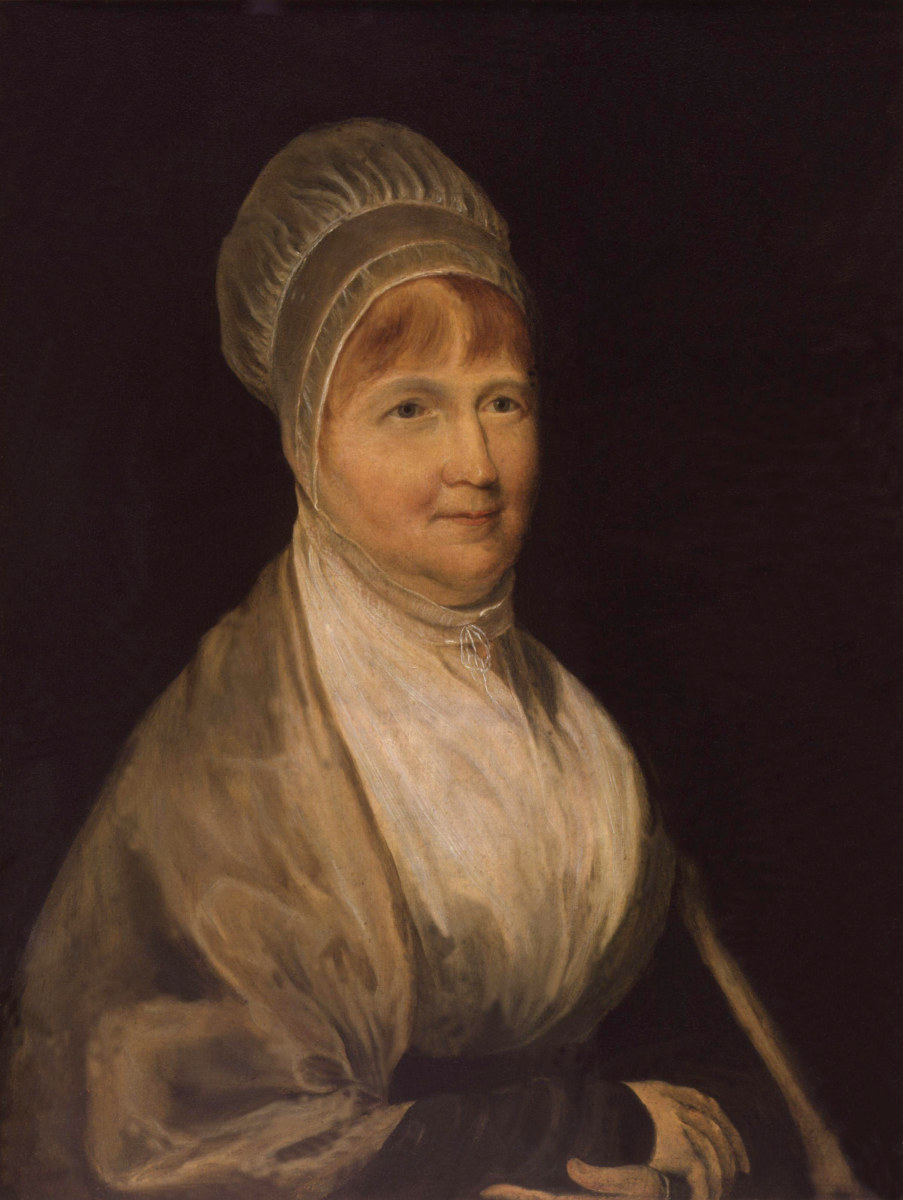
After Charles Robert Leslie, National Portrait Gallery, London, NPG 898 · Oil-on-panel portrait of Elizabeth Fry in the National Portrait Gallery, London (NPG 898), catalogued as after Charles Robert Leslie (1794-1859); a later copy of Leslie's painting of about 1823, which the NPG catalogue (reached only through a search summary, since the NPG site blocks automated fetching) links to a March 1823 diary entry of Fry about a portrait commission. The Commons file page records the NPG source and tags the photographic reproduction as public domain because the painter died before 1939. Original image 2400 x 3188 pixels, downscaled to 903 x 1200; no upscaling. Shown as a historical depiction (a copy after the original painting), not a photograph of the sitter. · Public domain (two-dimensional artwork; painter died 1859)
activist · 19th Century
1780–1845
Not yet included in personality matching — the documented evidence doesn't yet cover enough of the personality model. Everything else on this page is fully available.
In 1817 she founded an association of Quaker women to improve conditions for female prisoners at Newgate, starting a school for the children and a workshop for the women.
In 1818 she gave evidence to a House of Commons committee, arguing for women's prisons staffed by women and for useful work for inmates; the committee's report credited the change she had made at Newgate.
Her ladies' committees spread across Britain and her tours of France, Germany and Holland (1838-43) promoted prison reform; critics such as the Edinburgh Review argued her methods would not stop crime.
In 1817, believing the national reform society would be too slow, she returned to Newgate and set up a school for the child inmates and then a workshop for the women.
This is consistent with starting practical work herself rather than waiting for wider reform. Proactive Agency
In 1817 she wrote a memorandum on the purpose of a prison, listing segregation of women, regular work, cleanliness, a matron and rewards for good conduct, while noting she still needed to consult people who knew well-run prisons.
This is consistent with setting out a plan while recognising the need for more information. Planning Orientation
Setting up the Newgate school and workshop in 1817 led her from working alone to organising a committee of women, and she later came to describe reform as the work of a movement.
This is consistent with moving from solo charity to collective organising, though she was at first reluctant to share control. Collaboration
People whose overall profiles resemble theirs.


Not a rival — a different profile shape worth a look.