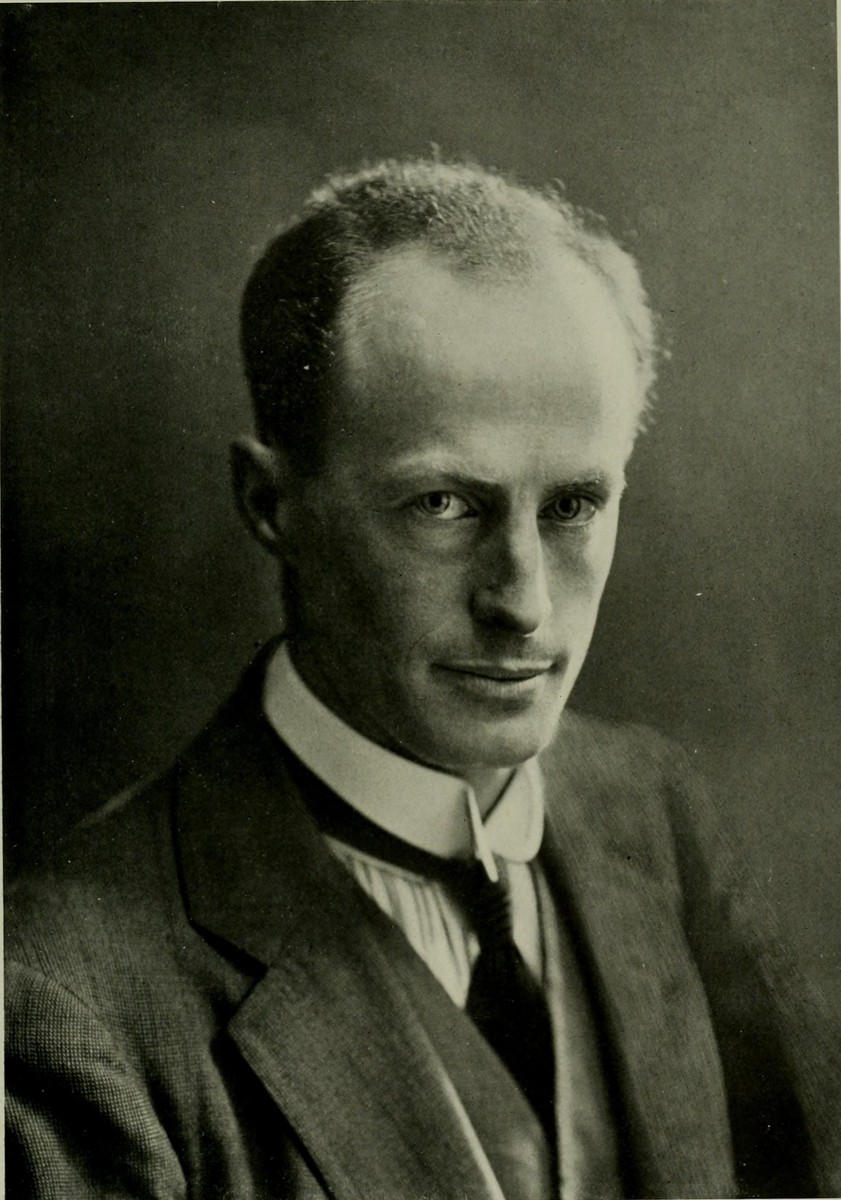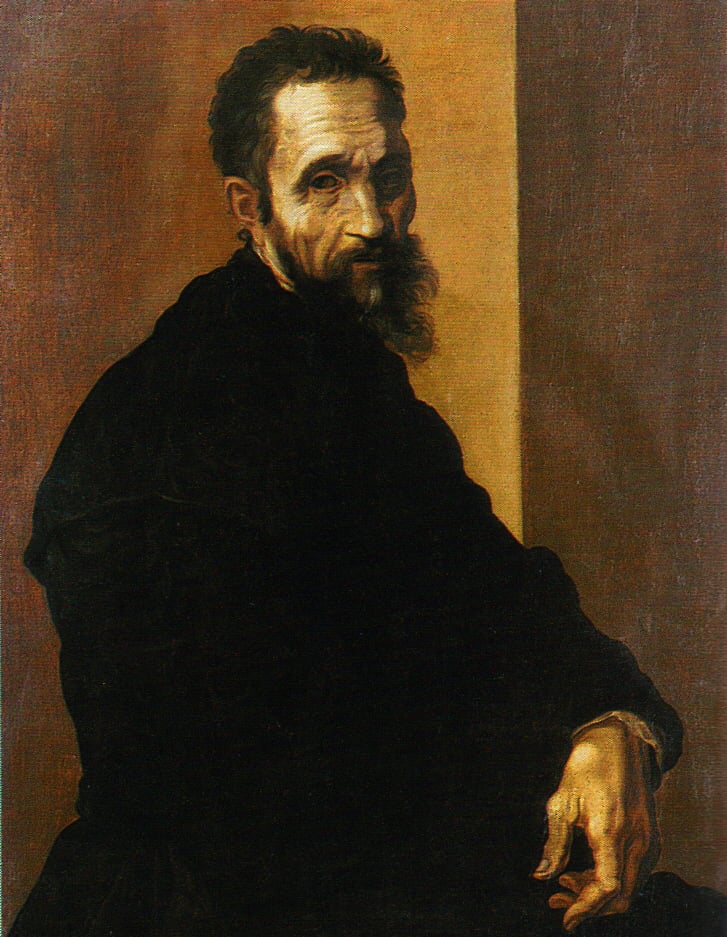

Photograph credited to Thomson, London, published in The American Museum Journal, vol. 15 (1915), p. 93, public domain · Studio photograph of Sir Douglas Mawson credited 'Photo by Thomson, London', printed as a full-page plate captioned 'Sir Douglas Mawson' on page 93 of The American Museum Journal, volume 15 (New York: American Museum of Natural History, 1915), in the Internet Archive copy digitised from the American Museum of Natural History Library for the Biodiversity Heritage Library (item americanmuseumjo15amer, page image 2352 x 3502 pixels). This copy is cropped to the photograph and downscaled to 841 x 1200 (never enlarged). · Public domain: first published in New York in 1915 (before 1931); the Internet Archive item is marked as not in copyright, and a 1914 British photograph was out of copyright in the United Kingdom well before 1996
explorer · 20th Century
Douglas Mawson
1882–1958
Known For
Not yet included in personality matching — the documented evidence doesn't yet cover enough of the personality model. Everything else on this page is fully available.
Trait Constellation
Key Achievements
Led the 1911-14 Australasian Antarctic Expedition, which charted large segments of the east Antarctic coast and advanced knowledge of geology, cartography, meteorology, geomagnetism, biology and marine science.
In 1912-13, after Belgrave Ninnis was lost in a crevasse and Xavier Mertz died, he travelled on alone for about a month, determined to bring back the party's data and specimens, and reached base after the relief ship had left.
Led the 1929-31 British, Australian and New Zealand Antarctic Research Expedition, which worked from voyages along much of the Antarctic coast, and was Professor of Geology and Mineralogy at the University of Adelaide from 1921 to 1952.
Moments That Reveal Them
After Ninnis fell into a crevasse with most of the supplies and Mertz died, Mawson carried on alone for about 30 days with the expedition's data and specimens, survived a fall into a crevasse by hauling himself out on his sledge harness, and reached base only after the ship had sailed.
This is consistent with continuing toward a goal through severe setbacks. Persistence
Having studied glaciation in outback South Australia, he hurried to Adelaide in 1907 hoping to meet Shackleton's ship because he wanted to see glaciation first-hand, and was taken on the expedition.
This is consistent with a hands-on curiosity about the natural processes he studied. Curiosity
Turning Points
When Scott invited him to join his expedition, Mawson declined and instead set out to organise and lead his own Australasian Antarctic Expedition into unexplored country south of Australia, seeking support across Australia in 1910-11.
This is consistent with preferring to start and direct his own venture over joining someone else's. Proactive Agency
Similar People
People whose overall profiles resemble theirs.

Mustafa Kemal Atatürk

Harriet Tubman

Simón Bolívar

Mahatma Gandhi

Nellie Bly
Sources
- Douglas Mawson (Q434281), verified live via the Wikidata API (2026-11-04): label 'Douglas Mawson', description 'Australian geologist and explorer of the Antarctic (1882-1958)', born 1882-05-05, died 1958-10-14, citizenship Australia (also United Kingdom and a third entry), no Korean label. Orientation only; not used as support for any row.
- Encyclopaedia Britannica, 'Douglas Mawson' (Britannica Editors, last updated October 2026), article body read in full. CANONICAL SIGNIFICANCE SOURCE: born 1882 at Shipley, Yorkshire, died 1958 in Adelaide, an Australian geologist and explorer 'whose travels in the Antarctic earned him worldwide acclaim'; mining-engineering degree from Sydney University in 1902 and a doctorate in science in 1909 from field studies at Broken Hill; on Shackleton's 1907 expedition he and T. W. E. David reached the south magnetic pole on 16 January 1909 by sledge; led the Australasian Antarctic Expedition 1911-14 and directed the British, Australian and New Zealand Antarctic expedition of 1929-31; knighted in 1914; edited and contributed to the 22-volume 'Reports of Australasian Antarctic Expeditions' and wrote 'The Home of the Blizzard' (1915). The article also states the territorial claims that followed his expeditions, which are not scored.
- Australian Antarctic Program (Australian Antarctic Division), 'Sir Douglas Mawson (1882 to 1958)', last updated 2019, read in full: geologist on Shackleton's 1907-09 Nimrod expedition and, with Edgeworth David, completer of a 122-day man-hauling sledge journey; developed an Australian-led research expedition, the Australasian Antarctic Expedition of 1911-14 (Aurora captained by John King Davis, 31 expeditioners, bases at Macquarie Island, Commonwealth Bay led by Mawson and Queen Mary Land led by Frank Wild, first radio communications in Antarctica); on the Far Eastern sledging party of November 1912 Ninnis was lost in a crevasse with a sledge of supplies and Mertz died, and Mawson, alone and 'determined to return with the data and specimens', struggled for 30 days to reach base, missed the ship by hours and stayed a second winter with six volunteers; the expedition charted large segments of the east Antarctic coast and advanced geology, cartography, meteorology, geomagnetism, biology and marine science (22 volumes of reports); he lobbied the British, Australian and New Zealand governments for the 1929-31 BANZARE voyages, funded in part by a 10,000-pound donation from Macpherson Robertson; honours include the Royal Society fellowship (1923). Government agency page; admiring in tone.
- Encyclopedia of Australian Science and Innovation (Swinburne/University of Melbourne), 'Mawson, Douglas (1882 - 1958)' person entry, read in full: lecturer at the University of Adelaide from 1905 and Professor of Geology and Mineralogy 1921-1952; pioneering research on the geology of South Australia and New South Wales with extensive field work, which also featured in his teaching; 'the first to identify radium-bearing ore in Australia'; on the Nimrod expedition acted as surveyor, cartographer and magnetician; the Australasian Antarctic Expedition 1911-14 was, although struck by tragedy, 'one of the most successful expeditions of the period'; BANZARE 1929-31 discovered more coastline and charted more territory than previous expeditions; office in the Royal Society of South Australia and ANZAAS; chronology of awards. Scholarly database entry.
- Australian Academy of Science, 'Douglas Mawson 1882-1958' biographical memoir page, read in full (the linked memoir PDF returned HTTP 404 and was not read): Foundation Fellow of the Academy, Emeritus Professor of Geology and Mineralogy at Adelaide, 'Australia's most famous Antarctic explorer', who as Shackleton's 1907 expedition member, leader of two Australian expeditions in 1911 and 1929 and a chief authority on the Antarctic planning committee 'has dominated Australian Antarctic exploration for almost half a century'. Short obituary-style summary; admiring.
- Alexander Maitland, extract on Sir Douglas Mawson from 'Exploring the World: Two Centuries of Remarkable Adventurers and Their Journeys', published by Stanfords (travel-book retailer) blog, 18 November 2022, read in full: emigrated as a baby from Yorkshire, Sydney University graduate in geology and mining engineering in 1902, wrote one of the first comprehensive reports on the geology of the New Hebrides in 1903, Adelaide lecturer from 1905; refused an invitation to join Scott's Terra Nova expedition and organised and led his own Australasian Antarctic Expedition into unexplored country south of Australia; the Vickers monoplane crashed in a test flight at Adelaide and was converted to an air-tractor sledge whose engine seized; account of the Far Eastern Party, Ninnis's fall and Mertz's death and Mawson's solo trek of more than a month, the second winter, and the final sentence 'After Mawson's expedition records and journal were released, some historians questioned his leadership skills, navigation and apparent recklessness, none of which diminished his reputation or achievements' (no historians named). Popular travel-writing extract; supplies the critical counter-voice but unsourced.
- South Australian Medical Heritage Society, 'Sir Douglas Mawson and the Far East Antarctic Journey, 1911/1914' (virtual-museum page based on a 2018 talk by Associate Professor Brian Brophy), read to the account of the return journey: in 1907 Mawson hurried to Adelaide hoping to meet Shackleton's ship because he had studied glaciation in outback South Australia and wanted to see it first-hand; after Scott declined his plan to explore west of Cape Adare he mounted his own expedition, sought support in Australia through 1910-11 with scientific, commercial and nationalistic aims; ship Aurora left Cardiff in July 1911 with 49 huskies; the Far Eastern Party left on 10 November 1912 with 17 dogs and three sleds, Mawson reorganised the sleds to two and put the best dogs and most food on Ninnis's sled, reasoning that a crevasse lid failing would cost his own sled instead; on 14 December Mawson crossed the crevasse tangentially and on his sled while Ninnis jogged alongside; Mawson considered the coast route and dismissed it, ate the dogs on the return, cut down the sled, was roped to it when he fell into a crevasse and reached base on 9 February 1913 after the relief ship had left. The author discusses vitamin A poisoning as the likely cause of Mertz's death (not used). Society talk page by a neurosurgeon and former Mawson Station medical officer; Mawson's own diary is the underlying record.
- Mike Dash, 'Alone against Antarctica', A Blast From The Past (history blog), 27 January 2012, read in part (opening and narrative sections): describes Mawson as 'tall, lean, balding, earnest and determined, an Antarctic veteran, a supreme organizer, and also physically tough'; says the Far Eastern assignment was an especially risky one, that the party had left no food depots on the way out, which left a choice between heading for the sea or a fast return the way they had come, and that Ninnis's habit of running alongside his sledge risked the lives of those he left behind; quotes Mawson's diary entries. Popular history blog by a historian-author drawing on Mawson's diary and Home of the Blizzard; not an independent primary source and some reader comments appended to the page are not used.