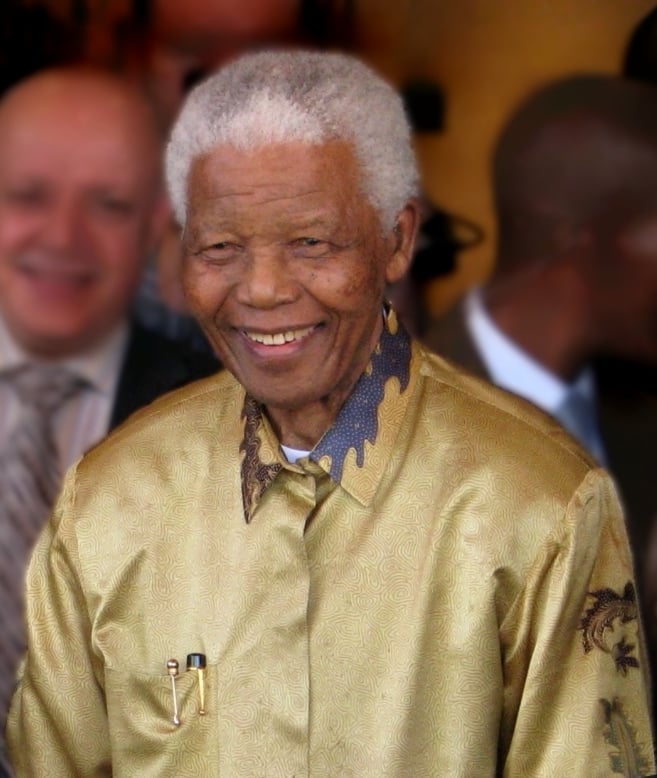
Nelson Mandela
94% Profile Match

Landesarchiv Baden-Württemberg, Fotograf: Willy Pragher · Landesarchiv Baden-Württemberg, Staatsarchiv Freiburg (Sammlung Willy Pragher) · CC BY 4.0
Solved the complex three-dimensional molecular structures of penicillin, insulin, and vitamin B12 using X-ray crystallography, work recognized by the sole 1964 Nobel Prize in Chemistry.
Pursued insulin's molecular structure -- which she described as "impossibly complex" -- for more than three decades before finally resolving it in 1969.
As rheumatoid arthritis progressively worsened over her career, had a longer lever made for her X-ray machine's main switch and adjusted her international travel practices, continuing active research rather than withdrawing from it.
Specifically modifying her own working methods to continue research as a real physical constraint worsened is part of the basis for the profile's adaptability score. Adaptability
Insisted on including Chinese and Soviet scientists in the International Union of Crystallography during the Cold War, directly against the prevailing exclusionary political climate of the era in both the US and UK.
Taking this institutional stance against the prevailing climate of the time is part of the basis for the profile's independent_thinking score. Independent Thinking
People whose overall profiles resemble theirs.

Not a rival — a different profile shape worth a look.