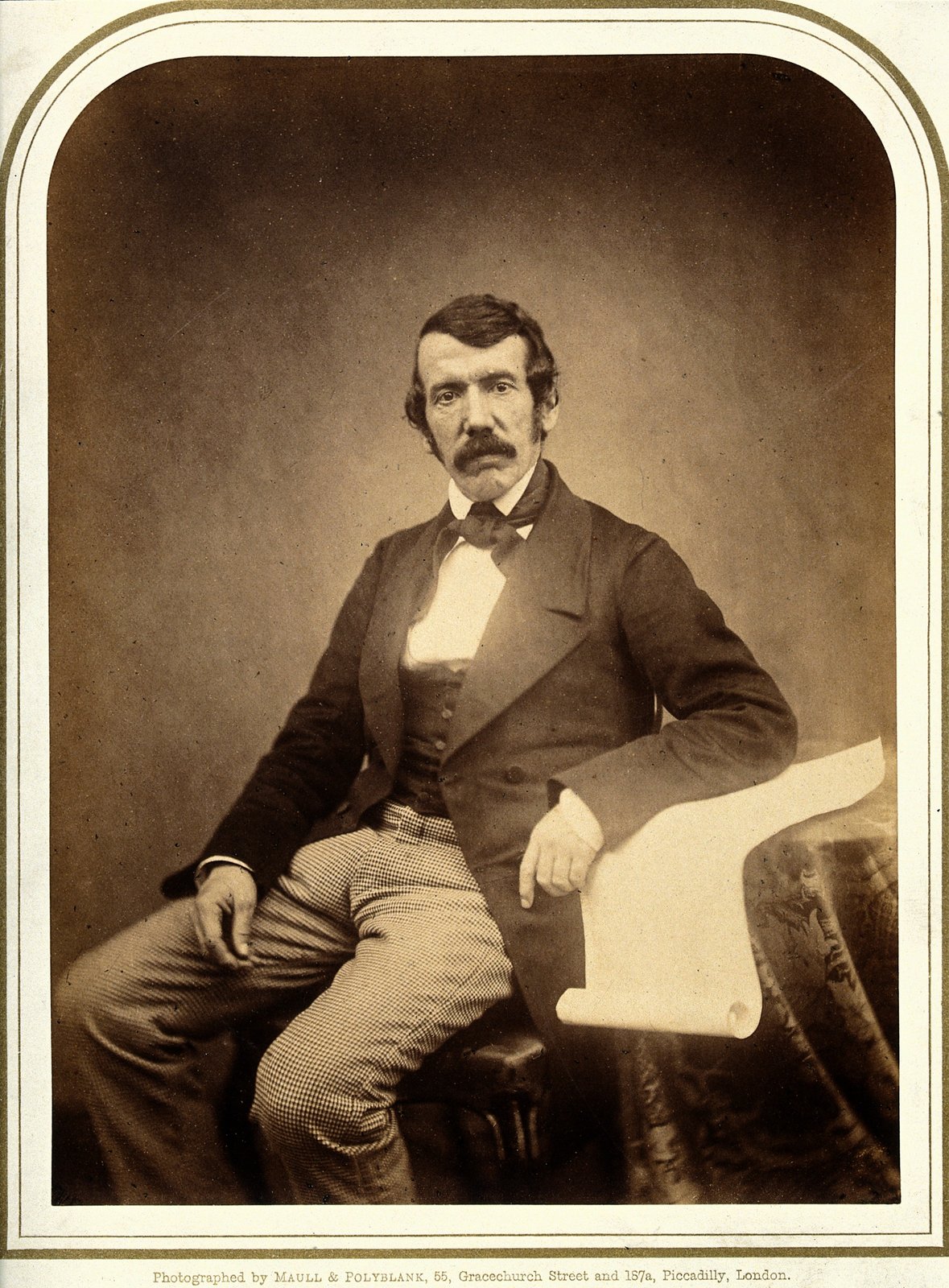

Maull & Polyblank, David Livingstone, photograph, undated (studio active 1854-65; probably 1856-58), Wellcome Collection V0026725 (Public Domain Mark in the Wellcome catalogue; the Commons copy carries Wellcome Images' earlier CC BY 4.0 tag); downscaled, uncropped · Wellcome Collection, Iconographic Collections (ICV No 27182; image V0026725; catalogue work pfwka7tv), via Wikimedia Commons · Public domain
explorer · 19th Century
David Livingstone
1813–1873
Known For
Not yet included in personality matching — the documented evidence doesn't yet cover enough of the personality model. Everything else on this page is fully available.
Trait Constellation
Key Achievements
Between 1853 and 1856 Livingstone travelled from Linyanti, on the upper Zambezi, west to Loanda on the Atlantic and then back and east to Quelimane on the Indian Ocean coast. The journey was backed by the Kololo ruler Sekeletu, who supplied men and goods, and it depended on Kololo companions as interpreters and guides; on the eastward leg they led him to the waterfall known locally as Mosi-oa-Tunya, which he named Victoria Falls. He was hailed in Britain as the first European to cross the continent, though Arab and African traders had long crossed it along established caravan routes.
Missionary Travels and Researches in South Africa, published by John Murray in November 1857, combined missionary narrative, travel writing and field science. Its first printing of 12,000 copies sold out before publication and a second of 30,000 followed. The book argued for mission work and trade in south-central Africa as a means against the slave trade, a programme framed in the colonial language of "Christianity, commerce and civilisation".
From 1858 to 1864 Livingstone led a government-funded expedition on the Zambezi and its tributaries. It found the Kebrabasa (Cabora Bassa) rapids impassable, explored the Shire River and much of Lake Nyasa, and sent botanical and zoological specimens to Kew and the Natural History Museum. It fell far short of its commercial aims, and several members resigned or were dismissed amid strained relations.
Moments That Reveal Them
Livingstone reached Loanda in May 1854, ill and having used up his trade goods. According to his biographer Blaikie, he could have sailed home on a British naval cruiser; instead, in September 1854 he set out with his Kololo companions on the return journey inland, reaching Linyanti a year later. He then went on eastward and arrived at Quelimane in May 1856.
Turning back into the interior rather than taking the ship is consistent with the profile's high persistence score; his undertaking to see his companions home was also part of the decision. Persistence
Livingstone sent his astronomical readings to Thomas Maclear, Astronomer Royal at the Cape, who reduced them and in March 1854 wrote that, despite rough early readings, no explorer on record had fixed his route so precisely. Livingstone himself called his observation book "quite a mass of confusion" in 1857. In 1871-72 Henry Morton Stanley saw him make careful notes every evening and described notebooks filled with columns of figures.
Accounts from an astronomer and a journalist sit alongside the profile's detail-orientation score, while his own complaint about the notebook is a reminder that the care lay in sustained recording more than in tidiness. Detail Orientation
Turning Points
The Zambezi expedition rested on the hope that the river could serve as a navigable highway into the interior. When the Kebrabasa rapids proved impassable, Livingstone turned the expedition north up the Shire River, reached Lake Nyasa in September 1859, and later explored the Rovuma. Earlier, when the expedition's naval officer resigned in 1858, he had taken over navigating the steamer himself.
Redirecting the expedition once its central assumption failed offers one example behind the profile's adaptability score, although the new routes also fell short of what he had hoped. Adaptability
Similar People
People whose overall profiles resemble theirs.

Louis Pasteur

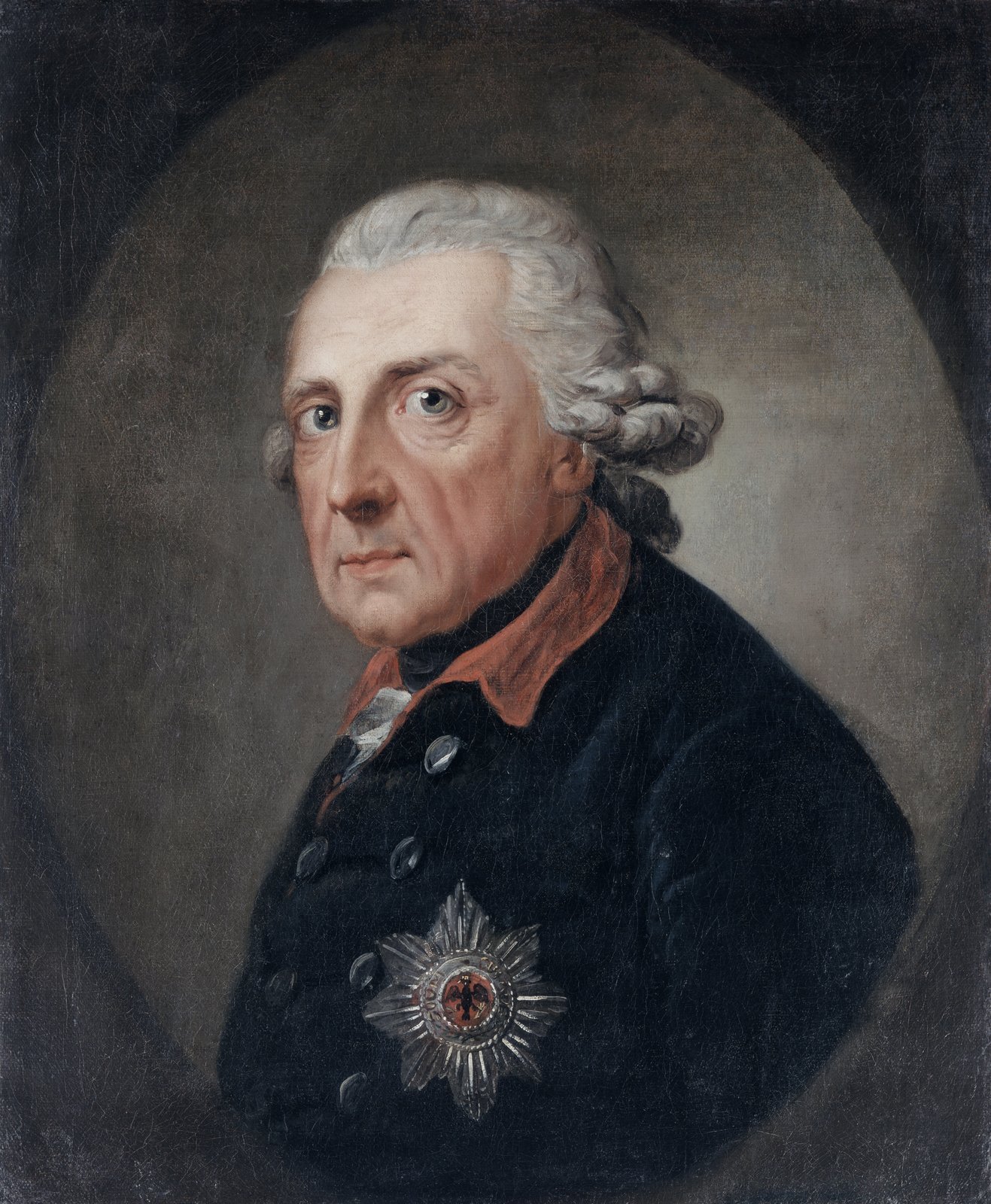
Frederick the Great

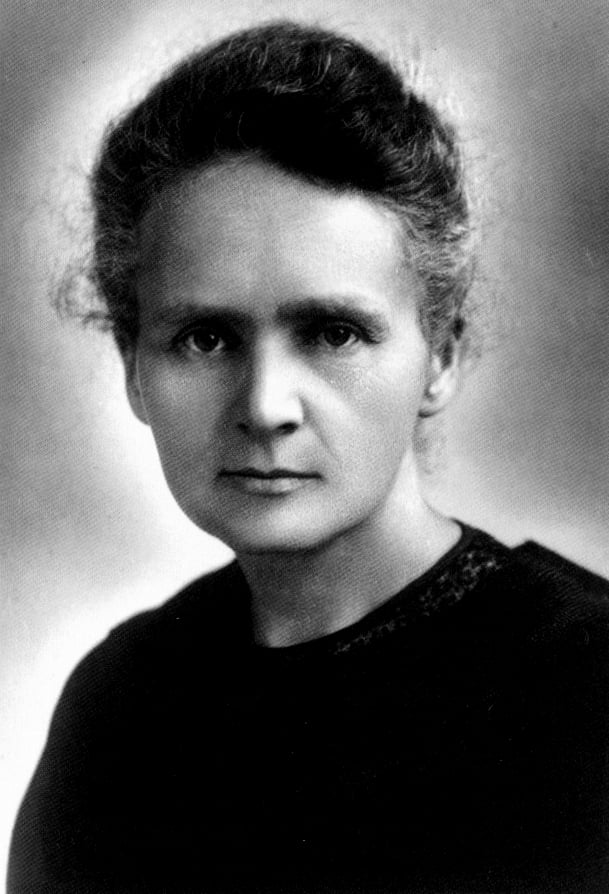
Marie Curie

Alan Turing

Che Guevara
Opposite Profile
Not a rival — a different profile shape worth a look.
Otto von Bismarck
Sources
- David Livingstone (Q48373) -- identity verified live through the Wikidata API (wbgetentities: labels, descriptions, claims, sitelinks) on 2026-09-26: en label 'David Livingstone', description 'Scottish missionary and explorer (1813-1873)', ko label '데이비드 리빙스턴' (ko description '스코틀랜드의 조합교회(Congregationalist) 선교사이자 탐험가이다.'), born 1813-03-19, died 1873-05-01, citizenship Q22 (Scotland) and Q145 (United Kingdom), P18 'David Livingstone by Thomas Annan.jpg', kowiki title '데이비드 리빙스턴'. Orientation only; not used as support for any scored row.
- Justin D. Livingstone, 'Livingstone's Life & Expeditions', Livingstone Online (eds. A. S. Wisnicki and M. Ward; University of Maryland Libraries, 2nd ed. 2015; peer-reviewed scholarly edition) -- read in full (all sections, Early Years through Death and Burial, with works cited). SCHOLAR perspective, independent of the family; explicitly corrects heroic framing (reliance on African intermediaries and Arab-Swahili traders, earlier crossings of the continent by Arab and African traders, the Zambezi team's strained relations 'in part due to Livingstone's shortcomings as a leader', the incorrect Lualaba theory). Built on ODNB (Roberts 2004), Jeal (2013), Ross (2002), Dritsas (2010) and the manuscripts.
- Louise Henderson, 'Publishing Livingstone's Missionary Travels', Livingstone Online (University of Maryland Libraries, 2015) -- read in full. SCHOLAR perspective resting on the 1857 John Murray Archive correspondence (National Library of Scotland): Livingstone's dispute with Murray's reviser, his own description of his observation book as 'quite a mass of confusion', Maclear's computation of the position tables, and his consultation of Maclear, Murchison, Arrowsmith and Toynbee before accepting Murray's decision on the appendix. The quoted letters are Livingstone's own; the reading and context are the author's.
- Christopher Lawrence, 'Livingstone's Medical Education' and 'Fever in the Tropics', Livingstone Online (University of Maryland Libraries, 2015) -- both essays read in full. SCHOLAR perspective (historian of medicine) built on the surviving Anderson's University certificates, Risdon Bennett's testimony, the 1841 and 1865 letters to Richard Owen, the 1860 Livingstone-Kirk fever paper, the 1863 Medical Times letter and the 1865 Narrative. Used for the 1836-40 study routine, the breadth of his observational record and the compounded fever pills ('rousers'); his pre-germ-theory fever model is NOT scored.
- Adrian S. Wisnicki, 'Introduction to the Edition', Livingstone's 1871 Field Diary: A Multispectral Critical Edition (Livingstone Online, 2011/2017) -- read in full. SCHOLAR/EDITORIAL perspective on the physical manuscript: the diary was written at Nyangwe over pages of The Standard newspaper with improvised ink when paper and ink ran out, and the published Last Journals version (ed. Waller) was substantially revised. The diary's contents were not used for trait inference.
- Justin D. Livingstone, 'Livingstone's Posthumous Reputation', Livingstone Online (2015) -- read in full. HISTORIOGRAPHICAL perspective: surveys hagiographic, imperial, critical and postcolonial treatments, quoting George Martelli (1970: 'imaginative enterprise, grit' yet 'authoritarian and secretive') and Tim Jeal (2001: 'courageous and resilient'; 'intolerant, narrow and self-opinionated'). Second-hand quotations of other biographers' characterisations, used only as corroboration at inference level, never as sole support.
- William Garden Blaikie, The Personal Life of David Livingstone (London: John Murray, 1880), Project Gutenberg #13262 full text downloaded -- read: chapter synopses I-XXIII; ch. II (1838-40, London and Ongar); ch. IV (the 1845 Mabotsa dispute); ch. VIII (Loanda 1854 decision; Maclear correspondence); ch. IX (loss of the Forerunner, Pungo Andongo); ch. X (RGS meeting of 15 Dec. 1856); ch. XI (1858 expedition planning); ch. XII (Kongone, resignation of the naval officer, Kebrabasa, the 1859 dismissals and Blaikie's defence); ch. XVI (Lady Nyassa storm and voyage to Bombay, 1864). INSIDER-LEANING perspective: a sympathetic Free Church biographer writing from family-held journals and letters; openly apologetic on the Zambezi quarrels (tone discounted, facts used).
- Recollections of Livingstone as a London Missionary Society probationer, 1838-39, by his fellow candidate Rev. Joseph Moore and by Rev. Isaac Taylor (then a boy at Stanford Rivers), furnished to Blaikie and printed in The Personal Life (1880), ch. II -- read in full as reproduced. FIRSTHAND, non-family (friendly, written some forty years later): the failed sermon, Cecil's unfavourable report and the extended probation.
- Thomas Maclear (Astronomer Royal at the Cape) on Livingstone's astronomical observations: letters to Livingstone of 27 March 1854 and 11 August 1855 and his remark to Sir John Herschel, as quoted in Blaikie, The Personal Life (1880), ch. VIII -- read as reproduced. FIRSTHAND EXPERT ASSESSOR (the person who checked and reduced the observations; a friend, so admiring, but he also records the early errors).
- Henry M. Stanley, How I Found Livingstone (1872), Project Gutenberg #5157 full text downloaded -- read: the character sketch of Livingstone written at Ujiji (Nov. 1871: appearance, rumours rebutted, note-taking and observations, humour, reserve, treatment of servants, the Lualaba/Nile theory, his refusal to go home). FIRSTHAND JOURNALIST, non-self and non-family, about four months' acquaintance; self-promoting and openly admiring, so only concrete observations are used, not his praise.
- David Livingstone, Missionary Travels and Researches in South Africa (London: John Murray, 1857), Project Gutenberg #1039 full text downloaded -- read: ch. XX (Loanda; the Makololo companions aboard HMS Philomel and Pluto; departure of 20 Sept. 1854 on the return journey). SELF perspective (one perspective; a book written to promote African mission and commerce and revised by Murray's reviser); never the sole support for a row.