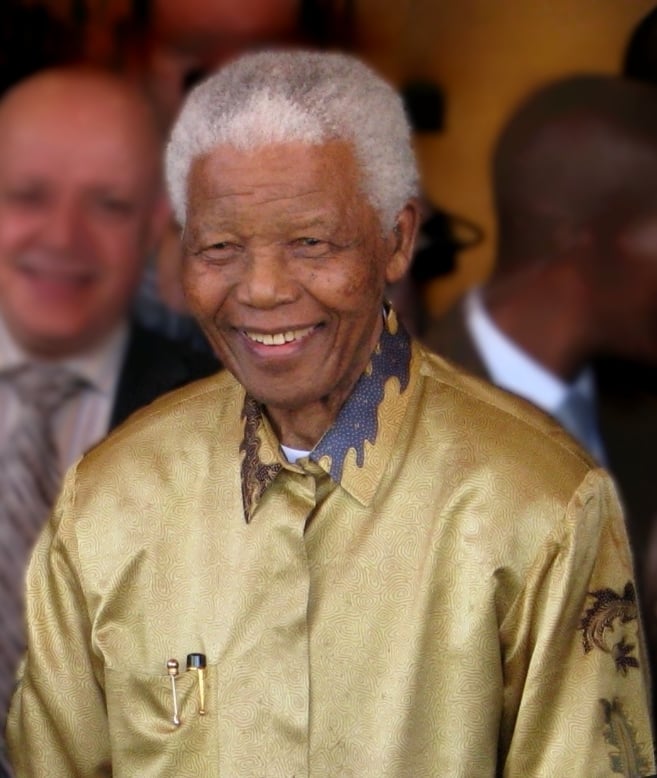
Nelson Mandela
92% Profile Match
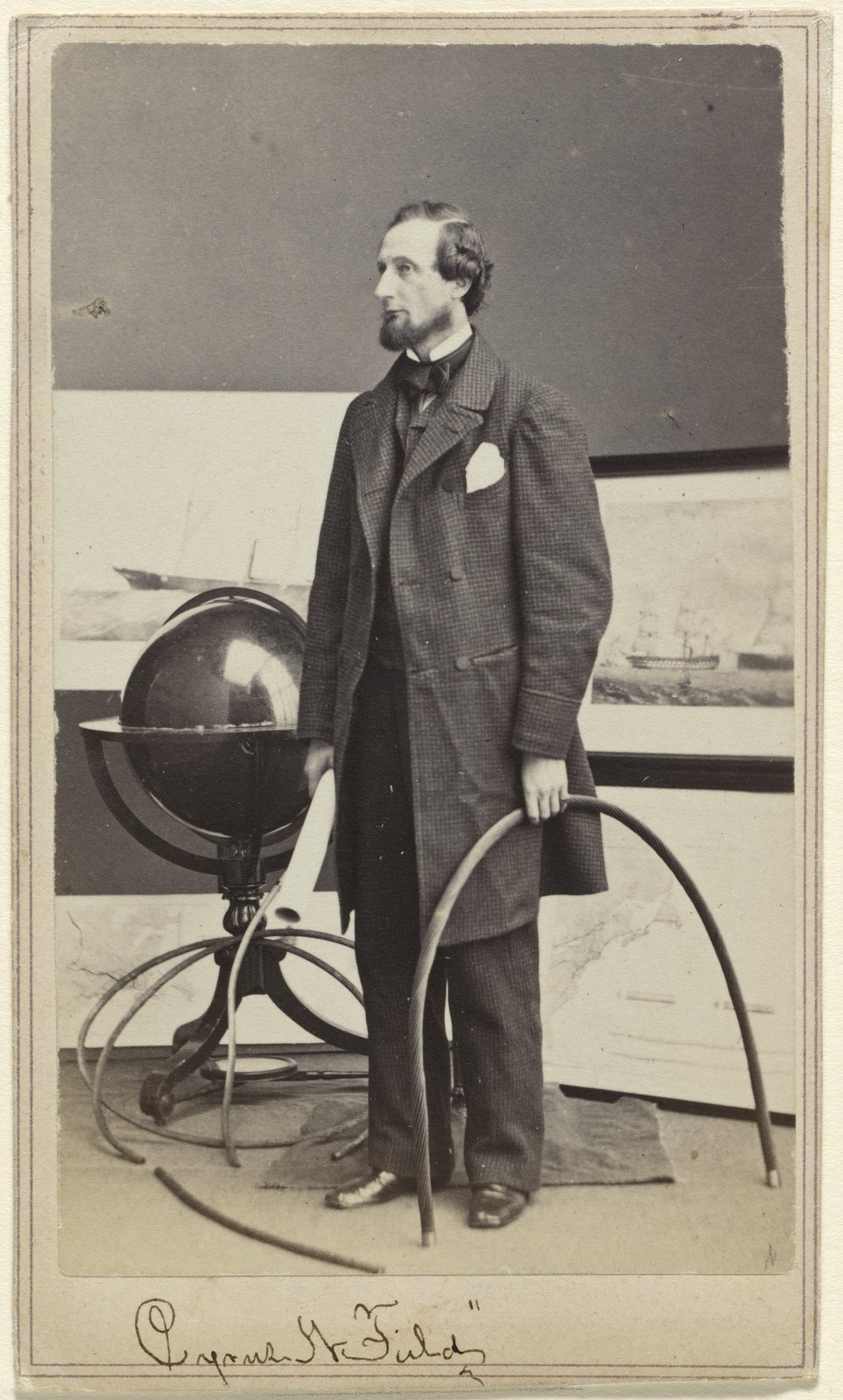
Charles DeForest Fredricks, 'Cyrus West Field', albumen silver print, c. 1863; Smithsonian National Portrait Gallery, NPG.80.213 (CC0) · Smithsonian National Portrait Gallery, NPG.80.213 (Charles DeForest Fredricks, Cyrus West Field, albumen silver print carte-de-visite, c. 1863), via Wikimedia Commons file 'Cyrus West Field by Charles DeForest Fredricks, c. 1863 ... NPG-8000506C 1.jpg' · CC0 1.0 Universal (public domain dedication by the National Portrait Gallery)
In 1854 Field and several New York partners, among them Peter Cooper, took over the Newfoundland telegraph concession of Frederic Gisborne and organised the New York, Newfoundland and London Telegraph Company. In September 1856 he agreed with John Brett and Charles Bright to form the Atlantic Telegraph Company, which was organised in London on 9 December 1856. Field's part was promotion and finance, including a large personal subscription; the electrical and engineering work fell to others, among them Bright, Edward Whitehouse and William Thomson.
After the first expeditions of 1857 and June 1858 failed, a cable laid by the ships Niagara and Agamemnon was spliced in mid-Atlantic on 29 July 1858 and landed at Trinity Bay on 5 August. On 16 August Queen Victoria and President Buchanan exchanged messages over it. The cable went silent in early September 1858, and the engineer's biography records that most of the successful working had been done with Thomson's mirror galvanometer.
After the Great Eastern's cable parted in August 1865, a new Anglo-American Telegraph Company raised 600,000 pounds, and in 1866 the ship laid a cable that was landed at Heart's Content, Newfoundland, on 27 July. On 2 September the lost 1865 cable was recovered and put in telegraphic contact with Valentia, and it was landed at Heart's Content on 8 September. A joint resolution of Congress approved on 2 March 1867 awarded Field a gold medal.
At the American Telegraph Company's stockholders' meeting on 29 June 1860, Field told the meeting that the executive committee's pamphlet contained 'exactly thirty-six statements' that were 'utterly false, or gross misrepresentations', and the chairman called him to order for making personal remarks. The account comes from the shorthand notes reproduced in the pamphlet of his opponent, R. W. Russell.
Telling a hostile meeting in plain terms that an opposing pamphlet was false is consistent with a willingness to take open conflict; the only account is a record preserved by his opponent, and the chairman's rebuke shows the tone cost him goodwill. Conflict Tolerance
Reaching London on 24 December 1865, Field learned that the Attorney-General had ruled that only an Act of Parliament could legalise the preference shares, and the money already subscribed had been returned. In his own later account, Daniel Gooch and Brassey encouraged him, and a new company was formed on 1 March 1866, with ten guarantors at 10,000 pounds each and the Telegraph Construction Company at 100,000. Bright's biography confirms these subscriptions.
Accepting the legal ruling and replacing the planned share issue with a different company is consistent with resourcefulness; the account of his own part comes from his own words as retold by his daughter, and Bright confirms only the subscriptions. Resourcefulness
After the June 1858 attempt, in which the cable parted several times, the board of the Atlantic Telegraph Company met in London. Its chairman, Sir William Brown, advised selling the cable still on board, and the vice-chairman, Brooking, left the room and resigned. Field, Bright and William Thomson argued for one more attempt, and the board voted for it; the ships left Queenstown on 17 July 1858 and the splice was made on 29 July. The board scene is told by Henry Field, Field's brother, whose text Bright's biography reproduces.
Arguing for a further attempt when the chairman wanted to sell and a colleague resigned is consistent with persistence; both retellings of the board scene derive from Field's brother, so the account is not independent. Persistence
People whose overall profiles resemble theirs.



Not a rival — a different profile shape worth a look.
