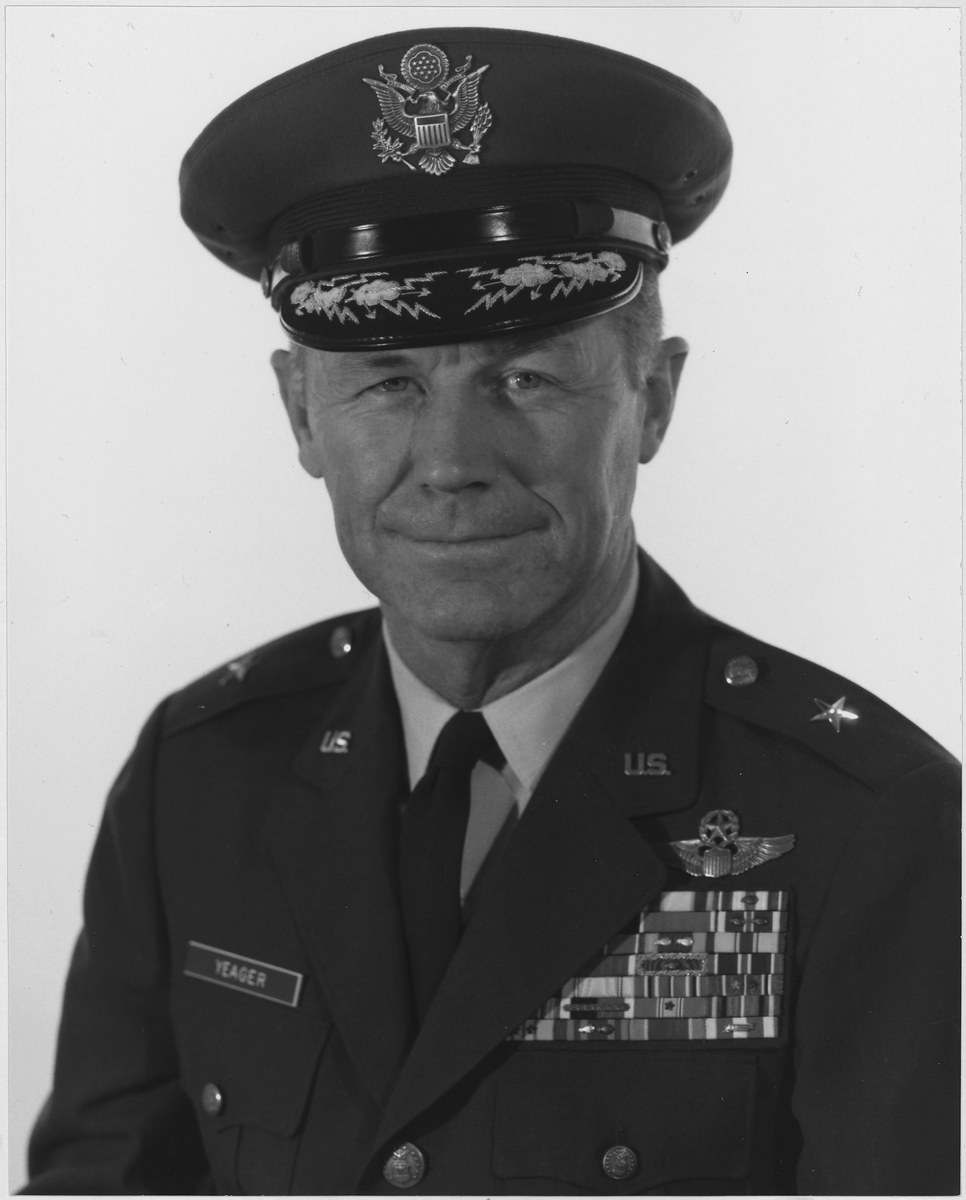

Official U.S. Air Force portrait, 15 September 1969, National Archives and Records Administration (catalog record 542371); public domain, downscaled from the original · U.S. National Archives and Records Administration catalog record 542371 (NAID 542371; Record Group 342, 'Photographs of Air Force Officers and Officials'), 'Official portrait of Brigadier General Charles E. Yeager', 15 September 1969, via Wikimedia Commons. Original 2,416 x 3,000 pixels, downscaled once to 966 x 1,200 (never upscaled). · Public domain (US federal government work; NARA catalogue: No Copyright - United States)
aviator · 20th Century
Chuck Yeager
1923–2020
Known For
Not yet included in personality matching — the documented evidence doesn't yet cover enough of the personality model. Everything else on this page is fully available.
Trait Constellation
Key Achievements
On 14 October 1947 he piloted the Bell X-1 to Mach 1.06 at 43,000 feet over the California desert, the first flight faster than the speed of sound, which the Smithsonian says showed that aircraft could be designed to fly faster than sound and turned the 'sound barrier' into a myth.
He shared the 1947 Collier Trophy with Bell Aircraft's Lawrence Bell and NACA scientist John Stack for the first supersonic flight, a joint NACA and Army Air Forces research programme.
He kept pushing the speed envelope, reaching Mach 1.45 in the X-1 in March 1948 and Mach 2.44 in the X-1A in December 1953, a flight that ended in a violent tumble from which he recovered.
Moments That Reveal Them
Two days before the Mach 1 attempt he broke two ribs in a fall from a horse and, according to the officer in charge, said nothing; a broom handle was used as a lever extension so he could close and lock the X-1's hatch.
This is consistent with a willingness to accept personal risk, and to work around a physical obstacle, rather than give up a flight he had prepared for. Risk Tolerance
After the X-1A tumbled out of control at Mach 2.4 in December 1953, he told fellow test pilot Scott Crossfield he had deliberately put it into a spin in thicker air, saying a spin was something he knew how to get out of.
This is consistent with falling back on a manoeuvre he knew well to recover an aircraft in a situation no one had a procedure for. Resourcefulness
Turning Points
In 1947 the Air Force took over the X-1 project after Bell's civilian pilot demanded large bonus money to go past Mach 1, and Colonel Albert Boyd chose Yeager, then the most junior test pilot available, who flew it for his regular captain's pay.
This is consistent with accepting a high-stakes, unproven assignment that a better-paid civilian pilot had stalled over. Risk Tolerance
Similar People
People whose overall profiles resemble theirs.
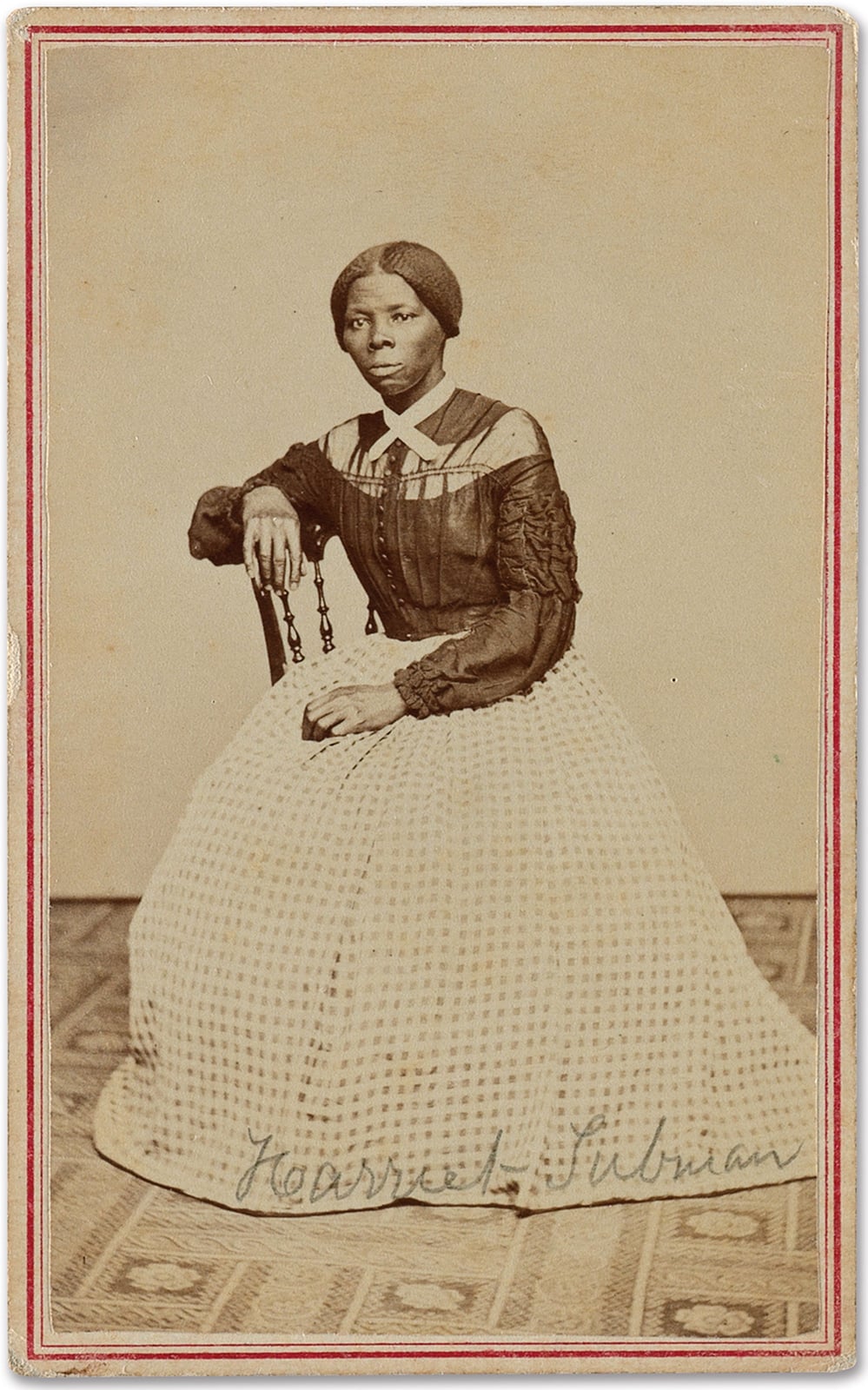

Harriet Tubman

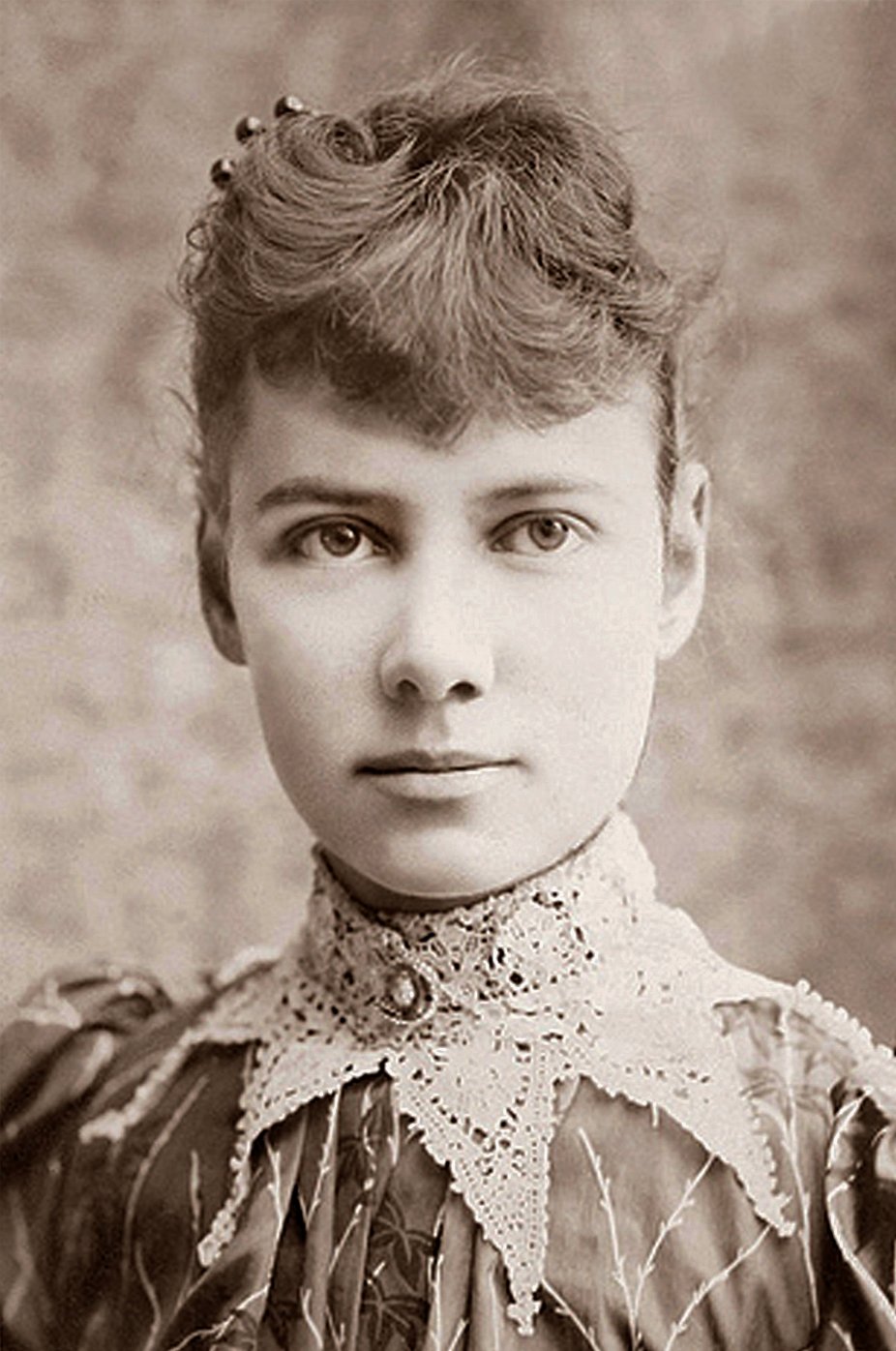
Nellie Bly

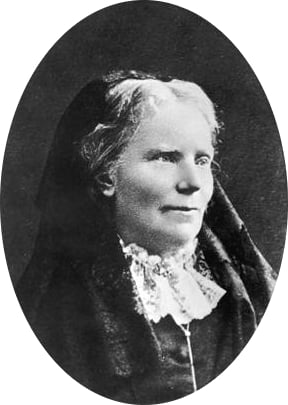
Elizabeth Blackwell

Che Guevara
Fela Kuti
Opposite Profile
Not a rival — a different profile shape worth a look.

Leonardo da Vinci
Sources
- Chuck Yeager (Q271939) -- verified live via the Wikidata API (2026-10-11): English label 'Chuck Yeager', description 'American World War II flying ace and test pilot; first pilot to fly faster than sound (1923-2020)', born 13 February 1923, died 7 December 2020, citizenship United States, Korean label present. Orientation only; not used as support for any row.
- Smithsonian National Air and Space Museum, collection record 'Bell X-1 Glamorous Glennis' -- museum's own account of the 14 October 1947 flight (Mach 1.06 at 43,000 feet), of the joint NACA/Army Air Forces research programme that built the XS-1, of Yeager's later Mach 1.45 flight of 26 March 1948, and of the aircraft's 1950 presentation to the Smithsonian with the 1947 Collier Trophy awarded to Bell, NACA's John Stack and Yeager. CANONICAL SIGNIFICANCE SOURCE. Institutional, not a character source; used for significance and record facts only. Read in full (the page's 106 image slides were not itemised).
- NASA Dryden Flight Research Center, 'First Generation X-1' fact sheet FS-2003-07-0085 -- agency history of the X-1 programme: the June 1947 two-phase plan, Yeager's powered flights from 29 August to Mach 0.997 on 10 October, the observation that NACA engineers used to a more cautious step-by-step approach saw Yeager and the Air Force 'acting in haste', and the top-secret handling of the result. Institutional, neutral in tone, not a character study. Read in full.
- Mark Carlson, 'Bell X-1: Dropping the Orange Beast That Broke the Sound Barrier', HistoryNet (Aviation History) -- article built on the first-hand recollections of Robert Cardenas, the Air Force officer in charge of the X-1 project and B-29 launch pilot, and on the project record: the stepwise flights from August to October 1947, the loss of elevator effectiveness at Mach 0.92 and Dick Frost's adjustable stabiliser fix, how Cardenas learned of Yeager's broken ribs, and the broom-handle fix. Independent colleague account (non-self); sympathetic, and it explicitly corrects the film The Right Stuff's version. Read in full.
- Bryan Swopes, '12 December 1953', This Day in Aviation -- aviation-history entry on Yeager's Mach 2.44 flight in the Bell X-1A: Bell engineers had warned him not to exceed Mach 2.3, the aircraft tumbled out of control and fell about 50,000 feet, his official post-flight report, a radio transcript, and a quotation from NACA test pilot A. Scott Crossfield's memoir Always Another Dawn. Contemporary technical record (Yeager's own report) plus an independent test-pilot peer's account; the compiler is a hobbyist historian. Read in full.
- Bryan Swopes, '10 December 1963', This Day in Aviation -- aviation-history entry on Yeager's fourth attempt at an altitude record in the Lockheed NF-104A: the planned zoom-climb profile, the re-entry attitude error (about 50 degrees nose-down instead of 70), the flat spin, his ejection, his burns, and a quotation from his 1985 autobiography. A candid, non-hagiographic technical account with Yeager's own recollection marked as such; reader comments below the article were not used. Read in full.
- Jeff MacGregor, 'How the Bell X-1 Ushered in the Supersonic Age', Smithsonian magazine -- essay on the X-1 programme (Bell, Stack, Kotcher, Woods and Yeager), the Collier Trophy, the aircraft's 1950 donation and Air Force Chief of Staff Vandenberg's remark at it, and the museum curators' account of Yeager as a rock-star visitor after The Right Stuff. Journalistic and admiring in tone; used for significance and context, not behavioural scoring. Read in full.
- 'Remember Chuck Yeager by Exploring the Plane He Flew to Break the Sound Barrier', Smithsonian magazine, 8 December 2020 -- obituary-style feature with the X-1 history, the 'sound barrier' idea, the one-year secrecy, and Yeager's own 1985 recollection that the flight was a letdown because 'the real barrier' was in knowledge and experience of supersonic flight. Mixed (journalist plus quoted self account). Read in full.
- 'Chuck Yeager', Encyclopedia of World Biography, via Encyclopedia.com -- reference biography covering his wartime service (incidental here), selection as the X-1 pilot, the Mach 1 flight, the December 1953 Mach 2.4 flight, the 1963 NF-104 attempt, his return to flying after a month in hospital and later career. Used for dates, sequence and the account of the fall from a horse, the doctor, and the broomstick. Reference-grade, not first-hand. Read in full.
- General Chuck Yeager Legacy Foundation, 'Punching a Hole in the Sky' -- the foundation's narrative of the X-1 programme: Colonel Albert Boyd's choice of Yeager, Chalmers Goodlin's bonus dispute with Bell, the eighth powered flight at Mach 0.96, the horse accident, the off-base doctor and the broomstick lever. Affiliated with the subject and admiring; used only to cross-check facts given elsewhere. Read in full.
- San Diego Air & Space Museum, online exhibit 'The Sound Barrier: The Men' -- museum profile of the X-1 team (Boyd, Cardenas, Hoover, Ridley, Frost, Yeager) quoting Major General Ascani that choosing the most junior test pilot for the project was 'courageous because it was unorthodox'. Museum source, somewhat celebratory. Read in full.
- U.S. National Archives and Records Administration, catalog record 542371, 'Official portrait of Brigadier General Charles E. Yeager' (15 September 1969), Record Group 342 -- its rights metadata (No Copyright - United States, unrestricted access) as imported on the Commons file page; the NARA catalogue site itself is script-rendered and could not be read directly. Not used for any scoring.