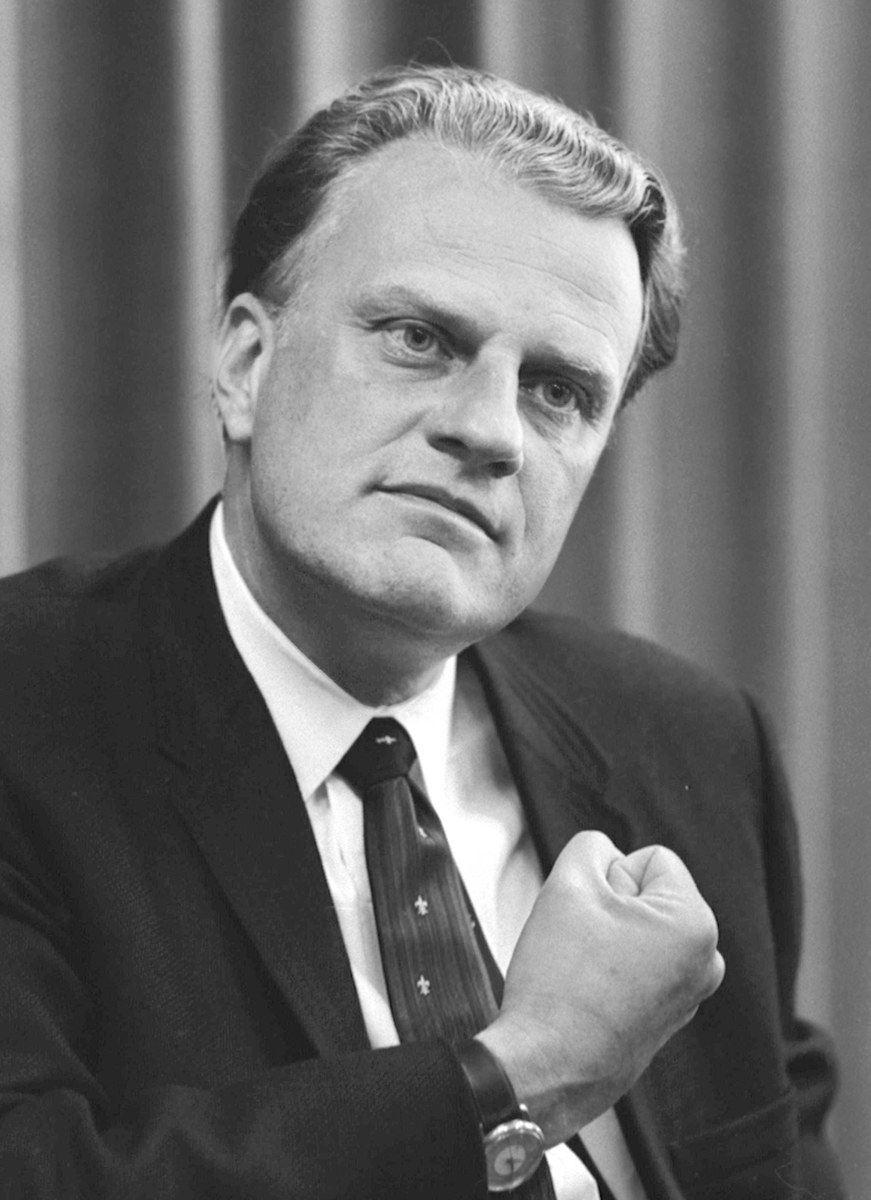
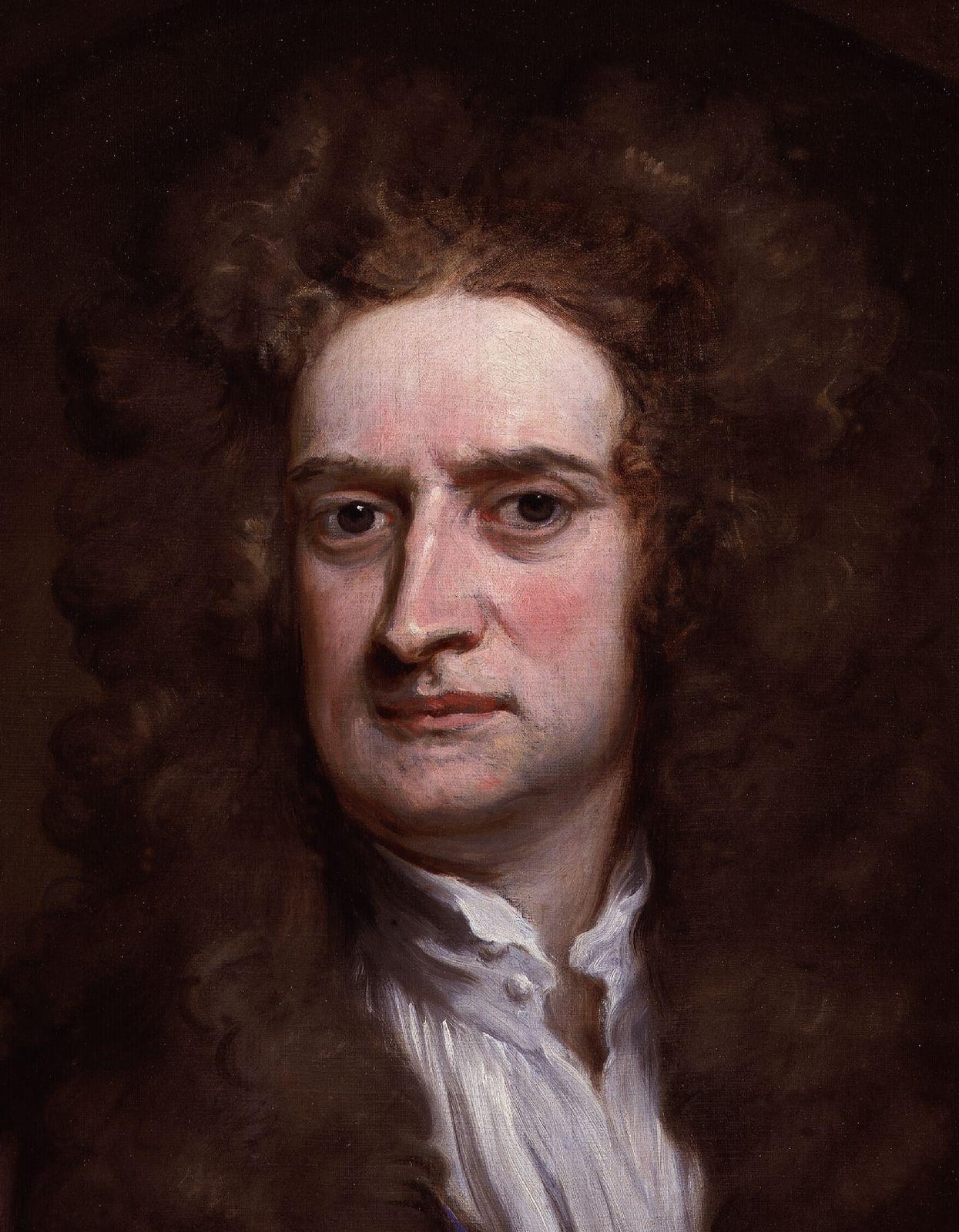
Warren K. Leffler, U.S. News and World Report, 1966, Library of Congress, U.S. News and World Report Magazine Photograph Collection · Library of Congress, U.S. News and World Report Magazine Photograph Collection, photograph by staff photographer Warren K. Leffler dated 11 April 1966, hosted on Wikimedia Commons. The Commons rights template records that the photograph is a work for hire by a named staff photographer and that, under the deed of gift to the Library, the magazine dedicated to the public all rights it held in the collection. The Library's own item and rights pages could not be opened (bot protection, HTTP 403), so the basis was verified through the Commons file page and template, which is a secondary statement of the Library's position. Original 2292 x 3156; downscaled once to 871 x 1200 (no upscaling). · Public domain (work for hire dedicated to the public by deed of gift to the Library of Congress)
religious leader · 20th Century
Billy Graham
1918–2018
Known For
Not yet included in personality matching — the documented evidence doesn't yet cover enough of the personality model. Everything else on this page is fully available.
Trait Constellation
Key Achievements
Gained national prominence with his 1949 Los Angeles tent crusade and went on to lead evangelistic crusades across the United States and abroad over roughly six decades, ending with a mission in Queens in 2005.
Reached wider audiences through the Hour of Decision radio programme and later television, films and satellite broadcasts, run through the evangelistic association he founded in 1950.
Took down the ropes separating black and white seating at his 1953 Chattanooga crusade, and in 1957 led the New York crusade with mainline church cooperation, which fundamentalist critics never forgave.
Moments That Reveal Them
According to Christian History, before one of the 1953 Chattanooga crusade meetings Graham personally took down the ropes separating the black and white sections after the sponsoring committee had kept the custom.
This is consistent with changing a held position and acting on it publicly after earlier hesitancy. Belief Updating
In 1957 Graham accepted the Protestant Council of New York's invitation and invited Martin Luther King Jr. to pray at the crusade, even though fundamentalists such as John R. Rice and Bob Jones Sr. objected.
This is consistent with accepting criticism from former allies in order to cooperate across church lines. Conflict Tolerance
Turning Points
In the late 1940s, after fellow evangelist Charles Templeton urged him to attend seminary, Graham decided in 1949 to set aside his intellectual doubts and simply preach the gospel, and his Los Angeles crusade soon brought national attention.
This is consistent with choosing to commit fully to preaching rather than further study. Persistence
Similar People
People whose overall profiles resemble theirs.

Wangari Maathai

Mahatma Gandhi

Abraham Lincoln

Niels Bohr

Jane Goodall
Sources
- Billy Graham (Q213550) -- verified live via the Wikidata API (2026-10-24): English label 'Billy Graham', description 'American Baptist evangelist (1918-2018)', born 1918-11-07, died 2018-02-21, citizenship United States, Korean label '빌리 그레이엄', P18 image 'Billy Graham bw photo, April 11, 1966.jpg'. Orientation only; not used as support for any row.
- Encyclopaedia Britannica, 'Billy Graham' (britannica.com), article text read: American evangelist whose large-scale preaching missions called crusades brought him international prominence; 1934 conversion at a Mordecai Ham revival; the fundamentalist-modernist background and his refusal to be sectarian; use of radio and television; the 1949 Los Angeles tent crusade and Hearst's instruction to 'puff Graham'; criticism from Reinhold Niebuhr and from fundamentalists (Bob Jones Sr. and Jr., Carl McIntire, Jack Wyrtzen) who never forgave his cooperation with mainline clergy in the 1957 Madison Square Garden crusade, described as a deliberate strategy and part of an irenic career; his closeness to presidents (political material, not used); concluded his public career with a June 2005 mission in Queens. CANONICAL SIGNIFICANCE SOURCE. Reference article; the entry's political passages are deliberately not used.
- North Carolina History Project, 'Billy Graham (1918-2018)' (northcarolinahistory.org), read in full: Graham as the most recognised evangelist of the twentieth century, schooling, ordination, first full-time evangelist for Youth for Christ, president of Northwestern College at a young age while touring about three months a year, the Hour of Decision radio programme on nearly 800 stations, founding of the evangelistic association in the early 1950s, preaching in communist countries, and critics who said he became too involved in politics and that his message was narrow. State-history encyclopaedia entry; broadly admiring with a short critical note. Family and political-friendship passages not used.
- Christian History magazine (Christian History Institute), 'History in the Making: Billy Graham Had a Dream' (issue 47), read in full: setting Graham against earlier evangelists' handling of racism; his 1952 Jackson, Mississippi statement that there is no scriptural basis for segregation and his softening of it under criticism; the 1953 Chattanooga crusade where he personally took down the ropes separating black and white sections; adding Howard O. Jones as a black team member in 1957; saying publicly that anti-segregation legislation might be necessary; abuse from white supporters; and some Southern cities overriding his demands, so that he sometimes accepted the status quo. Evangelical church-history magazine, admiring but candid about early hesitancy and later retreats.
- Collin Hansen, 'When Billy Graham Went to New York City' (Christianity Today, Christian History, originally 2005, republished August 2008), the passages on the 1957 crusade read: Niebuhr's Life magazine denunciation and Graham's courteous public reply, his declining of earlier New York invitations as unrepresentative, his accepting the invitation of the Protestant Council of the City of New York in 1957, fundamentalists calling that a slap in the face, John R. Rice's warning in The Sword of the Lord that Graham led a drift from strict fundamentalism, his inviting Martin Luther King Jr. to pray at the crusade, and Bob Jones Sr.'s warning against it. The passages on his health are deliberately not used. Evangelical press retrospective quoting critics on both sides.
- Holly Lebowitz Rossi / Religion News Service, 'Billy Graham leaves a positive interfaith legacy, with a few blemishes' (National Catholic Reporter, 21 February 2018), read in full: Jewish leaders' descriptions of Graham's interfaith work and awards, his 1973 rejection of evangelism aimed specifically at Jews, and the 1972 Oval Office tape released in 2002 on which he made anti-Semitic remarks, the outrage from Rabbi Marvin Hier and historian Martin Marty, his apology, and Rabbi A. James Rudin's disappointment that he did not disagree with the president. Press report quoting Jewish and academic critics and supporters; used only to document the tape controversy factually and unscored.
- Billy Graham Evangelistic Association, 'Ministry Timeline' (billygraham.org), read in full: first citywide crusade in 1947, the 1949 Los Angeles crusade, incorporation of the association in 1950, the Hour of Decision on radio from 1950 and television from 1951, films, the 1957 New York crusade broadcast live, Decision magazine from 1960, satellite broadcasts of crusades from 1985, and the association's figure of nearly 215 million people in live audiences in more than 185 countries and territories. Self-published by the organisation he founded; admiring and used only for chronology and the organisation's own figures, which are not independently audited.
- Wikimedia Commons file page 'Billy Graham bw photo, April 11, 1966.jpg' and its rights template (wikitext and image record), checked for the portrait: photograph by Warren K. Leffler, U.S. News and World Report staff photographer, dated 11 April 1966, from the Library of Congress U.S. News and World Report Magazine Photograph Collection; the template states the photograph is a work for hire and that, under the deed of gift, the magazine dedicated all its rights in the collection to the public on donation to the Library. Original 2292 x 3156. Not used for any scoring.