Sequoyah
93% Profile Match
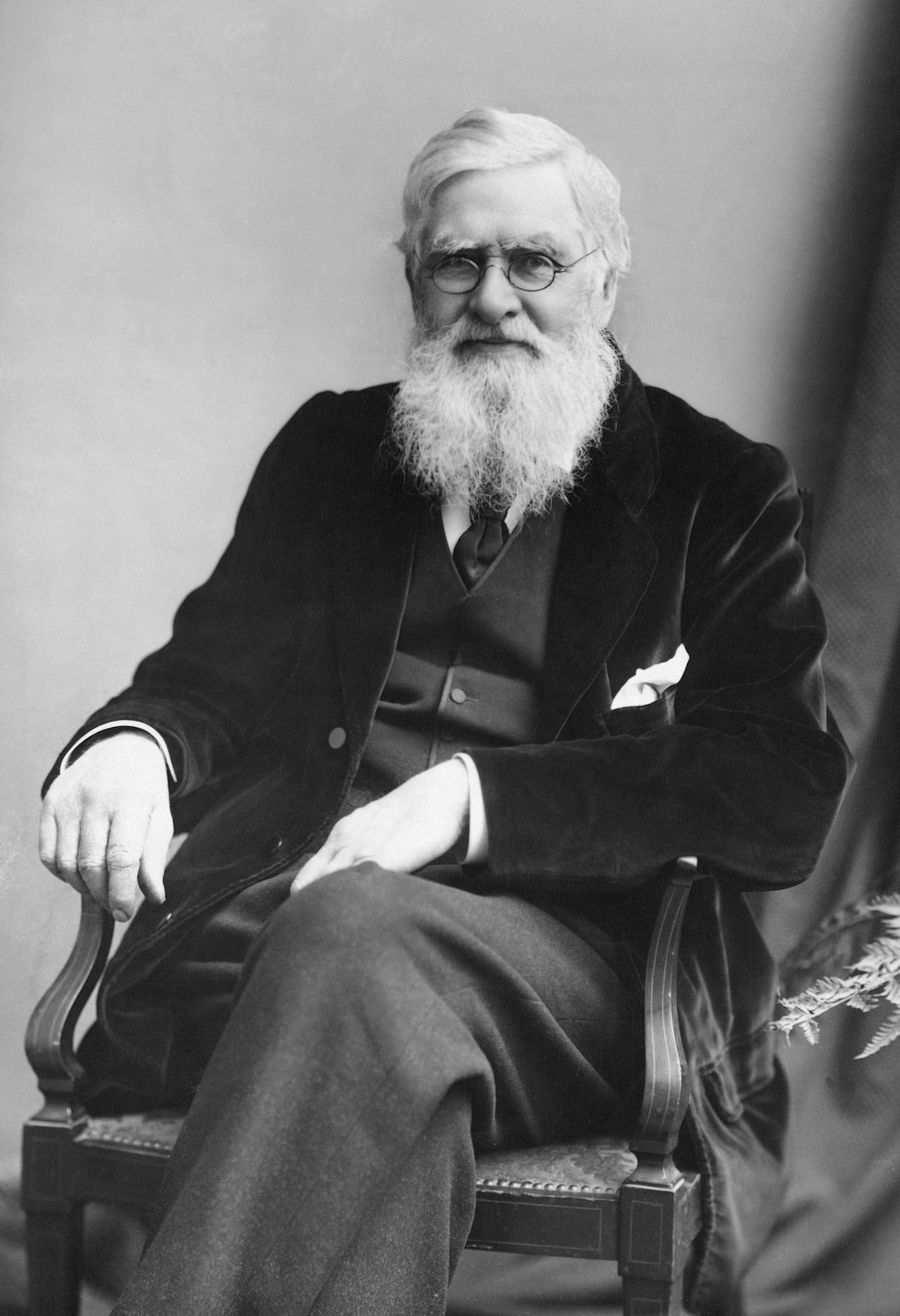
London Stereoscopic and Photographic Company, c. 1895 (first published in Borderland Magazine, April 1896) · London Stereoscopic and Photographic Company studio photograph, first published in Borderland Magazine, April 1896, via Wikimedia Commons · Public domain
From March 1854 to 1862 Wallace worked in Southeast Asia as a professional specimen collector. He travelled with a changing team of local assistants, among them Ali from Sarawak, and published an account of the journey, The Malay Archipelago, in 1869.
In February 1858 Wallace wrote an essay at Ternate and sent it to Darwin, with the wish that it be forwarded to Charles Lyell if Darwin thought it sufficiently novel and interesting. On 1 July 1858 the Linnean Society of London read the essay together with extracts from Darwin's own writings; neither man was present, and Wallace was in the Moluccas.
In February 1867 Darwin, on Henry Walter Bates's advice, asked Wallace why some caterpillars are brightly coloured. Wallace replied that conspicuous colour might advertise distastefulness to birds and proposed experiments, which John Jenner Weir carried out in the summers of 1867 and 1868.
In February 1854 the Royal Geographical Society's secretary, Henry Norton Shaw, wrote to the Foreign Office that Wallace would accept the government's offer of a mail-packet passage and hoped it could include his young assistant, and asked that it go to Singapore rather than Australia. The passage was arranged on a P&O steamer that left Southampton on 4 March 1854 with Wallace and the teenage Charles Allen aboard.
The episode is consistent with a pattern, seen again in his 1860 arrangement with Allen, of turning institutional contacts and delegated collecting into practical means of fieldwork. Resourcefulness
In March 1869 Wallace told Darwin that a forthcoming Quarterly Review article would, for the first time, set limits on the power of natural selection. On 14 April Darwin replied that he differed 'grievously' from its remarks on humans and saw no need for 'an additional & proximate cause', while also saying he had been 'wonderfully interested' and calling Wallace's exposition of natural selection 'inimitably good'.
The exchange illustrates Wallace maintaining a position against a close colleague's; it says nothing about whether the position was right. Independent Thinking
In 1852 a fire on the ship carrying Wallace home from the Amazon destroyed almost all of his personal collection, which his London agent, Samuel Stevens, had insured for about £200. About eighteen months after he reached England he left again to collect, this time in Southeast Asia, with government-funded passage.
This dated sequence is consistent with a willingness to return to fieldwork after a serious loss; the sources do not describe his reasoning, so the reading stays within what the sequence shows. Persistence
People whose overall profiles resemble theirs.