Catherine the Great
93% Profile Match
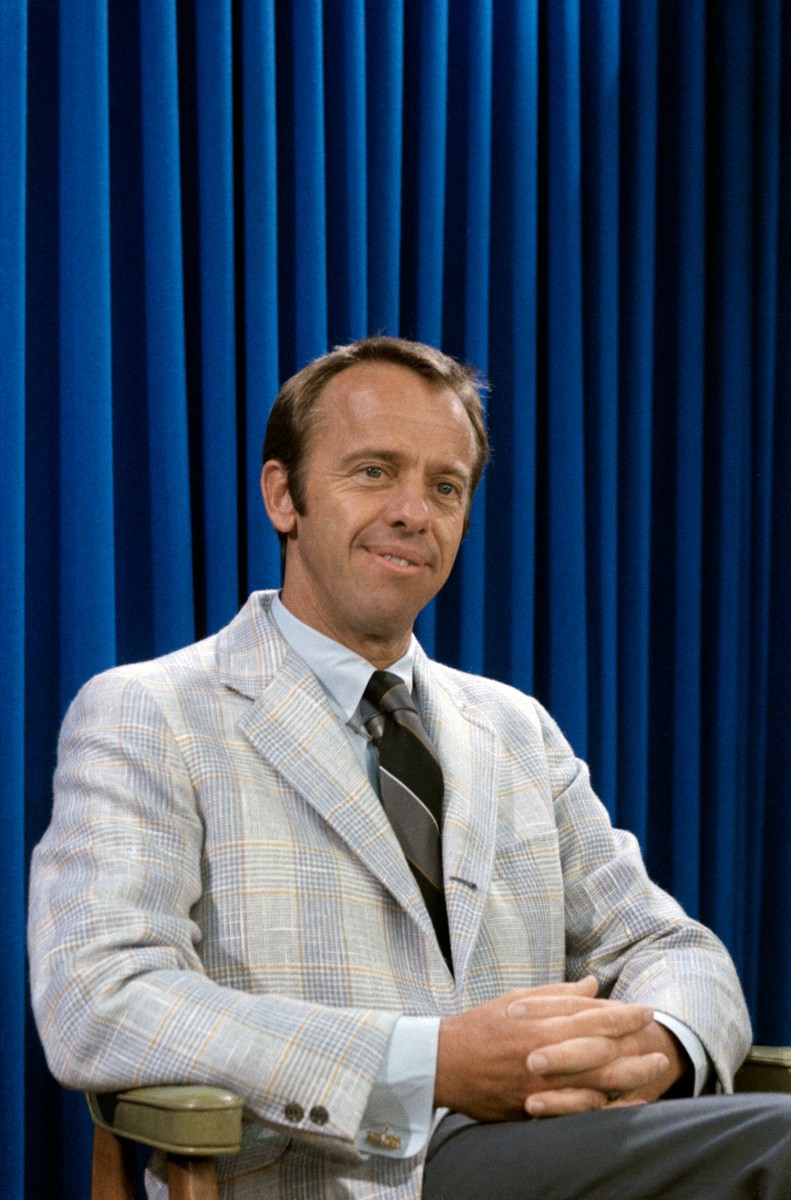
NASA / Johnson Space Center, photo S70-45232, 14 July 1970, downscaled from the original · NASA Johnson Space Center photograph S70-45232, 'Astronaut Alan B. Shepard Jr., Apollo 14 mission commander' (caption date 14 July 1970, 'Photo credit: NASA'), downloaded from the NASA Image and Video Library original (2644 x 4009 pixels) and also catalogued on Wikimedia Commons as 'Alan B. Shepard 1970.jpg' (PD-USGov-NASA, same dimensions). NASA's Media Usage Guidelines say NASA content is generally not subject to copyright in the United States and that third-party copyrighted material is marked with the holder's name; this record carries only a NASA credit, no third-party credit and no logo. Downscaled once to 791 x 1200 (never upscaled). · Public Domain (NASA work)
astronaut · 20th Century
1923–1998
Not yet included in personality matching — the documented evidence doesn't yet cover enough of the personality model. Everything else on this page is fully available.
On 5 May 1961 he flew Freedom 7 on a Redstone rocket and became the first American in space, a suborbital flight of about 15 minutes to an altitude of about 116 miles; he was one of the seven Mercury astronauts named in April 1959.
In 1971 he commanded Apollo 14, the third crewed lunar landing, setting down in the Fra Mauro highlands with Edgar Mitchell; the two spent about 33 hours on the surface and brought back almost 100 pounds of samples, and he ended the second moonwalk by hitting golf balls.
From 1963, and again from 1971 until he retired in 1974, he was Chief of the Astronaut Office, responsible for coordinating, scheduling and training NASA's astronauts and, with Deke Slayton, helping to choose the Gemini and Apollo crews.
After repeated failed attempts to dock with the lunar module on the way to the Moon, Shepard suggested that the crew suit up and bring the probe inside to inspect it; when Houston proposed retracting the probe under thrust instead, he repeated the plan back to Houston and made the retract call, and the spacecraft hard-docked about 4 hours 57 minutes into the flight, according to the Apollo 14 Flight Journal.
This is consistent with persistence at a problem that combines proposing alternatives with carrying out a ground-suggested fix carefully. Persistence
When the Apollo 13 crew was being decided, Shepard recommended himself as commander with Stuart Roosa and Edgar Mitchell; headquarters objected, and after several days of talks the crews were swapped with Jim Lovell's, giving Shepard Apollo 14, according to Shepard, Mitchell and Lovell.
This is consistent with pressing for the assignment he wanted through internal negotiation and then accepting a compromise. Proactive Agency
In early 1961 Mercury director Robert Gilruth told the seven astronauts that Shepard would fly first, Gus Grissom second and John Glenn would back up both; Shepard recalled feeling elated and then sorry for his colleagues, and his flight came on 5 May, weeks after Yuri Gagarin's orbit.
This is consistent with the intense competition for the first flight that colleagues and Shepard himself describe. Competitiveness
People whose overall profiles resemble theirs.