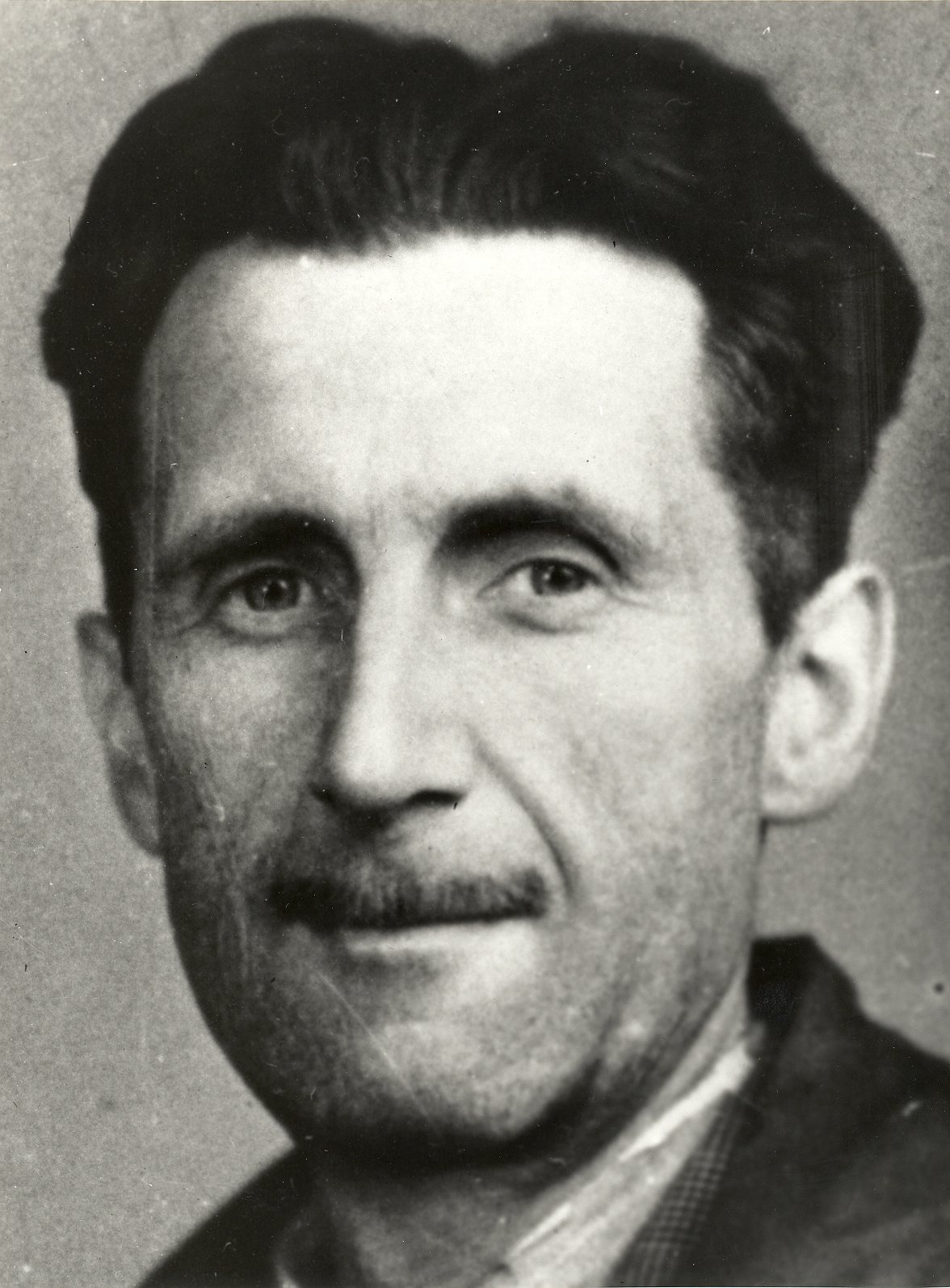
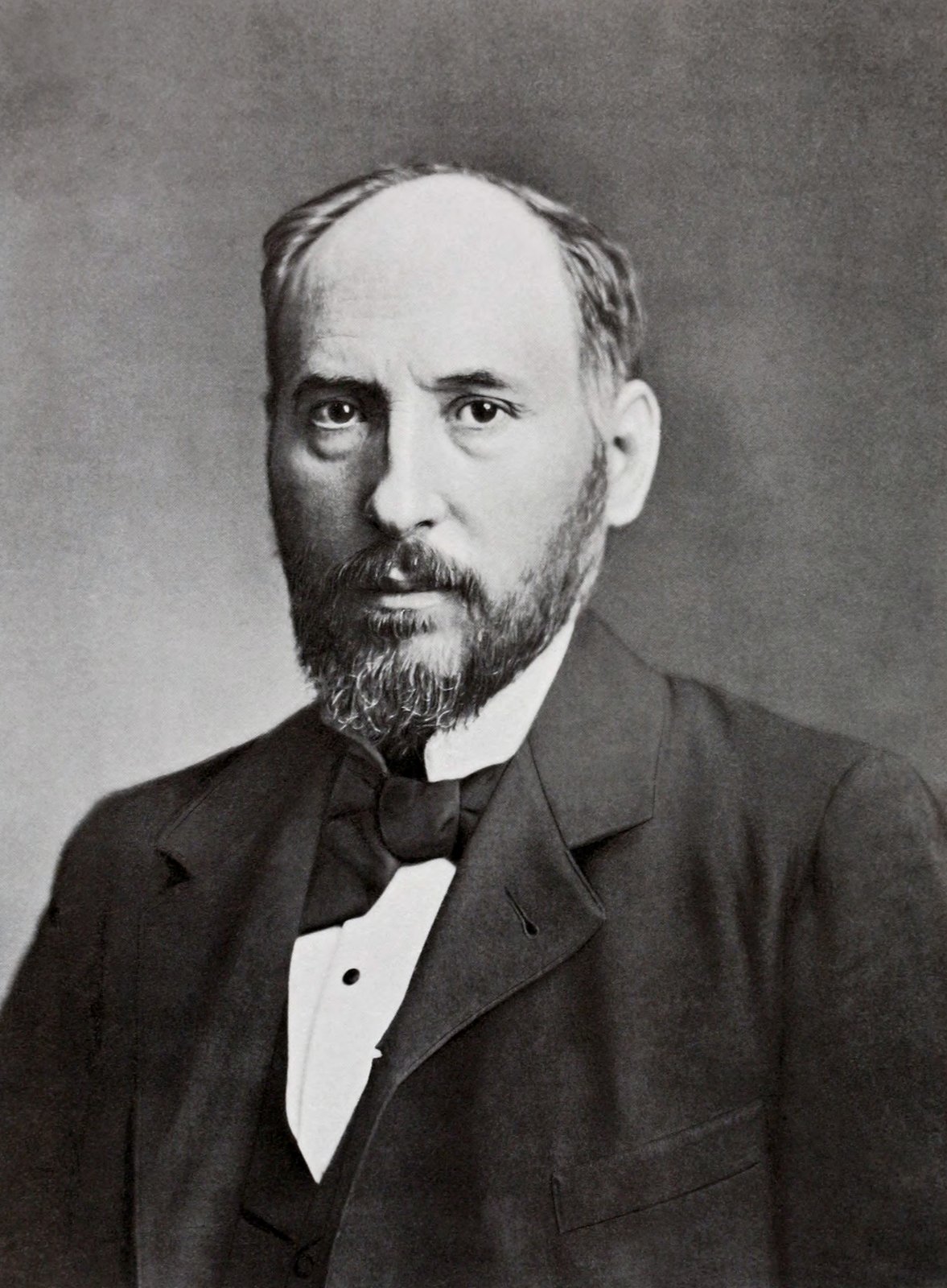

Santiago Ramón y Cajal, photograph by an unknown photographer, published in Clark University, 1889-1899: Decennial Celebration (1899); restoration by Garrondo (Wikimedia Commons: dust removed, levels adjusted, cropped to the photograph); downscaled · Portrait plate facing p. 311 in Clark University, 1889-1899: Decennial Celebration (Worcester, Mass.: printed for the University, 1899); restored digital copy on Wikimedia Commons · Public domain
핵심 특성
주요 업적
신경계 구조에 관한 연구로 카밀로 골지와 함께 1906년 노벨 생리학·의학상을 공동 수상했다. 골지는 자신의 노벨 강연에서 신경세포가 연결되는 방식에 대한 카할의 견해에 동의하지 않는다고 밝혔다.
1888년부터 그는 신경세포가 연속된 그물망을 이루는 것이 아니라, 서로 떨어진 단위로서 접촉을 통해 신호를 주고받는다고 주장했다. 1891년에는 신호가 각 세포 안에서 가지돌기와 세포체에서 축삭 쪽으로 한 방향으로 흐른다는 가설도 내놓았다.
1889년부터 1913년 사이에 1903년의 환원 질산은법을 비롯한 여러 염색법과 그 변형을 개발했다. 그가 남긴 약 4,500장의 표본과 거의 모두 직접 그린 2,000점 가까운 과학 그림이 마드리드의 카할 연구소에 남아 있다.
삶의 장면들
1889년 10월 카할은 자신의 표본과 현미경을 들고 베를린에서 열린 독일 해부학회 학술대회에 참석했다. 현장에 있던 아르튀르 반 게후흐텐은 훗날, 그가 회의적인 미소 속에 거의 홀로 서 있다가 알베르트 폰 쾰리커를 현미경 앞으로 데려갔다고 회고했다. 몇 달 만에 쾰리커는 그의 발견을 확인하는 논문을 발표했다.
논문이 읽히기를 기다리지 않고 가장 회의적인 학자들에게 직접 표본을 보여 주기로 한 선택은 먼저 나서서 행동하는 강한 습관과 맞닿아 있다. 선제적 행동력
1918~20년 무렵 제자 피오 델 리오 오르테가는 카할이 돌기가 없다고 기술한 세포들에 실제로는 돌기가 있다는 것을 발견했다. 리오 오르테가 본인의 기록에 따르면, 카할은 그 결론이 지나치게 대담하다며 발표를 권하지 않았다. 이후 그 발견이 확인되자 카할은 회고록에서 이를 다른 제자의 공으로 돌렸다.
이 이야기는 당사자인 제자의 기록이며, 카할이 실제로 견해를 수정한 다른 일화들과 나란히 놓인다. 그의 프로필에서 생각을 바꾸는 성향이 중간 부근에 놓인 이유 가운데 하나다. 입장 수정 성향
전환점
1887년 신경학자 루이스 시마로는 카할에게 골지의 은 염색법으로 물들인 뇌 절편을 보여 주었다. 카할이 글로만 접하고 쓸모없다고 여겼던 기법이었다. 그는 곧바로 이 방법을 받아들여, 신경섬유가 더 잘 염색되는 어린 동물과 배아에 적용했다. 첫 주요 발견은 1888년에 나왔다.
한때 제쳐 두었던 방법을 다시 받아들이고 재료 선택으로 그것을 다듬어 낸 일은, 그의 연구 전반에서 보이는 직접 해 보고 변형해 보는 방식을 보여 주는 한 예다. 실험 성향
비슷한 인물
전체적인 프로필이 이 사람과 닮은 사람들이에요.


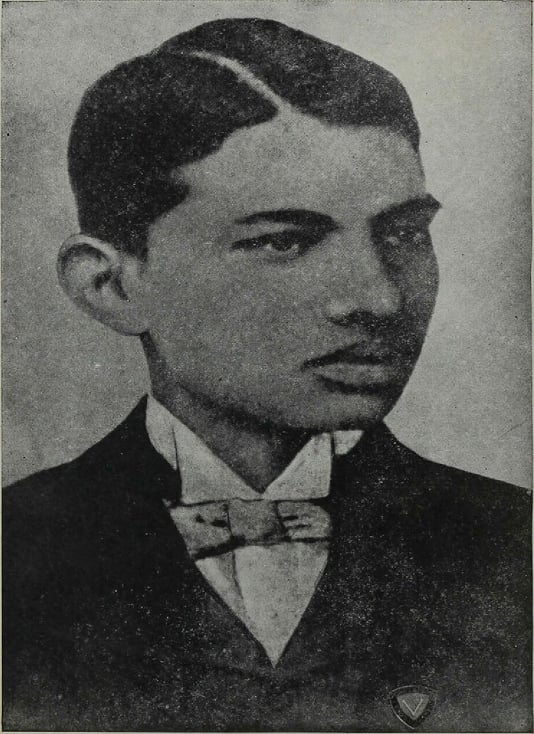
마하트마 간디

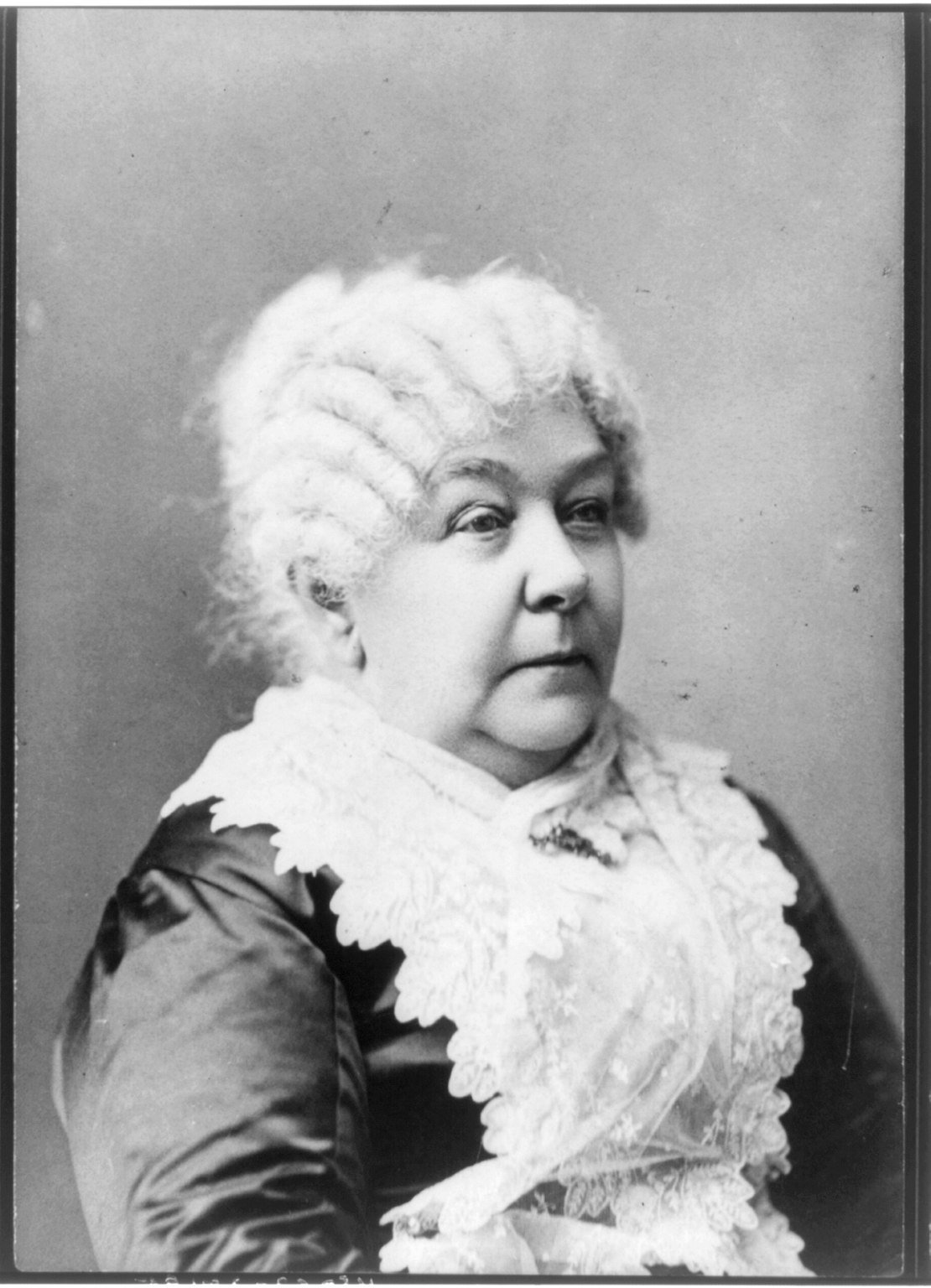
엘리자베스 케이디 스탠턴

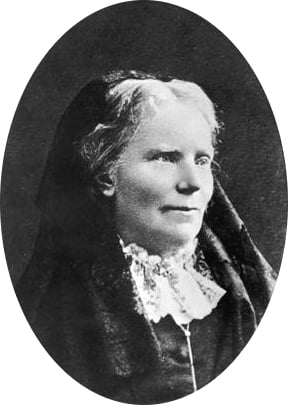
엘리자베스 블랙웰

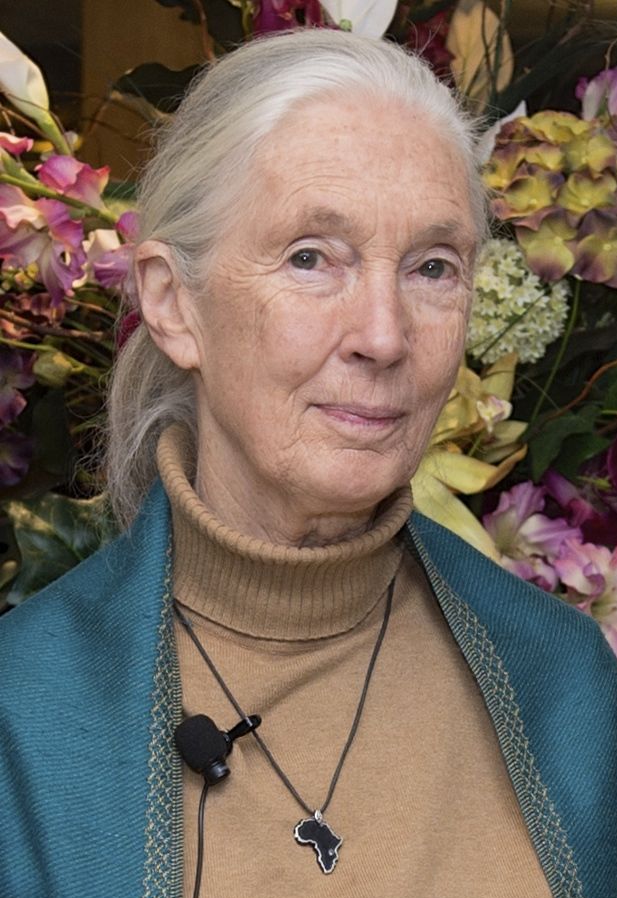
제인 구달

조지 오웰
출처
- Santiago Ramón y Cajal (English Wikipedia) -- orientation only; not used as support for any scored row. Korean Wikipedia title '산티아고 라몬 이 카할' confirmed via the Wikidata sitelink.
- Santiago Ramón y Cajal (Q150526) -- verified live via wbgetentities (2026-09-26): en label 'Santiago Ramón y Cajal', description 'Spanish scientist (1852-1934)', ko label '산티아고 라몬 이 카할' (ko description '스페인의 신경과학자'), es label 'Santiago Ramón y Cajal', born 1852-05-01, died 1934-10-17, citizenship Q29 (Spain), P18 'Cajal-mi.jpg' and 'Santiago Ramón y Cajal (1852-1934) portrait (restored).jpg', kowiki '산티아고 라몬 이 카할'. Orientation only.
- Dorothy F. Cannon, Explorer of the Human Brain: The Life of Santiago Ramón y Cajal (1852-1934) (New York: Henry Schuman, 1949), with 'A Memoir of Dr. Cajal' by Sir Charles Sherrington (pp. ix-xv), archive.org OCR (in.ernet.dli.2015.63985) -- two perspectives in one volume, recorded separately in the notes: (a) SHERRINGTON, FIRSTHAND HOST/PEER: Cajal stayed some two weeks in Sherrington's London house in 1894 (Croonian Lecture); Sherrington writes from his own observation (London Bridge visit, Army and Navy Stores, choosing slides for the Croonian lecture and the chick 'pyramidal tract' exchange, his rough-mounted preparations and anthropomorphic descriptions). (b) CANNON, SCHOLAR/BIOGRAPHER: admiring, relies heavily on Cajal's own Recuerdos (such passages are treated as SELF-derived) but adds unpublished firsthand material from pupils: Fernando de Castro (student from 1914; daily routine, teaching, retirement laboratory), Pío del Río Hortega's unpublished memoir 'El maestro y yo' via Moisés Polak (the microglia dispute, c.1918-20; an ADVERSARIAL insider account), and Wilder Penfield's 1926 published account of meeting Cajal. Read: Author's preface; Sherrington memoir in full (a garbled OCR page [xi]-[xii] partly unreadable); ch. 1 opening; ch. 7 Berlin 1889 section (pp. 142-145); ch. 10 pp. 237-245 (Río Hortega episode, de Castro's account of the master and his school); ch. 11 pp. 248-250 (de Castro on retirement years, Penfield's 1924-25 meeting).
- Camillo Golgi, Nobel Lecture 'The neuron doctrine - theory and facts', 11 Dec. 1906 (English translation), nobelprize.org PDF -- ADVERSARIAL PEER perspective: Golgi, co-laureate, opposed the neuron doctrine and argues against Cajal on the cerebellar basket/Purkinje endings and the spinal-ganglion pathway. Read in full 2026-09-26. Used for: Golgi's own statement that Cajal 'successively modified his theory' of dynamic polarization to fit new data and 'to meet some opposition' (the spinal-ganglion T-bifurcation revision), and his judgment that Cajal's reduced-silver neurofibril results were 'the finest and most important' and easy to demonstrate.
- K. A. H. Mörner (Rector of the Karolinska Institute), Presentation Speech, Nobel Prize in Physiology or Medicine 1906, 10 Dec. 1906, nobelprize.org -- INSTITUTIONAL perspective, read in full 2026-09-26. Evaluative only (describes Cajal's 'extraordinarily active and successful work'); contains no behavioural episode and supports no row; recorded for completeness.
- Santiago Ramón y Cajal, Nobel Lecture 'The structure and connexions of neurons', 12 Dec. 1906 (English), nobelprize.org PDF -- SELF, one perspective, never sole support for a row. Read pp. 220-223 closely and skimmed the rest: states the neuron propositions, credits Golgi's method and the confirmations by Kölliker, Lenhossék, Retzius, van Gehuchten and others, says he applied Golgi's method first to embryos and young animals, and claims twenty-five years of work with the Golgi, Cox, Ehrlich and neurofibrillar methods.
- Javier DeFelipe, 'Cajal and the discovery of the Golgi method: a neuroanatomist's dream', Anatomical Science International 100 (2025): 384-399 (open access, PMC12513909), read in full -- MODERN SCHOLAR perspective (Instituto Cajal/CSIC; admiring, but works from the primary publications and archive). Used for: the 1887 Simarro encounter and Cajal's earlier dismissal of the Golgi method after Ranvier; the 1888 avian cerebellum paper including Cajal's printed note that he first suspected the dendritic spines were silver precipitate and accepted them as real only from their constancy; the 1891-92 redefinition of Golgi's type I/II classification; the 1933 '¿Neuronismo o reticularismo?' rebuttal; and, critically, Arthur van Gehuchten's 1913 EYEWITNESS account (quoted) of Cajal at the Berlin congress of Oct. 1889, alone amid 'smiles of incredulity', taking Kölliker aside to a microscope.
- P. Garcia-Lopez, V. Garcia-Marin and M. Freire, 'The histological slides and drawings of Cajal', Frontiers in Neuroanatomy 4:9 (2010) (open access, PMC2845060), read in full -- ARCHIVAL/MUSEUM SCHOLAR perspective: a catalogue of 4,529 of Cajal's surviving slides and 1,976 scientific drawings at the Cajal Museum. Used for documentary facts about his working method (not counts as merit): most slides made personally and 1,907 of the drawings by his own hand; a sequence of staining methods and variants he introduced 1889-1920 (fast and double-impregnation Golgi variants 1889, methylene-blue variant 1896, reduced silver nitrate 1903, formalin-uranium nitrate 1912, gold-sublimate 1913); systematic use of correlative stains to confirm a structure; the 'ontogenic' choice of embryonic/young animals; the Cajal-De Castro 1933 technical rules on species and ages.
- William Carleton Gibson, 'Santiago Ramón y Cajal (1852-1934)', Annals of Medical History n.s. 8 (Sept. 1936): 385-394 (PMC7939818, scanned, CC BY-NC), read in full -- JOURNALIST/COMPILER perspective: a memorial essay drawing on Recuerdos, Sherrington's 1935 obituary notice, Penfield 1926 and others; little or no firsthand content, so SELF-derived passages are treated as such. Used only for: the refusal of the Ministry of Public Instruction (not scored, political), the switch of his laboratory journal to French so pupils' work would be read, and the (hearsay, 'it has been recounted') London bedroom-laboratory anecdote, which is NOT used for any row.
- Santiago Ramon y Cajal, Recuerdos de mi vida, 2 vols. (Madrid: Nicolas Moya, 1917 edition; vol. II 'Historia de mi labor cientifica'), archive.org OCR (recuerdosdemivid01ramuoft, recuerdosdemivid02ramuoft) -- SELF, one perspective, never sole support for any row (the English 'Recollections of My Life', 1937, is a lending-only copy on archive.org and was not read). Read in Spanish: vol. II preface ('Dos palabras al lector'); ch. V pp. 97-103 (the 1888 'ano cumbre', two years of unrewarded trials, the self-financed Revista trimestral de Histologia of May/Aug. 1888, six articles and six plates by his own hand, 60 copies mostly for foreign scientists); ch. VIII pp. 144-147 (joining the German Anatomical Society; Berlin congress Oct. 1889 paid from savings, own Zeiss microscope, demonstrations to His, Schwalbe, Retzius, Waldeyer and Kolliker, with his footnote quoting van Gehuchten's 1913 speech). Vol. I (childhood) was consulted only via Cannon's and Gibson's retellings and is not used for any row.