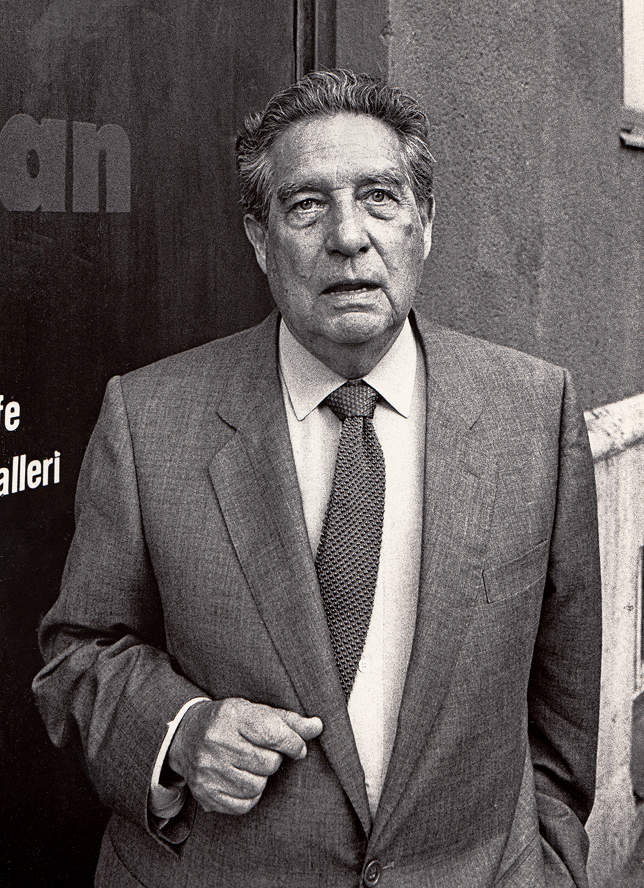

Foto: Jonn Leffmann, Octavio Paz at the Malmo International Poetry Festival, 1988, Wikimedia Commons, CC BY 3.0 · Wikimedia Commons file 'Octavio Paz - 1988 Malmo.jpg', photograph taken at the Malmo International Poetry Festival in 1988 by Jonn Leffmann, uploaded to Commons by his own account (user Jonnmann, who identifies himself as Jonn Leffmann on his user page, 23 July 2013) under CC BY 3.0 with a byline requirement. Original 644 x 888 pixels, used at full size; no resizing or upscaling. · CC BY 3.0
시인 · 20세기
옥타비오 파스
1914–1998
주요 업적 분야
아직 성격 매칭에 포함되지 않았습니다 — 기록된 근거가 성격 모델 전체를 다루기에는 충분하지 않습니다. 이 페이지의 다른 모든 내용은 자유롭게 확인하실 수 있습니다.
핵심 특성
주요 업적
멕시코의 시인이자 수필가인 그는 장시 『태양의 돌』(1957)과 『말 아래의 자유』, 『블랑코』 같은 시집으로 20세기 스페인어권 시의 중심 인물이 되었고, 1990년 노벨 문학상을 받았다.
프랑스에서 쓴 『고독의 미로』(1950)에서 그는 멕시코의 성격과 역사, 문화를 분석했고, 브리태니커는 이를 영향력 있는 에세이로 평가한다. 『활과 리라』(1956)는 그의 시 연구서 가운데 하나다.
그는 잡지 『탈레르』(1938)를 공동 창간했고 『플루랄』(1971-1976)을 편집했으며, 이 잡지가 폐간된 뒤 1976년 『부엘타』를 창간해 1998년 그가 세상을 떠날 때까지 발행했다.
삶의 장면들
『원숭이 문법학자』(1974)에서 그는 비평가들이 장르를 정하지 못한 글을 썼는데, 한 평자는 이를 '장르의 가장자리'에 있다고 했고 파스는 오래전부터 시, 서사, 에세이의 교차점을 추구해 왔다.
이는 자신의 작업에서 장르의 경계를 허물려는 지향과 부합한다. 창의적 독창성
전환점
1976년 『플루랄』이 검열을 받아 폐간되자 파스는 문학과 사상을 다루는 새 잡지 『부엘타』를 창간해 죽을 때까지 편집했다.
이는 중단된 사업을 곧바로 다시 세우는 태도와 부합한다. 선제적 행동력
비슷한 인물
전체적인 프로필이 이 사람과 닮은 사람들이에요.


벤저민 프랭클린

세쿼야

라빈드라나트 타고르

프란츠 카프카

에이다 러브레이스
출처
- Octavio Paz (Q46739), verified live via the Wikidata API (2026-10-30): label 'Octavio Paz', description 'Mexican writer, poet an diplomat (1914-1998)', born 1914-03-31, died 1998-04-19; Korean label present. Orientation only; not used as support for any row.
- Nobel Foundation, 'Octavio Paz - Biographical', NobelPrize.org (Nobel Prize in Literature 1990), read in full. CANONICAL SIGNIFICANCE SOURCE: the prize body's biography says he wrote The Labyrinth of Solitude, his study of Mexican identity, co-founded the journal Taller, edited Plural and founded Vuelta, and is a poet and prolific essayist in poetics, art criticism and Mexican history and culture. Institutional and admiring in tone; the bibliography was skimmed.
- Kjell Espmark (Swedish Academy), Presentation Speech for the 1990 Nobel Prize in Literature, NobelPrize.org, read in full. A short critical appreciation of Paz's poetry (Piedra de sol, the 'welding' of thought and sensuousness, love poetry, Indian and Mexican sources). Admiring prize-body source; used for the originality and range rows only. Its passages on politics were read and not scored.
- Encyclopaedia Britannica, 'Octavio Paz' (biography article), read in full: career summary covering Luna silvestre (1933), Taller, El hijo pródigo, El laberinto de la soledad, Piedra de sol, Blanco and Ladera este, Plural and Vuelta, the Cervantes Prize and the 15-volume Obras completas. Neutral reference summary; the page's AI-generated summary boxes were ignored.
- 'Paz, Octavio 1914-1998', Contemporary Authors entry reproduced on Encyclopedia.com (Gale), read in full: biography, list of works and a critical sidelights section quoting reviewers (Alazraki and Oviedo on The Monkey Grammarian, Schulman on Eastern thought and 'burnt water', Ronald Christ on Eagle or Sun?, Luciani and Keates on Sor Juana). A compilation of critics from several journals, independent of the Nobel and Britannica texts.
- Michael Schmidt, editorial in PN Review 216 (March-April 2014) marking Paz's centenary, read in full: an editor and poet recalls three decades of acquaintance, says Paz edited Plural until it was censored and closed and then established Vuelta, and quotes Paz's 1975 speech on the critical word. Personal, admiring and brief; used for the journals only.
- 'Polemical Paz', essay in Literal Magazine (review of Claire Brewster's 'Responding to Crisis in Contemporary Mexico'), read in full: a reviewer defends Paz against a hostile account while acknowledging some accurate criticism, and describes his role through Plural (1971-1976) and Vuelta (1976-1998). Counter-voice: records that he was attacked harshly by opponents and that Brewster portrays him as unpopular and unable to hear others. Used only for the journals and as a critical perspective; the political content is not scored.
- 'Octavio Paz, The Art of Poetry No. 42', interview by Alfred MacAdam (Paris Review, issue 119, Summer 1991): only the editors' introduction and the opening answers on his childhood home in Mixoac were readable (the rest is behind a subscription wall). Self-report; not used for any row.