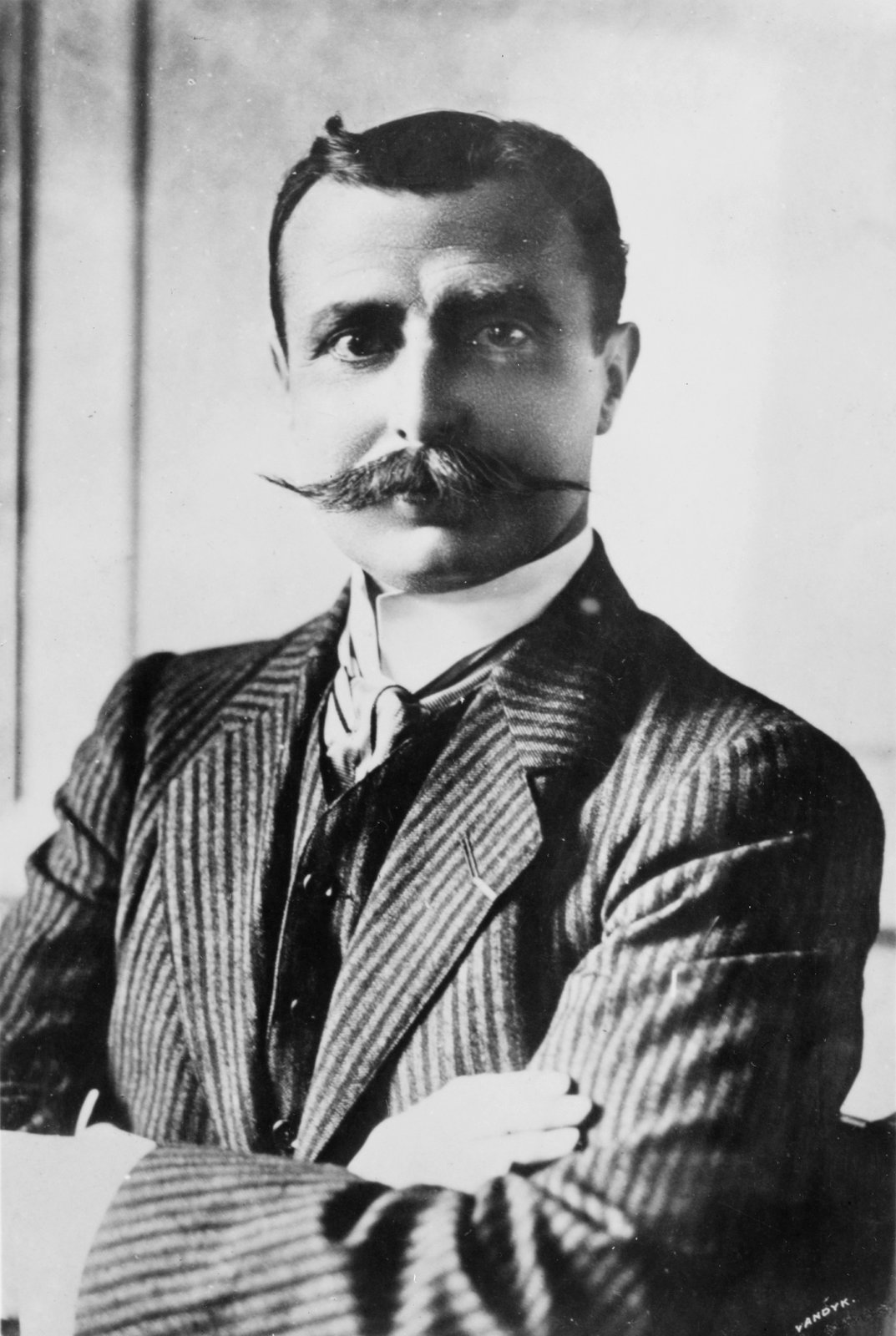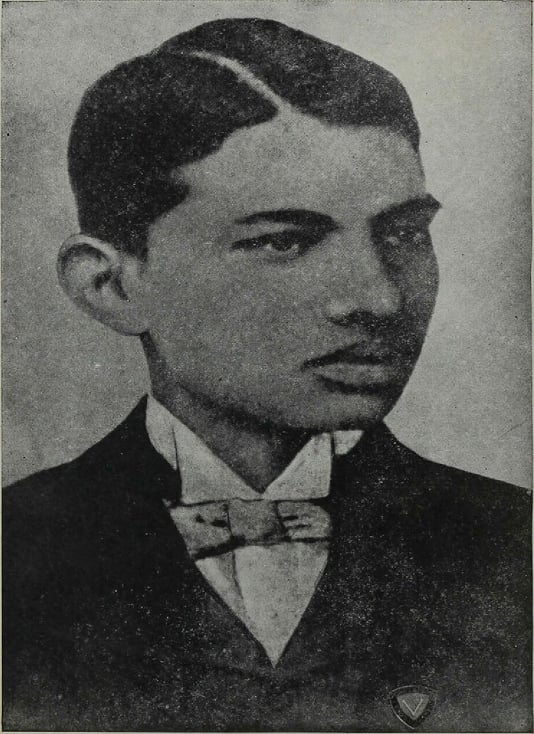

Vandyk (photographer), published by Rotary Photo, E.C., between 1909 and 1916; Library of Congress Prints and Photographs Division (LC-USZ62-100564), no rights restriction stated in the record · Library of Congress Prints and Photographs Division, LOT 6131 (LC-USZ62-100564; hdl.loc.gov/loc.pnp/cph.3c00564), photographic print 'M. Blériot, the first man to fly the channel', Vandyk, published as a Rotary Photo postcard; Ernest L. Jones Collection; also on Wikimedia Commons as 'Louis Bleriot.jpg' · Public domain
핵심 특성
주요 업적
블레리오는 1909년 7월 25일 자신의 11호 단엽기를 몰고 칼레 근처에서 도버까지 약 31마일을 대략 40분에 날아, 비행기로 영국 해협을 처음 건넌 사람이 되었다. 이 비행으로 그는 데일리 메일이 내건 상금 1,000파운드를 받았다.
블레리오는 1900년부터 실험을 거듭한 끝에 소형 단엽기 11호를 주력 기종으로 삼았고, 영국 해협 비행 12일 전에는 이 기체로 약 25마일을 들판과 마을 위로 날았다. 브리태니커 백과사전에 따르면 그의 공장은 1909년 7월부터 1914년 8월 사이에 항공기를 800대 넘게 만들었고 그 가운데 상당수가 11호 단엽기이거나 그 변형이었으며, 1914년에는 스패드(SPAD) 복엽기를 만든 회사를 인수했다.
블레리오는 항공기에 뛰어들기 전에 자동차 전조등과 부품을 만드는 사업을 했고, 브리태니커 백과사전은 이 사업으로 모은 재산이 그의 초기 항공 연구 비용을 댔다고 설명한다. 『플라이트』지는 1909년에 그의 이름이 붙은 아세틸렌 램프를 세계적으로 유명하다고 소개했고, 그가 9년 동안 비행기 실험에 약 2만 파운드를 썼다고 스스로 추산했다고 전했다.
삶의 장면들
『플라이트』지에 따르면 블레리오는 1909년 7월 25일 새벽 2시 반쯤 일어나 짧게 시험 비행을 한 뒤, 나침반도 시계도 없이 프랑스 시간 4시 40분께 영국을 향해 출발했다. 그는 곧 호위 구축함을 앞질렀고, 본인의 추산으로 약 10분 동안 육지도 배도 보이지 않는 곳을 날았다. 그라함화이트와 해리 하퍼는 바람이 거세지고 있어 곧장 가는 것만이 유일한 희망이라고 판단해, 호위함을 기다리며 선회하지 않았다고 전한다. 『플라이트』 편집진은 이 비행을 '다소 무모했다'고 평했고, 블레리오 자신도 그 점을 인정했다고 덧붙였다.
나침반 없이 바다 위로 나서고 호위함을 기다리지 않은 일은 높은 위험 감수 성향과 부합한다. 같은 잡지는 그가 취한 안전 조치와 행운이 따랐다는 점도 함께 적고 있어, 이런 태도에는 실제 대가도 따랐다. 위험 감수
찰스 터너는 항공 역사서에서 블레리오의 연이은 사고를 열거한다. 1906년 11월 4호 복엽기가 도랑에 처박혔고, 1907년 4월 5호 단엽기는 첫 비행 며칠 뒤 부서졌으며, 1907년 9월 17일에는 6호가 파손되었고, 같은 해 12월에는 7호가 선회 중 날개 끝이 땅에 닿아 뒤집혔다. 터너는 블레리오가 곧바로 8호 설계에 착수했다고 쓰고, 사고 횟수를 50번까지 세는 사람도 있다고 덧붙인다. 『플라이트』는 1909년에 그가 9년간 실험에 약 2만 파운드를 썼다고 전했다.
몇 해에 걸쳐 사고가 날 때마다 다시 기체를 만든 일은 끈기와 부합한다. 터너와 『플라이트』는 사고의 연속을 서술할 뿐 블레리오 본인의 동기를 밝히지는 않으므로, 행동의 패턴은 기록으로 확인되지만 동기는 확인되지 않는다. 끈기
전환점
영국 해협 비행 뒤 11호 주문이 빠르게 밀려들었다. 『플라이트』는 1909년 7월에 그가 이미 15대를 팔았고, 8월에는 11월까지 36대를 대당 약 400파운드에 인도하기로 했으며, 9월에는 101번째 기체를 팔아 납품을 맞추기 위해 예정했던 베를린 비행 시연을 포기했다고 전했다. 터너는 그가 경기와 곡예비행을 그만두고 제작에 전념하겠다고 밝혔고 이에 비판하는 사람도 있었다고 쓴다.
주문이 밀려드는 때에 조종사이자 실험가에서 전업 제작자로 옮겨 간 일은 기회 포착과 부합한다. 자료는 그 결정과 비판을 전할 뿐 그의 이유를 밝히지는 않는다. 기회 감지
비슷한 인물
전체적인 프로필이 이 사람과 닮은 사람들이에요.
출처
- Louis Blériot (Q5396) -- verified live via wbgetentities (2026-10-05): en label 'Louis Blériot', description 'French aviator, inventor and engineer (1872-1936)', ko label '루이 블레리오', birth 1 July 1872, death August 1936, citizenship France, instance of human, image 'Louis Bleriot.jpg'. Orientation only; not used as support for any row.
- Louis Blériot and Blériot XI -- English Wikipedia articles (raw wikitext), read as orientation only for the chronology of the aircraft series, the Daily Mail prize and the later business; not used as support for any scored row or for any editorial claim.
- Flight (London weekly aeronautical journal), issues of 17, 24 and 31 July 1909, Internet Archive full-text scans (Flight International Magazine 1909-07-17, 1909-07-24, 1909-07-31) -- CONTEMPORARY, INDEPENDENT trade press, sympathetic to aviation but not written by or for Blériot. Read locally: the 17 July report of his 25-mile cross-country flight; the 24 July notes on his entry for the Daily Mail prize, his cost-of-experiments statement, his burned foot and his starting-without-a-run patent; and the 31 July leader and news sections on the Channel flight (the journal's account of the crossing, its comment that the flight was 'somewhat foolhardy', the offer to share the prize with Latham, the Anzani engine, orders for machines and the Blériot lamp company).
- Flight, issues of 7, 14 and 28 August 1909, Internet Archive full-text scans (Flight International Magazine 1909-08-07, 1909-08-14, 1909-08-28) -- contemporary independent trade press. Read locally for Blériot's reception in Paris, the order to deliver thirty-six monoplanes by November at about 400 pounds each, his teaching of Leblanc and Delagrange on duplicates of the Type XI at Issy (including refusing to let a pupil fly in a squally wind) and the proposed, later cancelled, Blériot-Latham match race.
- Flight, issues of 4, 11 and 18 September and 16 October 1909, Internet Archive full-text scans (Flight International Magazine 1909-09-04, 1909-09-11, 1909-09-18, 1909-10-16) -- contemporary independent trade press, including H. Massac Buist's article on the Rheims meeting. Read locally for the Rheims results and the burning of Blériot's racing machine, the observation that Blériot's mechanics tied machines to a stake and measured propeller thrust with a hydraulic gauge, his London banquet speech of 15 September, his announcement that he had sold his 101st monoplane and would stop flying to deliver, and the October note on a British Blériot company.
- Charles C. Turner, The Romance of Aeronautics (London: Seeley, 1912), Internet Archive full text (romanceofaeronau00turn) -- independent British aeronautical historian and journalist, written three years after the Channel flight; narrative history, not a Blériot biography. Read locally: the passage on Blériot's experiments from 1900 to 1908 with the dated sequence of machines and wrecks, the passage on his early association with Voisin and the Seine glider trials, the Channel chapter (with the quotations from his own account), and the passage on the criticism he met for giving up exhibition flying.
- Claude Grahame-White and Harry Harper, The Aeroplane (Project Gutenberg eBook 45825) -- history of early aviation by a pilot and an aviation journalist, partly a rival-pilot perspective (Grahame-White flew Blériot monoplanes himself). Read locally: the passages on Blériot's early monoplanes, the dawn start of 25 July 1909, the ten minutes in sea mist, the decision not to wait for the escort, the abrupt landing at Dover and the burned foot.
- Claude Grahame-White and Harry Harper, The Aeroplane: Past, Present and Future (London: T. Werner Laurie, 1911), Internet Archive full text (aeroplanepastpr00harpgoog) -- the introduction's recollection of Blériot's early experiments from 1900 (flapping-wing 'bird', two-cell motor craft on floats at Enghien, first monoplane flights) and the biographical dictionary entry on Blériot (French Aero Club certificate No. 1, the Channel flight, the school at Pau, the Gnome-engined monoplanes). Independent of Blériot but written by pilot-authors, so partly sympathetic.
- Louis Blériot, 'Sporting and Commercial Possibilities of the Aeroplane', in Grahame-White and Harper, The Aeroplane: Past, Present and Future (1911), Section VII -- SELF source, an essay by Blériot (as presented by the book's editors) on engines, construction and aviation's prospects. Read in full as context only (his account of early engine failures, the critics who said reliable aeroplane engines were impossible, the 1909 appearance of the Gnome rotary engine); not used as support for any scored row because it is a self-account and the book's editors framed it.
- Flight, 6 August 1936, obituary 'The Death of Louis Blériot' (p. 153), and the 13 August 1936 notice 'The Late M. Blériot', Internet Archive OCR scans (sim_flight-international_1936-08-06_30_1441, sim_flight-international_1936-08-13_30_1442) -- period trade-press obituary written within a week of his death; the OCR is partly garbled and was read for the dated facts used (headlamp business profit, 1900 start and about 20,000 pounds spent, Lilienthal-style body-shifting replaced by wing warping, 'more crashing than flying', later turn to design and production). It gives his birth year as 1873, which conflicts with Wikidata and Britannica (1 July 1872).
- Encyclopaedia Britannica, 'Louis Blériot' (written by Tom D. Crouch, curator emeritus, National Air and Space Museum) -- institutional overview, read in full: the headlamp business that funded his experiments, the Blériot XI and the Channel flight, more than 800 aircraft built between July 1909 and August 1914, the 1912 wing-strength controversy, and the 1914 takeover of the makers of the SPAD. Used for the Achievement facts only, not for any scored row.