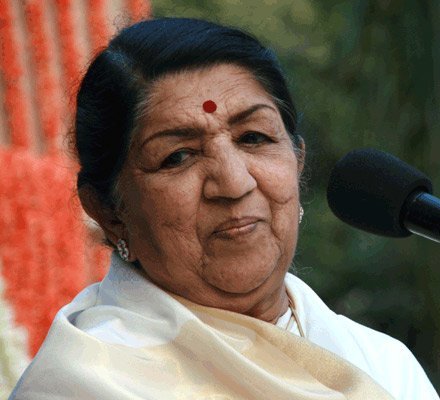

Photo: Bollywood Hungama, 2008, CC BY 3.0 · Wikimedia Commons file 'Lata Mangeshkar - still 29065 crop.jpg': photograph of Lata Mangeshkar by a Bollywood Hungama photographer at an event (the file page names the source still as the launch of a painting collection), a cropped image on the Bollywood Hungama website; the original file is 440 x 400 pixels, saved unchanged (no resizing, no upscaling). Licensed CC BY 3.0 by the copyright holder, with a Wikimedia volunteer-team permission record (ticket 2008030310010794) and a review by a Commons administrator in August 2010 who confirmed the image was on the Bollywood Hungama site. The file page gives the date as 2008; the first upload recorded the date as unknown, so the year is the file page's statement only. · CC BY 3.0
가수 · 20세기
라타 망게슈카르
1929–2022
주요 업적 분야
아직 성격 매칭에 포함되지 않았습니다 — 기록된 근거가 성격 모델 전체를 다루기에는 충분하지 않습니다. 이 페이지의 다른 모든 내용은 자유롭게 확인하실 수 있습니다.
핵심 특성
주요 업적
그녀는 80년에 걸쳐 활동한 힌디 영화의 플레이백 가수로, 2,000편이 넘는 인도 영화의 사운드트랙에 노래를 녹음했다.
1949년 영화 「마할」의 '아예가 아네왈라'가 방송되자 청취자들이 올인디아 라디오에 목소리의 주인공을 묻는 전화를 했고, 이후 그녀는 볼리우드의 주요 음악감독 모두를 위해 녹음했다.
기네스북은 1974년 그녀를 가장 많은 녹음을 남긴 아티스트로 기록했고, 그녀는 다다사헵 팔케 상(1989)과 바라트 라트나(2001)를 받았다.
삶의 장면들
그녀는 녹음 전에 모든 노래를 손으로 직접 적었고, 공연에서도 가사 수첩을 보며 노래했으며 가사가 음악만큼 중요하다고 말했다.
이는 노래의 가사에 세심하게 주의를 기울이는 태도와 부합한다. 디테일 지향
그녀는 출연료와 노래 수익의 인세 몫을 요구하는 데 주저하지 않았으며, 한 설명에 따르면 인세를 둘러싼 모하메드 라피와의 의견 차이로 한동안 듀엣이 중단되었다.
이는 업무 관계에 부담이 되더라도 직업적 입장을 밀고 나가려는 태도와 부합한다. 사회적 적극성
전환점
당시 선호되던 목소리들 사이에서 자리 잡기 어려웠던 초기를 지나, 음악감독 굴람 하이다르의 기회를 계기로 1949년 「마할」과 「안다즈」로 첫 히트를 얻었다.
이는 불확실한 출발 속에서도 버틴 끝에 돌파구를 맞이한 지속성과 부합한다. 끈기
비슷한 인물
전체적인 프로필이 이 사람과 닮은 사람들이에요.
출처
- Lata Mangeshkar (Q156347), verified live via the Wikidata API (2026-10-25): label 'Lata Mangeshkar', description 'Indian singer (1929-2022)', born 1929-09-28, died 2022-02-06, P18 image 'Lata Mangeshkar - still 29065 crop.jpg'. Orientation only; not used as support for any row.
- Encyclopaedia Britannica, 'Lata Mangeshkar', read in full. CANONICAL SIGNIFICANCE SOURCE: playback singer for the soundtracks of more than 2,000 Indian films over eight decades; classical training from her father and from Aman Ali Khan and Amanat Khan; early difficulty gaining a foothold against the prevailing heavier voices; first hit in Andaz (1949); music directors such as Naushad, Madan Mohan and S. D. Burman composed to use her range; Guinness 'most recorded artist' entry in 1974; Padma Bhushan, Dadasaheb Phalke Award, Padma Vibhushan, Bharat Ratna (2001) and the Legion of Honour. Reference entry: factual and admiring.
- Al Jazeera obituary, 'Nightingale of India Lata Mangeshkar has died' (6 February 2022), read in full: more than half a century of dominance in Bollywood music, work with nearly all of the major music directors, her willingness to take a stand on fees and a share of royalties, the habit of writing out each song by hand before recording, longevity and discipline, and critics' complaint that her dominance left little room for newer singers. International news obituary with a quoted music author; mostly admiring, with one critical line.
- Songlines magazine obituary by Katherine Schofield, 'Lata Mangeshkar (1929-2022)' (7 February 2022), read in full: the 1949 Mahal broadcast that drew listeners to All India Radio asking whose voice it was, her classical training and high, clear timbre as the sound of the film heroine, the later singers who imitated her style, her duets with Mohammed Rafi, and her 'hard-nosed business acumen', refusal to sing vulgar parts and power to make or break films and music directors. A specialist-magazine obituary by a music historian: admiring in register but analytical, and the source that states the business side most directly.
- The News Minute, 'Legendary singer Lata Mangeshkar passes away at 92' (6 February 2022), read in full: career chronology, the break she got from music director Ghulam Haider in an era that preferred slightly nasal voices, the 1949 Mahal hit, the range of music directors and male co-singers, and the list of awards. Regional news obituary used for the career timeline and for how her break came; the health and death passages were not used.
- Daily Times (Pakistan, 13 March 2014) article on Muhammad Rafi, republished by the Academy of the Punjab in North America, read in full. COUNTER-VOICE: relays a columnist's account that Rafi disagreed with Mangeshkar over her push for singers to receive royalties, that they stopped singing duets, that the composer Jaikishan later patched things up, and that she was annoyed by a letter disputing her Guinness song count. Opinion column about Rafi that itself relies on another writer's article; one account of one episode, treated as a single secondhand voice from Rafi's side and not as proof of her motives.
- Partho Datta, review of Nasreen Munni Kabir's 'Lata Mangeshkar: In Her Own Voice', The Book Review (December 2009), read as far as the free preview goes (the rest is behind a login): the reviewer's recollection of a concert where she looked at a notebook throughout because she held that the words matter as much as the music, his view that her fire was reserved for recorded music and that she re-invented herself in the 1970s, and his note that Kabir's interview is respectful and avoids controversy while Raju Bharatan's book was more critical. Partly read: later paragraphs were not opened.
- Rolling Stone India, review of 'Lata Mangeshkar in Her Own Voice' by Nasreen Munni Kabir (25 July 2009), read in full. COUNTER-VOICE: praises the book's care over facts but notes that Kabir avoids difficult areas, including the 'Mangeshkar monopoly' and complaints about its effect on other singers, and says the later half is encomium after encomium. A critical book review: used to bound the evidence and to flag that the well-known biographies are respectful or partisan.
- Wikimedia Commons file page 'Lata Mangeshkar - still 29065 crop.jpg' (photograph by Bollywood Hungama, CC BY 3.0, with a Wikimedia volunteer-team permission record), checked for the portrait only.