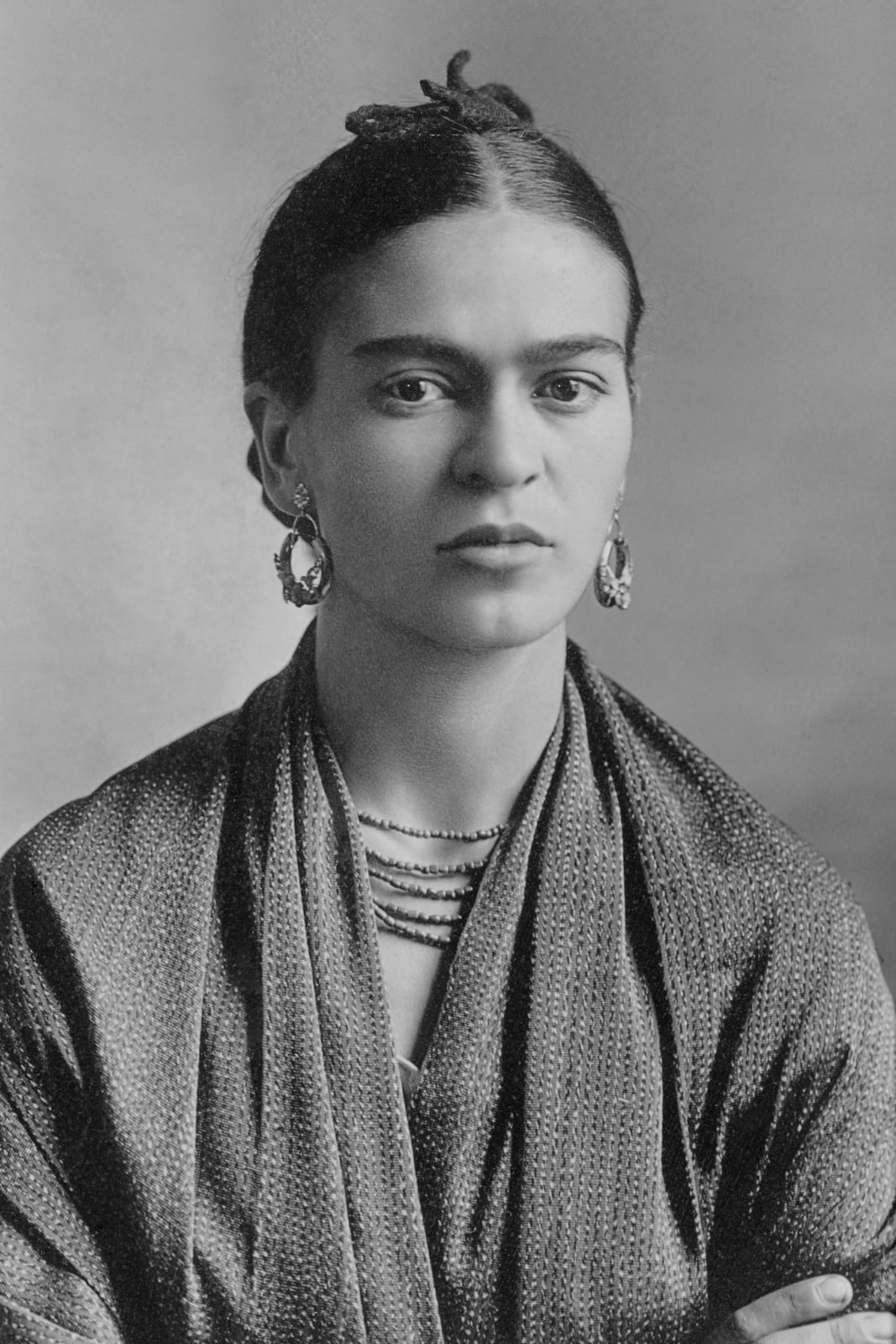
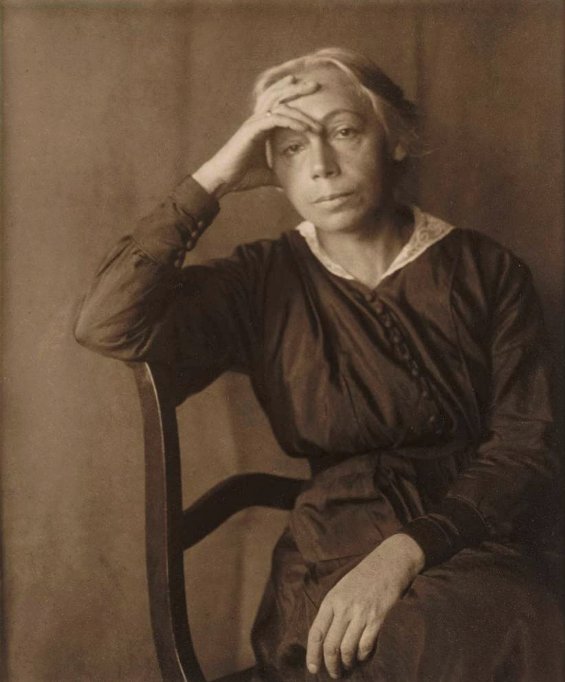

Hugo Erfurth, 1917; Kupferstich-Kabinett, Staatliche Kunstsammlungen Dresden (via Deutsche Digitale Bibliothek / Wikimedia Commons) · Hugo Erfurth, "Bildnis Käthe Kollwitz", 1917, photograph 29.4 x 24.3 cm, Kupferstich-Kabinett, Staatliche Kunstsammlungen Dresden, via Deutsche Digitale Bibliothek and Wikimedia Commons file "1917 Foto Käthe Kollwitz.png" (original 565 x 682 px; converted PNG to JPEG at the same size, not upscaled) · Public domain (Hugo Erfurth died 1948; published before 1 January 1931, so public domain in the United States, and the author term has expired in the country of origin; Commons template PD-old-auto-expired|1948)
예술가 · 20세기
케테 콜비츠
1867–1945
주요 업적 분야
아직 성격 매칭에 포함되지 않았습니다 — 기록된 근거가 성격 모델 전체를 다루기에는 충분하지 않습니다. 이 페이지의 다른 모든 내용은 자유롭게 확인하실 수 있습니다.
핵심 특성
주요 업적
콜비츠는 1893년 게르하르트 하우프트만의 희곡 『직조공들』 초연을 본 뒤 석판화 3점과 에칭 3점으로 이루어진 연작 「직조공 봉기」를 시작해 1897년에 완성했다. 이 연작은 1898년 대베를린 미술전시회에 출품되어 그녀의 출세작이 되었고, 심사위원단이 메달 수여를 제안했으나 황제 빌헬름 2세가 이를 거부했다. ARTinWORDS에 따르면 이 연작은 1844년의 실제 봉기나 희곡의 줄거리가 아니라 당대를 배경으로 한 가상의 봉기를 그린 것이다.
「농민전쟁」은 1902년부터 1908년까지 제작한 에칭 7점의 연작으로, 1524~25년 농민전쟁을 다룬 빌헬름 치머만의 역사서에서 영감을 얻었다. 쾰른 케테 콜비츠 미술관에 따르면 그녀는 처음에 이 연작을 컬러 석판화로 구상했으며, 1904년 신청해 드레스덴의 역사미술협회로부터 제작 지원을 받았다. 1907년에는 빌라 로마나 상을 받았다. 『아트 인 아메리카』는 이 연작을 모든 매체를 통틀어 그녀의 가장 위대한 작업이라고 평가한다.
콜비츠는 1920년대 초 에른스트 바를라흐의 판화에 자극받아 목판화를 시작한 뒤, 7점의 목판화 연작 「전쟁」을 만들었다. 쾰른 케테 콜비츠 미술관은 이 연작을 그녀가 제1차 세계대전 중에 겪고 깨달은 바를 다룬 작업으로 설명한다. 『아트 인 아메리카』에 따르면 7점 가운데 5점이 자식을 잃은 부모를 다룬다.
「슬퍼하는 부모」는 무릎 꿇은 어머니와 아버지를 표현한 화강암 조각 한 쌍으로, 1932년 아들 페터가 묻힌 벨기에 디크스마위더 인근 로게펠트 전몰자 묘지에 세워졌다. 이 묘지는 훗날 블라슬로 묘지로 통합되면서 조각도 함께 옮겨졌다. 그녀는 1914년부터 기념비를 구상했고 1919년에 첫 구상을 중단한 뒤 1924년 새 구상을 마련했다. 화강암 조각은 아우구스트 라데스와 프리츠 디더리히가 그녀의 석고 모형을 따라 제작했다.
콜비츠는 1937~38년에 작은 조각 「피에타(죽은 아들을 안은 어머니)」를 만들었다. 베를린 케테 콜비츠 미술관은 조각가 하랄트 하케(Harald Haacke)가 만든 확대 복제본이 베를린 노이에 바헤(Neue Wache)에 서 있다고 기록하며, 원작은 이 시기에 만든 작은 조각 세 점에 속하는 말년의 작품이다.
삶의 장면들
1909년 9월 콜비츠는 어머니와 죽은 아이를 표현한 첫 다인물 조각을 시작하고, 첫 결과물을 뮌헨 시절부터 알던 조각가 알렉산더 오플러에게 보여 주었다. ARTinWORDS에 따르면 그는 작품의 구성이 허술하다고 지적했고, 이것이 그녀의 야심을 자극했다. 그녀는 이미 1904년에 파리 아카데미 쥘리앙의 조각 수업을 두 달간 들었고 로댕의 작업실도 방문한 바 있었다.
미완성 작품을 비판적인 동료 조각가에게 보여 준 일과 몇 해 전 수업을 들으며 기술을 익힌 일은 새로운 매체를 숙달하려는 강한 의욕과 부합한다. 숙련 지향
동시대 비평가 알프레트 쿤은 「농민전쟁」의 첫 장면인 쟁기질 판화에 쟁기를 모는 여성이 있는 초기 버전이 있었다고 기록한다. 1906년 판에서는 그 여성이 빠지고 멍에를 메고 버티는 두 남자만 남았다. 『아트 인 아메리카』의 비평가는 또 다른 판화 「검은 안나」를 여러 번 고쳤고, 초기의 하늘을 나는 나체상을 땅에 발을 디딘 인물로 바꾸었다고 덧붙인다.
여러 단계의 판을 거치며 한 인물을 빼고 다른 인물을 다시 그린 일은 구도에 대한 완벽주의적 태도와 부합한다. 다만 출처들은 변경 사실만 설명할 뿐 그녀가 밝힌 이유는 전하지 않는다. 완벽주의
전환점
1920년경 콜비츠는 에른스트 바를라흐의 목판화에 감명받아, 20년 넘게 주로 에칭과 석판화로 작업해 온 뒤 첫 목판화 가운데 하나인 1920년의 추모 판화를 만들었다. 『아트 인 아메리카』는 이 매체가 직접적인 표현을 원하던 그녀에게 더 잘 맞았고 그녀가 에칭을 늘 더디고 기술적이라고 여겼다고 설명한다. 목판화는 연작 「전쟁」의 매체가 되었다.
20년이 지난 뒤 다른 작가의 작업을 보고 주된 매체를 바꾼 일은 기법을 새롭게 시도하려는 태도와 부합한다. 실험 성향
비슷한 인물
전체적인 프로필이 이 사람과 닮은 사람들이에요.
출처
- Käthe Kollwitz (Q142472) -- verified live via wbsearchentities and wbgetentities (2026-10-07): en label 'Käthe Kollwitz', description 'German printmaker and sculptor (1867-1945)', born 8 Jul 1867, died 22 Apr 1945, ko label '케테 콜비츠', P18 'Käthe Kollwitz by Hugo Erfurth, 1927.jpg'. Orientation only; not used as support for any row.
- Käthe Kollwitz Museum Köln, 'Biography' (kollwitz.de) -- year-by-year institutional biography (non-self, scholarly, based on the Kollwitz estate archive and her diaries; sympathetic to her). Read in full: education, the Weavers' Revolt and Peasants' War cycles, Académie Julian sculpture course, woodcut turn, the 1914-1932 memorial, the Prussian Academy years, the 1933-1945 chapter.
- ARTinWORDS, 'Käthe Kollwitz Biografie' (artinwords.de) -- German art-historical biography (non-self, independent of the Kollwitz museums), organised by period; gives the sculpture beginnings (1904, 1909 critique by Alexander Oppler), the memorial's 1914-1932 history including technical and meaning-related doubts, the Weavers cycle set in the present, and the 1933 Academy resignation. Read in full.
- Deutsches Historisches Museum, LeMO Biografie 'Käthe Kollwitz 1867-1945' (Walther and Harders, 2015) -- institutional chronology (non-self); used for dates (1904 Paris sculpture class, 1906 poster removed, 1919 Academy, 1928 master studio, 1933 forced resignation, 1943 bombing). Read in full.
- Neue Deutsche Biographie 12 (1980), entry 'Kollwitz, Käthe' (Deutsche Biographie online) -- standard German national-biography entry (non-self, scholarly). Read in full: quotes her 1922 diary line, describes her self-portraits and the sculptural self-portrait of 1926-1936, her own later view that she was an 'evolutionary' rather than a revolutionary, and names Hans Kollwitz's 1948 and 1953 diary and letter editions as the best key to her.
- German History in Documents and Images (German Historical Institute Washington), 'Käthe Kollwitz on the Rise of the Nazis (1930-33)' -- SELF source: her own diary entries 1930-1933 in English translation from Die Tagebücher (ed. Jutta Bohnke-Kollwitz, 1989), with editors' notes. Read in full; used only for her working-life facts (resigning from the Academy, continuing work on the sculpture group), not for any political position.
- Art in America (ARTnews), feature on the Museum of Modern Art's Käthe Kollwitz retrospective -- recent critical overview (non-self, independent). Read in full: the Weavers and Peasants' War cycles (Black Anna reworked, allegorical figure dropped), the move from etching to woodcut, about 100 self-portraits, and a note that its gold-medal account differs from the museum chronologies.
- Erich Knauf, 'Käthe Kollwitz' chapter (pp. 207-216) in Empörung und Gestaltung: Künstlerprofile von Daumier bis Kollwitz (Büchergilde Gutenberg, Berlin, 1925), Internet Archive OCR -- CONTEMPORARY ADMIRING left-wing critic; includes a passage in which Kollwitz herself lists her literary influences. Read the chapter; the OCR is rough and was read for sense only.
- Alfred Kuhn, Käthe Kollwitz (Graphiker der Gegenwart series, Neue Kunsthandlung, Berlin, 1921), Internet Archive OCR -- CONTEMPORARY CRITICAL monograph that treats her art as already belonging to the previous generation, describes her cycles plate by plate and records how the first Peasants' War plate was reworked between early versions and the 1906 state. Read the first half; the OCR is rough.
- Rosa-Luxemburg-Stiftung, 'Künstlerin für Menschenwürde und Frieden' (text by Gisela Notz, 2020) -- partisan (left-political foundation) short biography; used only to cross-check dates and the diary quotation, and treated with caution for characterisations. Read in full.
- Encyclopaedia Britannica, 'Käthe Kollwitz' -- reference overview used for orientation and for the Prussian Academy and Pour le Mérite facts. Read in full; not used as support for a scored row.
- Käthe-Kollwitz-Museum Berlin: art postcards, sculptures (Pietà and the Neue Wache replica)