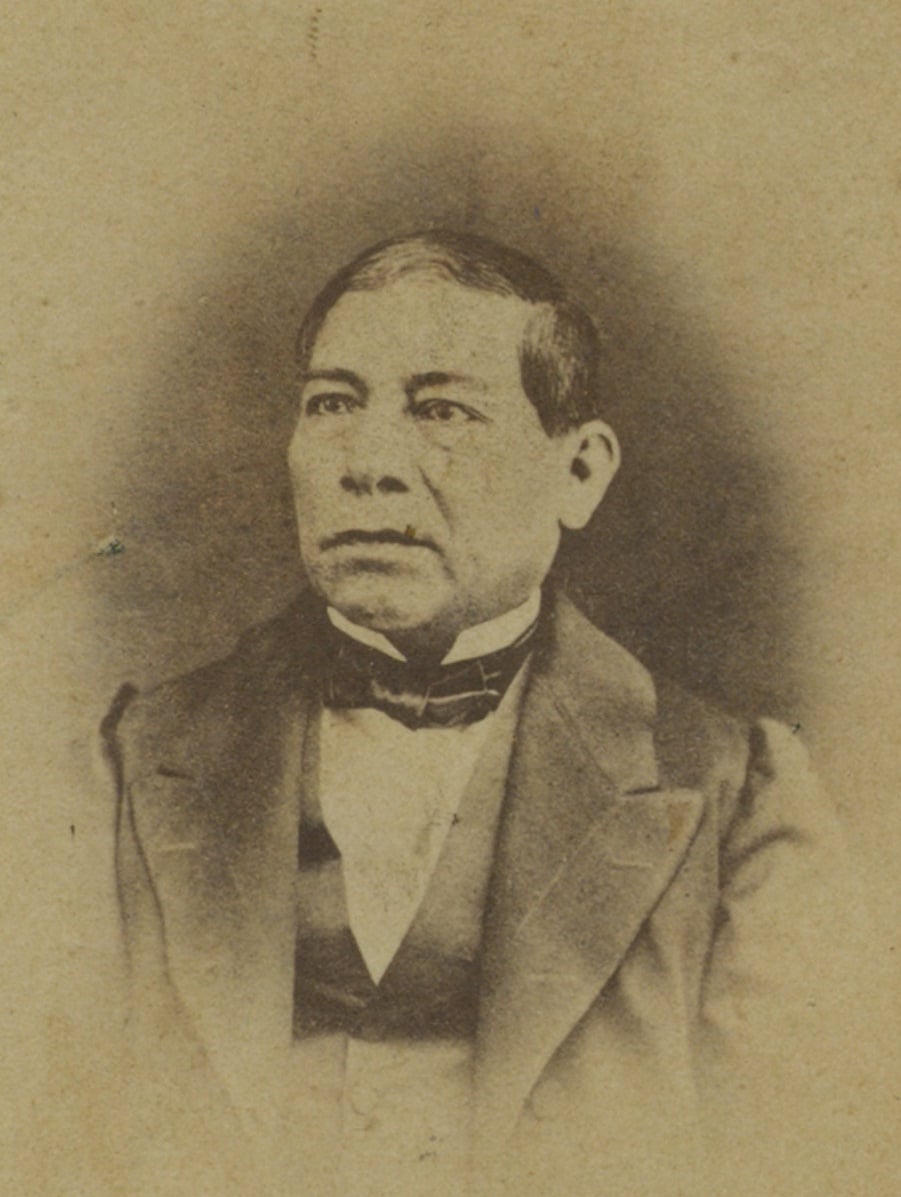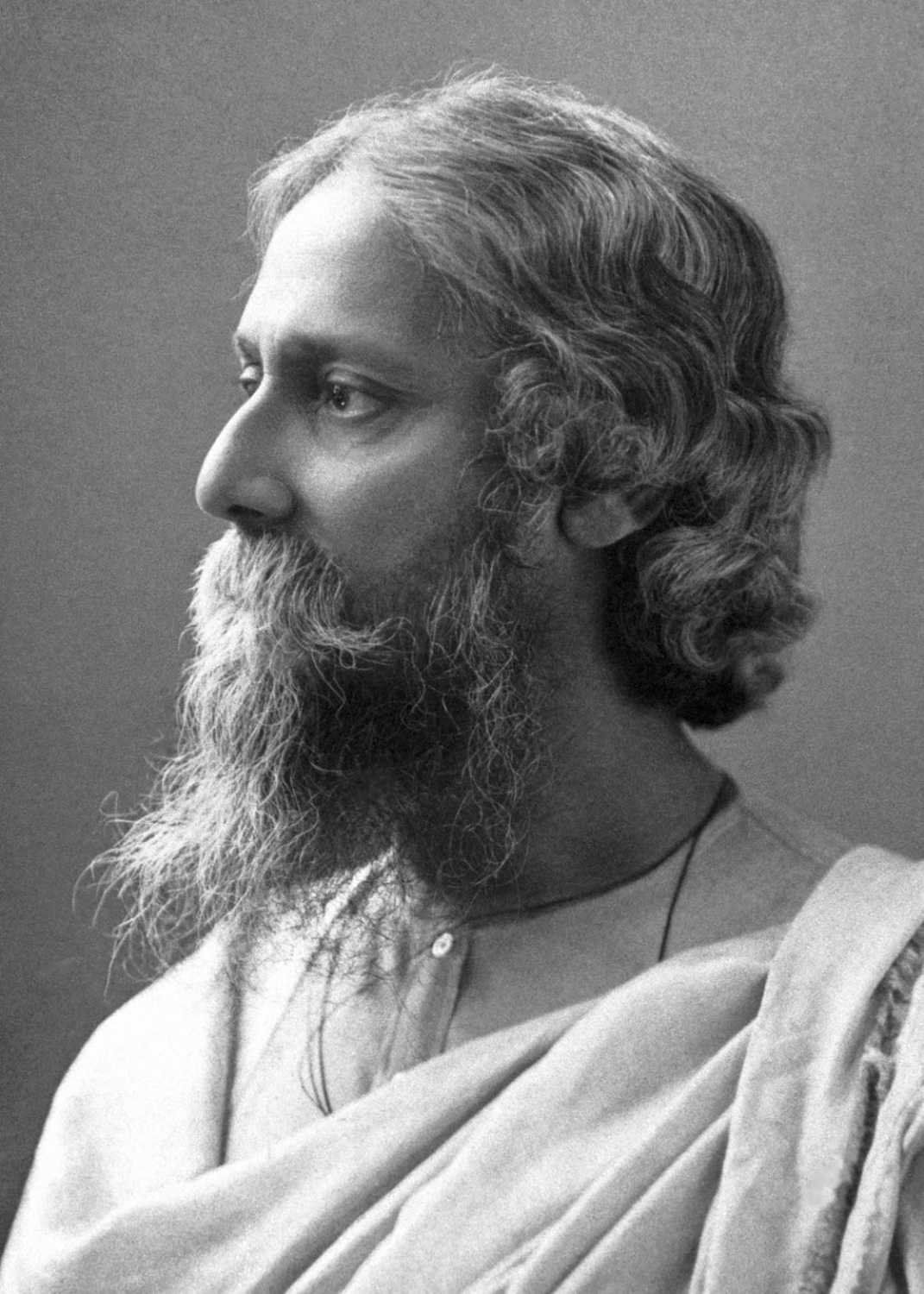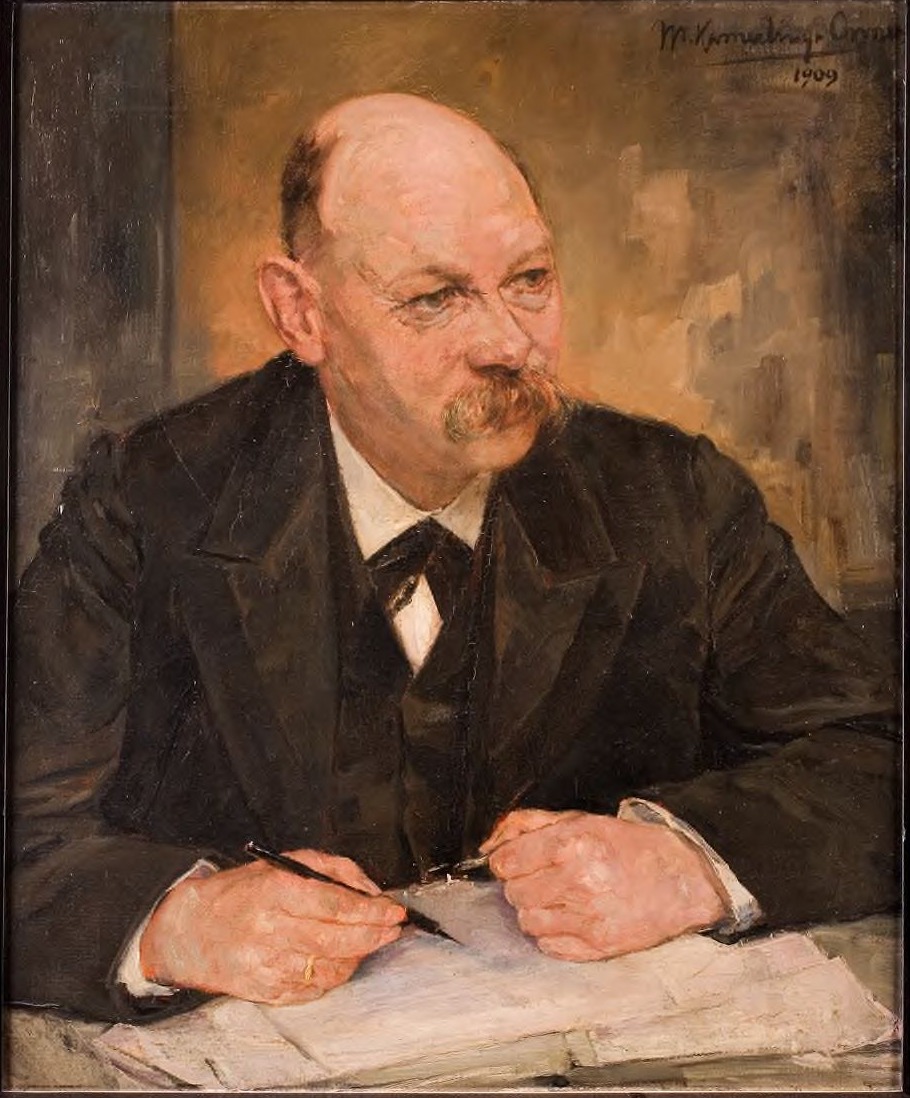

Menso Kamerlingh Onnes, portrait of Heike Kamerlingh Onnes, 1909, oil on canvas, Leiden University Libraries, Icones Leidenses (Icones 311), public domain · Oil portrait of Heike Kamerlingh Onnes by his brother Menso Kamerlingh Onnes (1860-1925), signed and dated 1909, in the Leiden University portrait collection (Icones Leidenses, shelfmark Icones 311; given to the university in 1926 by Mrs Kamerlingh Onnes-Bijleveld). The holder's record, read through its IIIF manifest, states the rights status as public domain with a Public Domain Mark 1.0 link; the painter died in 1925. The file used is the holder's own 1,024 x 1,273 pixel digital image, cropped once to the painted canvas to remove the black frame (910 x 1,098 pixels); nothing was upscaled. The painted frame carries the lettering 'HEIKE KAMERLINGH ONNES. GRONINGENSIS.' and 'NATUS 21 SEPT. 1853 ... PHYS. EXPER. PROF. ORD. AC. L.B. 11 NOV. 1882 ... OBIIT LEIDAE 21 FEBR. 1926.', which match the sitter. A portrait painted in his lifetime by a close relative, signed and dated; the sitting itself is not described in the record. · Public domain (painter died 1925; Leiden University Libraries rights status: public domain, Public Domain Mark 1.0)
물리학자 · 20세기
헤이커 카메를링 오너스
1853–1926
주요 업적 분야
아직 성격 매칭에 포함되지 않았습니다 — 기록된 근거가 성격 모델 전체를 다루기에는 충분하지 않습니다. 이 페이지의 다른 모든 내용은 자유롭게 확인하실 수 있습니다.
핵심 특성
주요 업적
1908년 7월 10일 그는 레이던에서 헬륨을 액화해 약 4.2켈빈의 액체 헬륨 약 60ml를 얻었다. 이는 이른바 영구 기체 가운데 마지막으로 액화된 기체였다.
1911년 그는 아주 순수한 수은의 전기 저항이 액체 헬륨 온도에서 갑자기 0으로 떨어진다는 것을 발견하고 이 현상을 초전도라고 이름 붙였다.
그는 액체 공기 캐스케이드, 수소 액화기, 계기 제작자 학교를 갖춘 레이던을 선도적인 저온 연구소로 키웠고, 저온 연구로 1913년 노벨 물리학상을 받았다.
삶의 장면들
1898년 듀어가 액체 수소를 선보인 뒤에도 그는 서둘러 작은 액화기를 만들지 않고, 1906년까지 시간당 수 리터를 생산할 수 있는 엄격한 기준의 액화기를 제작했다.
이는 수년이 걸리더라도 장비를 엄격한 기준에 맞추려는 태도와 일치한다. 완벽주의
1911년 수은 측정에서 저항이 0으로 나오자 연구진은 단락이 없음을 확인하기 위해 네 구간으로 나뉜 W자형 관으로 실험을 되풀이했다.
이는 놀라운 결과를 받아들이기 전에 다른 설명 가능성으로 검증하는 모습과 일치한다. 실험 성향
전환점
1882년 레이던 교수가 된 그는 물리학 실험실을 교육 기관에서 연구소로 개편해 판데르발스의 분자 이론을 검증하려 했고, 이는 저온 실험실을 처음부터 구축하는 일로 이어졌다.
이는 길고 단계적으로 짜인 연구 계획에 전념하는 모습과 일치한다. 계획 지향
비슷한 인물
전체적인 프로필이 이 사람과 닮은 사람들이에요.


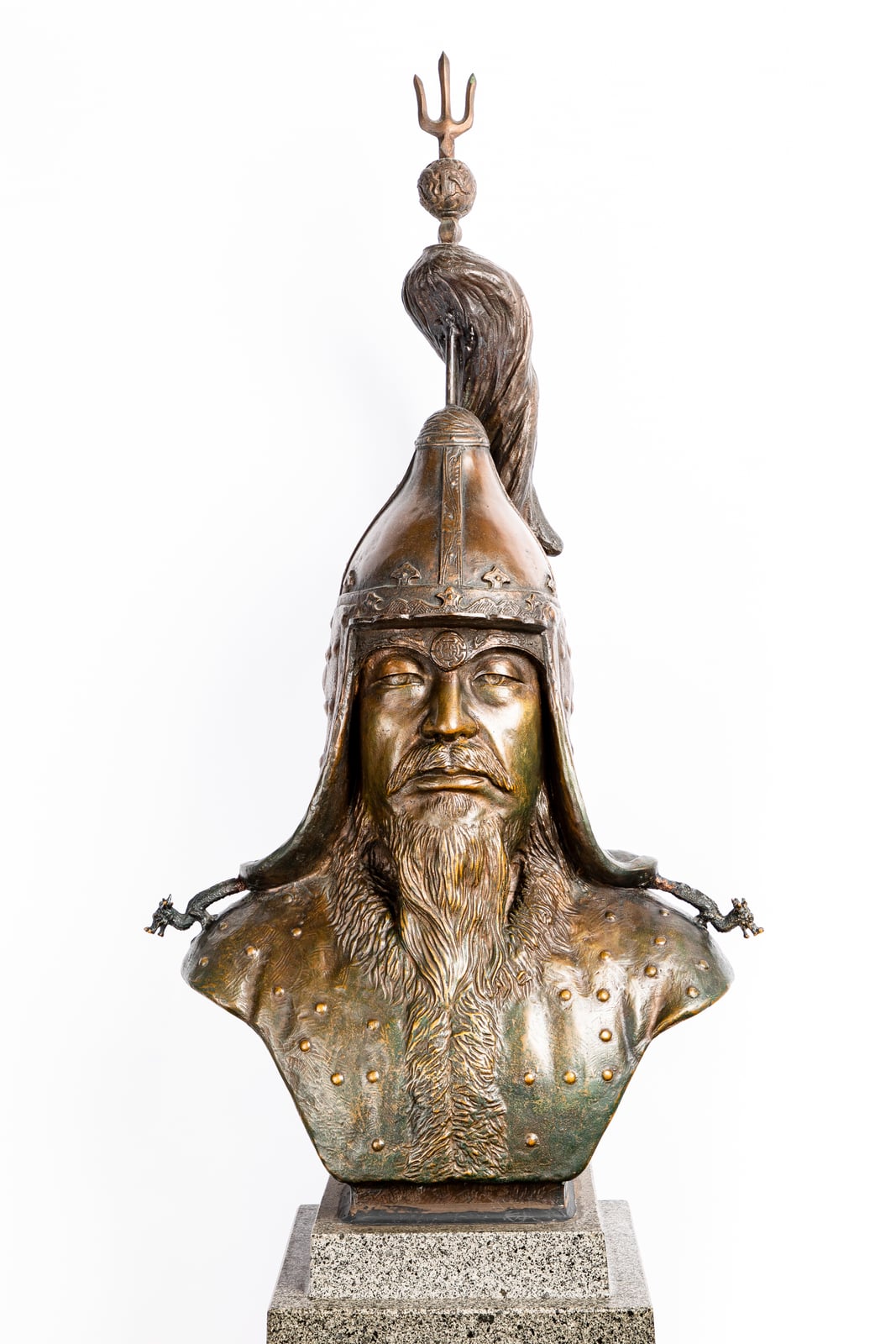
이순신

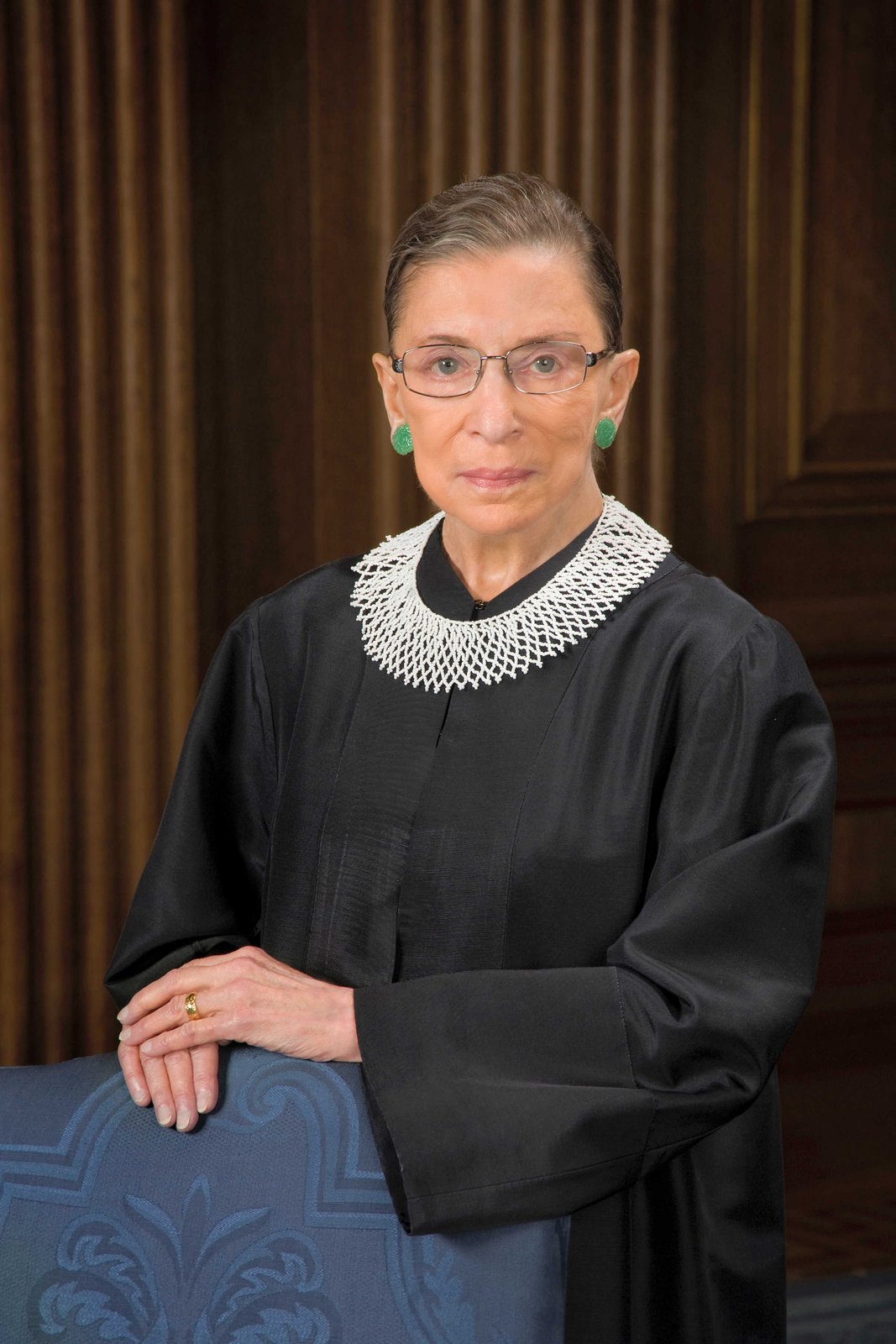
루스 베이더 긴즈버그

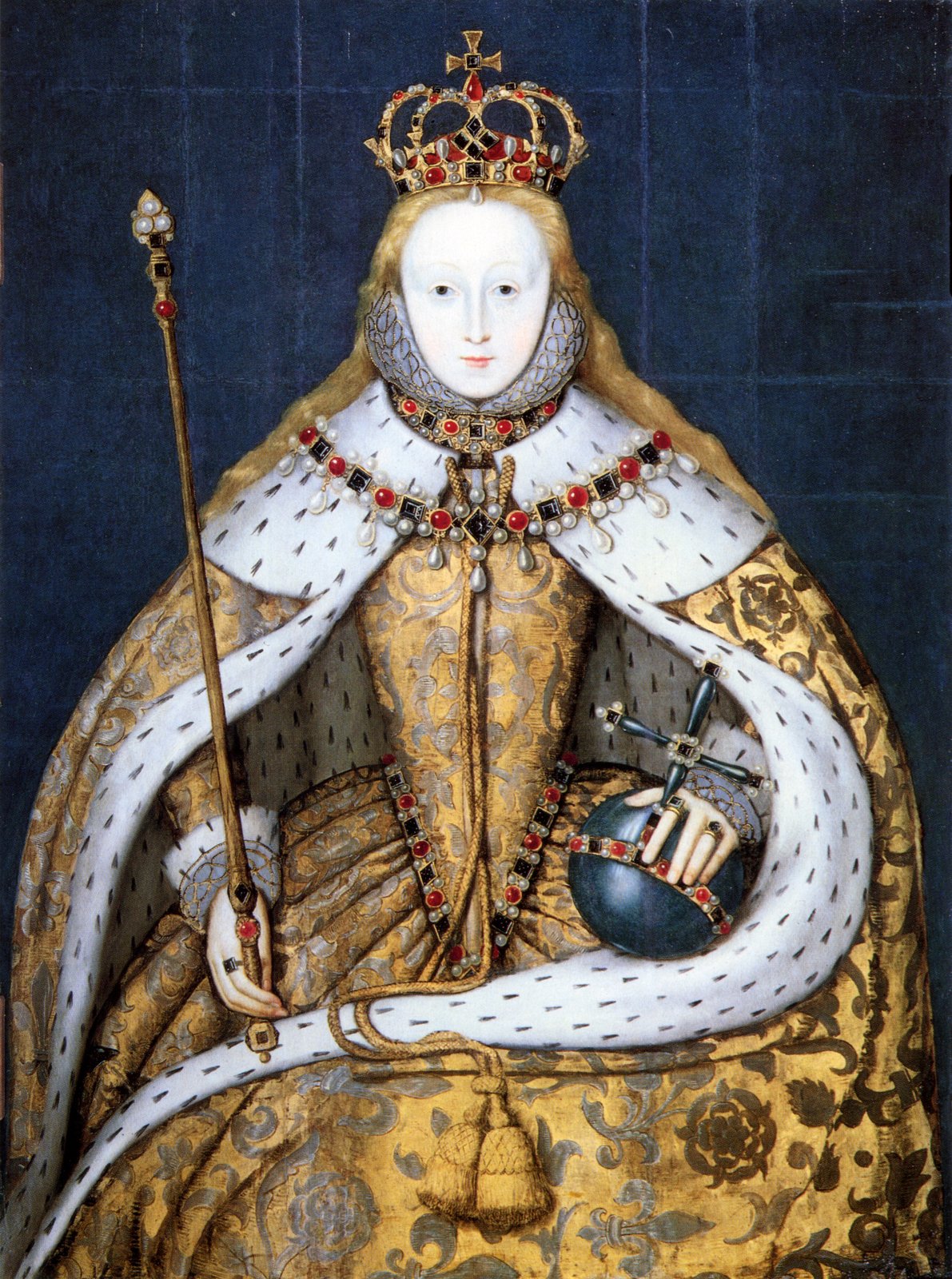
엘리자베스 1세

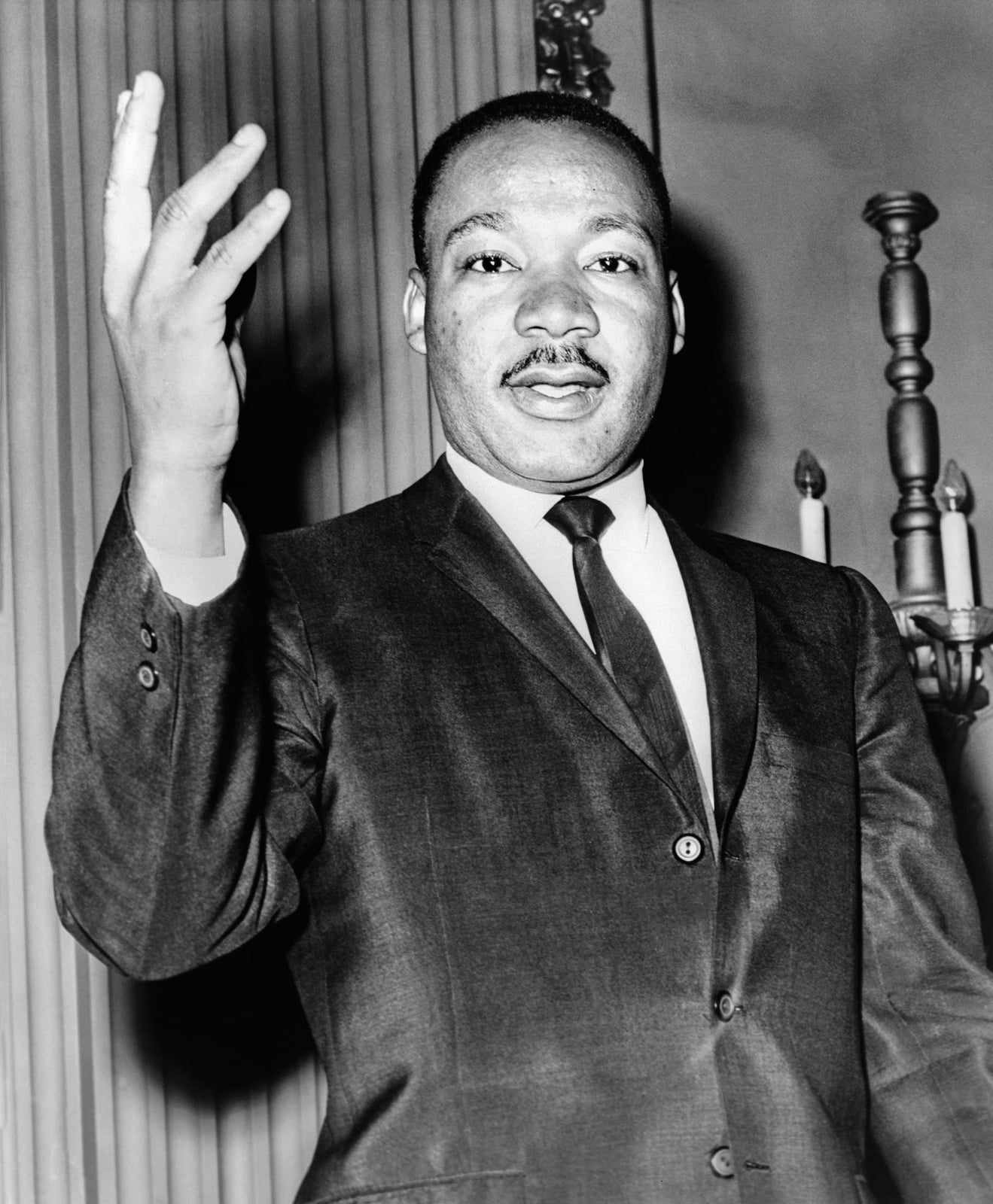
마틴 루터 킹 주니어

베니토 후아레스
출처
- Heike Kamerlingh Onnes (Q62891), verified live via the Wikidata API (2026-11-06): label 'Heike Kamerlingh Onnes', description 'Dutch physicist, Nobel prize winner (1853-1926)', born 21 September 1853, died 21 February 1926, citizen of the Netherlands, occupations include physicist. Orientation only; not used as support for any row.
- Complete Dictionary of Scientific Biography, 'Kamerlingh Onnes, Heike' (entry read in full via Encyclopedia.com). CANONICAL SIGNIFICANCE SOURCE: professor of experimental physics at Leiden for forty-two years from 1882; inaugural address of 1882 and the motto 'Door meten tot weten'; aimed to give experimental support to van der Waals's law of corresponding states; cascade apparatus for liquid air and oxygen in 1892, hydrogen liquefier in February 1906, helium first liquefied on 10 July 1908; discovered in 1911 that the resistance of very pure mercury drops discontinuously to zero and named the effect superconductivity; remained 'absolute monarch' of his field until retiring in 1923. Scholarly and sober: records that his first expectations about resistance were wrong, that his virial-coefficient programme did not give a better law of corresponding states, and that a 1911 density anomaly in liquid helium was attributed to possible methodological faults and not published below 2.2 K.
- Dirk van Delft, 'Little cup of helium, big science', Physics Today 61(3), March 2008 (article read in full, seven pages). The director of the Boerhaave Museum describes the 10 July 1908 liquefaction hour by hour, the 1895-98 city-council shutdown of his hydrogen work, his insistence on stringent standards for the 1906 hydrogen liquefier, the helium gas purification, the school of instrument makers and the 'cold factory' organisation, the 1908 'solid helium' announcement withdrawn six weeks later, and his helium supply chain (Ramsay, a brother's monazite sand, the Welsbach firm, the US Bureau of Mines). Written by a museum historian who is admiring and draws on Onnes's archive; the strongest behavioural source, though it is one author's interpretation.
- Rudolf de Bruyn Ouboter, 'Heike Kamerlingh Onnes's Discovery of Superconductivity', Scientific American, March 1997 (article read in full). A Leiden low-temperature professor describes the cascade, the instrument-makers' society, the 1896 council shutdown, the helium liquefaction, and the 1911 mercury experiments in which the team repeated the measurement with a W-shaped tube to rule out short circuits, plus the later persistent-current experiment and his disappointment that magnetic fields destroyed superconductivity. Flags that the anecdote about a student falling asleep is third-hand. Written from inside the Leiden laboratory tradition.
- Dirk van Delft, 'Heike Kamerlingh Onnes and the Road to Liquid Helium', IEEE/CSC and ESAS European Superconductivity News Forum no. 16, April 2011 (conference paper read in full). Scientific biography from the Leiden centennial symposium: formative years under Bunsen and Kirchhoff, no articles published in the first ten years at Leiden while building the cryogenic installation, the 1901 school of instrument makers, the three-year licence struggle, and Dewar's remark that assistants are a waste. Same author as the Physics Today article, so not an independent perspective; used to corroborate and add dates.
- Encyclopaedia Britannica, 'Heike Kamerlingh Onnes' (page read in full). Orientation on the Nobel Prize in Physics in 1913 for low-temperature work and the production of liquid helium, superconductivity, and the founding in 1894 of the cryogenic laboratory that bears his name; notes that his student Keesom, not he, solidified helium in 1926.
- National High Magnetic Field Laboratory, Magnet Academy, 'Heike Kamerlingh Onnes' (page read in a summarised fetch). Biography of his education, the reorganisation and re-equipping of the Leiden laboratory, hydrogen in 1906, helium in 1908, superconductivity in 1911, the Nobel Prize and his role in the International Institute of Refrigeration. Short, admiring institutional page; used only to corroborate dates.
- Linda Hall Library, Scientist of the Day, 'Heike Kamerlingh Onnes' (21 September 2018; read in full, short post). Frames him as the contemporary and competitor of James Dewar, notes that he reached liquid oxygen and liquid hydrogen later than others and then produced liquid helium in 1908 and found superconductivity in mercury. Used for the competitor framing only.
- Leiden University Libraries, Icones Leidenses, 'Portret van Heike Kamerlingh Onnes, hoogleraar Proefondervindelijke natuurkunde en meteorologie te Leiden' (shelfmark Icones 311; oil painting by Menso Kamerlingh Onnes, 1909); record read through the holder's IIIF manifest, rights 'public domain' with a Public Domain Mark 1.0 link. Used for the portrait only, not for any trait row.