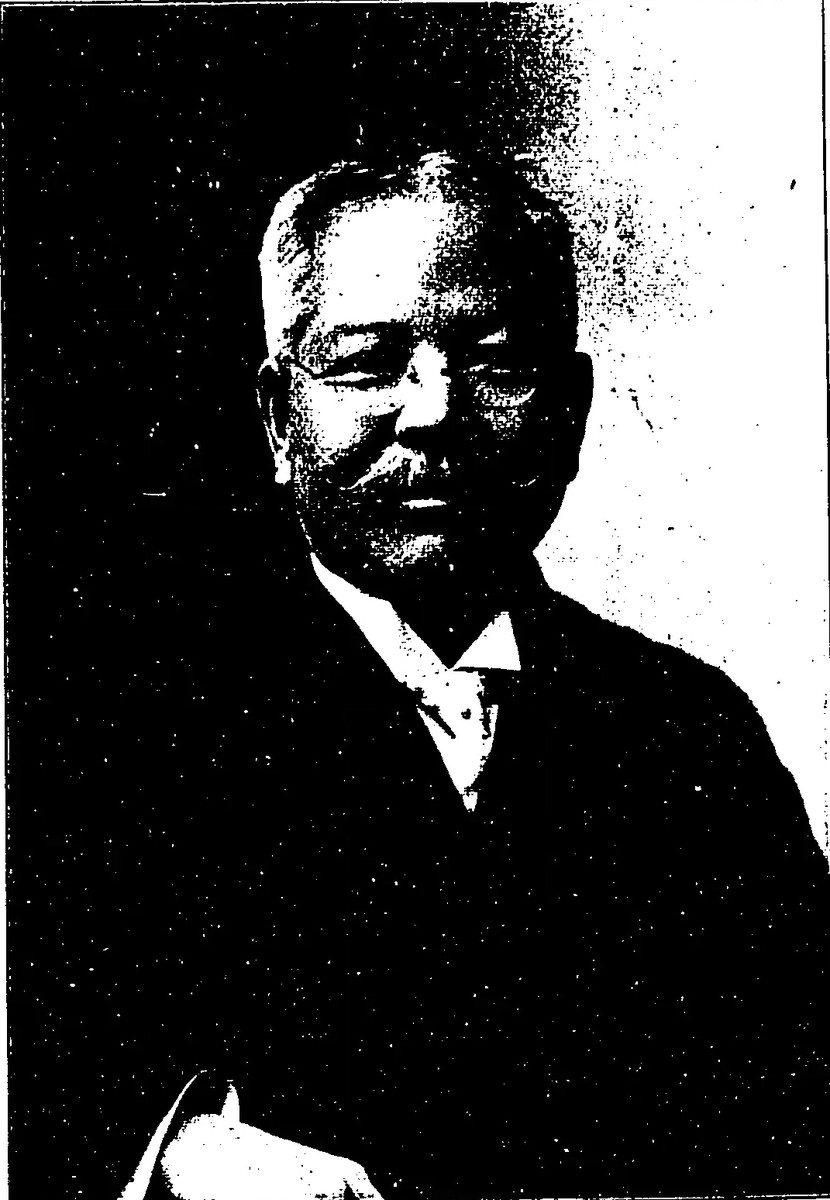

Photograph of Jokichi Takamine in Makino Terutomo, Gendai hatsumeika den (Teikoku Hatsumei Kyokai, 1911), National Diet Library of Japan Digital Collections, item 777757, Public Domain Mark · Halftone photograph of Takamine as the frontispiece of the book 'Gendai hatsumeika den' (Lives of Contemporary Inventors) by Makino Terutomo, published by Teikoku Hatsumei Kyokai, Tokyo, September 1911, captioned 'world-famous inventor Takamine Jokichi', National Diet Library of Japan, Digital Collections item 777757, page 11, with the library's Public Domain Mark. The photographer is not named in the book. The page image (3607 x 2777 pixels) was cropped to the photograph and downscaled to 830 x 1200 with no upscaling. The picture is a coarse printed halftone, so quality is low. · Public domain (published in Japan in 1911; National Diet Library Public Domain Mark)
화학자 · 19세기
다카미네 조키치
1854–1922
주요 업적 분야
아직 성격 매칭에 포함되지 않았습니다 — 기록된 근거가 성격 모델 전체를 다루기에는 충분하지 않습니다. 이 페이지의 다른 모든 내용은 자유롭게 확인하실 수 있습니다.
핵심 특성
주요 업적
그는 조수 우에나카 게이조와 함께 1900년 무렵 뉴욕에서 호르몬 아드레날린을 결정으로 얻어 '아드레날린'이라는 이름으로 특허를 냈고, 이는 널리 쓰이는 의약품이 되었다.
그는 누룩곰팡이에서 얻은 녹말 분해 효소 타카디아스타제를 개발해 파크 데이비스사에 사용권을 주었고, 이 회사는 1895년부터 이를 소화제로 팔았다.
그는 도쿄인조비료회사를 세웠고, 1913년 시오바라 마타사쿠와 함께 산쿄 주식회사를 설립해 초대 사장을 맡았으며, 훗날 이화학연구소(리켄)가 된 연구기관을 제안했다.
삶의 장면들
그가 일하던 위스키 공장이 1891년 불타고 운영 측이 계약을 끝내자, 그는 방향을 바꿔 이 효소를 소화제로 개발하고 파크 데이비스사에 사용권을 주었으며, 그 수입이 그의 연구소를 뒷받침했다.
이는 좌절 뒤에 새로운 상업적 길을 찾아낸 발명가의 모습과 일치한다. 자원 활용 성향
부신 호르몬 연구가 3년 가까이 성과가 없자 그는 옛 스승 나가이 나가요시에게 도움을 청했고, 나가이가 추천한 우에나카 게이조가 1900년 일본에서 건너왔으며 6개월 안에 호르몬이 정제되었다.
이는 연구가 막혔을 때 자신의 인맥을 통해 도움을 구한 책임자의 모습과 일치한다. 협업 성향
전환점
1890년 그는 증류업에서 효소를 상업적으로 쓰기 위해 가족과 함께 미국으로 건너갔고, 이는 해외에서 발명가이자 기업가로 활동하는 경력의 시작이 되어 파크 데이비스사와의 협력으로 이어졌다.
이는 정부 관직을 떠나 불확실한 상업적 사업에 뛰어든 모습과 일치한다. 위험 감수
비슷한 인물
전체적인 프로필이 이 사람과 닮은 사람들이에요.
출처
- Takamine Jōkichi (Q910647), verified live via the Wikidata API (2026-11-01): label 'Takamine Jōkichi', description 'Japanese chemist (1854-1922)', born 3 November 1854, died 22 July 1922, citizenship Japan, Korean label 다카미네 조키치, Japanese label 高峰譲吉, image 'Jokichi Takamine.jpg'. Orientation only; not used as support for any row.
- Science History Institute, 'Jokichi Takamine' (Megan Krempa, Scientific Biographies, 17 September 2024), read in full. CANONICAL SIGNIFICANCE SOURCE: 'built bridges between Japanese and Euro-American science'; helped isolate the hormone epinephrine and developed new methods of fermentation; studied in Scotland, led the chemistry division of the Department of Agriculture and Commerce, founded the Tokyo Artificial Fertilizer Company, patented Taka-diastase from the koji mould, moved to the US in 1890, lost his factory to a fire in 1891 and licensed Taka-diastase to Parke, Davis & Co.; opened a laboratory in Clifton, New Jersey in 1897, failed for three years, recruited Keizo Uenaka through Professor Nagayoshi Nagai, purified the hormone within six months ahead of John Jacob Abel and filed for the 'adrenalin' patent, which a court upheld against Abel's challenge; later philanthropy and exchanges, helped found the Japan Society in 1907 (not scored). Institutional educational biography; sympathetic in tone.
- Mitsuo Ishida, Hormone Hunters: The Discovery of Adrenaline (Kyoto University Press, 2012; English edition 2018, Kyoto University Research Information Repository), read in the prologue and Chapters 5 and 8 and the profile of Takamine: an independent science-history account by a former Sankyo researcher who says earlier Japanese writing on Takamine was mostly written to honour him; over 20 researchers had raced to isolate adrenaline for 44 years; Takamine 'entered the race all of a sudden' and Parke, Davis & Co. had a major role; the crystals appeared in July 1900 in the laboratory of Takamine and Keizo Wooyenaka (Uenaka), who was named 'associate' but not co-author, which Ishida argues was the norm of the time; Wooyenaka said Parke, Davis 'exaggerated a bit' the story for publicity; Takamine presented a wrong molecular formula (C10) and called himself a practical scientist; he lectured widely (Edinburgh 1901, Tokyo 1902), arranged jobs at Sankyo for Wooyenaka, founded Sankyo with Matasaku Shiobara in 1913 and proposed the concept of RIKEN (1917); Sakichi Toyoda's autobiography records Takamine's advice about inventors. Independent scholarly source with a critical element.
- Daiichi Sankyo, 'Researcher Dr. Jokichi Takamine's Success in the Crystallization of Adrenaline Paved the Way for Development in Various Fields' (Our Stories, 31 January 2023), read in full: Takamine as first president of Sankyo, founder with Eiichi Shibusawa of Tokyo Jinzo Hiryo (now Nissan Chemical), a koji-malt whisky project, Taka-Diastase, work with Bakelite, Toyo Aluminum and Kurobe Railway; Keizo Uenaka's hundreds of experiments and the crystals in an unwashed test tube; Takamine introduced Uenaka as co-researcher at medical conferences. Corporate history by the successor company, so it is admiring and is used only for corroboration of facts also found in independent sources.
- Japan Patent Office, 'Jokichi Takamine: Taka-Diastase, Adrenaline' (Ten Japanese Great Inventors), read in full: Taka-Diastase discovered in 1894 and still an ingredient in medicines; in 1900 he succeeded in crystallising and isolating adrenaline, widely used as a haemostatic and cardiotonic agent. A short official note by a patent-history office.
- Life in the Fast Lane, 'Adrenaline or epinephrine?' (Eponymictionary), read for its account of the naming dispute (about half of the page): Abel named 'epinephrin' in 1899, von Furth's 'suprarenin' in 1900, and Takamine in 1901 reviewed both, said neither had the active principle in pure form and announced 'Adrenalin'; Parke, Davis chemist Thomas Aldrich confirmed his substance was identical and gave the formula C9H13NO3; the trade name Adrenalin led to a long split between 'adrenaline' and 'epinephrine'. Secondary medical-history source, independent of the Sankyo and Takamine literature.
- National Diet Library of Japan, Digital Collections, 'Gendai hatsumeika den' (Lives of Contemporary Inventors, Makino Terutomo, Teikoku Hatsumei Kyokai, September 1911), item record and page 11 opened through the library's open IIIF interface (access restriction: Public Domain Mark): a frontispiece portrait captioned 'world-famous inventor Takamine Jokichi'. Portrait record only; the book's text was not read.