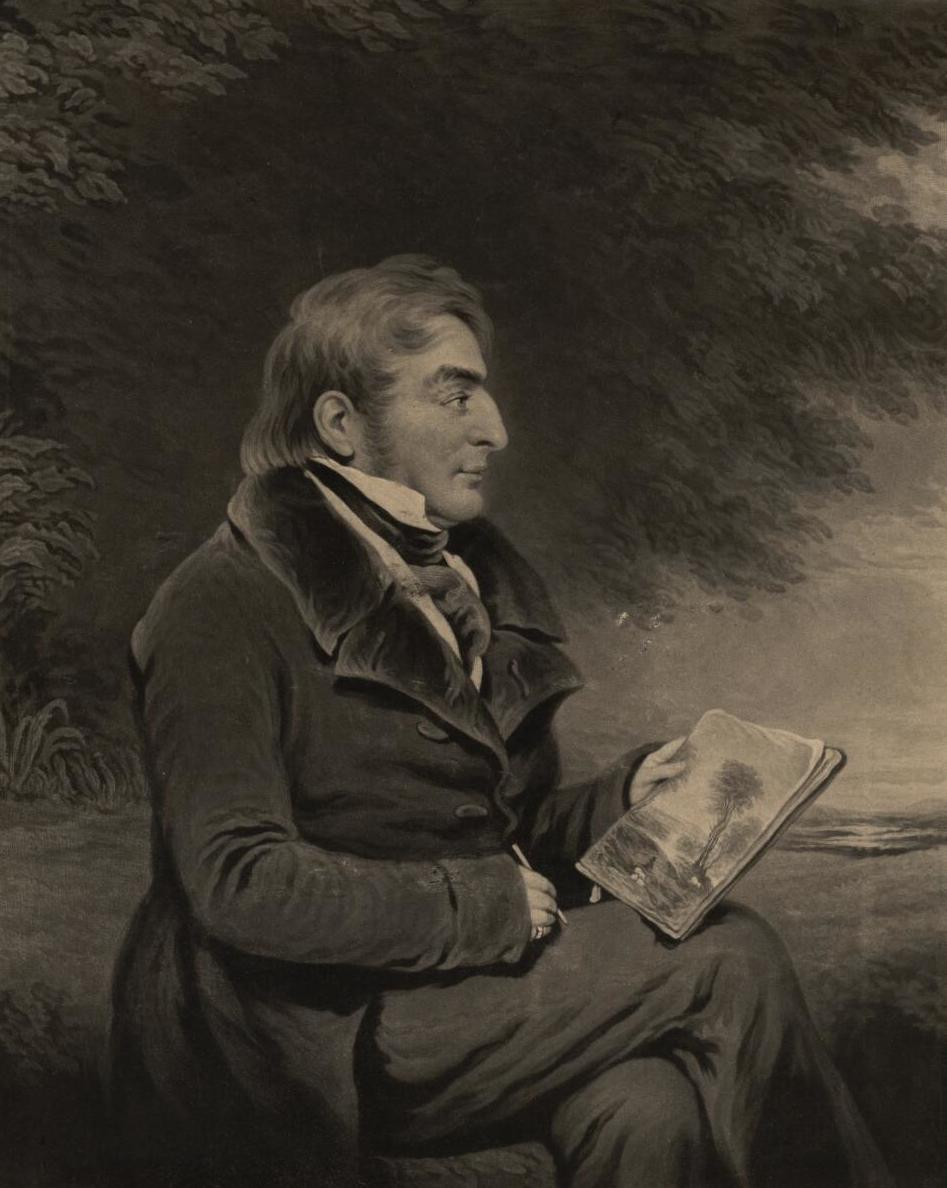
Charles Turner, mezzotint, about 1840, National Library of Wales, Welsh Portrait Collection (Public Domain Mark) · Mezzotint print by Charles Turner (engraver, 1774-1857), published about 1840 by Day and Haghe, titled 'J. M. W. Turner, R.A. making his sketch for the celebrated picture of Mercury and Argus'; National Library of Wales, Welsh Portrait Collection (handle 10107/4674619); file as hosted on Wikimedia Commons · Public domain (engraver died 1857; print published about 1840; the National Library of Wales marks the digitised item with the Public Domain Mark 1.0)
화가 · 19세기
J. M. W. 터너
1775–1851
주요 업적 분야
아직 성격 매칭에 포함되지 않았습니다 — 기록된 근거가 성격 모델 전체를 다루기에는 충분하지 않습니다. 이 페이지의 다른 모든 내용은 자유롭게 확인하실 수 있습니다.
핵심 특성
주요 업적
터너는 1839년 왕립미술원 전시에 〈전함 테메레르〉를 내놓았다. 트라팔가르 해전에 참전한 늙은 군함이 증기 예인선에 끌려 템스강을 거슬러 올라가 해체장으로 가는 모습을 그린 작품이다. 내셔널 갤러리는 그가 예인 장면을 직접 본 것이 아니라 보도를 토대로 그렸고, 효과를 위해 돛 장비와 도장을 자유롭게 바꾸었다고 설명한다. 1840년에는 자신의 미발표 시에서 따온 구절과 함께 〈노예선〉을 '죽어 가는 이와 죽은 이를 바다에 던지는 노예선'이라는 제목으로 전시했으며, 이 그림은 훗날 러스킨의 소유가 되었다가 보스턴으로 건너갔다. 1844년에는 대서부 철도의 열차가 브루넬이 설계한 메이든헤드 다리를 비 속에서 건너는 〈비, 증기, 속도〉를 그렸고, 이 작품도 지금 내셔널 갤러리에 있다.
터너는 1807년부터 풍경 메조틴트 연작 〈리베르 스투디오룸〉을 다섯 점씩 묶은 분책으로 펴냈다. 작품은 역사, 목가, 우아한 목가, 산악, 해양, 건축의 여섯 부문으로 나뉘었다. 해머턴은 이 작품을 터너와 클로드 로랭 가운데 누가 낫냐는 판단을 대중에게 직접 구한 것이라고 평하는데, 이름도 클로드의 사적인 화집 〈리베르 베리타티스〉를 따랐다. 터너는 이 연작을 직접 출판했고 일부 판은 스스로 에칭과 판각을 했으며, 다른 판각가들은 그의 교정을 받으며 작업했다. 연작은 제14분책에서 멈췄고 표제 그림을 포함해 모두 71점이었으며 수지가 맞지 않았다.
터너는 1831년의 유언장과 이후의 추가 유언으로 완성작들을 조건부로 내셔널 갤러리에 남겼다. 조건에는 두 점을 클로드의 그림 두 점 사이에 걸 것과 터너 갤러리를 지을 것이 있었고, 그의 자금 대부분은 노쇠한 남성 화가를 위한 자선 기관에 쓰이도록 되어 있었다. 1851년 그가 세상을 떠난 뒤 내셔널 갤러리는 그림 324점과 방대한 소묘를 넘겨받았고, 조건을 둘러싸고 의회와 대법관 법원에서 논란이 벌어졌다. 러스킨은 1857~58년에 소묘를 정리하면서 상자 열일곱 개에서 1만 9천 장이 넘는 종이를 발견했는데 상당수가 손상되어 있었고, 그중 1,757점을 중요한 습작으로 목록에 올렸다.
터너는 유화와 함께 판화로 제작될 지형 풍경 시리즈를 위한 수채화 원화를 대량으로 그렸다. 테이트 도록에 따르면 『터너의 연례 여행(Turner's Annual Tour)』을 위해 1832~33년에 푸른 종이에 구아슈로 약 마흔 점의 원화를 판화 제작용으로 그렸으며, 이 작품들은 찰스 히스(Charles Heath)가 1834년과 1835년에 두 권으로 출간했고 이후 『프랑스의 강들(The Rivers of France)』로 묶였다.
삶의 장면들
1832년 왕립미술원의 바니시 데이에 컨스터블은 터너의 회색 바다 그림 옆에 걸린 〈워털루 다리 개통식〉의 바지선에 밝은 붉은색을 더하고 있었다. 터너가 방을 막 나갈 때 들어온 C. R. 레슬리에 따르면 터너는 자기 바다에 둥근 연단 붉은색 얼룩을 찍어 놓았고, 컨스터블은 '그가 다녀갔어, 총을 쏘고 갔군'이라고 말했다. 터너는 하루 반 동안 나타나지 않다가 마지막 그림 작업 시간에 그 붉은 자국에 유약을 입혀 부표 모양으로 다듬었다.
경쟁자의 색에 붓질 하나로 답하고 그것을 다시 그림 안에 어울리게 다듬은 일은 경쟁심과 부합한다. 레슬리는 현장을 본 사람으로서 사건을 전할 뿐 터너의 동기는 밝히지 않는다. 경쟁 성향
터너의 만년에 뉴욕의 제임스 레녹스는 터너의 작품을 판화로만 알았는데, 레슬리에게 그림 한 점을 대신 구해 달라고 부탁했다. 터너는 〈테메레르〉에 대한 낮은 제안은 거절했지만 레녹스에게는 500파운드에 스태파섬의 석양 그림을 내주었다. 그림이 도착하자 레녹스는 '흐릿하다'고 실망했다. 레슬리가 이를 전하자 터너는 '흐릿한 것은 내 결점이오'라고 답했다. 레녹스는 나중에 다시 보니 그림이 대단히 마음에 든다고 편지했다.
구매자가 지적한 특징을 누그러뜨리지 않고 자기 결점이라고 인정해 답한 일은 독립적 사고와 부합한다. 이 이야기는 중개인이던 친구 레슬리의 서술이다. 독립적 사고
전환점
1807년 터너는 유화를 찾는 구매자가 적고 유행하는 취향이 클로드를 따르던 때 클로드의 〈리베르 베리타티스〉에 맞서는 마음으로 〈리베르 스투디오룸〉을 시작했다. 소묘 교사 웰스에 따르면 그는 일이 별로 없을 때 이 일에 손을 댔다. 초기 판은 판각가 찰스 터너에게 한 점당 8기니를 주고 맡겼는데, 조건과 수정을 두고 다투다가 두 사람은 19년 동안 말을 하지 않았다. 연작은 제14분책에서 멈췄다.
일이 한가한 시기를 구매자를 기다리는 대신 대중을 향한 자비 출판 연작으로 바꾼 일은 주도적 행동과 부합한다. 다만 사업은 고르지 않게 운영되었고 기획은 끝내 완결되지 못했다. 선제적 행동력
비슷한 인물
전체적인 프로필이 이 사람과 닮은 사람들이에요.
출처
- J. M. W. Turner (Q159758) -- verified live via wbgetentities (2026-10-08): en label 'J. M. W. Turner', description 'English painter and draftsman (c.1775-1851)', P569 23 Apr 1775, P570 19 Dec 1851, instance of human, ko label present, P18 'Joseph Mallord William Turner auto-retrato.jpg'. Orientation only; not used as support for any row.
- Walter Thornbury, The Life of J. M. W. Turner, R.A., founded on letters and papers furnished by his friends and fellow academicians, vol. 1 (London: Hurst and Blackett, 1862), Internet Archive full text (lifeofjmwturnerr01thor) -- COMPILED MEMORIAL BIOGRAPHY by a literary journalist, admiring, built from the recollections of Turner's friends (the drawing-master Wells, the Rev. Henry Trimmer, George Jones and others) plus quotations from Ruskin; it carries some date errors (for example it places Rain, Steam and Speed in 1832) and is used here only for dated or attributed items cross-checked elsewhere. Read locally: the Liber Studiorum chapter (Wells's account of the project and the engraver dispute), the account of Turner's art life, the walking-tour passages, the chapter on his sketchbooks, and the passages on the Temeraire and on his reluctance to sell.
- Walter Thornbury, The Life of J. M. W. Turner, R.A., vol. 2 (London: Hurst and Blackett, 1862), Internet Archive full text (lifeofjmwturnerr02thor) -- continuation of the compiled memorial biography; includes a condensed reading of Turner's will and codicils copied from the probate registry, the House of Lords and Chancery proceedings about the bequest, Ruskin's own account of sorting the drawings (1857-58), George Jones's testimony about Turner's plans for a charity, and a recollection of Turner's Royal Academy council behaviour. Read locally: the chapters on the will and the bequest, the Ruskin chapter, the Academy-life and lecture passages, and the Constable/varnishing-day passages.
- Philip Gilbert Hamerton, The Life of J. M. W. Turner, R.A. (London: Seeley, Jackson and Halliday, 1879), Internet Archive full text (lifeofjmwturnerr01hame) -- INDEPENDENT critical biography by an art writer who knew none of the original circle; sympathetic to the art but openly critical of Turner's business conduct and, on the Liber Studiorum, of his handling of engravers and printsellers. Read locally: the Liber Studiorum chapter in full (the Claude rivalry, Turner as his own publisher, prices, the Burlington Fine Arts Club catalogue of 1872, Turner's marginal notes on engravers' proofs).
- Charles Robert Leslie, Autobiographical Recollections, ed. Tom Taylor (London: John Murray, 1860), Internet Archive full text (autobiographical00lesluoft), chapter on Turner -- EYEWITNESS memoir by a fellow Royal Academician and friend of Constable, written without hostility; Leslie says he came into the room at the Academy in 1832 just as Turner left Constable's picture, describes Turner on varnishing days, and reports Turner's exchange with him over an American order (1840s). Read locally: the Turner chapter in full.
- John Constable, letters in C. R. Leslie, Memoirs of the Life of John Constable, composed chiefly of his letters (London: Longman, 1845), Internet Archive full text (memoirsoflifeofj00lesluoft) -- primary letters of Turner's chief rival and critic, 1813-1830s (OCR uses the long s, so searched by hand); Constable praises Turner's range of mind and his 'golden visions' while remaining a partisan of his own manner. Read locally: the passages mentioning Turner (1813 dinner, 1826 Academy exhibition, letters on Petworth and the 1830s exhibitions).
- George Jones, Sir Francis Chantrey, R.A.: Recollections of his Life, Practice and Opinions (London: Moxon, 1849), Internet Archive full text (sirfrancischantr00joneiala) -- friend's memoir by a fellow Academician who knew both men; the passages on Turner (Petworth, Academy council 1828 and 1837, his conduct over the hanging of a Lawrence portrait) are firsthand or close to it, and Jones's testimony on Turner's charity is quoted at length by Thornbury. Read locally: the Turner passages.
- John Ruskin, Notes on the Turner Gallery at Marlborough House, 1856-7 (London: Smith, Elder, 1857), Internet Archive full text (notesonturnergal00rusk) -- PARTISAN catalogue notes by Turner's chief champion and the cataloguer of the drawings after his death; valuable for dating pictures and for Ruskin's own observations of Turner's habits of work, but openly enthusiastic. Read locally: the opening remarks, the notes on the Ulysses, Temeraire and later pictures, and the division of Turner's career into periods.
- National Gallery, London, painting page for J. M. W. Turner, 'The Fighting Temeraire' (1839), Overview and In-depth text -- institutional curatorial text (read in full): the ship's last tow to the breaker, Turner's reliance on reports rather than eyewitness observation, his liberties with the facts, and the first showing at the Royal Academy in 1839.
- National Gallery, London, painting page for J. M. W. Turner, 'Rain, Steam, and Speed - The Great Western Railway' (1844), Overview and In-depth text -- institutional curatorial text (read in full): the Maidenhead Viaduct and Brunel's bridge, the hare, Turner's habit of using new forms of transport, and the 1840s railway setting.
- Tate, J.M.W. Turner: Sketchbooks, Drawings and Watercolours (catalogue entry, Wanderings by the Seine watercolours for Turner's Annual Tour; read as a one-page summary of the engraved-series watercolours)