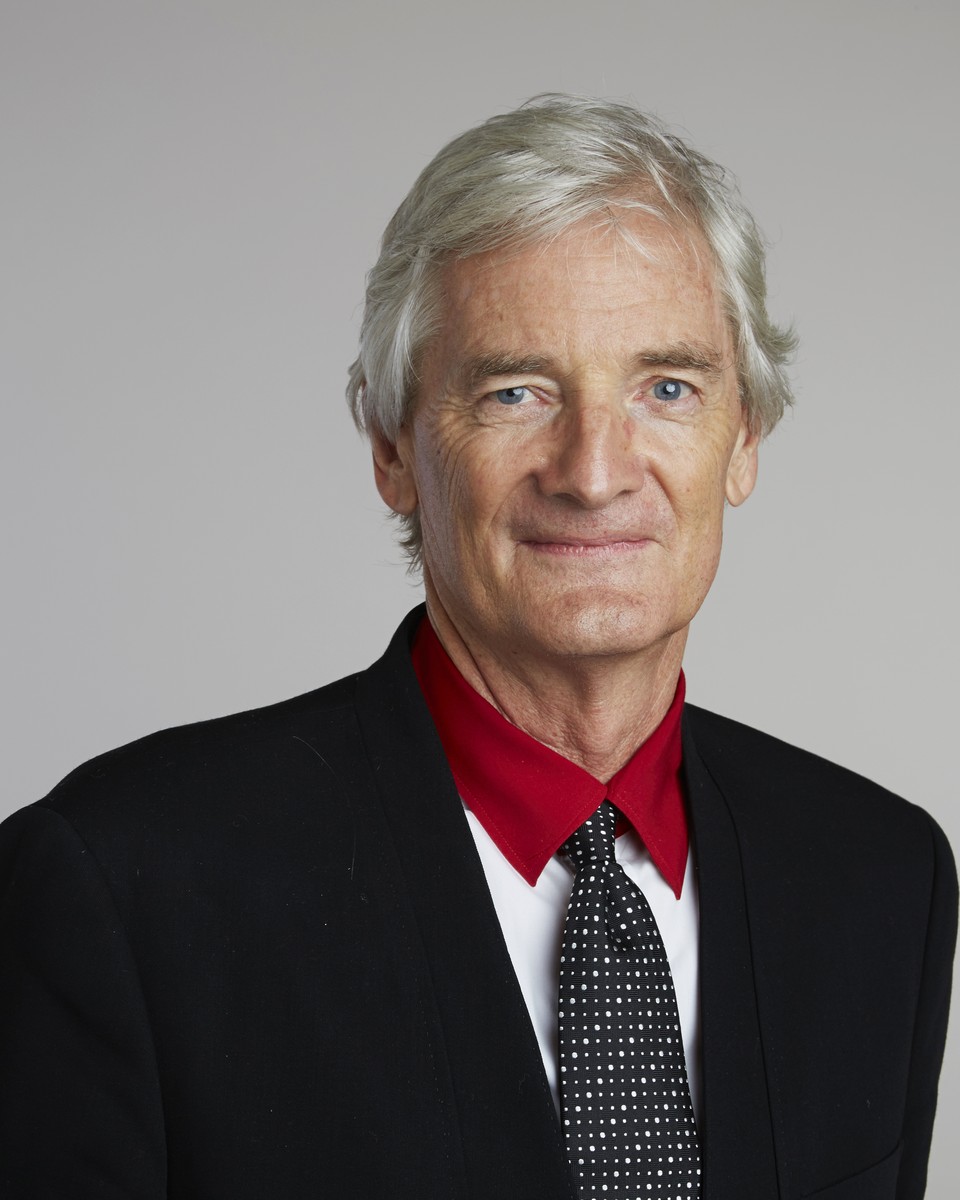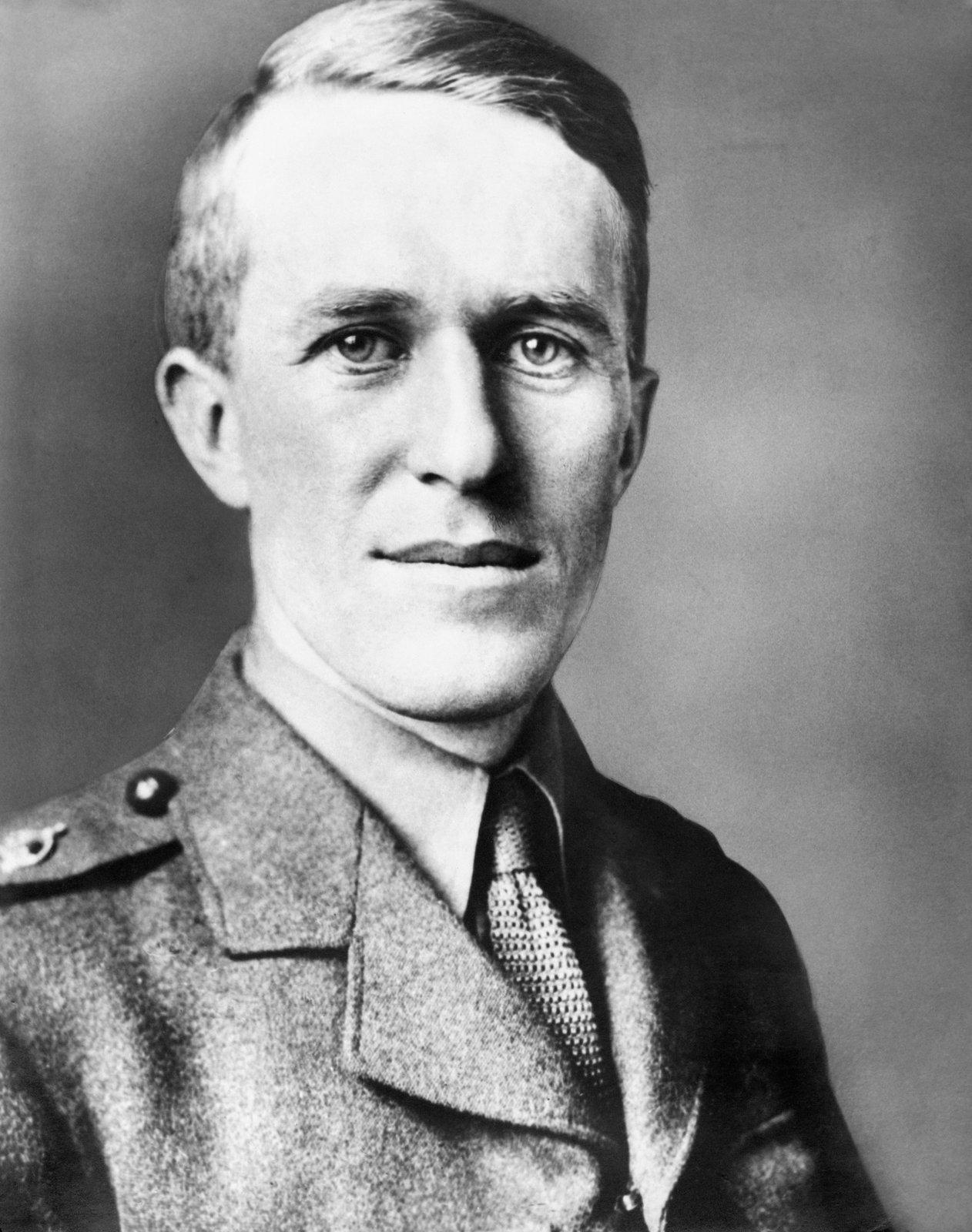

Photo: Debbie Rowe for the Royal Society, 10 July 2015, CC BY-SA 3.0, cropped and downscaled from the original · Wikimedia Commons, 'Sir James Dyson CBE FREng FRS.jpg' -- studio photograph by Debbie Rowe (named as creator on the Royal Society Picture Library record 'Portrait of James Dyson', image RS.18523) taken at the Royal Society's Admissions Day ceremony in July 2015 (EXIF Canon EOS 5D Mark III, 10 July 2015), uploaded to Commons by the Royal Society's uploader account under a VRTS permission ticket (2014062710019796); the Commons page (a featured picture) offers CC BY-SA 4.0 and CC BY-SA 3.0 and the Royal Society's own library record credits CC BY-SA 3.0 with no conflicting restriction, and the file's embedded metadata carries no conflicting copyright notice; original 3724 x 5586 pixels, cropped to a 3100 x 3875 head-and-shoulders area and downscaled once to 960 x 1200 (never upscaled). · CC BY-SA 3.0
발명가 · 현대
제임스 다이슨
b. 1947
주요 업적 분야
아직 성격 매칭에 포함되지 않았습니다 — 기록된 근거가 성격 모델 전체를 다루기에는 충분하지 않습니다. 이 페이지의 다른 모든 내용은 자유롭게 확인하실 수 있습니다.
핵심 특성
주요 업적
1978년 제재소에서 쓰던 사이클론 집진 장치를 가정용 청소기에 응용한 그는 약 5년 동안 5,000개가 넘는 시제품을 시험했다고 브리태니커는 전한다. 기존 제조사들이 관심을 보이지 않자 일본에 설계를 팔아 'G-포스'로 출시했고, 디자인 박물관에 따르면 그 성공이 자체 DC01 생산 자금이 되었다. 1993년부터 윌트셔에서 만든 DC01은 더 비싼 가격에도 2년 안에 영국 판매 1위 청소기가 되었다고 브리태니커는 기록한다.
그는 청소기에 그치지 않고 회사를 키웠다. 브리태니커는 2009년의 날개 없는 선풍기 '에어 멀티플라이어'를 기록하고, 옵서버 인터뷰는 이 회사의 핸드 드라이어 '에어블레이드'를 소개한다. 가디언은 2005년 다이슨이 미국 시장에 진출한 지 약 2년 만에 미국에서 가장 인기 있는 청소기가 되었다고 보도했는데, 이는 회사가 발표한 내용이다. 쿠퍼 휴잇 박물관은 DC07의 미국 출시를 2002년으로 기록한다.
왕립산업디자이너(RDI)는 그를 2005년 엔지니어링 디자인 분야 회원으로 올렸고, 2015년 그를 석학회원으로 선출한 영국 왕립학회는 그가 특허 1,138건을 보유하고 영국 대학의 연구 프로젝트 50건을 지원한다고 밝힌다. 그의 G-포스, DC01, DC07 청소기는 디자인 박물관, 과학박물관 그룹, 쿠퍼 휴잇 박물관이 소장하고 있다.
삶의 장면들
다이슨 팀이 투명 먼지통이 달린 청소기를 팔기 시작하자 소매업체들은 질색하며 사람들이 먼지를 보고 싶어 하지 않을 것이라고 했고, 시장조사도 같은 결과를 보였다. 다이슨은 사람들이 살 것이라고 증명할 수 없었지만 디자인을 지켰다고 말한다. 디자인 총괄 피터 가맥은 동료들이 이 발상을 불편해했지만 '그가 뜻을 굽히지 않았다'고 전하며, 다이슨은 이제 다른 제조사들도 투명 먼지통을 쓴다고 덧붙인다.
시장조사보다 자신의 판단을 믿는 디자이너의 모습과 일치하지만, 두 기록 모두 다이슨과 그의 디자인 총괄에게서 나왔고 제품이 성공한 뒤에 전해진 것이다. 독립적 사고
2019년 10월 10일 다이슨은 직원들에게 보낸 이메일에서 팀이 '환상적인 자동차'를 만들었지만 '상업적으로 성립시킬 방법을 더는 찾을 수 없다'고 밝혔다. 그는 사업부를 팔려 했으나 인수자를 찾지 못했고 이것이 '제품의 실패도, 팀의 실패도 아니다'라고 말했으며, 회사는 관련 직원 523명(영국 498명) 대부분의 다른 일자리를 찾아 주겠다고 했다. 한 경영대학원 교수는 가디언에 이 사업이 애초에 수지가 맞지 않았고 허영 프로젝트처럼 보였다고 말했다.
프로젝트의 수지가 맞지 않을 때 대규모 사업을 접는 창업자의 모습과 일치하지만, 이 결정은 그가 자동차를 포함한 25억 파운드 투자 계획을 확정한 뒤에 나왔고 외부 비평가는 이를 허영 프로젝트로 보았다. 입장 수정 성향
전환점
영국에서 무봉투 청소기 설계를 후원해 줄 곳도, 관심을 보이는 기존 제조사도 찾지 못한 다이슨은 일본에 설계를 라이선스했고, G-포스는 1986년 판매에 들어가 디자인 박물관의 설명대로 자신의 DC01 생산 자금을 댈 만큼 성공했다. 그는 1993년 노스 윌트셔에 자체 공장을 열었고, 브리태니커에 따르면 듀얼 사이클론은 2년 안에 영국 판매 1위 청소기가 되었다.
기존 경로가 막히자 스스로 시장에 가는 길을 만든 사람의 모습과 일치하지만, 앞선 거절에 관한 세부 내용 대부분은 그 자신의 설명에서 나온 것이다. 선제적 행동력
비슷한 인물
전체적인 프로필이 이 사람과 닮은 사람들이에요.
출처
- James Dyson (Q1346101) -- verified live via the Wikidata API (2026-10-16): English label 'James Dyson', description 'British inventor, industrial designer and founder of the Dyson company (born 1947)', born 2 May 1947, no date of death, citizenship United Kingdom, Korean label present. Orientation only; not used as support for any row.
- Encyclopaedia Britannica (Britannica Money), 'James Dyson', by the Editors -- encyclopedia biography: the Royal College of Art, the Sea Truck landing craft for Rotork (1970), the Ballbarrow company (1974), the 1978 idea of adapting the cyclone collectors of industrial plants such as sawmills to a household cleaner, five years and more than 5,000 prototypes, the established makers' lack of interest, the G-Force sold in Japan, the 1993 plant in North Wiltshire and the Dual Cyclone becoming Britain's top-selling vacuum cleaner within two years despite its price, the 2009 Air Multiplier bladeless fan, and his campaigning for engineering. CANONICAL SIGNIFICANCE SOURCE (a reference work's overview of his contribution). Independent, though it follows his own account in places; its CBE year (1998) conflicts with the Royal Society and Royal Designers for Industry (1996), so no honours date is taken from it, and its passages on policy reports are not used. Read in full.
- The Royal Society, 'Sir James Dyson CBE FREng FRS' Fellow profile (elected 2015) -- the Society's statement that he is a renowned inventor, entrepreneur, philanthropist and supporter of science and engineering who holds 1,138 patents, funds 50 research projects at UK universities and conducts further R&D at his own facility, with subject groups in engineering and materials science. CANONICAL SIGNIFICANCE SOURCE (second; the Society's own statement of why he was elected). Institutional; the patent and funding figures were supplied at election and are not independently checked, and the word 'outspoken advocate' is not used for scoring. Read in full.
- Royal Designers for Industry (the Royal Society of Arts faculty of distinguished designers), profile of James Dyson, Engineering Design, 2005 -- the faculty's entry and biography: founder of Dyson, six thousand engineers and scientists, technology sold in 83 markets, works listed (DC01 1993, V11 Animal 2019, Supersonic hair dryer 2019), honours and charitable giving. Institutional listing with company-supplied figures, used for the recognition card only and never for scoring. Read in full.
- Design Museum (London), 'Dyson G-Force' object page (Adopt an Object) -- the museum's note that, unable to find support for his invention in the UK, Dyson licensed his first design for a bagless vacuum cleaner in Japan, and that the G-Force's form, colours and cyclone feature were a success that funded his production of the DC01. Short institutional statement. Read in full.
- Cooper Hewitt, Smithsonian Design Museum blog, 'James Dyson: Designing Out Annoyances' by Rebecca McNamara (first posted 1 May 2013, reposted 17 May 2018) -- curator's note on the DC07: his habit of treating the shortcomings of appliances as opportunities, the DC01's development through more than five thousand prototypes with one aspect changed at a time, the adaptation of industrial cyclone technology to the home, and the 2002 US launch of the DC07. Institutional blog that partly relies on his autobiography. Read in full.
- James Dyson Foundation, 'Our Story' page -- the account published by the Dyson-supported charity: the 1978 sawmill idea and rough cardboard prototype, five years and 5,127 prototypes to the DC01, the company's growth into a global technology enterprise, and the Foundation's founding in 2002. Self-published by a Dyson-funded charity, so used only for orientation and as the origin of the prototype count, and its 'world's first bagless vacuum cleaner' wording is not used. Read in full.
- Gary Younge, 'Gold dust', The Guardian (G2), 28 February 2005 -- profile written in New York after the company's American success: his critical eye for design flaws (even in a hotel suite), the origin of the cyclone idea at a sawmill, the US launch and retailers' initial reluctance, his remark comparing his success with the Beatles and the writer's view that it was boastful, his 2004 resignation as chairman of the Design Museum over style versus substance, and the 2002 move of production to Malaysia with 800 redundancies and his account of it. Independent profile with a critical edge; its passages on wealth, dividends, taxation, the euro and litigation were read and are not used as evidence. Read in full.
- Lucy Siegle, 'James Dyson: Reinventing Britain', The Observer, 1 May 2011 (online 30 April) -- interview at the Malmesbury headquarters: his statement that he made 5,126 failed prototypes before number 5,127, the failed Contrarotator washing machine kept in his office, his refusal to design down to a cost and his dismissal of brands, the first business 'betrayal' over the Ballbarrow, the interviewer pressing him on the 2002 move abroad and his distinction between assembly and manufacturing, and his admission that he could not do three-quarters of the work in the building. Independent interview with named challenge; its passages on copying, universities and policy were read and are not used. Read in full.
- Carole Cadwalladr, 'James Dyson interview: Vacuums are already smarter than people', The Guardian/Observer, 9 May 2014 -- interview: his remark that rejection by the big manufacturers revealed an opportunity, his preference for learning from failure, the clear-bin decision made against retailers' objections and market research, his reasons for keeping Dyson private and doubling research spending every two years, and the company's robotics work. Independent interviewer; much of the content is Dyson's own account, and the passages on education policy, immigration and wealth are not used. Read in full.
- Rob Davies, 'James Dyson scraps plans to build electric car', The Guardian, 10 October 2019 -- news report on his email to staff that the electric-car project could not be made commercially viable, his statement that he had tried to sell the division and found no buyer and that it was not a product failure or a failure of the team, the 523 staff affected, and a business-school professor's comment that it never stacked up and looked like a vanity project. Independent report with an outside critic; the references to Brexit and the choice of Singapore for the factory are not used. Read in full.
- Faisal Islam, 'Britain no longer wants to make it', The Observer, 24 August 2003 -- report on the move of the contra-rotating washing machine's production to Malaysia a year after the vacuum cleaners', with 65 further UK jobs lost on top of 800 and his reasoning that it would protect more than 1,200 design, research and engineering jobs, set inside a discussion of manufacturing policy. Independent reporting; its policy and statistics sections are not used. Read in full.
- Patty Onderko, 'James Dyson: The Ever-Tinkering Engineer', SUCCESS, November 2013 (page later updated) -- magazine profile: the 1978 insight and cardboard-and-duct-tape cyclone, fifteen years of rejections, lawsuits and near-bankruptcy, the G-Force in Japan in 1986 and the DC01 in 1993, his rule that engineers build and test their own prototypes while he spends his days breaking them, former design manager Marcus Hartley on his charisma and approachability, his refusal to sell the technology or go public, and his description of the 2002 move abroad as painful but recommended by his chief executive. Independent but largely favourable; the passage on his wife and household is not used. Read in full.
- James Dyson and Peter Gammack, 'How we made the Dyson vacuum cleaner', The Guardian, 24 May 2016 -- first-person account by Dyson and his director of design: the Hoover Junior's clogging bag, the sawmill cyclone and cardboard prototype, fifteen years and about 5,000 prototypes, the Japanese G-Force deal, the clear bin that colleagues hesitated over, the DC02 built in two years, and the investment in the company's own motors. Self plus an employee's account, so used only as one voice and never as sole support; its '22 months later' timing of the DC01 is not used. Read in full.
- Nina Zipkin, 'James Dyson: Never Be Afraid to Fail', Entrepreneur.com via NBC News, 12 June 2014 -- short interview: the 5,127-prototype count, unreleased inventions such as the 2001 Halo headset, and Dyson's own account of an early licensing deal whose terms changed, the manufacturer making the product without him and the fraud suit he had to fight to recover his drawings. Almost entirely Dyson's own account (self), used only to corroborate other sources and never alone. Read in full.
- Wikimedia Commons file 'Sir James Dyson CBE FREng FRS.jpg' and the Royal Society Picture Library record for 'Portrait of James Dyson' (creator Debbie Rowe, taken at the Society's Admissions Day ceremony in July 2015) -- opened to check the portrait's licence: the Commons page shows a Royal Society release under CC BY-SA 4.0 and CC BY-SA 3.0 with a VRTS permission ticket, and the Library record credits CC BY-SA 3.0. Not used for any scoring.
- Science Museum Group Collection, 'Dyson DC01 dual cyclone vacuum cleaner' (object 1996-160) -- catalogue record of a 1995 DC01 modified to show the vortex effect, made by Dyson Appliances Limited at Chippenham and linked to James Dyson as related person. A bare catalogue record with no interpretive text, used only to show that the museum holds the object. Read in full.