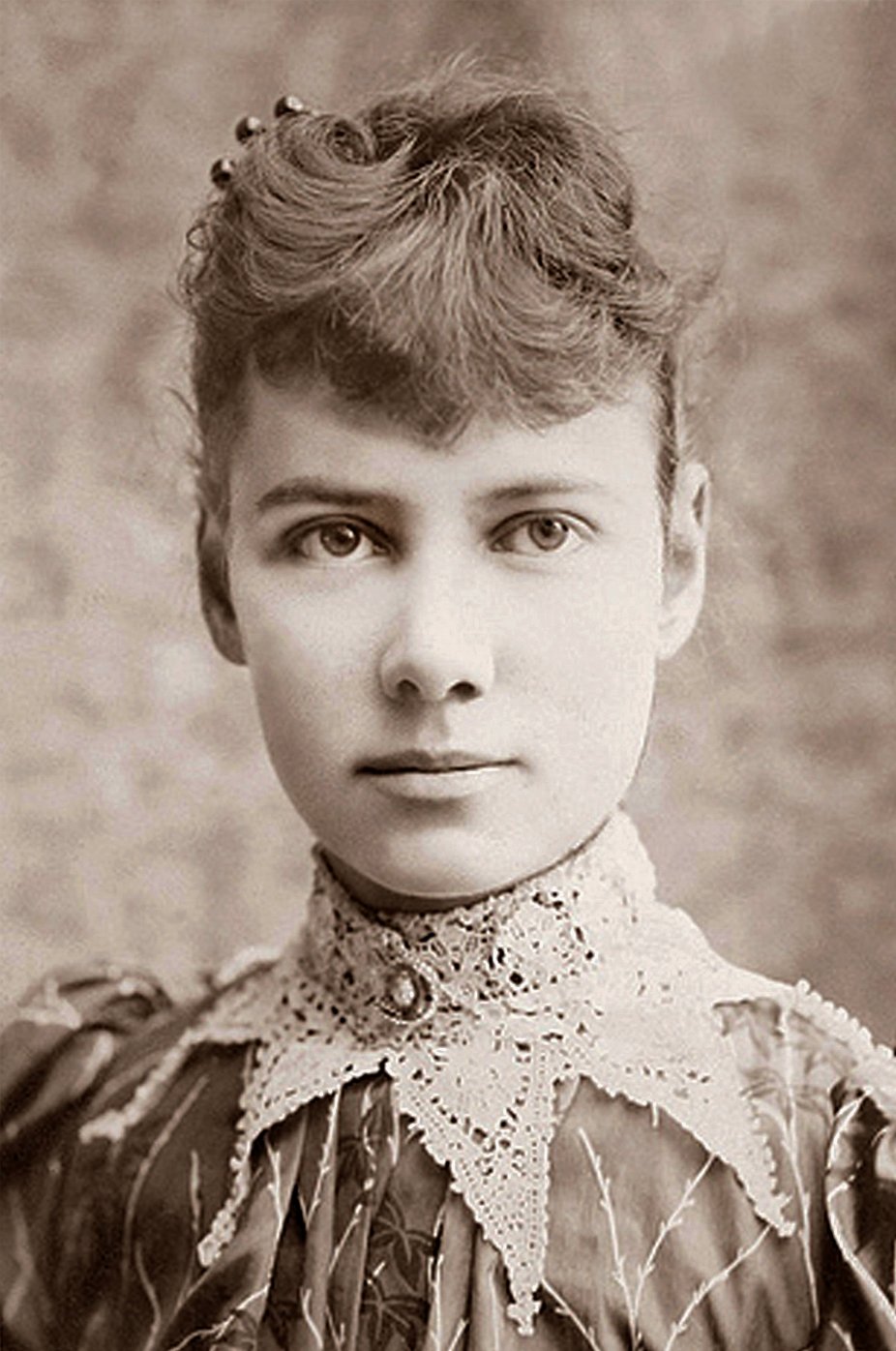
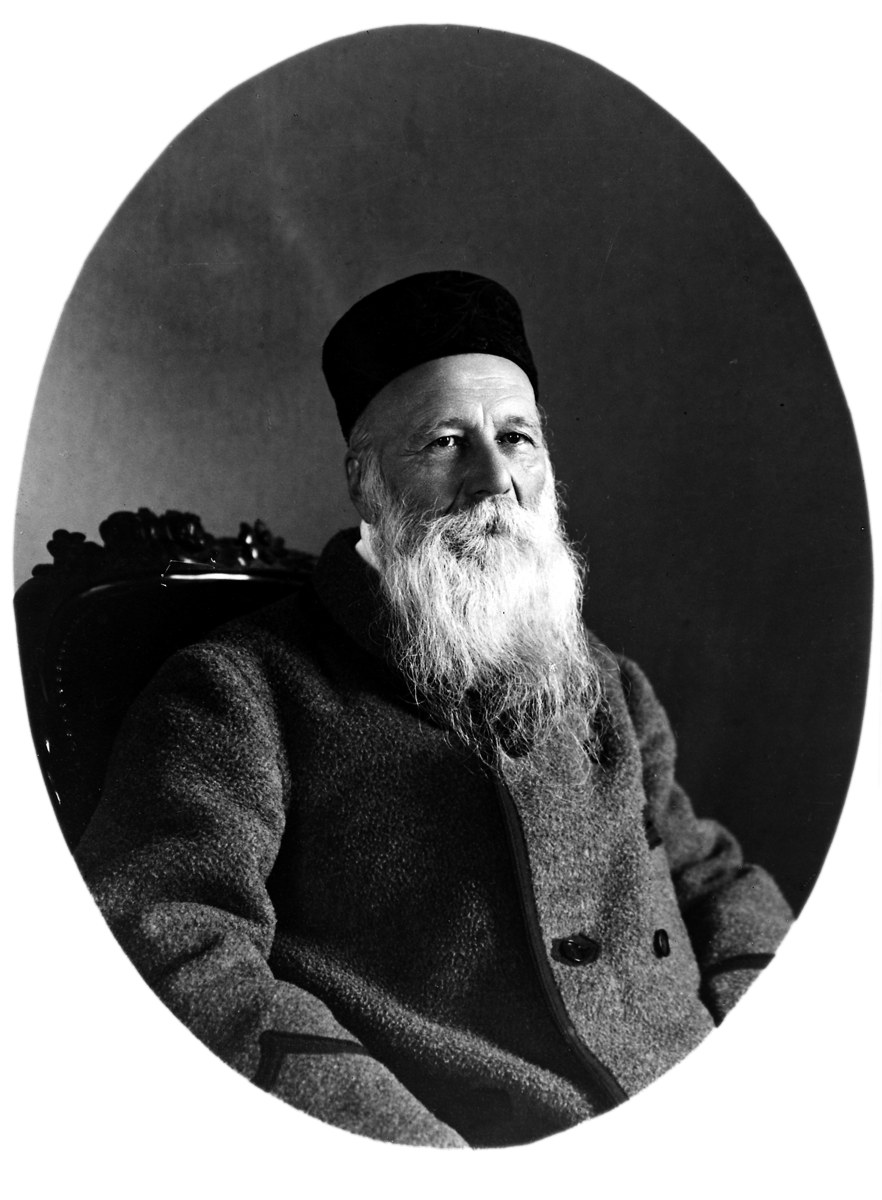

Photo: Otto Rietmann, St. Gallen, before 1896 (Wellcome Collection, Public Domain Mark) · Wellcome Collection M0017054 (glass-plate negative, 12 x 16.5 cm; Wellcome's own work page shows the Public Domain Mark), opened via Wikimedia Commons 'Henry Dunant. Photograph. Wellcome M0017054.jpg'. The same portrait was printed in Die Gartenlaube 1896, p. 675, in Max Wauer's article, with the caption 'Nach einer Aufnahme von Otto Rietmann in St. Gallen' (verified by viewing both images), so it is a lifetime photograph by Otto Rietmann (Swiss photographer, 1856-1942) published in 1896: public domain by age (published before 1931; photographer dead more than 70 years). Wellcome's page itself gives no creator or date; the attribution rests on the match with the 1896 print. The Commons file page still carries an older CC-BY-4.0 tag, which is superseded by Wellcome's Public Domain Mark and is less restrictive in any case. Original file 2953 x 4017 (oval print on white); saved downscaled only to 882 x 1200, not cropped. · Public Domain
사업가 · 19세기
앙리 뒤낭
1828–1910
주요 업적 분야
아직 성격 매칭에 포함되지 않았습니다 — 기록된 근거가 성격 모델 전체를 다루기에는 충분하지 않습니다. 이 페이지의 다른 모든 내용은 자유롭게 확인하실 수 있습니다.
핵심 특성
주요 업적
1859년 솔페리노 전투를 직접 목격하고 양쪽 부상병을 돌보았으며, '솔페리노의 기억'(1862)에서 모든 나라에 자원 구호 단체를 두고 전쟁 부상자를 보호하는 국제 협약을 맺자고 제안했다.
1863년 제네바에서 발족해 오늘날 국제적십자위원회가 된 5인 위원회의 창립자 다섯 명 중 한 명으로, 1863년 국가별 구호 단체 회의를 열고 1864년 최초의 제네바 협약이 채택되는 데 기여했다.
1867년 파산해 제네바를 떠난 지 수십 년 뒤인 1901년, 프레데리크 파시와 함께 최초의 노벨 평화상을 공동 수상했다.
삶의 장면들
솔페리노 전투 뒤 카스틸리오네에서 의료 직책이 없던 그는 사흘 동안 부상병을 돌보고, 마부를 브레시아로 보내 붕대와 물자를 사 오게 했으며, 대부분 여성이던 자원봉사자들을 모아 모든 부상병을 똑같이 돌보게 했다.
이는 주어진 수단으로 실질적인 구호를 즉석에서 꾸려 낸 모습과 부합한다. 자원 활용 성향
1863년 9월 뒤낭은 동료들과 상의하지 않고 베를린에서 제네바 위원회 명의로 의료 중립 문제까지 의제를 넓힌 새 회람장을 인쇄했고, 모이니에는 불가능한 것을 요구한다고 생각했다고 말했다.
이는 동료들과의 합의보다 자신의 우선순위를 앞세워 밀어붙이는 면과 부합한다. 협업 성향
전환점
1859년 6월 알제리 제분 사업의 물 사용권을 얻으려 나폴레옹 3세를 찾아 나선 사업가 뒤낭은 솔페리노에 도착해 오히려 며칠 동안 부상병을 돌보았고, 이후 적십자로 이어진 책을 썼다.
이는 필요를 직접 본 뒤 자신의 에너지와 자원을 사업에서 구호 활동으로 돌린 모습과 부합한다. 영향 창출 동기
비슷한 인물
전체적인 프로필이 이 사람과 닮은 사람들이에요.
출처
- Henry Dunant (Q12091) -- verified live via the Wikidata API (2026-10-24): English label 'Henry Dunant', description 'Swiss businessman and co-founder of the Red Cross (1828-1910)', Korean label '앙리 뒤낭', born 1828-05-08, died 1910-10-30, P18 'Jean Henri Dunant.jpg' and 'Henry Dunant-young.jpg' (both rejected for portrait use, see the portrait record). Orientation only; not used as support for any row.
- Encyclopaedia Britannica, 'Henri Dunant' (britannica.com; the live site was read through an Internet Archive copy, full short article): Swiss humanitarian, founder of the Red Cross and of the World Alliance of Young Men's Christian Associations, cowinner with Frederic Passy of the first Nobel Peace Prize in 1901; eyewitness of the Battle of Solferino (24 June 1859) where he organised emergency aid for Austrian and French wounded; in Un Souvenir de Solferino (1862) he proposed voluntary relief societies in all countries 'without distinction of race or creed' and an international agreement covering the war wounded; founded the International Committee for the Relief of the Wounded in 1863, with the first national societies and the first Geneva Convention in 1864; bankruptcy and departure from Geneva in 1867, 'because he neglected his business affairs'; later promotion of prisoners-of-war treatment, abolition of slavery, arbitration and disarmament; 'rediscovered' by a journalist in Heiden in 1895. CANONICAL SIGNIFICANCE SOURCE.
- NobelPrize.org, 'Henry Dunant - Biographical' (Nobel Peace Prize 1901; a biography written at the time of the award), read in full: a life of contrasts, 'passionate humanitarianism was the one constant'; YMCA work and business apprenticeship in Sétif; the 'daring financial scheme' of the Mons-Gémila Mills company in Algeria and his journey to Napoleon III's headquarters near Solferino to plead for water rights; the three themes of A Memory of Solferino including the plan for national relief societies; the February 1863 committee of five and the October 1863 conference (thirty-nine delegates from sixteen nations); the Geneva Convention signed on 22 August 1864 by twelve nations; his later schemes (a neutral colony in Palestine, an 'International and Universal Library', the 1872 conference on prisoners of war and arbitration); the 1867 bankruptcy (water rights not granted, company mismanaged in North Africa, his attention on humanitarian pursuits); his withdrawal from 1875, rediscovery and the prize; he spent none of the prize money and left bequests to local and philanthropic causes. Institutional and laudatory in tone; the 'bitter testament', the 'like a dog' burial and the account of his later life in poverty were not used for any row.
- International Committee of the Red Cross, 'Our history' (icrc.org/en/our-history), opening section read: in February 1863 what was to become the ICRC met for the first time in Geneva, and 'among its five founding members was a local man named Henry Dunant' whose 1862 book A Memory of Solferino called for better care of wounded soldiers; by the end of the year the committee had brought government representatives to agree to Dunant's proposal for national relief societies, and in August 1864 persuaded governments to adopt the original Geneva Convention; National Societies followed, the first in Wurttemberg in November 1863. Used to keep the card wording at 'co-founder'. The later sections on the ICRC's wars-era work were not used.
- Francois Bugnion, 'Birth of an idea: the founding of the International Committee of the Red Cross and of the International Red Cross and Red Crescent Movement: from Solferino to the original Geneva Convention (1859-1864)', International Review of the Red Cross, vol. 94 no. 888 (Winter 2012), ICRC historian and former ICRC director, based on archival documents (icrc.org PDF, read: the Solferino, book, Committee and Berlin sections and the conclusion, about 108,000 characters of text extracted, the later 1864 conference sections skimmed): Dunant was at Solferino pursuing his Algerian water-rights business; he spent three days and nights tending the wounded, sent his coachman to Brescia for supplies, mobilised volunteers, mostly women, urged them to treat all wounded alike and wrote to Geneva for relief funds; the account long rested on his own telling but four letters in the ICRC archives corroborate it; the book was followed by a 'cleverly orchestrated promotion campaign' and letters from sovereigns; in the Committee Dunant pressed alone for the legal protection of medical personnel (a 'first source of friction'); in September 1863 he had a new circular printed in Berlin on behalf of the Committee without consulting his colleagues, was told by Moynier 'We thought you were asking the impossible', then toured German capitals where 'his book opened every door'; he was the primary founder of the French Red Cross; the conclusion says neither idea would have come to anything without the help of the four fellow citizens. A scholarly institutional history with a critical edge on Dunant's methods.
- Stephen Kosnar, 'Humanitarian for all: The life of Henry Dunant', Hektoen International: A Journal of Medical Humanities (hekint.org, 29 January 2020), read in full: his Algerian company and the water-rights problem, his bold journey to find Napoleon III, tending the wounded at Castiglione and recruiting local women, the writing of A Memory of Solferino and the five-person committee, the neglected Algerian business and the 1867 bankruptcy of a Geneva bank on whose board he sat, his withdrawal from Geneva and later rediscovery, the Nobel statement credited to the committee. A medical-humanities magazine article compiled from the Nobel biography and Boissier; used only as a second, popular account of the Solferino episode and the bankruptcy. Its remarks on his religion, later poverty and burial were not used.
- Kirkus Reviews, review of Caroline Moorehead, 'Dunant's Dream: War, Switzerland and the History of the Red Cross' (kirkusreviews.com), read in full (two paragraphs): a history of the Red Cross from its inception to its present status, noting Dunant at Solferino at age 31 and the 1862 book, and describing Moorehead as the first researcher allowed to explore the ICRC archives and her account as 'both compassionate and critical'. Used only to show that an independent, archive-based history exists; the book was not opened, so no row relies on it.
- Wikimedia Commons file page 'Henry Dunant. Photograph. Wellcome M0017054.jpg' (wikitext and API record), Wellcome Collection work page yw7ea3rf, Commons file 'Die Gartenlaube (1896) 0675.jpg' and the German Wikisource transcription of Max Wauer, 'Henri Dunant, der Begrunder der Genfer Konvention', Die Gartenlaube 1896: the Wellcome glass-plate negative is the same portrait that Die Gartenlaube printed in 1896 with the caption 'Nach einer Aufnahme von Otto Rietmann in St. Gallen' (checked by viewing both images); Wellcome's own page shows the Public Domain Mark and a glass-plate negative without creator or date; Otto Rietmann, Swiss photographer (Wikidata Q18511563, 1856-1942). Checked for the portrait's rights; not used for scoring.