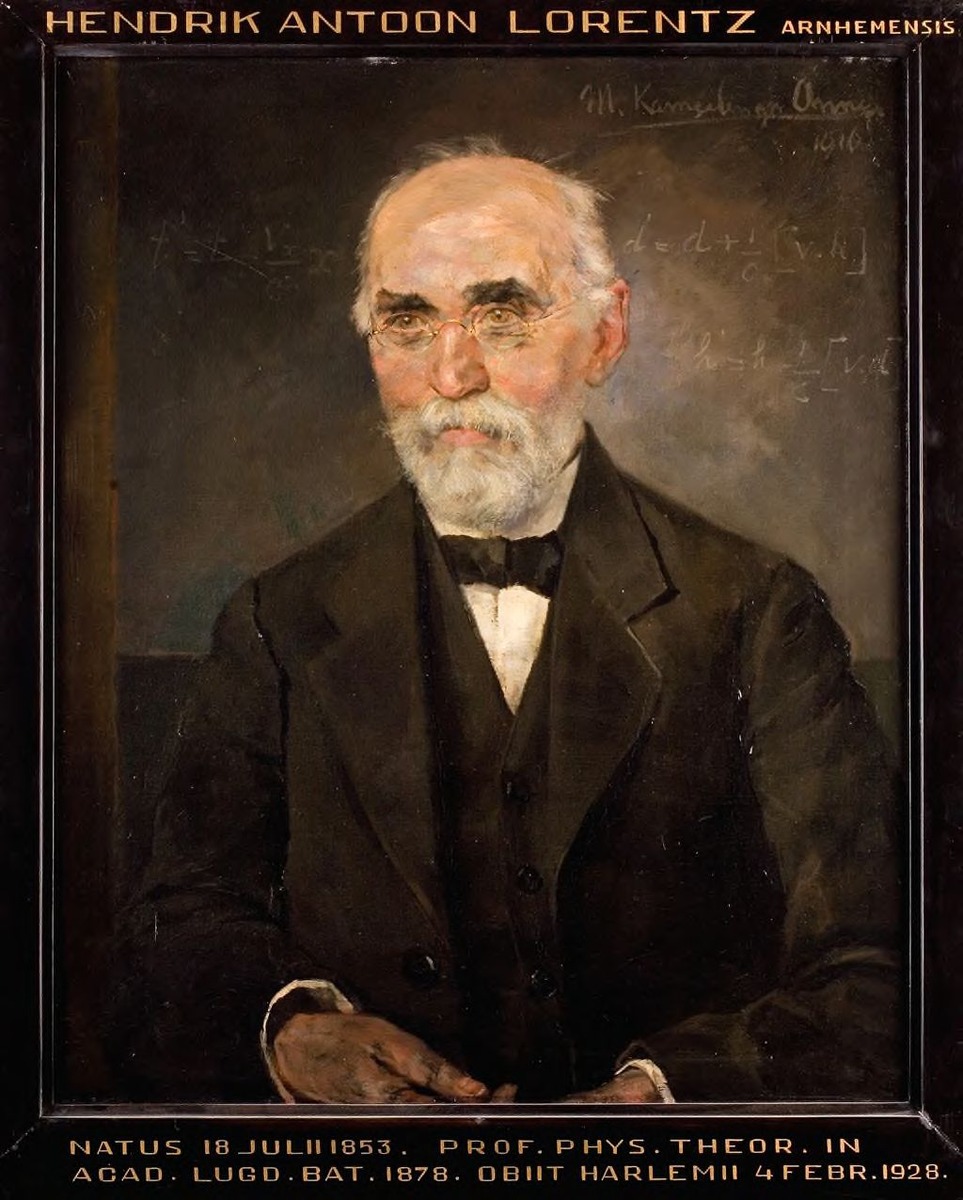

Menso Kamerlingh Onnes, Portrait of Hendrik Antoon Lorentz, 1916, oil on canvas, Icones Leidenses, Leiden University Libraries (Icones 310), public domain · Portrait painting (oil on canvas, signed and dated 1916) of Hendrik Lorentz by Menso Kamerlingh Onnes (1860-1925), Icones Leidenses, Leiden University Libraries (Icones 310), given by the sitter's family in 1931. The Leiden University Libraries item record and its IIIF manifest state 'The rights status of this resource is public domain' (Public Domain Mark), and the painter died in 1925. Downloaded from the library's IIIF image service at its full available size (1024 x 1276 pixels) and downscaled only, to 963 x 1200; no upscaling. The picture includes its frame with the Latin inscription naming Lorentz. · Public domain (Leiden University Libraries Public Domain Mark); painter died 1925
물리학자 · 20세기
헨드릭 로런츠
1853–1928
주요 업적 분야
아직 성격 매칭에 포함되지 않았습니다 — 기록된 근거가 성격 모델 전체를 다루기에는 충분하지 않습니다. 이 페이지의 다른 모든 내용은 자유롭게 확인하실 수 있습니다.
핵심 특성
주요 업적
맥스웰의 전자기 이론을 전자 이론으로 완성했고, 물질과 전하를 입자적으로 다루었다. 피터르 제이만의 관측을 설명한 이 이론으로 1902년 제이만과 함께 노벨 물리학상을 받았다.
1904년 로런츠 변환을 정식화해 마이컬슨-몰리 실험의 영(零) 결과를 설명했고, 노벨재단의 표현으로 아인슈타인의 특수상대성이론의 길을 닦았으나 끝까지 에테르를 버리지 않았다.
1911~1927년 솔베이 회의 첫 다섯 차례의 의장을 맡았고, 네덜란드 쥐더르 해 위원회 위원장으로서 제방 높이를 과학적으로 계산하는 방법을 도입해 조수 계산을 이끌었다.
삶의 장면들
1911년 그가 의장을 맡은 솔베이 회의에 대해 동료는 그가 뛰어난 명료함과 친절로 토론을 이끌었고, 의견이 갈릴 때마다 우호적이면서도 진지한 분위기를 유지했다고 적었다.
그룹 토론이 제대로 돌아가게 만든 협력자의 모습과 일치하나, 이 기록은 가까운 동료의 것이다. 협업 성향
70세가 넘은 나이에도 1925~26년에는 하이젠베르크의 행렬역학을, 1927년에는 슈뢰딩거의 이론을 각각 발표된 지 1년 안에 강의했다.
자신이 완전히 받아들이지 않은 새 이론까지 꾸준히 따라간 물리학자의 모습과 일치한다. 호기심
전환점
1912년 하를럼의 테일러 재단 관장직과 네덜란드 과학회 서기직을 맡고 라이덴 교수직은 월요일 아침 강의만 남겨, 일상적 학교 업무 대신 연구와 최신 물리학 강의에 집중하게 되었다.
행정 부담을 덜고 새 물리학을 따라갈 시간을 얻으려는 의도적 선택과 일치한다. 호기심
비슷한 인물
전체적인 프로필이 이 사람과 닮은 사람들이에요.


에이다 러브레이스

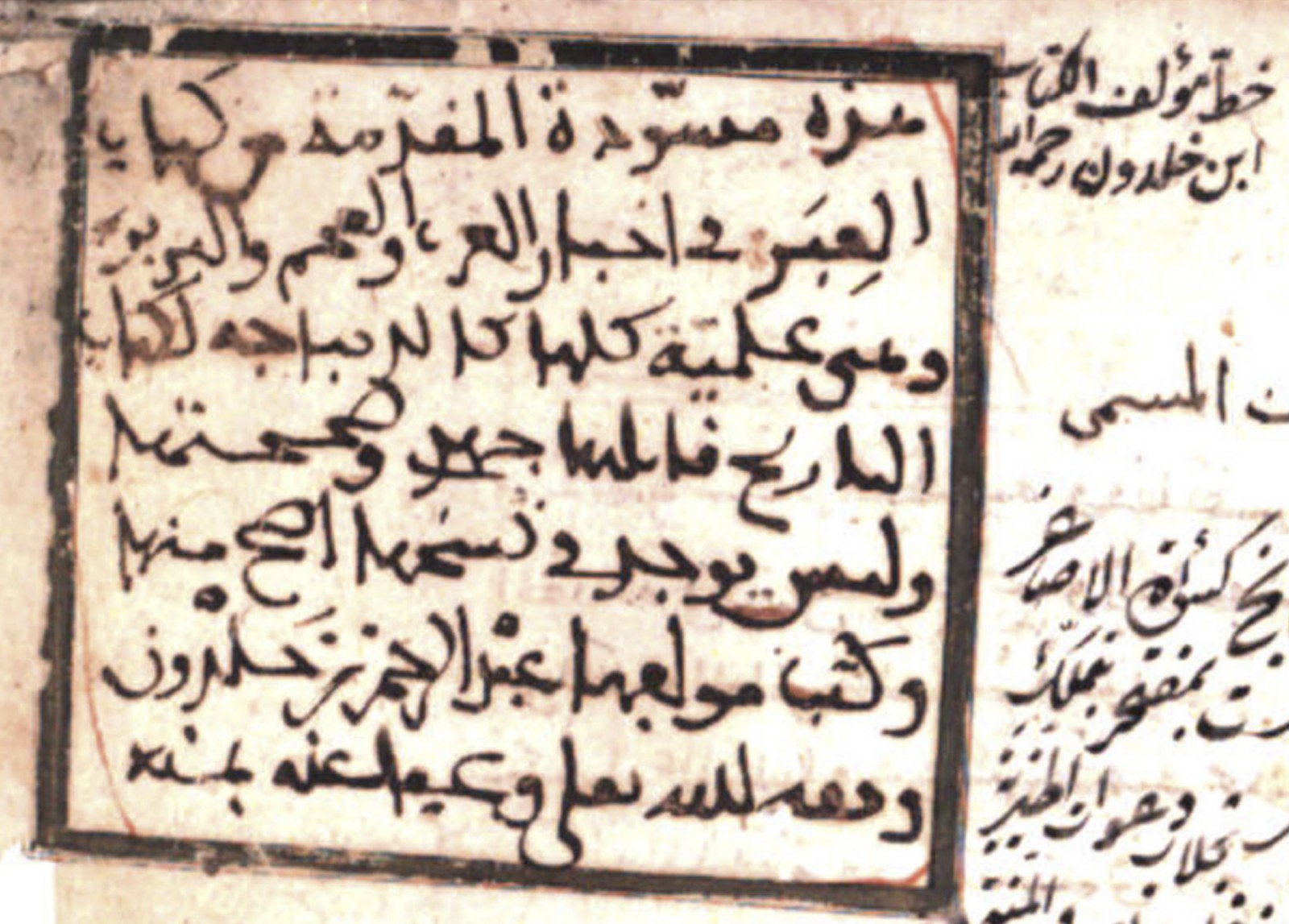
이븐 할둔

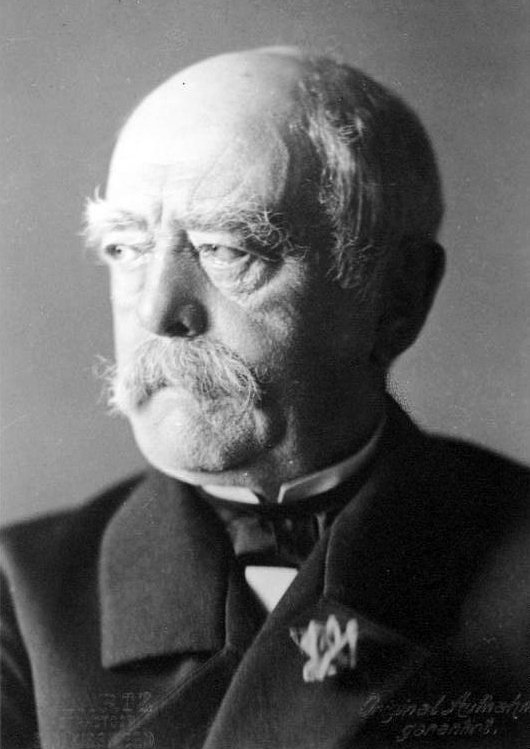
오토 폰 비스마르크

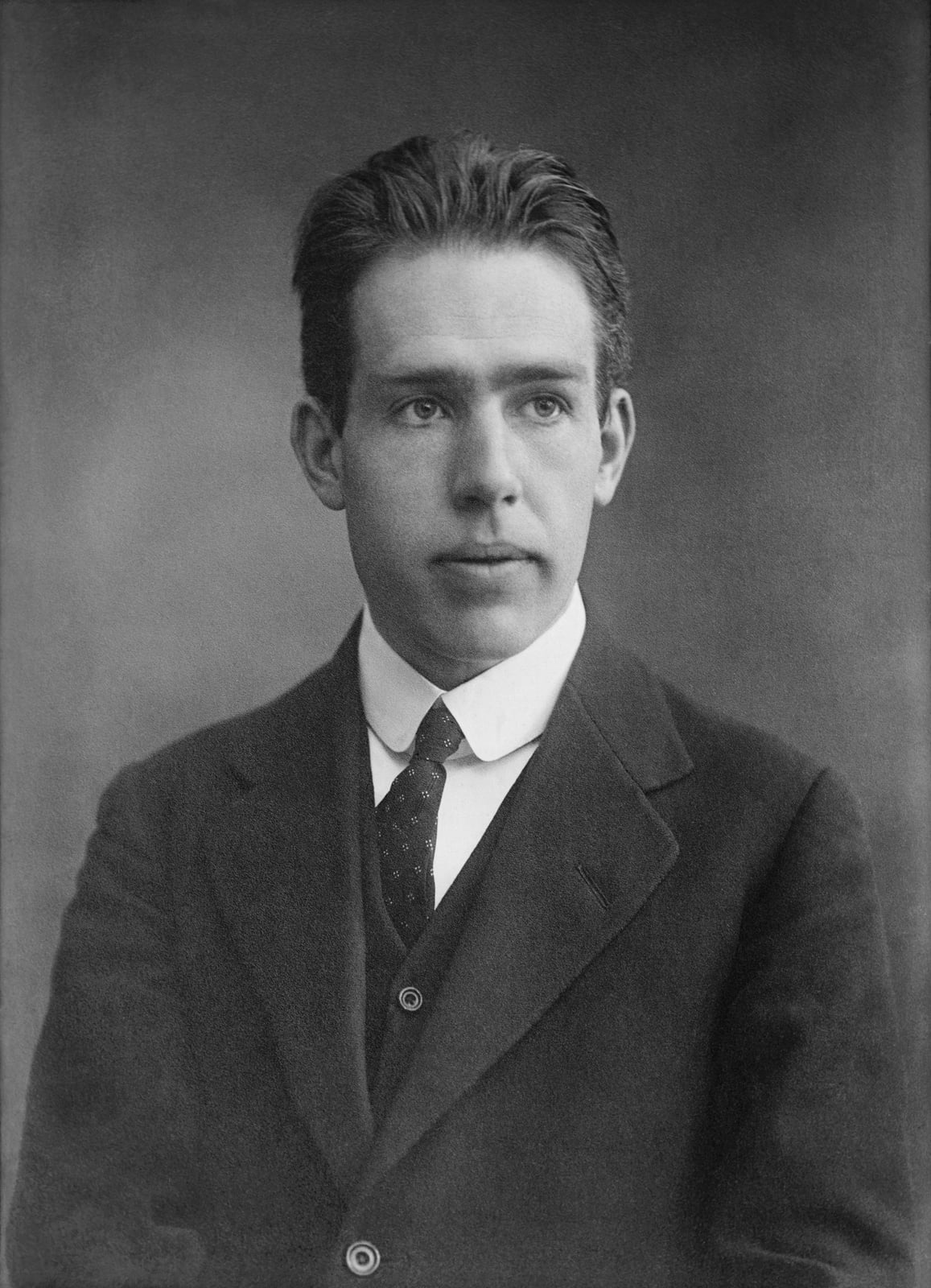
닐스 보어

마이모니데스
출처
- Hendrik Lorentz (Q41688), verified live via the Wikidata API (2026-11-02): label 'Hendrik Lorentz', description 'Dutch physicist (1853-1928)', born 18 July 1853, died 4 February 1928, citizenship Netherlands, Korean label present. Orientation only; not used as support for any row.
- 'Hendrik A. Lorentz - Biographical', NobelPrize.org (Nobel Foundation biography, 1902 Physics), read in full. CANONICAL SIGNIFICANCE SOURCE: states that from the start he made it his task to extend Maxwell's theory of electricity and light, that the conception of the electron stems from him, that the 1904 Lorentz transformation explained the null result of the Michelson-Morley experiments and 'paved the way for Einstein's special theory of relativity', that he chaired the Zuiderzee committee on tidal movements, chaired every Solvay Congress until his death and helped start the Dutch applied-research organisation TNO, and calls him 'a man of immense personal charm'. Award-body biography: admiring, institutional, with no critical voice.
- 'Hendrik Antoon Lorentz', Encyclopaedia Britannica, read in full: joint Nobel Prize for Physics 1902 with Pieter Zeeman; doctoral thesis 1875 refining Maxwell's theory; professor at Leiden from 1878; his central aim 'to construct a single theory to explain the relationship of electricity, magnetism, and light'; the electron theory and its confirmation by Zeeman in 1896; the local time idea of 1895 and the 1904 transformations; director of research at Teyler's institute in Haarlem from 1912 while lecturing weekly at Leiden. Encyclopedia overview; notes that the electron theory could not explain the Michelson-Morley result by itself.
- 'Hendrik Antoon Lorentz', MacTutor History of Mathematics Archive, University of St Andrews, read in full: biography with dated list of works (1892 and 1895 treatises on moving bodies, The Theory of Electrons 1909, Lessons on Theoretical Physics from 1919), the 1911 Solvay opening address welcoming Planck's quantum hypothesis as 'a wonderful ray of light', the statement that he 'never fully accepted quantum theory and always hoped' to bring it back into the classical approach, an obituary appreciation of his 'mental vivacity' in guiding discussion, and an account of his funeral. University history-of-mathematics archive; admiring, with the quantum reservation recorded.
- Frits Berends, 'Hendrik Antoon Lorentz: his role in physics and society', Journal of Physics: Condensed Matter 21 (2009) 164223, read in full: a history of Lorentz by a Leiden emeritus professor of theoretical physics, with dated episodes (appointment in 1878 to one of the first chairs of theoretical physics; his support for Kamerlingh Onnes's appointment and his taking over the latter's medical-student teaching for about twenty years; the 1896 Zeeman effect and his explanation of it; the 1904 transformation; chairing five Solvay conferences, with a 1911 letter from Kamerlingh Onnes praising his clarity and friendliness; the move to Haarlem in 1912 to keep one Monday lecture course; lectures on general relativity within about two years, matrix mechanics and Schroedinger's theory within a year of their appearance; the 1919 telegram to Einstein about the eclipse result; the Zuiderzee method for dyke heights; the 1925 jubilee and the funeral). Scholarly history by an institutional successor: well documented but admiring.
- Michael Eckert, 'A forgotten trailblazer', review of A. J. Kox and H. F. Schatz, 'A Living Work of Art: The Life and Science of Hendrik Antoon Lorentz' (Oxford, 2021), Physics Today, March 2022, read in full: a historian at the Deutsches Museum says the biography portrays Lorentz as a central figure of the Dutch and international physics communities, whose 'gift with languages, calm demeanor, and administrative skills' made him a 'linchpin', records that he chaired the first five Solvay Conferences and the Zuiderzee Commission from 1918 to 1926, and notes that the book contains no formulas and treats his scientific achievements in a single chapter. Independent review of a biography.
- 'Between humans and atoms: H. A. Lorentz, spiritual father of Einstein', The Low Countries (2020), read in full: a review of two Dutch biographies (by Kox, and by Van Delft and Berends) that says Lorentz made no spectacular discoveries but is considered a pioneer of relativity, notes that he was 'never willing or able' to give up the ether as Einstein did and kept an ambivalent attitude to quantum mechanics, says he chaired the Solvay Councils because he was respected, multilingual and from a neutral country, credits him with insisting on including women in the Solvay institute and with being Leiden's first professor to supervise female doctoral students, and criticises both biographies because his personality 'does not come to life anywhere', calling him 'a bit boring' and 'aloof'. Independent critical review of the biographies; the most sceptical voice read.
- 'Portret van Hendrik Antoon Lorentz, hoogleraar Theoretische natuurkunde te Leiden' (Icones 310), Icones Leidenses, Leiden University Libraries, item record and IIIF manifest read for the portrait review only: oil on canvas by Menso Kamerlingh Onnes (1860-1925), 1916, given by the sitter's family in 1931, with the rights statement 'The rights status of this resource is public domain'. Not used for any row.