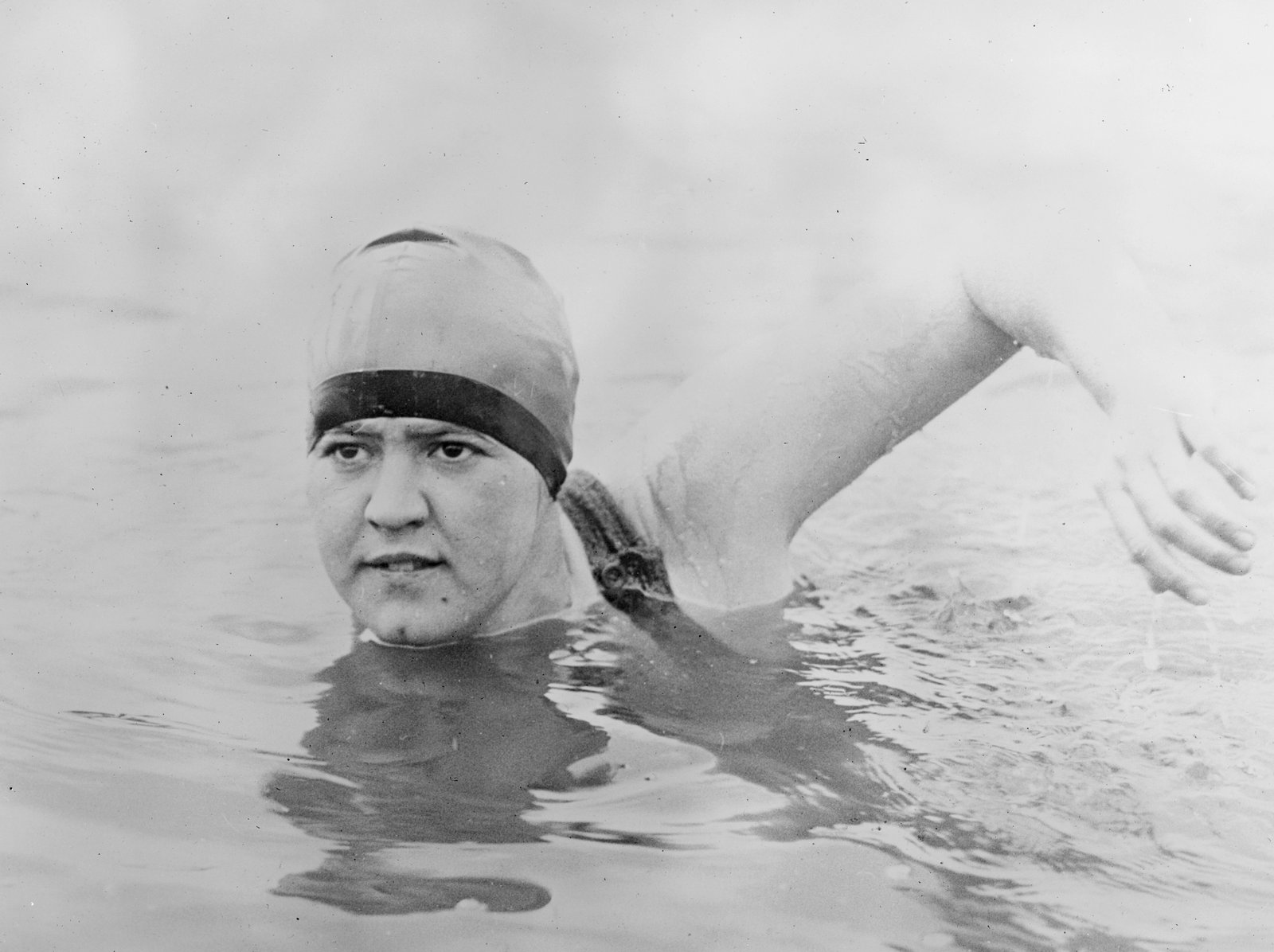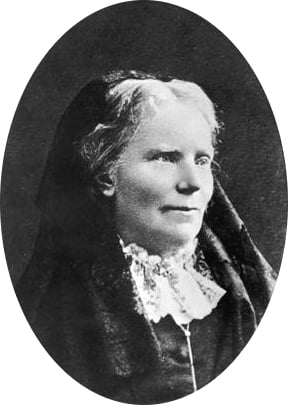

Bain News Service, 'Ederle', photograph, 1924 (catalogue date; negative annotated 7/9/26 for later publication); Library of Congress Prints and Photographs Division (LC-DIG-ggbain-37118), 'No known restrictions on publication' · Library of Congress Prints and Photographs Division, George Grantham Bain Collection, 'Ederle' (LC-DIG-ggbain-37118; hdl.loc.gov/loc.pnp/ggbain.37118), via Wikimedia Commons 'Gertrude Ederle.jpg' (downsized from 3618x2704) · Public domain
핵심 특성
주요 업적
에덜리는 1926년 8월 6일 프랑스 그리네 곶(Cape Gris-Nez)에서 도버 부근 킹스다운까지 헤엄쳐, 영국 해협을 건넌 최초의 여성이 되었다. 당시 통신 보도와 브리태니커 백과사전은 기록을 14시간 31분으로 전하는데, 이는 앞서 건넌 남성 5명 누구보다 두 시간 가까이 빠른 기록이며, 거친 바다 때문에 실제 거리는 약 35마일에 달했다. 이후 독일의 에른스트 피어쾨터(Ernst Vierkoetter)가 더 빠른 기록을 세웠다.
에덜리는 1924년 파리 올림픽에서 자유형 4x100m 계주 금메달과 자유형 100m, 400m 동메달을 땄다. 올림피디아(Olympedia)에 따르면 그녀는 1919년 12세에 세계 수영 기록을 세운 최연소 여성이 되었고, 세계 기록을 모두 아홉 차례 세웠으며 그중 일곱 번은 1922년 브라이턴 비치의 500m 한 번의 레이스에서 나왔다. 브리태니커는 1921~1925년 사이 국내·세계 아마추어 기록이 29개라고 센다.
횡단 후 에덜리는 뉴욕에서 티커테이프 퍼레이드로 환영받았다. EBSCO 참고 문헌은 군중을 약 2백만 명으로 추산하며, 쿨리지 대통령과 지미 워커 뉴욕 시장이 이 기록을 칭찬했다. 같은 글은 남성 기록을 넘어선 이 기록이 여성의 신체 능력에 대한 통념에 도전했고 이후 수많은 여성이 적십자 수영 자격증을 땄다고 설명하는 한편, 런던 『데일리 뉴스』 등은 이를 예외적 사례나 이벤트로 깎아내렸다고도 적는다.
삶의 장면들
유나이티드 프레스는 1926년 8월 6일 약 열 시간째 물속에 있던 에덜리에게 트레이너 빌 버지스(Bill Burgess)가 상황이 나쁘니 포기하라고 권했고, 그녀가 '지금 그만둘 이유가 없다'고 받아쳤다고 보도했다. EBSCO 참고 문헌은 저녁 폭풍이 거세지는 가운데에도 그녀가 중단하라는 요구를 무시했고 왼쪽 다리에 쥐가 난 뒤에도 계속 헤엄쳤다고 덧붙인다.
한 번의 수영에서 두 차례 트레이너의 중단 권고를 거절한 것은 끈기와 부합한다. 두 기록 모두 같은 현장 취재에서 나온 것이라 근거는 하나의 사건에 해당한다. 끈기
유나이티드 프레스는 1926년 8월 7일, 에덜리가 출발 전 아버지에게 자신이 두 번째로 가라앉기 전에는 물에서 꺼내지 않겠다고 약속하게 했다고 전했다. 이 보도는 전년도에 트레이너가 물에서 끌어내라고 명령하자 그녀가 항의했던 일과 대비하며, 아버지가 처음 가라앉는 모습을 보면 붙잡을 생각이었다고 말한 것도 인용한다.
열린 바다에서 구조 시점을 스스로 정한 것은 높은 위험 감수 성향과 부합한다. 전년도의 탈진은 같은 태도가 시도의 중단으로 이어질 수 있음을 보여 준다. 위험 감수
전환점
1925년 8월 18일 에덜리는 트레이너 제이브즈 울프(Jabez Wolffe)와 함께 그리네 곶에서 첫 해협 횡단을 시도했다. 통신 보도에 따르면 그녀는 약 아홉 시간 뒤 쓰러졌고 수영 선수 이샤크 헬미(Ishak Helmy)가 그녀를 배 위로 끌어올렸으며, 이후의 기록들은 그녀가 이 결정에 동의하지 않았다고 전한다. EBSCO 참고 문헌은 그녀가 이후 다른 트레이너 빌 버지스를 찾고 자금을 마련하고 언론사 후원을 확보한 뒤 그리네 곶에서 훈련했다고 설명한다. 그녀는 1926년 8월 해협을 건넜다.
실패 뒤 트레이너를 바꾸고 자금과 후원을 직접 마련한 것은 주도적 행동 성향과 부합한다. 그녀의 동기에 관한 설명은 2차 자료에서 나온 것이다. 선제적 행동력
비슷한 인물
전체적인 프로필이 이 사람과 닮은 사람들이에요.
출처
- Gertrude Ederle (Q263287) -- verified live via wbgetentities (2026-10-05): en label 'Gertrude Ederle', description 'American swimmer (1905-2003)', P569 23 Oct 1905, P570 30 Nov 2003, citizenship United States, instance of human, place of birth New York City, P18 'Gertrude Ederle.jpg'. No Korean label on Wikidata. Orientation only; not used as support for any row.
- Gertrude Ederle -- Wikipedia article, read as orientation only; not used as support for any scored row.
- Olympedia (olympedia.org), 'Trudy Ederle' athlete biography and results page (read in full) -- the Olympic statistical reference: 1924 Paris results (gold 4x100 m freestyle relay, bronze 100 m and 400 m freestyle), nine world records including seven in one 500 m swim at Brighton Beach in 1922, youngest woman to set a world record (1919), 1925 professional swim from Lower Manhattan to Sandy Hook, the failed 1925 Channel attempt and the 1926 crossing, trainer Tom Burgess. Its text gives 14 h 34 min for the swim while its own records list gives 14:39; contemporary press and Britannica give 14 h 31 min.
- Encyclopaedia Britannica, 'Gertrude Ederle' biography (read in full) -- encyclopaedia overview: eight-beat crawl, 29 national and world amateur records 1921-1925, 1924 Olympic medals, the 1926 crossing from Cape Gris-Nez in 14 h 31 min (1 h 59 min inside the men's record) in a self-designed two-piece suit, the New York parade, the 1933 back injury, the 1939 Aquacade, instructing deaf children, Hall of Fame inductions.
- The Indianapolis Times, 7 August 1926, p. 1 and p. 3, 'Ederle to sail home on Aug. 21' / 'World acclaims Gertrude Ederle' (United Press dispatches from Dover and Boulogne), Library of Congress Chronicling America OCR text -- period wire reporting the day after the swim, written by reporters who followed the swim from a tug; OCR partly garbled but read in full for the parts used (her return to the water next day, her refusal to be taken out, her reply to Burgess after ten hours, the British press reaction).
- Daily Kennebec Journal (Augusta, Maine), 7 August 1926, p. 1, Associated Press report from Dover, 'Woman makes channel swim', and a congratulatory cable from Henry F. Sullivan, Library of Congress Chronicling America OCR text -- second, independent news service and a rival Channel swimmer's comment; read for the dated facts (start about 7 am from Cape Gris-Nez, landing at Kingsdown in the evening, 14 h 31 min, faster than the five men before her).
- New Britain Herald (New Britain, Connecticut), 18 August 1925, p. 1, Associated Press and North American Newspaper Alliance reports on Ederle's first Channel attempt, Library of Congress Chronicling America OCR text -- same-day wire account of the 1925 attempt (start, pace, companions swimming alongside, the collapse and recovery by Helmy); read for the first half of the article.
- South Bend News-Times (Indiana), 19 August 1925, p. 10, United News report 'Miss Ederle sinks unconscious when near British coast', Library of Congress Chronicling America OCR text -- a United News correspondent's account written aboard or from the tug, with her statements after the attempt; read in full. Distances from the English coast and times differ between wire reports of the same day (and from later summaries), so only the broad sequence is used.
- The Birmingham Age-Herald (Alabama), 19 August 1925, p. 7, 'Ederle fails to reach goal', Library of Congress Chronicling America OCR text -- a second newspaper's version of the same 1925 dispatches, used only to cross-check the sequence and not counted as a separate perspective.
- Outside Online, 'Gertrude Ederle, the First Woman to Brave the English Channel' (5 December 2017) -- magazine feature that interviews the sports historian Glenn Stout (author of Young Woman and the Sea) and the historian Susan Cahn; secondary retelling of the 1925-26 attempts, the 1924 disappointment, and later life. Anecdotes it repeats from Stout (e.g. the tea-poisoning belief about her first trainer) are not used.
- Elizabeth D. Schafer, 'Ederle Swims the English Channel', EBSCO Research Starters (History), 2021 -- scholarly reference article with a bibliography (Colwin, Smith, Unwin, Wennerberg, Woolum); gives the 1925 attempt, her change of trainer, the media sponsorships, the 1926 storm and her refusal to stop, the London Daily News dissent, and the aftermath including the later faster crossing by Ernst Vierkoetter.
- Library of Congress Prints and Photographs Division, George Grantham Bain Collection, 'Ederle' (LC-DIG-ggbain-37118) -- catalogue record for the portrait: 'No known restrictions on publication'; dated 1924 in the catalogue (the negative bears a later 1926 publication date).